
SEO Software Comparisons: Find the Right Tool
Pick the situation that fits you in the table below and go straight to the right comparison. This SEO software comparison hub routes you to side-by-side guides, shows how we judge tools, and helps you narrow a shortlist before you commit to a trial or paid plan. It does not rank tools or name winners. For rankings, see our best SEO tools guide.
Disclosure: SEORAF may earn a commission when you buy through some links on its review, comparison, best-tool and pricing pages. This hub page contains no affiliate links and quotes no prices, but some pages it links to do contain affiliate links. Commission status is never a scoring factor. Read our affiliate disclosure. Vendor descriptions on this page were last checked on October 10, 2026; recheck them before republishing if product details have changed.
Jump to:
Which SEO Software Comparison Do You Need?
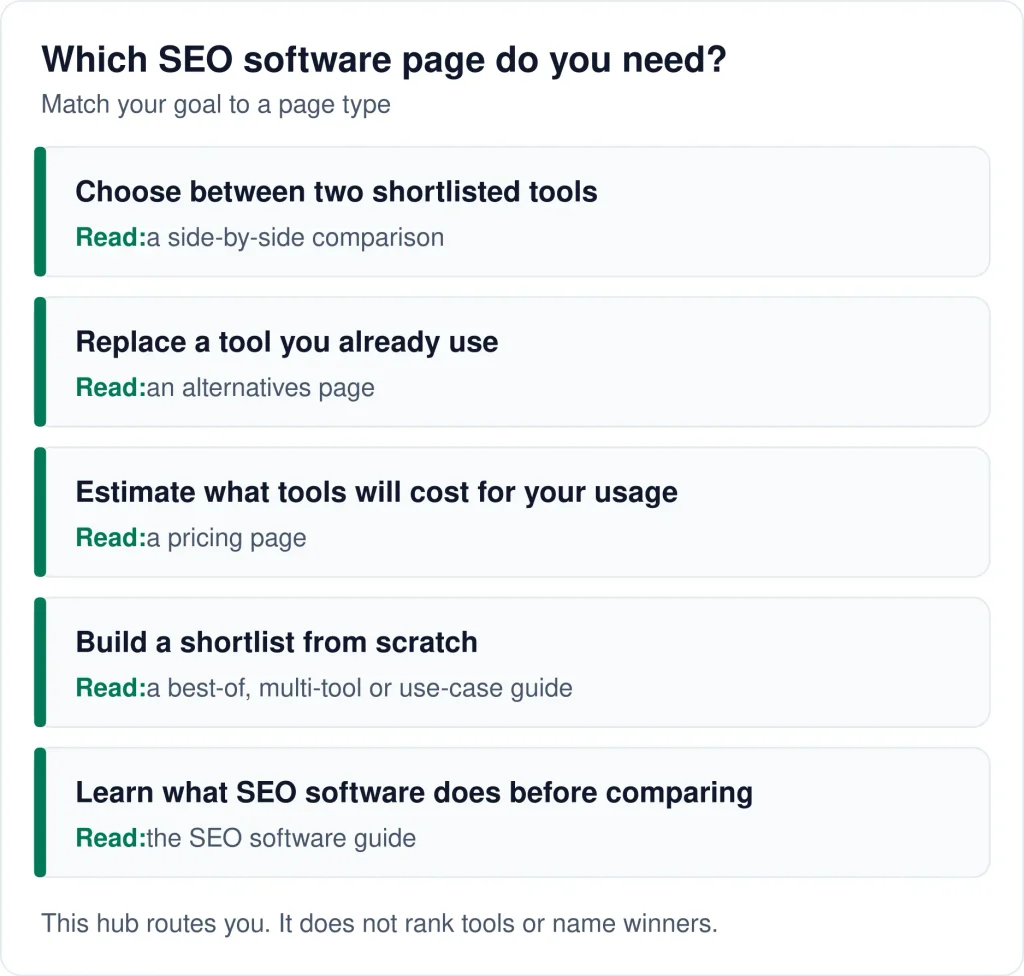
Different questions need different pages. Match your situation to the page type that answers it, then follow the link.
| If you want to… | Read this | Start here |
|---|---|---|
| Choose between two tools you have shortlisted | A side-by-side comparison | Browse available matchups |
| Replace a tool you already use | An alternatives page | SE Ranking alternatives, Ahrefs alternatives, or the general SEO software alternatives guide |
| Estimate what tools will cost for your usage | A pricing page | SEO software pricing and plans |
| Build a shortlist from scratch | A best-of, multi-tool or use-case guide | Best SEO tools, the multi-tool SEO tools comparison, or SEO tools by use case |
| Learn what SEO software does before you compare | The SEO software guide | SEO software explained |
Reader goals matched to page types
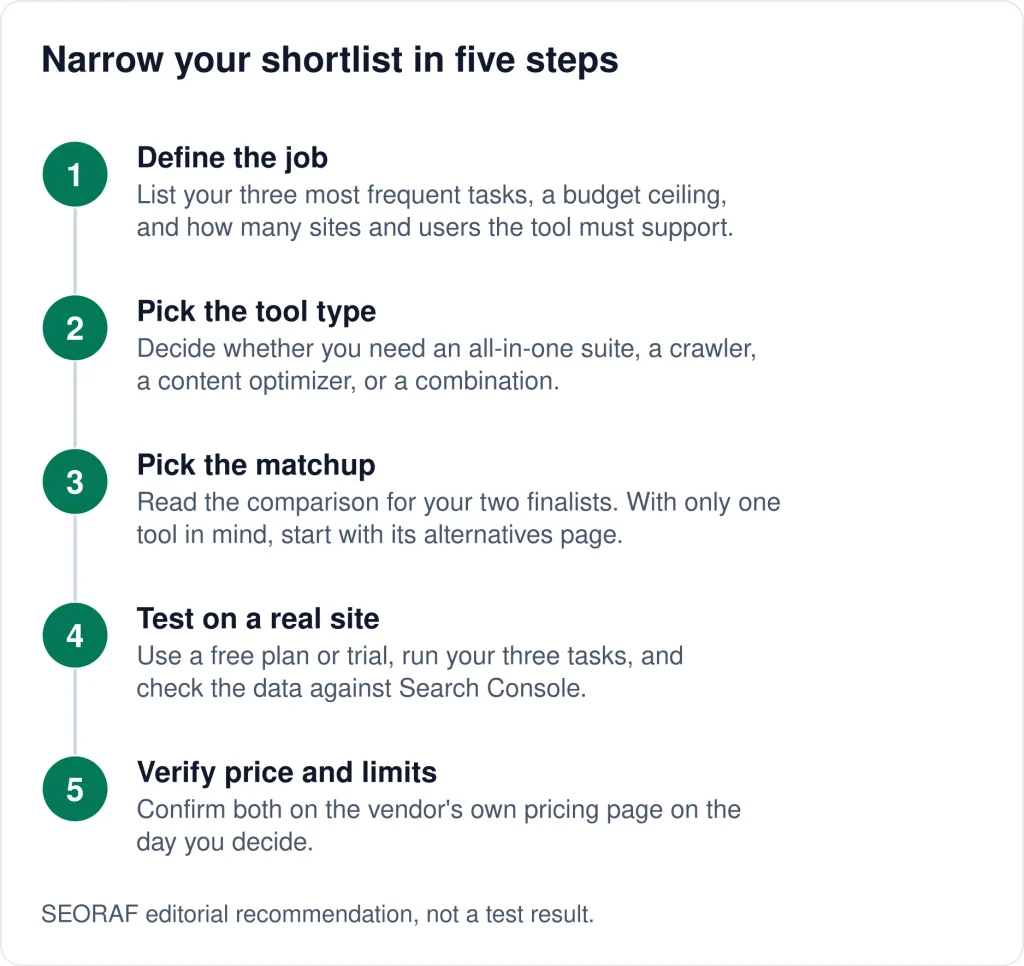
Not sure which row fits? Start with the shortlist process below.
Browse Comparisons by Tool Type
Comparisons are grouped by the kind of tool being compared, so you can focus on matchups relevant to your needs. Each available guide covers a specific decision. This index only describes the decision each matchup helps with; it does not declare a winner. For lists of individual tools within each category, see SEO tools by category.
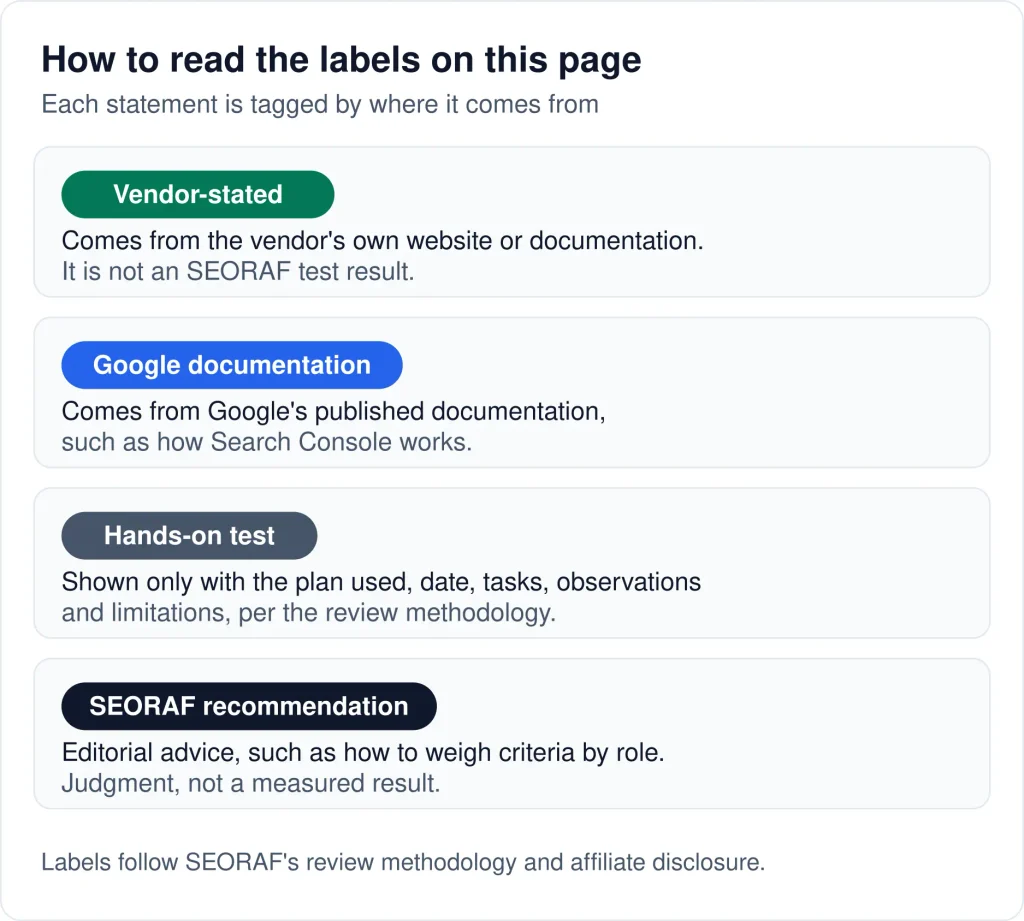
Tool descriptions here reflect how vendors describe their own products on their websites (checked October 10, 2026) plus SEORAF’s editorial grouping. They are not independent test results.
All-in-One SEO Suites
Suites typically bundle keyword research, rank tracking, site audits, backlink data and reporting under one subscription. Semrush, Ahrefs and SE Ranking list these types of capabilities on their own websites. The decision is usually about overall fit: data depth, workflow, project and user limits, and what the price looks like once you move beyond the entry plan. Check each vendor’s current documentation before purchasing.
- Semrush vs Ahrefs: compare two all-in-one SEO platforms.
- SE Ranking vs Semrush: compare two suites with overlapping core SEO features.
- SE Ranking vs Ahrefs: compare pricing, limits and workflow fit.
Want a broader shortlist instead of a two-tool matchup? See our best all-in-one SEO tools guide. Confirm that the guide is published and current before linking to it from a live page.
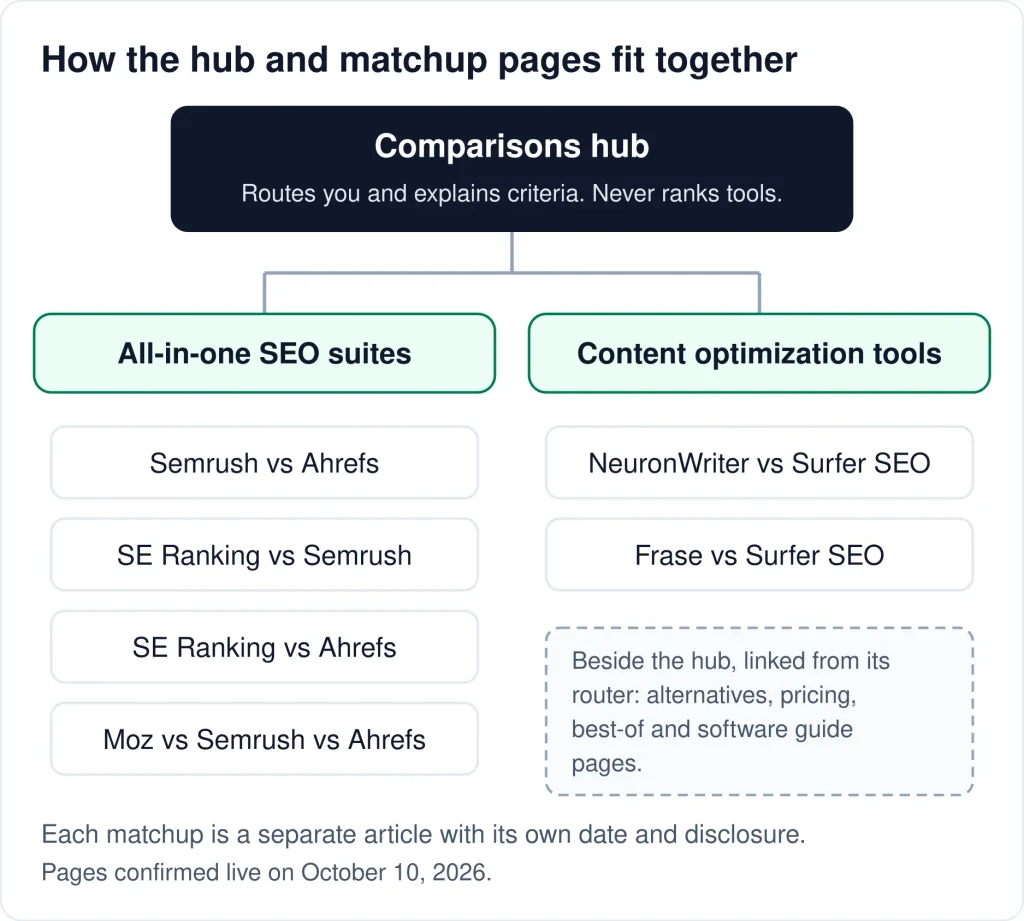
Content Optimization Tools
Content optimization tools can help with research, content planning, draft evaluation and on-page editing. When comparing them, consider how each supports your workflow, what evidence informs its recommendations, and whether its features suit the way you write and edit.
Before adding a content-tool matchup to this index, confirm that its comparison page is published, accessible and sufficiently maintained. Do not link to a planned or unavailable article as though it were live. For now, you can start with the SEO tools by category guide and use the shortlist process below.
Data and Feature Fit
Start with the work, not the feature list: tracking a defined set of keywords, auditing a large site or building content briefs, for example. A tool that supports your three most frequent tasks well may be more useful than one with a longer feature list you rarely use.
Data accuracy deserves a sanity check. Third-party tools estimate figures such as search volume using their own data sources and methods, so numbers can differ from tool to tool. Ahrefs, for example, explains how it estimates keyword search volume in its own documentation.
Google describes Search Console as a tool that shows how a verified site performs in Google Search. It can be a useful reference when you evaluate a tool’s reporting, but the metrics are not always directly equivalent. Some difference is normal. Investigate persistent, unexplained discrepancies for the market, country or language you care about.
Advanced capability matters only if you will use it. API access, custom reporting and bulk exports can be valuable for agencies and larger teams, but may be unnecessary for a single-site blog.
Cost and Value
Entry prices rarely tell the whole story. Look at the limits that determine whether a plan fits your real usage: the number of projects or sites, tracked keywords, user seats, crawl limits, report and export caps, and which features sit in higher tiers or paid add-ons. Then compare monthly and annual billing, and check whether a free plan or trial is long enough to test a real workflow. A cheaper plan that forces an upgrade in month two may not be cheaper overall.
Vendors change plans often, so treat any price as a snapshot. A trustworthy comparison identifies when each price was checked and links to the vendor’s own pricing page. Look for both before relying on a figure, and confirm the current price on the vendor’s site before you buy.
Usability and Support
A powerful tool that nobody on your team can operate may be wasted spend. During a trial, ask someone who did not choose the tool to complete one real task, such as setting up a project or exporting a report, and note where they get stuck. Then review the quality of the documentation and tutorials, and check which support channels come with the plan you would actually pay for.
Reliability and Integrations
Check how quickly reports load, whether crawls and rank updates finish reliably, and how often data refreshes. Then check the connections. Does the tool work with Google Search Console and Google Analytics? Can it export in the formats your reporting uses? If a tool cannot hand data to the systems you already rely on, you may end up paying for that gap in manual work every month.
Which Criteria Matter Most for Your Role
The same tool can be right for one role and wrong for another. Treat this as a starting point, not a universal rule.
| Role | Weigh most heavily | Question to ask |
|---|---|---|
| Freelancer or solo site owner | Cost and value, ease of use | Will I use enough of this to justify the plan every month? |
| Agency | Project limits, reporting, user seats | Can I manage many sites and deliver client reports without hitting limits or paying for every extra seat? |
| In-house team | Integrations, depth for one site | Does it connect to the analytics and reporting systems we already use? |
| Enterprise | Scale, access controls, API, support terms | Can it handle our site size, and will it pass our security and procurement review? |
Criteria to weigh most, by role
Ready to compare? Go back to the matchup index and open the guide for your finalists.
Standards Behind SEORAF Comparisons
A comparison is only useful if you can understand how it was made. These are the standards SEORAF publishes for its reviews and comparisons. Each page should show its own affiliate disclosure, where relevant, and its price-check or review date. If either is missing, treat time-sensitive prices and feature claims as unverified and confirm them on the vendor’s site.
Testing and Data Sources
SEORAF’s review methodology sets out how evidence should be assessed, including first-party documentation and official pricing pages, official product pages and announcements, documented hands-on testing, and reputable independent sources. Community evidence is used cautiously and should not be the sole basis for material claims. Vendor marketing is not independent proof.
For hands-on tests, the methodology calls for recording the plan or account used, test date, tasks performed, observations and limitations. SEORAF should not claim testing that did not happen. On this page, statements based on vendor documentation or Google documentation are identified accordingly. The other advice is SEORAF’s editorial recommendation.
Independence and Affiliate Disclosure
Per the methodology, affiliate status is not a scoring factor and commercial information is kept separate from editorial evaluation. SEORAF does not currently publish sponsored content. Our affiliate disclosure explains how commercial relationships work. Pages containing affiliate links should disclose that relationship clearly near the beginning of the content.
SEORAF may receive free, trial or demo access from vendors. Such access should be disclosed when materially relevant, and complimentary access should not automatically lead to a positive evaluation. The methodology also allows editors to publish unfavorable findings when supported by evidence.
Updates and Pricing Verification
For material pricing claims, the methodology calls for recording the pricing date, currency, billing frequency, plan name and major limits, primarily from the vendor’s official pricing page. Reviews and pricing pages should be reverified regularly and sooner after material changes, such as pricing or feature updates. Each relevant page should display an accurate last-reviewed or price-check date.
Frequently Asked Questions
What is the difference between a comparison and a best-of list?
A matchup comparison puts two tools side by side on the same criteria so you can choose between them. A best-of list or a multi-tool guide such as our SEO tools comparison ranks or scores many tools at once. Use a matchup when you already have a shortlist, and a multi-tool guide when you do not.
Does SEORAF earn commission from these tools?
SEORAF may earn a commission when you buy through some links on its review, comparison, best-tool and pricing pages. This hub page contains no affiliate links and quotes no prices, but some pages it links to do contain affiliate links. Commission status is never a scoring factor and does not decide which tools we compare or how we judge them. Details are in our affiliate disclosure.
Are free tools included?
Comparisons may cover a tool’s free plan or trial where the vendor offers one. Check the comparison page and the vendor’s site for current eligibility, usage limits and terms. For tools with free access, see our guide to free SEO tools.