
Email Marketing Automation Guide That Boosts Sales
Are you struggling to convert leads into paying customers? You are spending hours every week crafting newsletters, but your open rates are plummeting, and sales remain stagnant. The problem isn’t your product; it is your lack of scale. You simply cannot manually follow up with thousands of leads effectively while trying to run a business.
The solution is not working harder; it is working smarter. You need a system that nurtures leads while you sleep, qualifies prospects automatically, and closes deals 24/7. You need this Email Marketing Automation Guide to transform your business strategy. In today’s digital landscape, an email marketing automation guide is not just a luxury; it is a necessity for survival.
This comprehensive Email Marketing Automation Guide will show you exactly how to set up automated workflows that drive revenue on autopilot. Whether you are a solopreneur or a marketing manager, these strategies are the key to unlocking exponential growth. Stop guessing and start scaling with a proven email automation system.
Download the Complete Email Automation Guide (Free PDF)
Download Free PDF →Get the Checklist Delivered to Your Inbox
Join 10,000+ marketers mastering automation today.
[contact-form-7 id=”5b3800f”]What Is Email Marketing Automation?
Email marketing automation is the process of sending timely, personalized emails to subscribers based on specific triggers or actions they take. Instead of hitting “send” on a broadcast every time, you set up a logic flow once. It is the cornerstone of modern content strategy and digital efficiency.
Why does this matter so much? Because manual email marketing is impossible to scale effectively. If you try to personally email every lead who downloads a PDF, visits your pricing page, or abandons a cart, you will burn out in a week. An automated email marketing system allows you to build relationships with thousands of people simultaneously.
It delivers the right message to the right person at the exact right moment. This Email Marketing Automation Guide defines automation not just as “sending emails,” but as building a relationship engine. It shifts your focus from administrative tasks to strategy and creativity, allowing the software to handle the repetitive execution.
By reading this Email Marketing Automation Guide, you will learn that automation is about empathy at scale. It is about ensuring that no customer feels ignored. When someone shows interest in your service, an automated system ensures they are attended to immediately, which is something a human simply cannot do 24/7.
How Email Automation Works
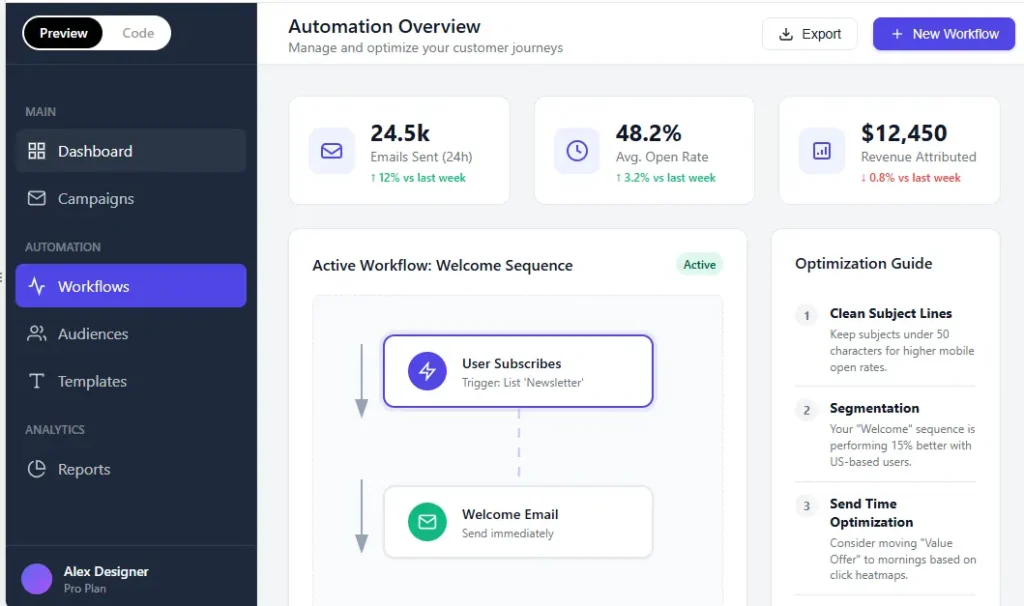
The magic of an email marketing workflow relies on a simple yet powerful three-step loop: Trigger, Logic, and Action. Understanding this mechanism is vital for anyone reading this Email Marketing Automation Guide who wants to move beyond basic broadcasting.
First, the Trigger. This is an event that happens. It could be a user filling out a form, clicking a specific link in a previous email, or visiting a pricing page on your website. This trigger wakes up the system. Second, the Logic. Your email platform checks the conditions associated with that trigger. Is the user on the “VIP” list? Did they buy the product before? Based on these answers, the system decides the path.
Finally, the Action. The system sends the specific email associated with that logic path. This email funnel strategy ensures that no lead falls through the cracks. It creates a seamless experience for the user, who feels like you are speaking directly to them and their specific needs, rather than blasting them with generic noise that everyone else receives.
An essential part of this Email Marketing Automation Guide is understanding that the “Logic” is where the money is made. You can set up logic that says, “If they click the link for Product A, stop sending them emails about Product B.” This level of personalization increases conversion rates dramatically.
Ready to automate your email marketing?
Start Now →Types of Email Automation
To master the Email Marketing Automation Guide, you must understand the different “personalities” of automated email campaigns. Not all automations are created equal; they serve distinct purposes in the customer lifecycle. Using the right one at the right time is crucial for success.
Welcome Emails: This is the handshake. When someone subscribes, this email introduces your brand and sets expectations. It usually has the highest open rate of any email you will ever send. Use it to deliver the lead magnet instantly and encourage a reply to start a conversation.
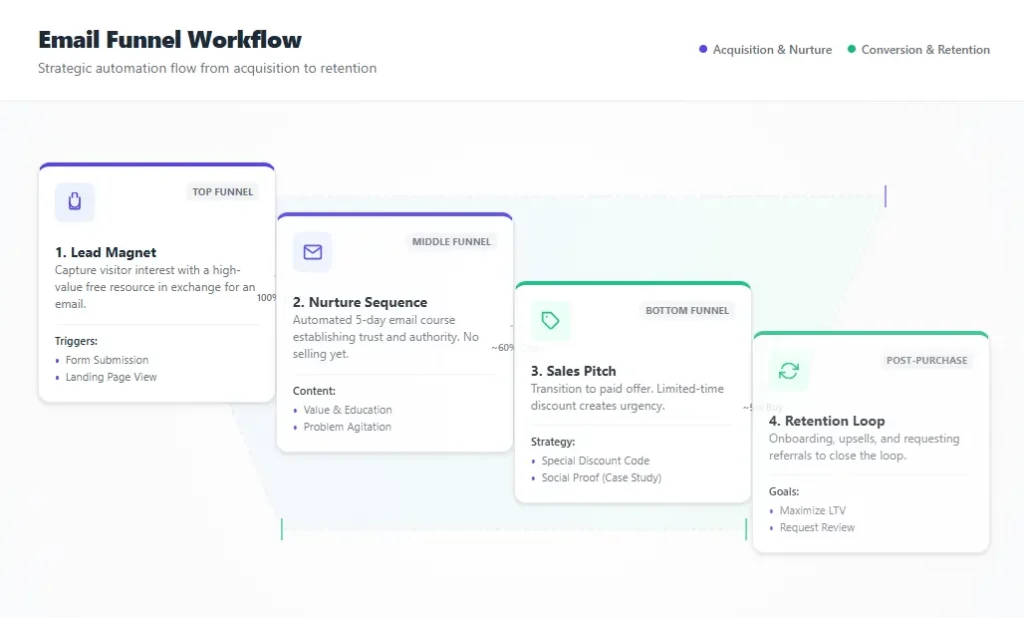
Lead Nurturing Emails: These are the teachers. These emails provide educational content that builds trust. They solve problems for your audience without selling hard. By using lead nurturing emails, you position yourself as an authority, making the eventual sales pitch much easier to accept.
Sales Funnel Emails: These are the closers. Once trust is established through nurturing, these automated emails pitch your product or service. They leverage social proof, case studies, and urgency to overcome objections and drive the conversion.
Abandoned Cart Emails: These are the recovery experts. When a customer adds an item to the cart but doesn’t buy, a gentle reminder (often with a small discount) can recover significant lost revenue. This is the highest ROI automation for e-commerce stores.
Re-Engagement Campaigns: Sometimes subscribers go cold. This automation targets people who haven’t opened an email in 6 months. It asks them if they still want to hear from you or removes them from your list to keep your metrics healthy. This Email Marketing Automation Guide recommends running these quarterly.
Best Email Automation Tools
You cannot execute a successful strategy without the right software. The market is flooded with options, but only a few offer the perfect blend of power, ease of use, and deliverability. Here are the top email automation tools recommended in this Email Marketing Automation Guide.
1. Mailchimp
Mailchimp is often the entry point for email marketing for beginners. It offers a user-friendly drag-and-drop builder and a vast library of pre-made templates. Its automation features, while robust enough for small businesses, are intuitive and do not require a coding background. If you are just starting your journey with digital marketing, this is a safe bet.
2. ConvertKit
Designed specifically for creators, bloggers, and coaches, ConvertKit excels at simplicity and tagging. It allows you to create sophisticated automated email campaigns using visual flows. You can easily segment subscribers based on their interests, ensuring that your painters don’t get emails about drawing supplies. It is the go-to tool for building a loyal audience.
3. Systeme.io
If you are looking for incredible value, Systeme.io is the answer. It is an all-in-one platform that combines email marketing with course hosting, sales funnels, and affiliate management. You can build your entire business on this single tool. It is incredibly affordable and excellent for entrepreneurs who want to minimize their monthly overhead while maximizing functionality.
4. ActiveCampaign
For those who need advanced power, ActiveCampaign is the gold standard. It functions almost like a CRM (Customer Relationship Management) system. It allows for complex conditional logic, site tracking, and deep segmentation. If you are running a high-volume business with complex sales cycles, the investment in ActiveCampaign will pay off tenfold through its powerful email automation system.
Choosing the right tool is the first step in any Email Marketing Automation Guide. We recommend starting with a tool that fits your budget but has the ability to scale with you as you grow. Migrating lists later is a headache you want to avoid.
Ready to automate your email marketing?
Start Now →How to Build Email Sequence (Step by Step)
Ready to get your hands dirty? Here is the practical part of the Email Marketing Automation Guide: email sequence setup. Follow these steps carefully to ensure your campaigns are technically sound and conversion-focused.
Step 1: Define the Goal and Segment
Before opening your software, you must define the goal. Is this sequence designed to sell a $50 ebook or a $5,000 consulting package? The goal dictates the length and tone. Next, decide who enters this sequence. Is it everyone who downloads a specific lead magnet? Segmentation ensures you don’t pitch a product to someone who already bought it.
Step 2: Map the Customer Journey
Write down the story arc on a piece of paper. Email 1: Deliver the lead magnet and introduce yourself. Email 2: Share a relevant case study or story. Email 3: Address a common objection your audience has. Email 4: Make the hard offer. Email 5: Create urgency or close the loop. This mapping phase prevents you from writing disjointed emails later.
Step 3: Craft High-Converting Copy
Focus on the “Problem -> Agitation -> Solution” framework. Don’t talk about features; talk about the transformation your product provides. Write subject lines that provoke curiosity. Ensure your copy is conversational, as if you are writing to a friend. Good copy is the engine of the email funnel, so spend the most time here.
Step 4: Configure the Logic in Your Tool
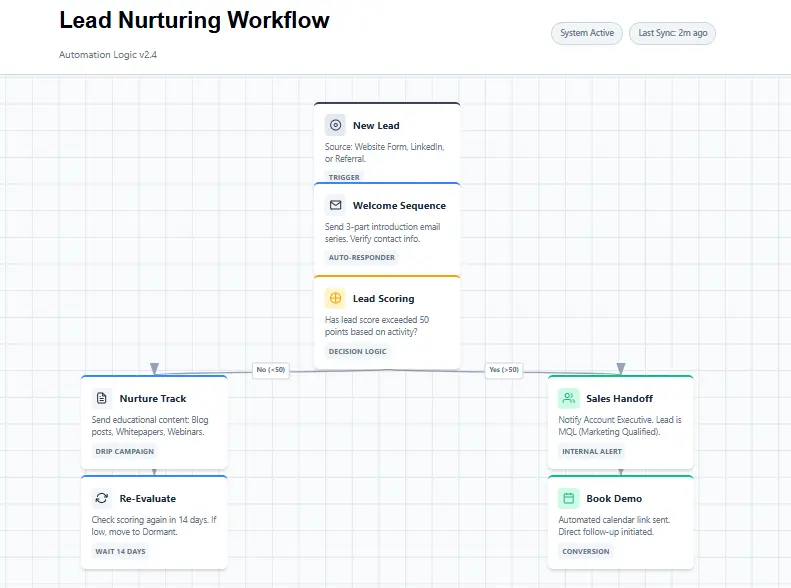
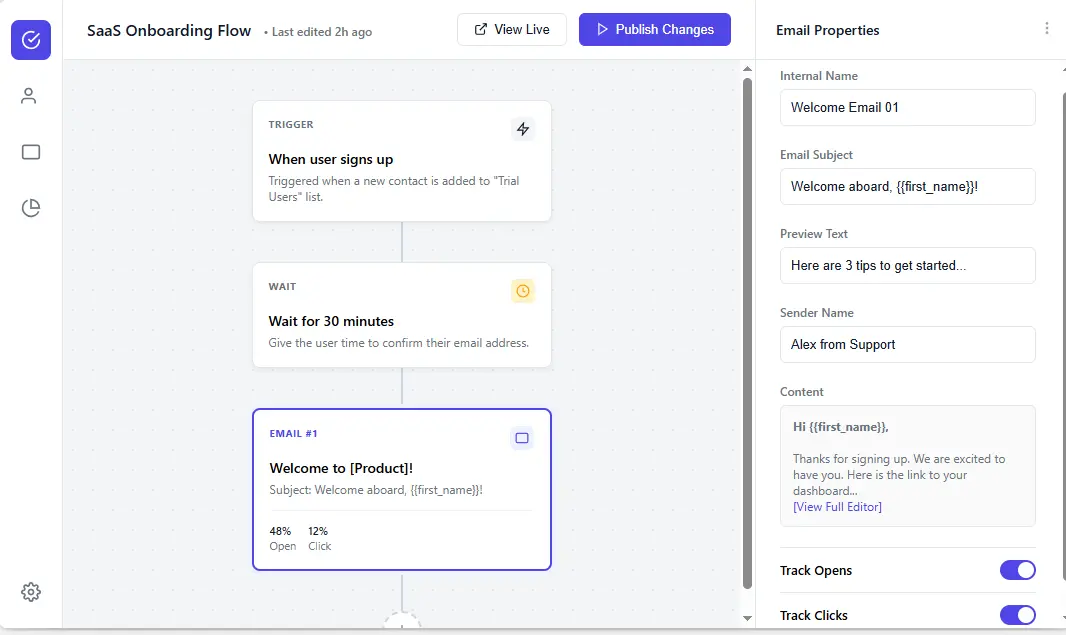
Log into your chosen tool and create the workflow. Set the entry trigger (e.g., “Form submitted”). Drag in your emails and connect them in the order you mapped out. Set the delays (e.g., “Wait 2 days before sending Email 2”). Ensure you have an “else” branch if a user buys the product mid-sequence so you stop trying to sell to them.
Step 5: Set Up Technical Authentication (SPF/DKIM)
This is a step many email marketing for beginners guides miss. You must authenticate your domain to ensure your emails don’t land in the spam folder. Go to your DNS settings and add the SPF and DKIM records provided by your email tool. This tells internet service providers that you are a legitimate sender, which is crucial for deliverability.
Step 6: Test, Launch, and Optimize
Always send a test email to yourself first. Check links, images, and mobile responsiveness. Once live, do not ignore it. Watch the open and click rates. If Email 3 has a low click rate, rewrite it. Optimization is an ongoing process, not a one-time event. This Email Marketing Automation Guide emphasizes that your first draft is rarely your best performer.
Download the Complete Email Automation Guide (Free PDF)
Download Free PDF →Need Help Setting This Up?
Get our exclusive cheat sheet delivered to your inbox.
[contact-form-7 id=”5b3800f”]Ready to automate your email marketing?
Start Now →Common Mistakes to Avoid
Even with this Email Marketing Automation Guide, errors happen. The landscape is littered with failed campaigns due to simple, avoidable blunders. Avoid these pitfalls to protect your sender reputation and your conversions.
Buying Email Lists: Never, ever buy lists. It kills your deliverability, damages your brand reputation, and is often illegal (GDPR/CAN-SPAM). Build your list organically with value.
Ignoring Mobile Users: Over 50% of emails are opened on smartphones. If your design breaks on mobile, or your font is too small, you are losing half your revenue. Always design mobile-first.
The “Set and Forget” Trap: Do not just turn on a workflow and never look at it again. Market trends change, links break, and offers expire. You must review your automated email marketing flows monthly.
Sending Too Frequently: Just because you can automate doesn’t mean you should spam people. Respect their inbox. If you send too many sales emails, you will see a spike in unsubscribe rates. Balance your promotional emails with value-packed content.
Neglecting the Subject Line: No matter how good your content is, if the subject line is weak, no one will see it. A/B test your subject lines to see what resonates with your audience. This is a critical tactic for success in any Email Marketing Automation Guide.
ROI of Email Automation
Why go through all this trouble? Because the data proves it works. Email marketing consistently generates an average ROI of $42 for every $1 spent, making it the highest ROI channel in digital marketing.
When you combine high ROI with the time-saving benefits of automation, you get a scalable growth machine. An optimized email funnel strategy acts as a 24/7 salesperson. It never calls in sick, never forgets a follow-up, and consistently delivers your message to interested prospects.
Furthermore, automation increases the Lifetime Value (LTV) of your customers. By keeping them engaged post-purchase with relevant content and upsells, you turn one-time buyers into loyal brand advocates. The investment in learning this Email Marketing Automation Guide pays dividends for years.
Consider the cost of manual labor. If you spent 10 hours a week managing emails, and you automate those tasks, you gain 40 hours a month. What could you do with that extra time? You could create more products, network, or simply enjoy life. That is the true return on investment of a solid Email Marketing Automation Guide.
Ready to automate your email marketing?
Start Now →Frequently Asked Questions
What is the best tool for email marketing for beginners?
While it depends on your specific needs, Mailchimp and Systeme.io are excellent starting points because they offer intuitive interfaces and generous free tiers. They allow you to learn the basics of lead nurturing emails without financial risk.
How long should an email sequence be?
It depends on the price point and complexity of your offer. For a low-ticket item ($10-$50), a short 3-5 day sequence often works best. For high-ticket coaching or consulting, a longer 7-14 day sequence is better to build sufficient trust and authority.
Can I use SEO tools to improve my email list?
Yes! Driving traffic to your site is the first step. Using the best SEO tools helps you capture organic search traffic, which you can then convert into email subscribers using the lead magnets described in this Email Marketing Automation Guide.
How often should I clean my email list?
You should remove inactive subscribers (people who haven’t opened an email in 6 months) at least once a quarter. This maintains high deliverability rates and ensures your open rate statistics remain accurate.
Is email automation expensive?
Not necessarily. Most email automation tools have free tiers for small lists (under 500-1,000 subscribers). As you scale, the cost increases, but the ROI typically far outweighs the monthly subscription fee.
Do I need coding skills to set this up?
Basic HTML helps for custom designs, but modern drag-and-drop builders make it easy for non-technical users. This Email Marketing Automation Guide simplifies the process so that anyone can set up a professional workflow.
What is a “drip” campaign vs. a workflow?
A drip campaign is a series of emails sent out on a fixed schedule (e.g., one per day). A workflow is more dynamic and reacts to user behavior (e.g., “Wait 2 days OR until they click this link”). Workflows are generally more effective for email funnel strategy.
Where can I find more marketing resources?
You can check out the SEORAF Blog for more insights on scaling your business and optimizing your digital presence. Also, referencing Google SEO documentation can help you understand the technical side of driving traffic.
Start Automating Your Success Today
You have reached the end of this Email Marketing Automation Guide, but your journey is just beginning. You now know the what, why, and how of automated email marketing. You have the strategy. You have the tool recommendations. You have the step-by-step plan.
The only thing missing is implementation. Do not let this knowledge go to waste. Every day you wait to set up your email marketing workflow is a day you leave money on the table.
Take action now. Join our community of smart marketers who are leveraging lead nurturing emails to dominate their niches. Check out our other resources on SEO tools to drive even more traffic to your new funnels.
Get Your Free Email Automation Blueprint
Download the proven system and start generating leads automatically.
[contact-form-7 id=”5b3800f”] Download Free PDF →