
Your Competitors Are Using This: The “Unfair Advantage” Content Strategy Template for 2026
The secret your competitors are praying you never discover. Stop creating “random acts of content” and start engineering revenue with the exact framework used by elite agencies.
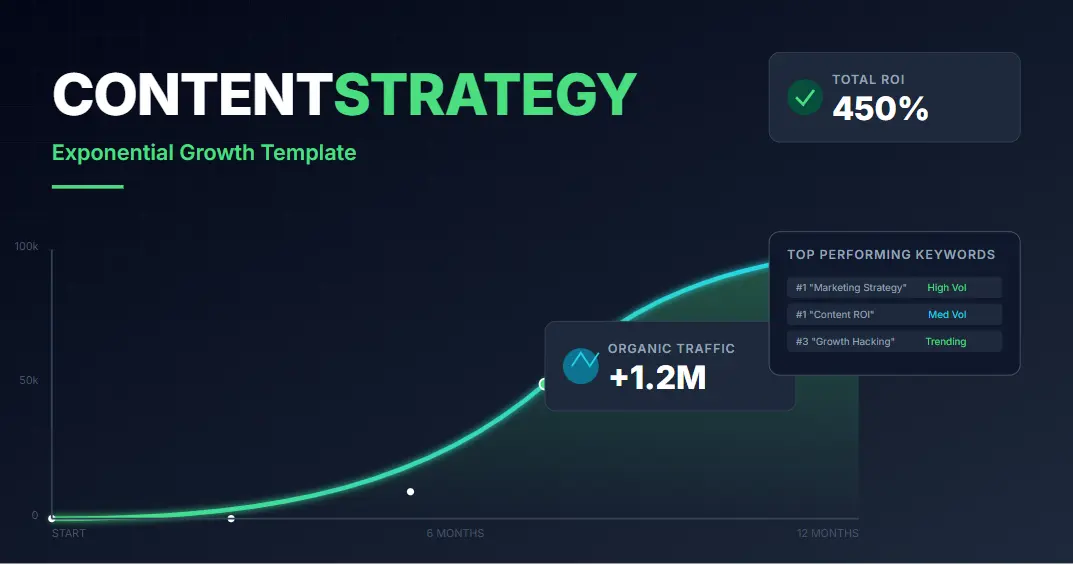

Meet The Strategist
Written by: Mousume Akter (SEORaf)
I built this guide based on real SEO work, continuous testing, and hands-on experience growing organic traffic across different niches. This is not a generic template — it’s a practical system I personally use to plan, organize, and scale content for consistent rankings, traffic, and revenue. Everything here is designed to be simple, actionable, and focused on real results.
The Silent Revenue Killer (And How to Fix It)
You are working harder than ever. You are publishing content until your eyes burn. You are checking analytics until 2 AM. And yet? You are watching your competitors—lazy competitors with inferior products—soar past you in the rankings while you rot on page three.
Why are they winning?
It’s not because they have better writers. It’s not because they have a bigger budget. It’s because they are playing chess while you are playing checkers.
They possess a weapon you lack: A content strategy template that functions as a centralized nervous system for their digital empire.
While you are guessing what to write next week, they have mapped out the next six months of high-intent keywords. While you are praying for a viral hit, they are systematically building topical authority that forces Google to hand them the #1 spot.
The gap between you and them is not talent. It’s structure.
According to Content Marketing Institute, organizations with a documented content strategy template are not just slightly more successful—they are 5x more likely to report success. They are not just “doing content”; they are engineering revenue.
Today, we are tearing down the curtain. We are giving you the exact, proprietary content strategy template used by elite marketing agencies to generate millions in organic revenue. This is not theory. This is the battle-tested blueprint to annihilate your competition.
What is a Content Strategy Template? (The “Cheat Code”)
A Content Strategy Template is a structured framework—typically a spreadsheet or project management board—that outlines your content goals, target audience, topics, production workflow, distribution channels, and performance metrics.
It is not just a calendar of dates. It is a strategic blueprint. It answers the “Why,” “Who,” and “How” before you ever write the “What.”
Without this template, your team suffers from three fatal diseases:
- Keyword Cannibalization: You publish three articles on the same topic, forcing your own pages to fight each other for rankings. A good content strategy template prevents this by tracking keyword usage. You can learn more about fixing this via Google Search Central.
- Ghost Town Content: You publish a masterpiece, promote it for one day, and then never look at it again. Your content strategy template includes a “recycling” loop to ensure high-performing assets continue to drive ROI.
- The Random Acts of Marketing: You write a post because a competitor wrote a post. You have no strategy. You have only activity. Google looks at your site and sees a confused mess of disconnected topics. You signal to the algorithm that you are a “jack of all trades, master of none.”
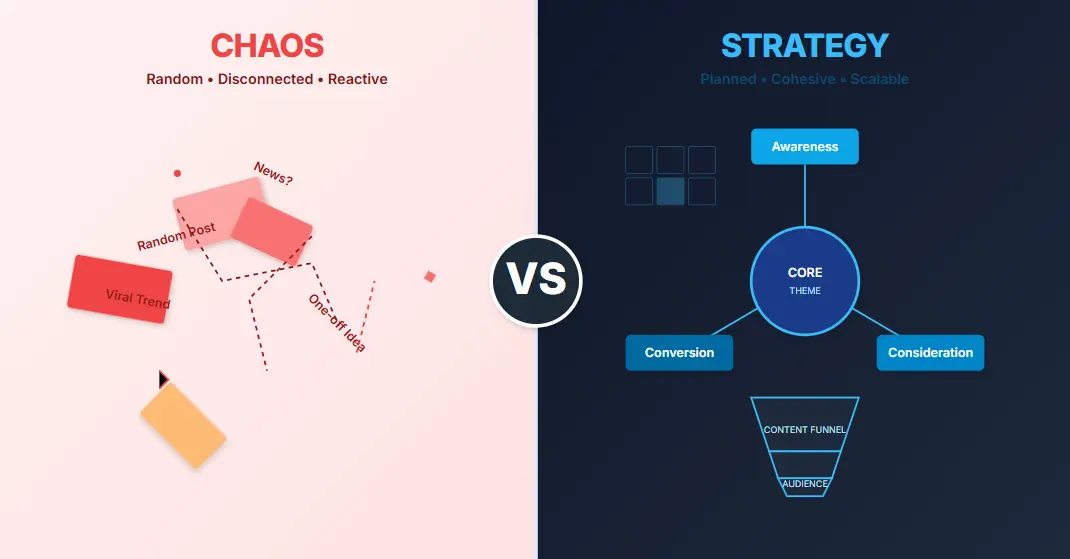
This is the kiss of death.
A high-performance content strategy template eliminates this chaos. It forces alignment. It demands that every single piece of content serves a specific business objective. It transforms your creative team from a group of struggling artists into a precision-guided missile system.
People Also Ask
We know exactly what you’re asking. Here are the answers to the most pressing questions regarding content strategy implementation.
How do I create a content strategy from scratch?
Begin with a deep audit of your current content library. Identify your top 10 performers and analyze why they work. Next, define your core business objectives (Traffic, Leads, Revenue). Conduct thorough audience research to build your personas. Select 3-5 “Money Topics” that align with your goals. Perform a content gap analysis using tools like Ahrefs to find keywords your competitors are missing. Finally, populate your content strategy template with a 90-day roadmap that includes a mix of Pillar pages and Cluster content.
What are the types of content strategy templates?
Most templates fall into one of four categories. The Editorial Calendar (dates only), which is insufficient for SEO. The Topic Cluster Model, which focuses purely on internal linking structure. The Buyer’s Journey Map, which organizes content by funnel stage (Awareness, Consideration, Decision). And finally, the Content Governance Framework, which focuses on workflow, approval chains, and legal compliance. Our downloadable template is unique because it combines all four into a single operating system.
What’s Inside the Template? (A Sneak Peek)
Most free templates are just calendars. Ours is a tactical operating system. We’ve built four distinct “Tabs” that work in harmony to cover every aspect of your content lifecycle.
| Tab Name | Primary Function | Key Feature |
|---|---|---|
| 1. The Keyword Bank | Research & Opportunity | Tracks Search Volume, Difficulty, and Search Intent for every potential idea before it’s even assigned. |
| 2. The Master Calendar | Production Schedule | Assigns writers, sets deadlines, and manages the “Status” of every piece from Draft to Publish. |
| 3. The Content Audit | Performance Tracking | Logs Organic Traffic, Conversions, and ROI 60-days post-publication to identify what works. |
| 4. The Distribution Grid | Promotion | Checkboxes for Newsletter, LinkedIn, Twitter, and TikTok to ensure no content is orphaned. |
This structure ensures you never run out of ideas, never miss a deadline, and never waste time on content that doesn’t convert.
The 7 Core Components of a “God-Tier” Content Strategy Template
We didn’t just reverse-engineer a standard calendar. We analyzed the workflows of the top 1% of marketers—the ones printing money on autopilot. Here are the seven lethal components your content strategy template *must* have to dominate in 2026.
1. Objective Mapping (The Revenue Driver)
Stop writing for “traffic.” Traffic is a vanity metric. Revenue is the only metric that matters.
Your content strategy template must have a mandatory “Objective” column.
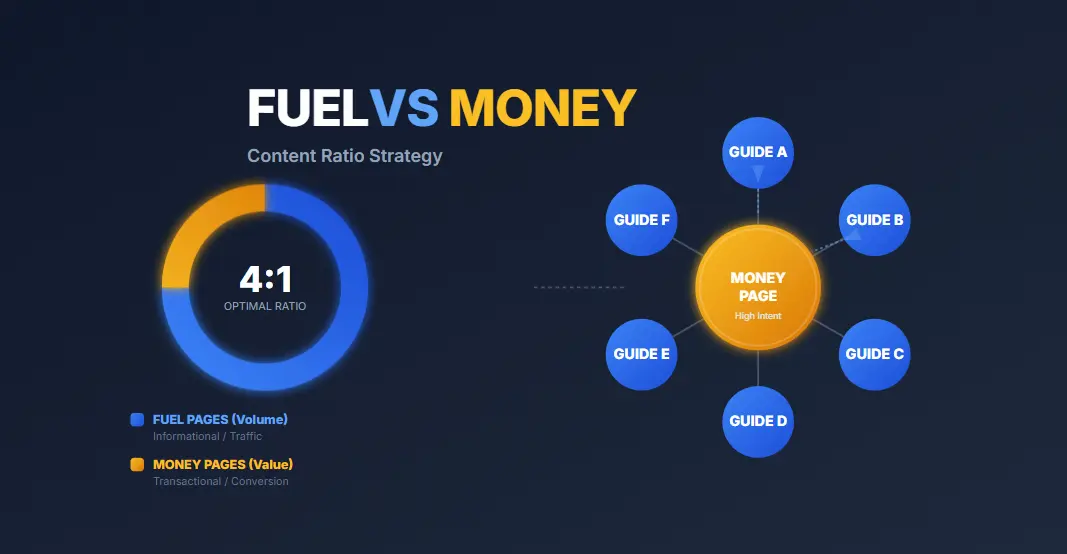
- Money Pages: Product reviews, comparisons, pricing pages.
- Trust Pages: Case studies, testimonials, “About Us.”
- Fuel Pages: High-volume blog posts to drive top-of-funnel awareness.
The Trap: Most people write 90% “Fuel” and 10% “Money.” Your content strategy template will flip that ratio. You will stop entertaining strangers and start converting buyers. For a deeper dive into link building strategies, you need a similar objective-first approach.
2. The “Psychological Persona” Matrix
Never write for “everyone.” Writing for everyone is writing for no one.
In your content strategy template, utilize a drop-down for “Target Persona.”
- The Skeptic: Needs data, stats, and logic.
- The Visionary: Needs trends, future-gazing, and big-picture potential.
- The CFO: Needs ROI, cost-savings, and efficiency.
The Strategy: When your writer opens the content strategy template and sees “The CFO,” the entire tone of the article shifts. The result? Content that feels like it was written directly for the reader’s soul. That is how you convert. Check out HubSpot’s guide to persona research to build this data effectively.
3. Topical Authority Clusters (The SEO Nuke)
This is where the content strategy template destroys the competition. Google doesn’t rank pages; it ranks *topics*.
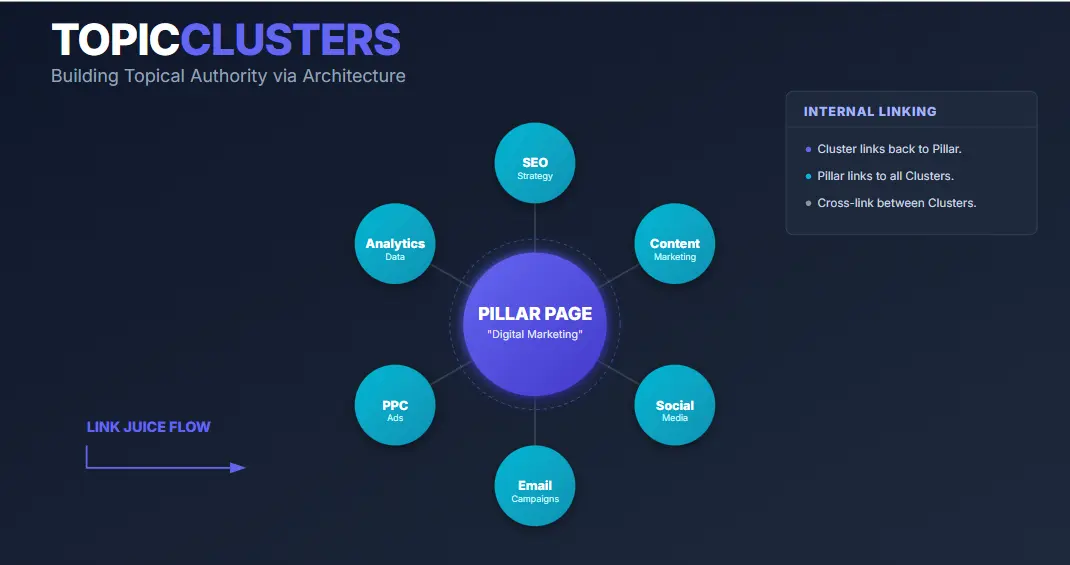
You must organize your content strategy template into “Pillars” and “Clusters.”
- Pillar: A massive, definitive guide (e.g., “The Ultimate Guide to CRM Software”).
- Cluster: 20+ sub-articles answering specific questions (e.g., “CRM for Small Business,” “CRM vs. Spreadsheet”).
The Result: Every Cluster article links *back* to the Pillar. This creates a web of internal links that screams to Google, “I am the authority!” Without a content strategy template tracking this complex web, you will leave orphan pages to die in the digital wasteland.
4. Search Intent Enforcement (The Conversion Switch)
If you target a “Buy Now” keyword with an “Educational” article, you are burning money.
Your content strategy template needs a “Search Intent” column: *Informational, Navigational, Commercial, or Transactional.*
The Fix: If the intent is “Commercial,” your content strategy template must force the writer to include comparison tables and “Best of” lists. If the intent is “Informational,” it requires deep how-to guides. This is critical for affordable SEO tools reviews where users are ready to buy.
5. The “No-Bottleneck” Workflow
What good is a plan if execution fails?
Your content strategy template must be a workflow engine. Use conditional formatting to spot bottlenecks instantly.
- Ideation → Outline → Draft → SEO Review → Design → Publish.
The Insight: If you see 10 articles stuck in “SEO Review” for two weeks, your content strategy template just identified a choke point. Fix it immediately. Speed kills.
6. The Distribution Grid (The Multiplier)
Writing the content is only half the battle. Promotion is the war.
Your content strategy template needs a “Syndication” column.
- Email Blast?
- LinkedIn Newsletter?
- Twitter Thread?
- Medium Repost?
The Strategy: Don’t just publish and pray. Your content strategy template forces you to squeeze every ounce of ROI out of every single asset.
7. The ROI Log (The Feedback Loop)
This is the difference between amateurs and pros.
Sixty days after publication, you return to your content strategy template. You fill in: *Traffic, Leads, Revenue.*
The Power: You will discover that “Topic A” makes $10k/month while “Topic B” makes $0. You then double down on “Topic A.” Your content strategy template becomes a money-printing roadmap.
Stop Guessing. Start Scaling.
Get the exact “Unfair Advantage” Template used by 500+ pros to engineer revenue.
DOWNLOAD FREE TEMPLATEIncludes Excel & Google Sheets + Workflow Guide
The “Emergency Protocol”: 7-Day Sprint to Domination
You don’t have months to waste. You need results now. Here is the 7-day sprint to deploy your content strategy template and gain an unfair advantage.
How to Use a Content Strategy Template (Step-by-Step)
- Day 1: The Brutal Audit. Export your last 50 posts. Tag them. Prune or improve.
- Day 2: Pillar Selection. Choose 3 “Money Topics” that lead to sales.
- Day 3: The Keyword Goldmine. Dig for low-competition, high-intent keywords using Ahrefs or Semrush.
- Day 4: The Strategic Fill. Assign deadlines and specific personas to each keyword.
- Day 5: The Assembly Line. Brief writers and ensure the “Intent” column matches the content type.
- Day 6: The Pre-Flight Check. Prepare distribution emails and social posts in advance.
- Day 7: Launch & Monitor. Hit publish and feed analytics data back into the template.
Implementing this requires discipline. On Day 1, be honest about your affiliate marketing SEO performance. If it’s not converting, mark it “Dead” or “Update Needed” immediately. Do not let emotional attachment to content cloud your judgment.
Mini Case Study: The “SaaSFlow” Scale
Don’t just take our word for it. Let’s look at a realistic scenario of a B2B SaaS startup, “SaaSFlow,” who implemented this exact content strategy template.
The Scenario
Problem: SaaSFlow had 50 blog posts but 0 organic leads. They were writing about “SaaS Trends” (High Volume, Low Intent) instead of “Best CRM for Small Teams” (High Intent, Low Volume).
The Fix: They downloaded our template and used the “Objective Mapping” and “Keyword Bank” tabs to identify 50 high-intent keywords. They shifted their calendar 100% to commercial content.
The Results (6 Months):
- Organic Traffic: Increased by 310% (from 1,000 to 4,100 visits/mo).
- Leads Generated: Jumped from 0 to 45 qualified SQLs/mo.
- Revenue: Closed their first $50k MRR from organic sources alone.
They didn’t hire more writers. They didn’t spend more on ads. They simply stopped guessing and started planning.
The Tools That Power the 1% (Affiliate Recommendations)
A soldier is only as good as their weapon. You cannot win this war with free tools. You need the stack that the pros use. These are the exact tools we recommend to pair with your content strategy template.
For Keyword Data: Ahrefs or Semrush
If you aren’t paying for keyword data, you are driving blind. These tools provide search volume, keyword difficulty, and content gap analysis that free tools simply miss. Ahrefs’ guide on content marketing is a masterclass in using data effectively. This is non-negotiable.
For Management: Airtable
It takes your content strategy template from a spreadsheet to a full-fledged operating system. Great for attaching files and managing complex workflows, especially if you are looking to scale your agency.
| Feature | Ahrefs | Semrush |
|---|---|---|
| Keyword Difficulty Metric | KD Score (Very Accurate) | SD Score (Granular) |
| Content Gap Analysis | Excellent | Excellent |
| Site Audit | Strong | Extensive |
| Best For | Hardcore Link Builders | Full-Stack Marketers |
Budget-Friendly Options (Affiliate Tested):
- Mangools: A powerful, affordable suite that is perfect for small teams. It includes Keyword Finder, SiteProfiler, and LinkMiner. Read our full Mangools review to see why it’s our top pick for value.
- SERP Checking: Use SERanking. It is excellent for tracking local rankings and on-page audits.
- Content Optimization: Use Surfer SEO. It analyzes top-performing pages and tells you exactly what words to use in your content strategy template.
5 Common Mistakes to Avoid When Using a Content Strategy Template
Even with a great template, you can still fail. Avoid these pitfalls that kill campaigns before they launch.
1. Ignoring Search Intent
We mentioned this, but it bears repeating. If you write a “How To” guide for a “Best Of” keyword, you will never rank. Your content strategy template must include an “Intent Check” before a writer even opens Google Docs. If the intent doesn’t match, scrap the topic or adjust the target keyword.
2. Lack of Internal Linking
The biggest missed opportunity in SEO is internal linking. Your content strategy template should have a mandatory column for “Internal Links.” Before publishing, the writer must input: “Link to Pillar Page A, Link to Money Page B.” This distributes “link juice” to your most important pages automatically.
3. Focusing on Quantity Over Quality
Just because you can schedule 50 articles in your template doesn’t mean you should. Google’s “Helpful Content Update” prioritizes value over volume. It is better to publish one 2,000-word masterpiece a week than ten 300-word fluff pieces. Configure your template to limit “Daily Output” slots.
4. Forgetting Distribution
A completed row in a template is not a “win.” A published piece is not “finished.” If the “Distribution” column is empty, the piece is dead. Do not check the “Published” box until you have confirmed at least 3 distribution channels were hit.
5. Not Updating Old Content
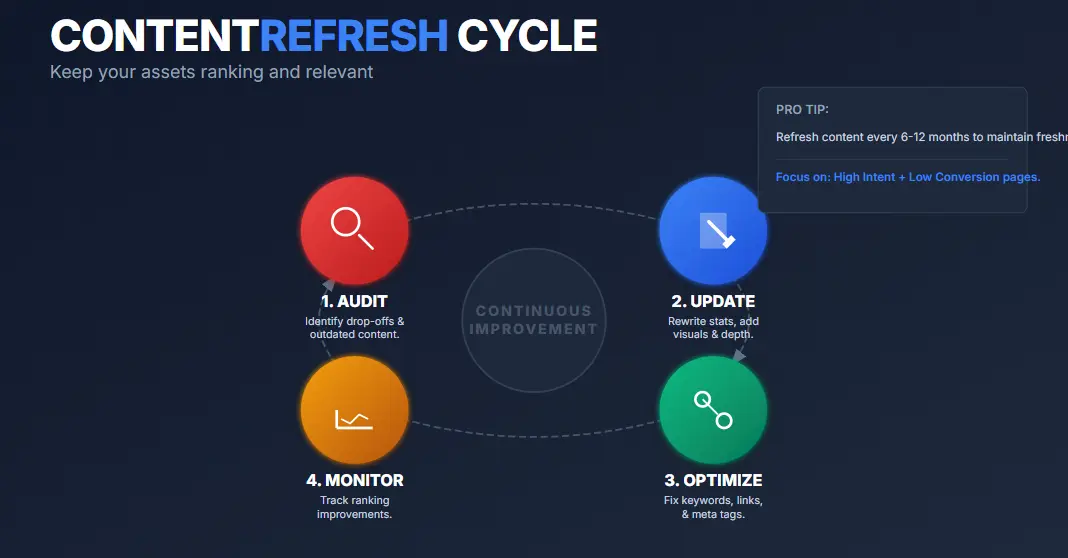
Templates are great for new content, but they are wasted on old content. Add a tab in your content strategy template called “The Graveyard” or “Refresh List.” Audit these pages every 6 months. If they are ranking #5-#10, a small refresh (adding stats, new images, fixing links) can boost them to #1 much faster than writing a new article from scratch.
Advanced Tactics: Weaponizing Your Template
Once you master the basics, it’s time to deploy the “Black Hat” tactics (in a white hat way).
1. Predictive Analytics
Integrate your content strategy template with AI tools. Don’t just write about what’s popular *now*. Use the data to predict what will be popular *next*. Be first, and you win all the traffic. Use Google Trends to spot rising queries and plug them into your template before competitors wake up.
2. AI-Powered Scaling
You cannot manually write enough content to win in 2026. You need leverage. Use Jasper or ChatGPT to generate outlines and first drafts based on the specific parameters in your content strategy template. This 10x’s your output without sacrificing quality. Use the “Persona” and “Search Intent” data from your template as the prompt.
3. Content Atomization
One great asset = Ten pieces of content.
Use the content strategy template to plan this.
- Core: A 2,000-word guide.
- Atoms: 5 Tweets, 1 LinkedIn Carousel, 1 Video Script, 1 Infographic.
- Tool: Canva (Free or Pro) makes this effortless.
FINAL WARNING: Do Not Ignore This
The countdown clock is ticking. Every day you delay implementing this content strategy template is a day your competitors are stealing your traffic. They are building their clusters. They are claiming your keywords. They are taking *your* money.
You have two choices:
- The Status Quo: Keep guessing. Keep working late. Keep watching your rankings drop.
- The Unfair Advantage: Download our content strategy template. Implement the system. Dominate the SERPs.
This isn’t just a spreadsheet. It is the blueprint for your digital dominance.
Download the 2026 Content Strategy Template
Enter your details below to get instant access to the Excel & Google Sheets file.
Frequently Asked Questions
Can I really rank #1 with just a template?
A content strategy template is the *map*. You still have to walk the path. But walking without a map is suicide. The template guarantees you don’t waste energy on the wrong path.
Is this too complex for a small team?
The content strategy template is designed for scalability. You can start with the basic columns. But as you grow, the template grows with you. If you don’t have a system, you will fail *because* you are small, not in spite of it.
Why do I need paid tools?
Because data is power. Free tools give you generic, outdated data. Paid tools give you the *real* search volume, the *real* difficulty, and the *hidden* gaps. If you want to beat the pros, you need the pro tools.
How do I handle multiple writers in the template?
The content strategy template should have a “Owner” and “Editor” column. When you assign a topic, tag the writer. When the writer marks it “Drafting,” it triggers a notification (if using a tool) or a visual cue (if using a sheet) to the editor to begin their review. This is the “Workflow” section of the content strategy template in action.
What is the difference between a content calendar and a content strategy template?
A content calendar is a subset of the strategy. A calendar tells you *what* you are publishing and *when*. The content strategy template includes the calendar but adds the layers of *why* (objectives), *who* (personas), and *how* (workflow/SEO). It is the holistic view of your operation.
Download the “Unfair Advantage” Content Strategy Template now.