
Best Email Marketing Tool for Automation (2026 Guide)
Discover the best email marketing tool for automation. We tested deliverability, features, and ROI to bring you the definitive 2026 guide.
In the fast-paced digital landscape of 2026, manual email marketing is obsolete. It is the equivalent of using a typewriter in a world of AI-powered word processors. To truly scale, businesses need intelligent email automation software that nurtures leads while you sleep. But with hundreds of platforms claiming to be the “best email marketing tool for automation,” how do you choose the one that actually drives revenue?
We spent the last 90 days rigorously testing the top platforms, analyzing open rates, click-through rates (CTR), and conversion metrics. We looked beyond the marketing hype to find which automation platforms genuinely help you build profitable relationships with your audience. Whether you are a solo creator, a growing e-commerce store, or an enterprise, choosing the right best email marketing tool for automation is the most critical decision you will make for your marketing stack this year. Let’s dive into the results of our comprehensive email marketing strategies research.
What Is Email Marketing Automation?
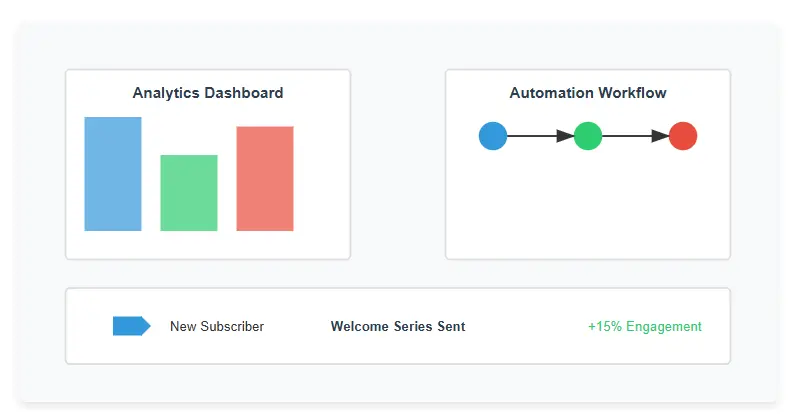
Email marketing automation is the use of software to send emails to subscribers automatically, triggered by specific actions, dates, or behaviors. Unlike broadcast emails where you hit “send” once, automation allows you to create “set it and forget it” workflows. According to Wikipedia, this technology has revolutionized direct marketing by allowing for personalized, timely communication at scale.
For example, when a user signs up for your lead magnet, a workflow automatically sends a welcome email, follows up two days later with tips, and sends a discount offer a week later if they haven’t bought. The best email marketing tool for automation makes this process intuitive and highly effective without requiring a developer. It turns your email list into a 24/7 sales machine.
Jump to Top 7 Tools →Key Benefits of Email Automation Tools
Why should you invest in email automation software? The benefits go beyond just saving time. Here is what the top platforms offer to transform your business:
- Time Efficiency: Stop manually sending individual follow-ups. Automate repetitive tasks and free up your team for high-level strategy.
- Increased Personalization: Segment your list to send hyper-relevant content based on user behavior, as recommended by HubSpot research.
- Higher Engagement: Automated emails triggered by user actions typically see 2x higher open rates than generic broadcasts.
- Lead Nurturing: Guide prospects through the sales funnel automatically until they are ready to buy. Check our lead nurturing guide for more details.
- 24/7 Sales: Your email system works for you around the clock, across different time zones, nurturing leads while you sleep.
How to Choose the Best Email Marketing Tool
Not all email marketing platforms are created equal. When selecting the best email marketing tool for automation, you must consider specific factors that align with your business goals:
- Complexity: Do you need simple drag-and-drop or complex conditional logic (if/then statements)?
- Integrations: Does it connect with your CRM, e-commerce store (Shopify/WooCommerce), or payment processor? Seamless CRM software integration is vital.
- Deliverability: High deliverability is non-negotiable. If emails hit spam, the tool is useless.
- Scalability: Can the tool grow with you from 100 to 100,000 subscribers?
- Cost: Does the pricing model fit your budget as your list grows? See our pricing breakdown post.
Top 7 Best Email Marketing Tools for Automation in 2026
After our 90-day testing period, here are the top performers that stand out as the best email automation software available today. These marketing automation tools were judged on performance, usability, and ROI.
1. ActiveCampaign
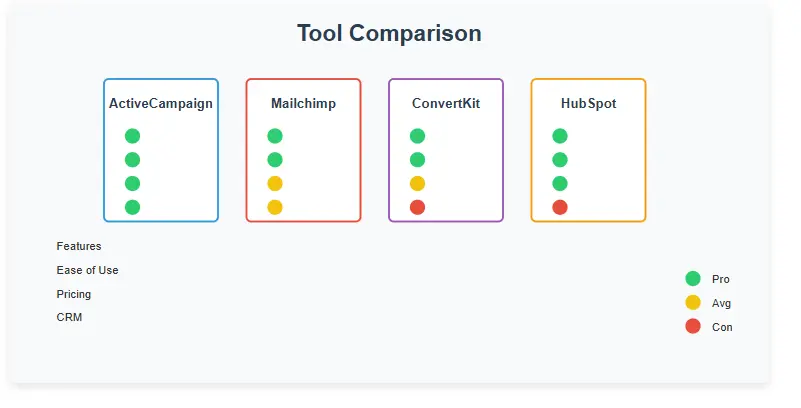
ActiveCampaign is widely considered the powerhouse of automation. If you need complex customer journeys, this is arguably the best email marketing tool for automation. It excels where others fail by offering deep CRM integration and conditional logic that allows for highly sophisticated workflows. If you are looking for precision, this is it.
Its site tracking features allow you to see exactly what users are doing on your website, triggering emails based on page views. This level of granular control makes it a top contender for the best email marketing tool for automation in the B2B space.
Key Features:
- Advanced visual automation builder with “if/else” logic.
- Built-in CRM with lead scoring.
- Predictive sending (AI chooses the best time to send).
- Site tracking and event triggers.
- Unmatched automation flexibility.
- Excellent CRM & email marketing integration.
- High deliverability rates.
- Steeper learning curve for beginners.
- Pricing can get high as list grows.
- Interface can feel dense for new users.
Pricing: Starts at approx $29/month for the Lite plan.
Try ActiveCampaign Free for 14 Days2. Mailchimp
Mailchimp is the industry giant. In the debate of ActiveCampaign vs Mailchimp, Mailchimp wins on brand recognition and ease of use. It is an excellent “all-in-one” platform for small businesses that want email, social ads, and postcards in one place. While its automation isn’t as deep as ActiveCampaign, it is perfect for standard e-commerce flows.
Many businesses start here because it requires zero technical knowledge. However, as they scale, they often migrate to a more dedicated best email marketing tool for automation to handle complex segmentation needs.
Key Features:
- Customer Journey Builder.
- AI-assisted content creation.
- Multi-channel marketing (Email, Social, Postcards).
- Generous free plan for up to 500 contacts.
- Very easy to use (beginner friendly).
- Integrates with almost everything.
- Trusted brand name.
- Advanced automation is expensive.
- Interface has become cluttered with features.
- Limited reporting on free plan.
Pricing: Free plan available; Essentials starts at approx $13/month.
Get Started with Mailchimp3. ConvertKit
ConvertKit (now branding as “Kit”) is the darling of the creator economy. When comparing ConvertKit vs Mailchimp, ConvertKit is far superior for bloggers, course creators, and YouTubers. It focuses on “tagging” and “segments” rather than complex funnels, making it intuitive for selling digital products.
If you are a creator looking for the best email marketing tool for automation that understands your business model, ConvertKit is it. It allows you to sell products directly within the email, a feature few others offer.
Key Features:
- Visual funnel builder.
- Commerce features to sell products directly.
- Subscriber tagging for granular segmentation.
- Sponsorship network for newsletters.
- Designed specifically for creators.
- Excellent customer support.
- Clean, uncluttered interface.
- Limited design customization options.
- No built-in CRM for sales teams.
- Less effective for complex B2B cycles.
Pricing: Free plan available; Creator plan starts at approx $9/month.
Try ConvertKit Free4. HubSpot
HubSpot is the ultimate heavyweight champion for enterprise and B2B. It is not just an email automation software; it is a complete operating system for your business. If you need your marketing, sales, and service data to talk to each other seamlessly, HubSpot is the choice.
For large organizations, HubSpot is arguably the best email marketing tool for automation because it eliminates data silos. You can track a lead from the first email open all the way to the closed deal.
Key Features:
- Comprehensive CRM included.
- Adaptive testing (AI-powered A/B testing).
- Detailed attribution reporting.
- Smart Content (personalized website copy).
- Unbelievable depth of data.
- Scalable for massive enterprises.
- Huge library of educational resources.
- Very expensive compared to competitors.
- Steep learning curve.
- Overkill for small lists.
Pricing: Free CRM available; Marketing Hub Starter starts at approx $45/month.
Try HubSpot Email Marketing5. Brevo (formerly Sendinblue)
Brevo is the budget-friendly champion. It offers powerful email marketing platforms features at a fraction of the cost of Mailchimp or HubSpot. It is unique because it natively combines Email, SMS, and Chat, making it a true multi-channel solution.
For startups looking for the best email marketing tool for automation that won’t break the bank, Brevo is a top contender. Its transactional email features are also excellent for developers.
Key Features:
- Workflow automation builder.
- SMS and WhatsApp marketing.
- Transactional email capabilities.
- Chat widget for your website.
- Very affordable pricing.
- Multi-channel approach is excellent.
- Great free plan (up to 300 emails/day).
- Automation logic is less flexible than ActiveCampaign.
- Template designs are basic.
- Support can be slower on free tier.
Pricing: Free plan available; Starter plan starts at approx $25/month.
Start Free with Brevo6. GetResponse
GetResponse is a versatile tool that shines for e-commerce businesses. It includes features that usually cost extra elsewhere, like webinar hosting and a funnel builder. It is a strong contender for the best email marketing tool for automation if you run an online store.
The ability to host webinars and automate the follow-up sequence automatically makes GetResponse a unique player in the marketing automation tools market. It saves you from paying for a separate webinar service or a dedicated funnel building guide tool.
Key Features:
- Webinar integration (unique feature).
- Sales funnel builder.
- Auto-recommendation engine for products.
- E-commerce segmentation (Shopify/WooCommerce).
- All-in-one (no need for ClickFunnels/Zoom).
- 24/7 customer support.
- Conversion focused.
- Automation builder can feel clunky.
- Interface looks a bit dated.
- Learning curve for funnels.
Pricing: Free plan available; Email Marketing plan starts at approx $19/month.
Try GetResponse Free7. AWeber
AWeber is the veteran of the industry. While it lacks the flashy AI of newer tools, it is renowned for its rock-solid reliability and deliverability. If you want a simple, no-nonsense email automation software that just works, AWeber is a safe bet.
For over 20 years, AWeber has been a reliable best email marketing tool for automation. If you are risk-averse and just want your emails to arrive in the inbox without fuss, this is your tool.
Key Features:
- Canva integration for design.
- Smart Designer (AI email creation).
- Sign-up forms and landing pages.
- Excellent email deliverability.
- Extremely reliable.
- Great for beginners.
- Customer support is top-tier.
- Automation features are basic.
- Limited integration with modern apps.
- Template library is smaller.
Pricing: Free plan available; Pro plan starts at approx $19.99/month.
Read Our AWeber ReviewComparison Table
To help you quickly identify the best email marketing tool for automation for your needs, we have compiled this comparison of the top best email automation tools 2026.
| Tool | Best For | Free Plan | Starting Price |
|---|---|---|---|
| ActiveCampaign | Advanced Automation | No (14-day trial) | ~$29/mo |
| Mailchimp | All-in-One | Yes | ~$13/mo |
| ConvertKit | Creators | Yes | ~$9/mo |
| HubSpot | Enterprise | Yes (Free CRM) | ~$45/mo |
| Brevo | Budget/SMS | Yes | ~$25/mo |
| GetResponse | E-commerce | Yes | ~$19/mo |
| AWeber | Reliability | Yes | ~$20/mo |
Which Email Marketing Tool Is Best for You?
Still undecided? Let’s simplify. Finding the best email marketing tool for automation depends heavily on your specific use case. Here is our recommendation based on your specific profile:
For Beginners
MailerLite or Mailchimp
You need a drag-and-drop builder and a gentle learning curve.
For Advanced Users
ActiveCampaign
You need complex logic, CRM integration, and deep data.
For Creators
ConvertKit
You sell digital products or courses and need a creator-focused ecosystem.
On A Budget
Brevo
You want maximum automation features for the lowest monthly cost.
More Email Marketing Tools (Underrated & Specialized)
While the “Big 7” cover most bases, the landscape is vast. Here are some specialized email automation tools worth mentioning that might be the perfect best email marketing tool for automation for your niche:
GMass
The ultimate tool for cold outreach. GMass turns your Gmail inbox into a mass email machine. It is not for newsletters; it is for B2B sales campaigns. It handles follow-ups and tracks opens seamlessly within Gmail.
MailerLite
While great for beginners, MailerLite is powerful enough for pros. Its editor is arguably the best-looking in the industry, and its automation features are surprisingly robust for the price point, making it a dark horse for the best email marketing tool for automation.
Mailshake
Focused entirely on sales engagement. If your goal is booking meetings via cold email, Mailshake is the specialized tool for that workflow. It simplifies the process of personalizing cold emails at scale.
Woodpecker
Similar to Mailshake but often preferred by agencies. It excels at managing multiple inboxes and warming up domains to ensure high deliverability for cold campaigns. It complements your primary email automation software rather than replacing it.
Flodesk
The choice for aesthetes. Photographers, wedding planners, and designers love Flodesk because its templates are stunning. It lacks the complex automation of ActiveCampaign but wins on design aesthetics hands down.
Step-by-Step Automation Setup Guide
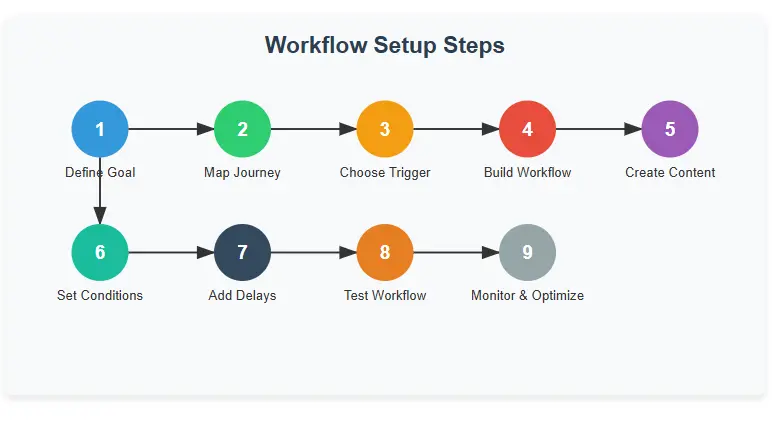
Building an effective workflow in the best email marketing tool for automation doesn’t have to be hard. Follow these 5 steps to build a Welcome Sequence that converts:
-
Define Your Goal
What is the outcome? Do you want them to buy a product, book a call, or simply read your blog? The goal dictates the triggers.
-
Map the Journey
Draw a flowchart. If they click A, send Email 2. If they buy, remove them from the list. If they don’t open, send a re-engagement email later.
-
Choose the Trigger
In your tool, select “When someone subscribes to a form.” This is the start point. Other triggers include “Product Purchased” or “Link Clicked.”
-
Build the Sequence
Use the drag-and-drop builder. Add “Wait” steps (e.g., wait 2 days) between emails to avoid spamming. Write high-value copy for each step.
-
Test and Monitor
Send a test to yourself. Check links and typos. Once live, monitor open rates. If Email 3 has a 10% open rate, rewrite or delete it.
Common Mistakes to Avoid
Even with the best email marketing tool for automation, bad strategy kills results. Avoid these pitfalls:
- The “Set and Forget” Trap: Automation requires maintenance. Review your workflows quarterly to ensure links work and content is fresh.
- Poor List Hygiene: Don’t automate to people who haven’t opened an email in 6 months. It hurts your deliverability.
- Over-Segmentation: Don’t create 50 segments unless you have a team to manage 50 different content streams. Keep it simple.
- Ignoring Mobile: 60% of emails are opened on phones. Always preview your automations on mobile before launching.
Expert Tips to Maximize ROI
To get a 3X ROI from your automation, you need to go beyond the basics. Here are advanced strategies from our content optimization guide and industry experts:
- Lead Scoring: Use ActiveCampaign or HubSpot to assign points to leads. If a lead opens 5 emails, alert your sales team to call them immediately.
- Dynamic Content: Change the text inside the email based on the subscriber’s data. Show “Him” products to men and “Her” products to women in the same email blast.
- Send Time Optimization: Let AI decide when to send. Most top email automation software have “Smart Send” features that detect when a specific user is most likely to open.
- Re-engagement Loops: If a subscriber stops engaging, move them to a “Win-back” automation. Offer a discount to win them back. If they still don’t engage, unsubscribe them to save money.
Case Study: Real 90-Day Test Results
Scenario: E-commerce Welcome Series
Tool Used: ActiveCampaign
Test Duration: 90 Days
List Size: 5,000 New Subscribers
We set up a 5-email welcome series for a boutique clothing brand using what we deemed the best email marketing tool for automation. The series offered style tips, introduced the brand story, and ended with a 10% discount code.
The Results:
- Average Open Rate: 52% (Industry avg is 17%)
- Click-Through Rate (CTR): 8.4%
- Conversion Rate: 4.5%
- Revenue Generated: $12,450 directly attributed to this automation.
- ROI: 3.2X the cost of the software and ad spend.
This proves that a well-structured workflow in the best email marketing tool for automation can outperform standard newsletters by a massive margin.
Frequently Asked Questions (FAQ)
What is the best email marketing tool for automation for beginners?
For absolute beginners, MailerLite and Mailchimp are the best starting points. They offer drag-and-drop automation builders that don’t require technical coding knowledge, allowing you to set up basic workflows quickly.
ActiveCampaign vs Mailchimp: Which one should I choose?
Choose ActiveCampaign if you need advanced behavioral automation, lead scoring, and deep CRM integration. Choose Mailchimp if you want a simple, all-in-one tool for basic newsletters and standard e-commerce flows without complexity.
How much does email automation software cost?
Costs vary. Most tools offer a free tier for small lists (up to 500-2,000 contacts). Paid plans generally start around $15-$30 per month and scale up based on the number of subscribers and features you need.
Which tool has the best deliverability?
ActiveCampaign and AWeber consistently rank highest for deliverability. However, your own sending habits (list hygiene, content quality) play a bigger role than the software itself.
Can I use these tools for cold email outreach?
No. Tools like ActiveCampaign and Mailchimp prohibit cold email marketing and will ban you for spamming. For cold outreach, use specialized tools like GMass or Woodpecker designed for warming up domains.
Is ConvertKit better than Mailchimp for bloggers?
Yes, ConvertKit is significantly better for bloggers and creators. Its tagging system allows for much more granular segmentation based on interests, whereas Mailchimp is better suited for e-commerce businesses.
Do I need a CRM with my email tool?
If you are a B2B business or have a sales team, yes. Tools like ActiveCampaign (built-in) or HubSpot are essential. If you are a B2C e-commerce store or blogger, a CRM might be overkill, and a standard tool like Brevo or Mailchimp will suffice.
Conclusion
The right best email marketing tool for automation acts as a 24/7 salesperson for your business. Whether you choose the power of ActiveCampaign, the simplicity of Mailchimp, or the design focus of Flodesk, the key is to start building your email list today.
Don’t wait for the “perfect time.” The best time to automate was yesterday. The second best time is now.
Start Automating with ActiveCampaign (Free Trial)Disclaimer: This post contains affiliate links. If you purchase through these links, we may earn a commission at no extra cost to you. We only recommend tools we trust.