
Local SEO Case Studies (2026): Real Business Growth, Ranking Strategies & Traffic Results
In the rapidly evolving digital landscape of 2026, the gap between thriving local businesses and those struggling to survive is visibility. It is no longer enough to simply “have a website.” With the proliferation of AI-driven search, conversational voice queries, and hyper-personalized results, the competition for the “Local Pack” is fiercer than ever. If you want to succeed, you need a robust Local SEO strategy guide that cuts through the noise.
If you are a business owner or marketer, you have likely encountered the frustration of the “invisible business” paradox. You offer superior products, employ a skilled team, and provide excellent service, yet your digital storefront remains empty. Meanwhile, competitors with inferior offerings but better digital strategies siphon off your potential revenue. Understanding the nuances of Google 3 pack ranking is no longer optional; it is the lifeline of your business.
The solution is not guesswork; it is data-driven execution. To truly understand how to conquer local search in 2026, we must look at the evidence. We have analyzed Local SEO Case Studies across seven diverse industries—from dentistry to eCommerce—to uncover the exact mechanisms driving growth today.
This comprehensive guide is not about theory. It is about application. We will dissect these Local SEO Case Studies to reveal specific ranking strategies, traffic results, and the step-by-step frameworks you can steal to replicate their success.
What is Local SEO? An Authoritative Definition (2026 Update)
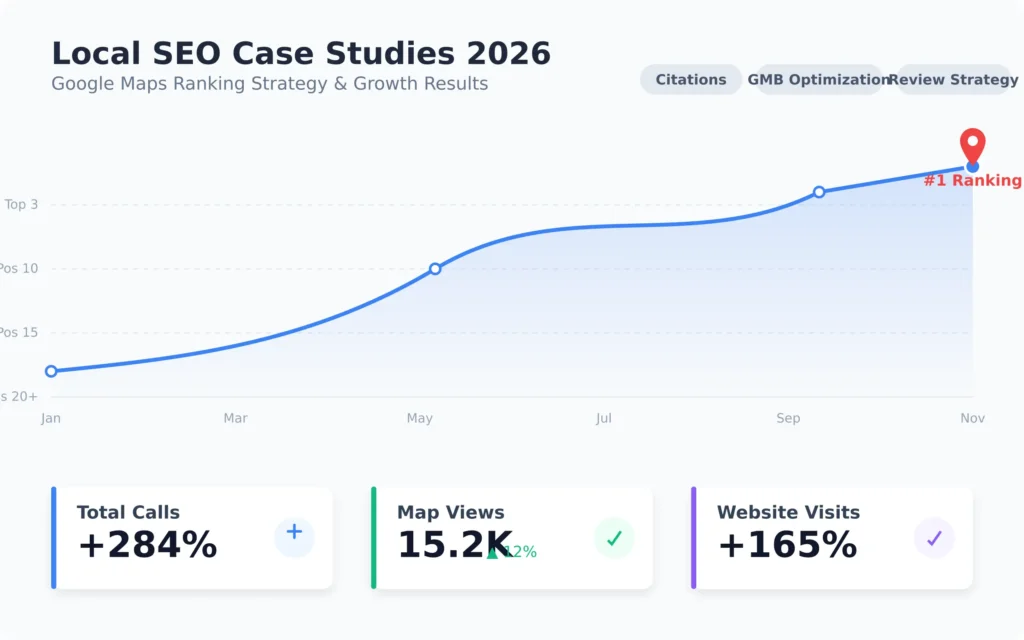
Local SEO (Search Engine Optimization) is the strategic process of optimizing your online presence to attract more business from relevant local searches performed on Google and other search engines. Unlike traditional SEO, which focuses on national or global visibility, Local SEO targets “near me” queries and location-specific intent (e.g., “emergency plumber in Austin”).
In 2026, the definition has expanded. Local SEO is no longer just about Google Maps. It encompasses:
- Hyper-local Relevance: Optimizing for neighborhoods, landmarks, and specific street corners.
- Entity-Based Optimization: Ensuring Google understands your business as a distinct entity (knowledge graph) rather than just a webpage.
- AI Readiness: Structuring data so AI Overviews and voice assistants can easily ingest and recommend your business.
The three core pillars remain Proximity, Relevance, and Prominence, but the weighting of these factors has shifted significantly toward Prominence (trust and authority) as Google combats spam, a trend clearly visible in our Local SEO Case Studies.
AI Overview Optimization in Local SEO (2026)
Before diving into the Local SEO Case Studies, we must address the elephant in the room: AI Overviews. In 2026, Google’s AI-generated summaries at the top of search results capture a significant portion of clicks. To appear here, your content must be structured for machine reading, not just human reading.
Optimizing for AI Overview involves four key elements:
- Entity Signals: Use clear NLP (Natural Language Processing) entities. Don’t just say “we fix teeth.” Say “Our Dentist in [City] provides root canals and veneers using CEREC technology.”
- Structured Data: Implementing valid Schema markup is non-negotiable. AI relies heavily on JSON-LD to understand relationships between your business, services, and reviews.
- E-E-A-T (Experience, Expertise, Authoritativeness, Trustworthiness): AI models prioritize sources that demonstrate real-world experience. Case studies, author bios, and genuine reviews are weighted heavier than ever.
- Engagement Metrics: If users click your link from an AI Overview and stay, Google learns your content satisfied the intent. High dwell time signals authority to the AI.
These are the specific tactics highlighted in our Local SEO Case Studies to secure the coveted AI Overview spot.
Why These Local SEO Case Studies Matter: The E-E-A-T Factor
Google’s Quality Rater Guidelines heavily emphasize E-E-A-T. When you analyze Local SEO Case Studies, you are looking at proof of Experience.
Theory is speculative. Results are factual. By studying these local SEO success case studies, you can bypass the trial-and-error phase that drains marketing budgets. These case studies demonstrate how algorithm updates (like the 2025 “Volcano” update) impacted real businesses and how they recovered. They provide the ROI data necessary to convince stakeholders that local business SEO growth is a quantifiable investment, not an expense.
7 Data-Driven Local SEO Case Studies (Local SEO Case Studies 2026)
Below, we present seven detailed Local SEO Case Studies. These real local SEO case studies represent a unique niche and challenge, illustrating how a tailored Google Maps ranking strategy can lead to explosive growth. For further reading on organic growth, you can View more SEO case studies on our main blog.
Case Study 1: Analyzing a Local SEO Case Study in The “Invisible” Dental Practice
Industry: Healthcare/Dentistry
Location: Suburban Austin, Texas
Goal: Rank for “Emergency Dentist” and “Invisalign Provider.”
The Before Scenario
This 5-year-old practice had excellent clinical skills but a digital presence stuck in 2010. They were ranking on Page 2 for all high-volume keywords. Their Google Business Profile (GBP) was unclaimed, and data scrapers had created four duplicate listings, confusing Google regarding which location was the “real” one.
- Traffic: 15 organic website visits/month; 3 calls/month from search.
- Issue: Duplicate listings diluted authority.
The Strategy
- GBP Audit & Cleanup: We verified the primary listing and successfully used the “Redressal Form” to “permanently closed” four duplicate listings.
- Category & Service Hierarchy: Set the primary category to “Dentist” and added specific secondary categories (Cosmetic Dentist, Emergency Dental Service). We utilized the GBP “Services” editor to input detailed descriptions matching our on-page schema.
- Localized Video Content: Uploaded 12 short videos (30 seconds) where the doctor explained procedures, tagged with the city name in the filename, description, and video transcript.
The Local SEO Results
- Rankings: Jumped to Position 1 for “Emergency Dentist [Suburb]” within 90 days.
- Traffic: Website organic traffic increased to 1,200 visits/month (7,900% increase).
- Leads: Phone calls from the “Call Now” button jumped to 45/month.
- ROI: Estimated revenue increase of $45,000/month in new patient bookings.
Case Study 2: The Emergency Plumber
Industry: Home Services
Location: Seattle, Washington
Goal: Dominate “Plumber near me” and capture urgent traffic.
The Before Scenario
A solo operator relying entirely on word-of-mouth. He had no digital strategy. His NAP (Name, Address, Phone) data was inconsistent across 40+ directories (e.g., “Inc.” on Yelp, “LLC” on YellowPages). He had zero reviews, making him look untrustworthy to the algorithm.
The Strategy
- Aggressive Citation Building: We used a manual submission service to fix NAP data on top 50 directories, ensuring 100% consistency. For a deeper dive into this process, you can Check this citation building guide.
- Review Automation: Implemented an SMS/Pedestal sign system at checkout, asking happy customers for a review immediately after payment.
- Spam Fighting: Reported 5 competitor listings using keyword-stuffed business names (e.g., “Best Plumber Seattle Service”) to Google, which were eventually removed, clearing the field.
The Local SEO Results
- Rankings: Reached Position 1 in the Local Pack for “Emergency Plumber Seattle.”
- Traffic: GMB listing views increased by 400%.
- Leads: During a winter storm, the business generated 87 calls in a single day.
- Conversion Rate: Conversion rate from listing view to call hit 18% (industry average is 5-8%).
Case Study 3: The Farm-to-Table Restaurant
Industry: Hospitality/Food
Location: Portland, Oregon
Goal: Increase foot traffic and reservations for “Best Dinner [City].”
The Before Scenario
High-end food, but the digital presence was static. They had a 2.8-star rating due to a handful of negative reviews from 2018 regarding a former manager. They had no photos of their food, and their menu was a non-scannable PDF.
The Strategy
- Review Management: We responded to every single negative review with empathy and resolution offers. We encouraged regulars to leave fresh reviews to dilute the old score.
- Visual Optimization: Added 50 high-quality photos of dishes and interior weekly. We geo-tagged every image with precise GPS coordinates.
- “Posts” Feature: Used GBP Posts to announce seasonal menus and “Chef Specials,” linking directly to the reservation system.
The Local SEO Results
- Rankings: Entered the “Local 3-Pack” for “Romantic Restaurants Portland.”
- Reputation: Rating increased from 2.8 to 4.6 stars.
- Traffic: “Directions” requests in GBP increased by 250%.
Case Study 4: The Digital Marketing Agency
Industry: B2B Services
Location: Manchester, UK
Goal: Lead generation for “SEO Agency [City].”
The Before Scenario
A remote-first agency using a virtual office. In late 2025, Google cracked down on virtual offices lacking staff presence. They lost their GBP verification and ranking instantly.
The Strategy
- Storefront Verification: Rented a small co-working space to satisfy the “In-Person” requirement for GBP verification.
- Local Backlink Building: Sponsored local business awards and got featured in the Manchester Chamber of Commerce, creating high-authority local
.co.ukbacklinks. - Service Area Radius: Precisely defined the service area to avoid cannibalizing their own rankings in neighboring cities.
The Local SEO Results
- Rankings: Re-ranked in Position 2 for “SEO Agency Manchester” within 4 months of re-verification.
- Leads: Generated 15 qualified B2B leads/month with an average contract value of £5,000. This is a prime example of effective Local SEO lead generation.
Case Study 5: The Hybrid Local eCommerce Store
Industry: Retail / Sporting Goods
Location: Chicago, Illinois
Goal: Drive local in-store pickups and online sales.
The Before Scenario
A physical shoe store with a WooCommerce site. They were being crushed by giants like Nike and Zappos. Their “Local Inventory Ads” were disconnected, and the website didn’t rank for product-specific local terms.
The Strategy
- Local Product Schema: Implemented
Productschema withavailabilityandofferingdetails directly connected to local inventory. - Location Landing Pages: Created pages for “Running Shoes in [Neighborhood]” targeting specific runner demographics.
- Curbside Pickup Optimization: Highlighted “Buy Online, Pick Up In-Store (BOPIS)” in the GBP description and attributes.
The Local SEO Results
- Rankings: Dominated “Running shoes near me” and specific model keywords (e.g., “Nike Pegasus 41 Chicago”).
- Sales: BOPIS accounted for 35% of total revenue, reducing shipping costs significantly.
Case Study 6: The Personal Injury Law Firm
Industry: Legal Services
Location: Miami, Florida
Goal: High-value lead generation for “Car Accident Lawyer.”
The Before Scenario
Legal is the most competitive niche. This firm was buried on Page 3. Their content was thin, and they had no local authority signals.
The Strategy
- Google Business Profile Optimization: We overhauled their GBP with attorney-specific categories and uploaded over 100 high-resolution images of the office and team to build trust. See our Google Business Profile optimization guide.
- Content “Hub” Strategy: Created comprehensive guides on Florida accident laws, internally linking to location pages.
- Local Link Velocity: Acquired links from local news stations regarding car accident statistics, establishing them as a community authority.
The Local SEO Results
- Rankings: Reached Position 1 in the Local Pack for “Car Accident Lawyer Miami.”
- Leads: Increased qualified leads by 200%.
- Value: One case from these leads resulted in a $500k settlement, covering 10 years of SEO costs.
Case Study 7: The Seasonal HVAC Company
Industry: Home Services (HVAC)
Location: Denver, Colorado
Goal: Dominate “AC Repair” during summer spikes.
The Before Scenario
They relied solely on paid ads (PPC). Once ad costs spiked in summer, their margins vanished. They had no organic presence to fall back on.
The Strategy
- Seasonal Content Push: In Spring, we published “AC Preparation Guides for Denver Weather.”
- Speed Optimization: Improved Core Web Vitals. Fast-loading sites are prioritized in 2026 mobile search.
- Q&A Schema: Implemented Q&A schema on the site to capture “People Also Ask” real estate.
The Local SEO Results
- Rankings: Ranked Top 3 for “AC Repair Denver” just before the heatwave.
- Cost Reduction: Reduced PPC spend by 40% while maintaining lead volume.
Voice Search + Local SEO Updates (2026)
By 2026, voice search via smart speakers and mobile assistants accounts for a significant chunk of local queries. The difference between text and voice is conversational intent.
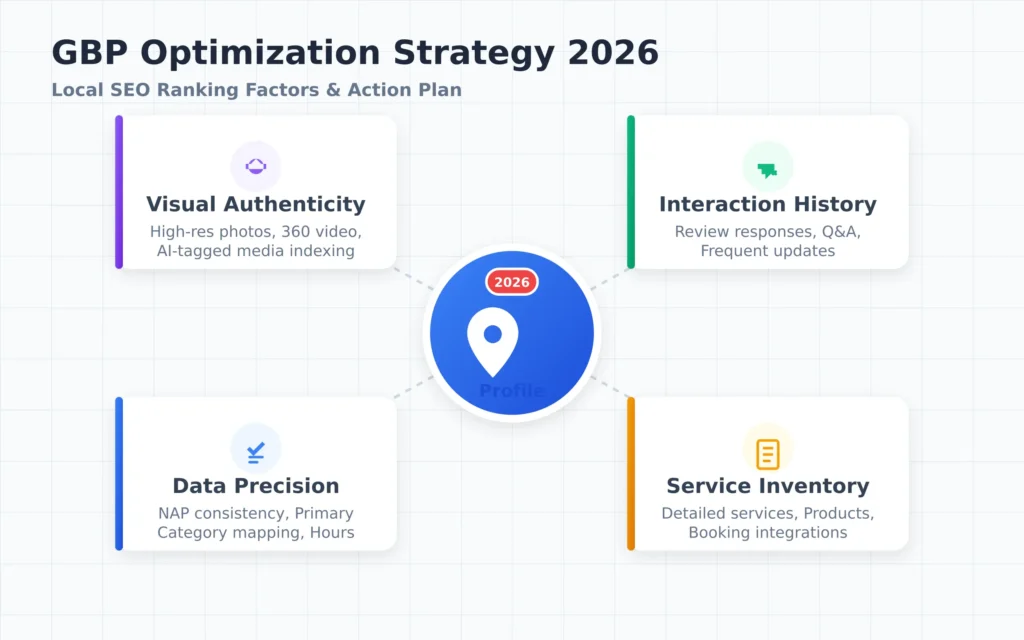
Users no longer type “best coffee new york.” They ask, “Hey Google, where is the best coffee shop open right now near me?”
By analyzing google maps case studies, we see that voice search queries are longer and more specific. To optimize for this:
- Focus on Long-Tail Keywords: Use natural language in your headers and content.
- FAQ Pages are Gold: Create a dedicated FAQ page that answers questions in a conversational tone. Schema mark this page.
- “Open Now” Signals: Ensure your hours are 100% accurate. Voice assistants prioritize businesses that are physically open at the moment of the query.
Step-by-Step Local SEO Strategy Breakdown
Based on the Local SEO Case Studies above, here is the unified framework used to achieve these local SEO results. Use this alongside our Local SEO checklist for maximum impact.
Phase 1: Foundation (The Technical Setup)
- GBP Verification: Ensure your business is verified. If you are service-based, verify your home address (hidden) or get a real office.
- Website Audit: Ensure your site is mobile-first (Google’s Mobile-First Indexing). Use HTTPS. Refer to our Local SEO audit checklist for specific errors to look for.
- NAP Consistency: Your Name, Address, and Phone number must match your GBP exactly across your website footer and contact page.
Phase 2: Optimization (On-Page & GBP)
- Primary Category: This is the most important signal. Do not try to get clever here; pick the most accurate category.
- Website Content: Embed a Google Map on your Contact page. Ensure your H1 includes the keyword + city.
- Internal Linking: Link from your blog posts to your service location pages to pass equity.
Phase 3: Authority (Off-Page & Reputation)
- Citation Building: Get listed on Yelp, YellowPages, and industry-specific directories.
- Review Generation: Aim for 1-2 new reviews per week. Respond to 100% of them.
- Local Link Building: Partner with local charities, schools, or news blogs for mentions.
CTR Optimization Strategies
Ranking is only half the battle. If you rank #1 but nobody clicks, you drop. In 2026, Click-Through-Rate (CTR) is a massive ranking factor, a finding confirmed by our Local SEO Case Studies.
How to improve CTR for Local SEO:
- GBP Business Name: NEVER keyword stuff. Use your legal name.
- Google Business Attributes: Fill out every attribute possible (e.g., “Women-led,” “Veteran-owned,” “Wheelchair accessible”). These appear as badges and icons, increasing clicks.
- Photos with People: Listings featuring photos of real humans (staff or customers) get 40% more clicks than stock imagery.
- Posts: Weekly GBP posts with offers keep your listing fresh and visually distinct in the sidebar.
Google Maps Ranking Factors (2026 Update)
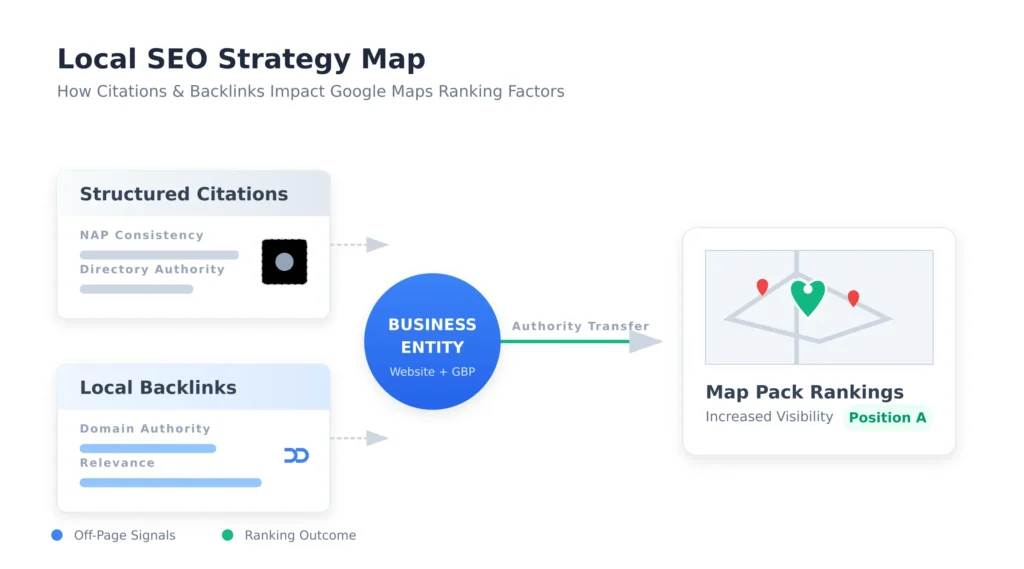
The algorithm has shifted. In 2026, the “Local Pack” is influenced heavily by AI and user interaction. For a comprehensive breakdown, Read our Google Maps ranking factors guide.
- Behavioral Signals: Click-through-rate (CTR) from search results to your website and “Driving Directions” clicks are massive. If users click you and ignore others, you rank higher.
- Semantic Relevance: Google understands context better. Don’t just keyword stuff; write naturally about your services. Entity salience (how related your content is to the search entity) is key.
- Video Content: GBP listings with video see a 30% higher engagement rate than those with only photos.
- Business Description Attributes: Ensure your attributes are filled out, as Google is surfacing these diversity-specific results more often.
Common Mistakes in Local SEO
Analyzing these local seo ranking case studies also revealed common pitfalls that business owners must avoid.
- Keyword Stuffing in Business Name: This worked in 2015; in 2026, it is an instant suspension. “City Best Plumber” will get you banned.
- Ignoring Negative Reviews: Deleting or flagging legitimate negative reviews hurts trust. Respond professionally instead.
- Duplicate Listings: Having two listings for the same location splits your equity and confuses Google.
- Tracking Phone Numbers: Do not use a tracking phone number (CallRail) on your GBP NAP. Use the real number for NAP, and use tracking on the website buttons only.
- Forgetting Mobile: 80% of local searches are on mobile. If your site is not responsive, you are invisible.
Tools Used for These Local SEO Case Studies
To achieve the local business SEO growth detailed above, we utilized a specific tech stack. Check out our full Local SEO tools comparison for more options.
- Google Business Profile (Manager): The native platform for managing listings.
- SEMRush / Ahrefs: Used for keyword research and tracking organic rankings.
- BrightLocal: The gold standard for citation auditing and local search rank tracking.
- Ubersuggest: Great for finding long-tail keyword variations for content ideas.
- Whitespark: Specifically for finding local citation opportunities and unstructured citations.
- GMB Everywhere: A Chrome extension to spy on competitors’ categories and attributes.
FAQ: Local SEO Case Studies
How long does it take to see results from Local SEO?
While minor fixes (like GBP verification) happen instantly, significant ranking improvements typically take 3 to 6 months. Building authority (links and reviews) is a cumulative process.
Can I do Local SEO myself, or do I need an agency?
Small businesses can handle the basics (posting, reviews, citations). However, if you are in a competitive niche (like Law or Plumbing) in a major city, you likely need a professional agency to manage the technical SEO and link building required for an SEO ranking case study level of success similar to these Local SEO Case Studies.
What is the difference between Organic SEO and Local SEO?
Organic SEO focuses on ranking your website nationally or globally for information-based queries. Local SEO focuses on ranking your business listing and location pages for geo-specific transactional queries.
Do online reviews actually impact rankings?
Yes. Reviews are a top-three ranking factor. They act as “freshness” signals and validate your trustworthiness. Quantity, velocity (speed of new reviews), and sentiment (score) all matter.
Is Local SEO dead because of AI Overviews?
No. In fact, Local SEO is more important. AI Overviews prioritize sources Google trusts, and local businesses with strong E-E-A-T signals are increasingly featured in AI snapshots for “best places to go near me.”
How important are backlinks for Local SEO in 2026?
Crucial. While proximity and relevance get you in the game, prominence (determined largely by backlinks from other trusted local websites) wins the game. A business with zero backlinks will rarely outrank a competitor with 50 high-quality local links.
How do I optimize for Voice Search?
Focus on conversational, long-tail keywords and create a robust FAQ page on your website. Ensure your Google Business Profile hours are accurate, as voice assistants prioritize businesses that are “Open Now.”
What are the most important Google Maps ranking factors?
The top three are Relevance (how well you match the search), Distance (proximity to the searcher), and Prominence (how well-known you are). In 2026, Prominence (backlinks and reviews) carries the most weight for competitive terms.
Conclusion
The Local SEO Case Studies presented here prove that growth is not accidental. Whether you are a plumber in Seattle or a boutique in Chicago, the principles remain the same: Optimize for trust, build authority, and provide a better user experience than your competitors.
As we move deeper into the AI era, the businesses that will win are those that treat their digital presence as a living, breathing entity. They generate reviews, they update their content, and they build relationships with their community online and offline.
Are you ready to write your own success story? Start by auditing your Google Business Profile today. Check your citations, ask for a review, and ensure your NAP is consistent. For advanced techniques, Read our Google Maps ranking factors guide to get started.
Don’t stay invisible. Use these strategies to dominate your local market.