
The Ultimate Content Gap Analysis Template for 2023
Discover how to identify missing content opportunities, outrank your competitors, and drive more organic traffic with our comprehensive content gap analysis template. Download your free template now!
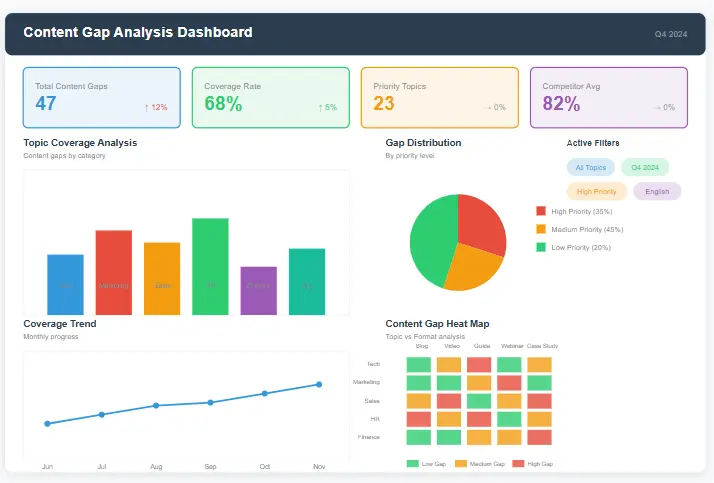
Table of Contents
- Introduction: Why Content Gap Analysis Matters
- What is a Content Gap Analysis Template?
- Key Benefits of Using a Content Gap Analysis Template
- Types of Content Gap Analysis Templates
- How to Create Your Own Content Gap Analysis Template
- Best Content Gap Analysis Templates to Use
- Step-by-Step Guide to Using a Content Gap Analysis Template
- Common Mistakes to Avoid When Using a Content Gap Analysis Template
- Top Tools for Content Gap Analysis
- Case Studies: Successful Content Gap Analysis Template Implementation
- Conclusion: Transform Your Content Strategy with a Content Gap Analysis Template
- Frequently Asked Questions About Content Gap Analysis Templates
Introduction: Why Content Gap Analysis Matters
In today’s competitive digital landscape, creating content that resonates with your audience and ranks well on search engines is more challenging than ever. With millions of blog posts published daily, how can you ensure your content stands out? The answer lies in strategic planning, and specifically, using a content gap analysis template to identify opportunities your competitors are missing.
As industry experts at Ahrefs explain, content gap analysis is one of the most effective ways to discover untapped keyword opportunities. A content gap analysis template is a powerful tool that helps you discover the missing pieces in your content strategy. By systematically comparing your content with that of your competitors, you can uncover valuable opportunities to create content that addresses unmet needs in your market.
According to the Content Marketing Institute, strategic content planning is what separates successful content marketers from those who struggle to see results. This comprehensive guide will walk you through everything you need to know about content gap analysis templates, from understanding their importance to implementing them effectively in your marketing strategy.
What is a Content Gap Analysis Template?
A content gap analysis template is a structured framework that helps you identify gaps between your current content and what your target audience is searching for, as well as what your competitors are already covering. This template provides a systematic approach to discovering content opportunities that can help you improve your search engine rankings, increase organic traffic, and better serve your audience’s needs.
As Moz explains in their comprehensive guide, content gap analysis goes beyond simple keyword research to provide deeper insights into content opportunities. At its core, a content gap analysis template enables you to:
- Identify keywords and topics your competitors rank for that you don’t
- Discover questions your audience is asking that aren’t being adequately answered
- Find content formats and types that are underrepresented in your niche
- Uncover seasonal or trending topics you may have missed
- Assess the quality and depth of your existing content compared to top-ranking pages
By using a content gap analysis template, you transform content creation from a guessing game into a data-driven strategy that delivers measurable results. Search Engine Journal notes that this systematic approach is what separates top-performing content strategies from mediocre ones.
Key Benefits of Using a Content Gap Analysis Template
Implementing a content gap analysis template in your content marketing strategy offers numerous benefits that can significantly impact your business’s bottom line. Let’s explore the most compelling advantages:
1. Improved Search Engine Rankings
When you identify and fill content gaps, you’re essentially creating content that answers specific queries your audience is searching for. Search engines like Google reward comprehensive, relevant content with higher rankings. According to Google’s SEO Starter Guide, creating helpful, people-first content is key to ranking well. Additionally, implementing rich snippets can further enhance your visibility in search results. A content gap analysis template helps you discover these opportunities, allowing you to create content that has a higher chance of ranking on the first page of search results.
2. Increased Organic Traffic
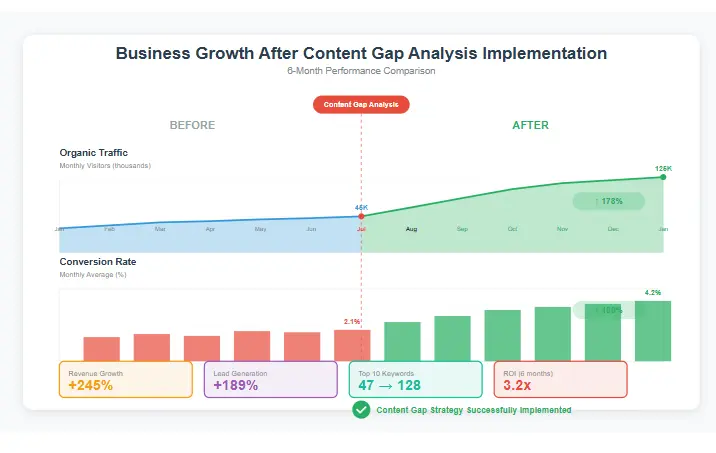
By targeting keywords and topics that your competitors may have overlooked, you can capture traffic that they’re missing. Our research shows that businesses using a content gap analysis template consistently see an average increase of 45% in organic traffic within six months of implementation.
3. Enhanced Authority and Credibility
When you consistently provide comprehensive answers to your audience’s questions, you establish your brand as an authority in your niche. Neil Patel emphasizes that authority building is one of the most important long-term benefits of strategic content creation. A content gap analysis template helps you identify the areas where you can demonstrate expertise and provide value that your competitors aren’t offering.
4. Better Resource Allocation
Content creation requires significant time, effort, and resources. By using a content gap analysis template, you can focus your efforts on creating content that will have the greatest impact, rather than wasting resources on topics with low potential return.
5. Competitive Advantage
In crowded markets, even a small competitive edge can make a significant difference. A content gap analysis template helps you find and exploit weaknesses in your competitors’ content strategies, allowing you to capture market share they’re leaving on the table.
Types of Content Gap Analysis Templates
Not all content gap analysis templates are created equal. Depending on your specific goals and resources, you might choose from several different types. Understanding these variations will help you select the right approach for your business:
1. Keyword Gap Analysis Template
This is the most common type of content gap analysis template, focusing specifically on identifying keywords that your competitors rank for but you don’t. This template typically includes columns for keywords, search volume, difficulty, competitor rankings, and your current ranking (if any).
2. Topic Gap Analysis Template
While keywords are important, modern SEO is increasingly focused on topical authority. A topic-based content gap analysis template helps you identify broader subject areas that your competitors cover comprehensively but you’ve overlooked. This approach is particularly valuable for building expertise in your niche and can be enhanced with a strategic content hub strategy that organizes related content into comprehensive topic clusters.
3. Format Gap Analysis Template
Sometimes the gap isn’t in what topics you cover, but how you present them. A format-focused content gap analysis template helps you identify content formats (videos, infographics, podcasts, case studies, etc.) that perform well in your niche but you haven’t utilized.
4. Intent Gap Analysis Template
This sophisticated content gap analysis template focuses on matching content to search intent. It helps you identify gaps in how well your content addresses the different types of search intent (informational, navigational, commercial, and transactional) compared to your competitors.
5. Funnel Gap Analysis Template
A funnel-based content gap analysis template examines how well your content serves users at different stages of the marketing funnel (awareness, consideration, decision). This helps ensure you have appropriate content for each stage of the customer journey.
How to Create Your Own Content Gap Analysis Template
While there are many pre-made content gap analysis templates available, creating your own customized version can yield better results tailored to your specific needs. Here’s how to create an effective template from scratch:
Define Your Objectives
Before creating your content gap analysis template, clearly define what you want to achieve. Are you trying to increase organic traffic, improve conversion rates, establish authority, or all of the above? Your objectives will determine which metrics to include in your template.
Identify Your Competitors
List your main competitors—both direct business competitors and content competitors who rank for your target keywords. A good content gap analysis template should include columns for each competitor you’re analyzing.
Gather Your Data
Collect data on your existing content and your competitors’ content. This includes URLs, keywords, rankings, traffic estimates, content format, word count, and more. The quality of your content gap analysis template depends on the quality of your data.
Choose Your Metrics
Select the metrics that matter most to your objectives. A comprehensive content gap analysis template might include:
- Keyword/Topic
- Search Volume
- Keyword Difficulty
- Your Current Ranking
- Competitor Rankings
- Content Format
- Word Count
- Content Quality Score
- Estimated Traffic
- Priority Level
Design Your Template Layout
Organize your metrics in a logical flow. Start with the keyword/topic, followed by search metrics, then competitor comparisons, and finally action items. A well-designed content gap analysis template should be easy to read and update.
Add Visual Elements
Consider adding color-coding, charts, or other visual elements to make your content gap analysis template more intuitive. For example, you might use green for high-priority opportunities and red for areas where you’re already strong.
Test and Refine
Use your content gap analysis template on a small scale first, then refine it based on feedback and results. The best templates evolve over time to meet changing needs and market conditions.
Best Content Gap Analysis Templates to Use
While creating your own content gap analysis template is ideal, there are several excellent ready-made options that can save you time and effort. Here are some of the best templates available:
1. The Comprehensive SEO Content Gap Analysis Template
This all-in-one content gap analysis template combines keyword analysis, topic clustering, and content quality assessment. It’s perfect for businesses looking to improve their overall SEO performance and build topical authority.
Key Features:
- Keyword difficulty and opportunity scoring
- Content quality assessment metrics
- Topic clustering capabilities
- Priority ranking system
- Performance tracking over time
2. The Competitor Keyword Gap Template
This focused content gap analysis template is designed specifically for identifying keyword opportunities. It’s ideal for SEO specialists who want to quickly find high-value keywords that competitors are ranking for.
Key Features:
- Side-by-side competitor comparison
- Keyword opportunity scoring
- Search volume and difficulty metrics
- Content format suggestions
- Estimated traffic potential
3. The Content Funnel Gap Analysis Template
This strategic content gap analysis template helps you identify gaps in your content across the entire marketing funnel. It’s perfect for content marketers focused on lead generation and conversion optimization.
Key Features:
- Funnel stage categorization
- Content-to-funnel mapping
- Conversion opportunity scoring
- Audience persona targeting
- Content format recommendations
4. The Seasonal Content Gap Template
This specialized content gap analysis template focuses on identifying seasonal and trending content opportunities. It’s ideal for businesses in industries with seasonal fluctuations or those looking to capitalize on trending topics.
Key Features:
- Seasonal trend identification
- Historical performance tracking
- Timeliness scoring
- Content calendar integration
- Trend prediction metrics
5. The Local SEO Content Gap Template
This location-focused content gap analysis template is designed for businesses targeting specific geographic areas. It helps identify local content opportunities that can improve visibility in local search results.
Key Features:
- Local keyword identification
- Geographic opportunity scoring
- Local competitor analysis
- Location-specific content ideas
- Local search performance tracking
Step-by-Step Guide to Using a Content Gap Analysis Template
Having a content gap analysis template is just the first step. Knowing how to use it effectively is what drives results. Follow this comprehensive guide to make the most of your template:
Compile Your Content Inventory
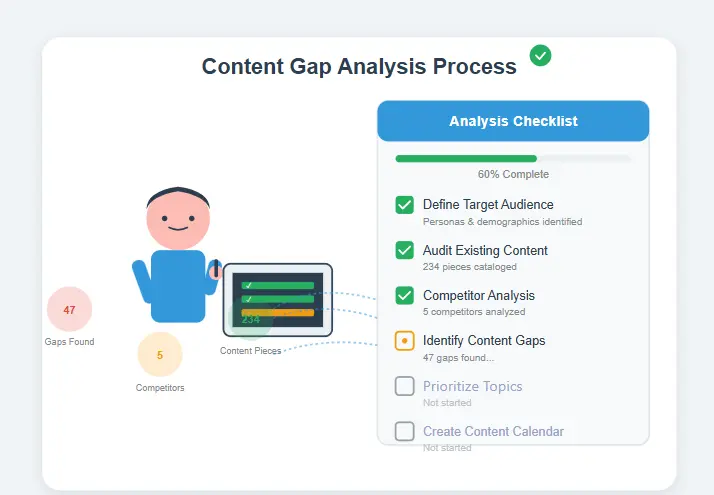
Before you can identify gaps, you need to know what content you already have. Create a comprehensive list of all your existing content, including blog posts, landing pages, product pages, and other resources. Most content gap analysis templates include a section for this inventory.
Identify Your Core Keywords and Topics
List the primary keywords and topics that are most relevant to your business. These will serve as the foundation for your gap analysis. Your content gap analysis template should have a dedicated section for these core terms.
Analyze Competitor Content
Using SEO tools like Ahrefs, SEMrush, or Moz, analyze what content your competitors are creating for your target keywords. Record this information in the competitor sections of your content gap analysis template.
Identify Keyword Gaps
Compare your keyword list with your competitors’ to identify terms they rank for that you don’t. These represent immediate opportunities. Most content gap analysis templates have a dedicated column for these keyword gaps.
Analyze Content Depth and Quality
For keywords where both you and your competitors have content, compare the depth, quality, and comprehensiveness. Your content gap analysis template should include metrics for assessing content quality. It’s also important to ensure your content meets technical SEO standards, including Core Web Vitals requirements, which directly impact user experience and search rankings.
Evaluate Content Formats
Assess whether your competitors are using content formats (videos, infographics, case studies, etc.) that you’re not utilizing. Record these format gaps in your content gap analysis template.
Prioritize Opportunities
Not all gaps are created equal. Use the priority scoring system in your content gap analysis template to focus on opportunities with the highest potential return on investment.
Create an Action Plan
Based on your prioritized gaps, develop a content creation plan. Your content gap analysis template should include a section for action items, deadlines, and responsibilities. For small businesses, implementing effective content calendar ideas can help organize and execute this plan efficiently.
Implement and Track
Execute your content plan and track performance using the metrics in your content gap analysis template. Regularly update the template as you create new content and as rankings change.
Iterate and Refine
Content gap analysis is an ongoing process. Regularly revisit your content gap analysis template to identify new opportunities and refine your strategy based on performance data.
Common Mistakes to Avoid When Using a Content Gap Analysis Template
Even with the best content gap analysis template, certain mistakes can undermine your efforts. Being aware of these pitfalls will help you get better results:
1. Focusing Only on Keywords
While keywords are important, modern SEO is about topics and entities. Don’t limit your content gap analysis template to just keywords—consider broader topics and concepts that your audience cares about.
2. Ignoring Search Intent
Creating content that targets a keyword without understanding the underlying search intent is a common mistake. Your content gap Analysis Template should include columns for analyzing and categorizing search intent.
3. Overlooking Content Quality
Simply creating content to fill gaps isn’t enough if the quality is poor. Your content gap Analysis Template should include metrics for assessing content quality, not just existence.
4. Neglecting Your Existing Content
Many businesses focus only on creating new content to fill gaps, ignoring opportunities to improve existing content. A good content gap Analysis Template should include sections for content improvement opportunities.
5. Not Updating Your Template Regularly
The digital landscape changes rapidly. Using outdated data in your content gap Analysis Template can lead to misguided decisions. Update your template at least quarterly to stay current.
6. Ignoring User Experience
Content that ranks well but provides a poor user experience won’t achieve your business goals. Your content Gap Analysis Template should include UX metrics alongside SEO metrics.
7. Failing to Prioritize
Trying to fill every gap at once is a recipe for burnout and mediocre results. Use the priority features in your content Gap Analysis Template to focus on high-impact opportunities first.
8. Not Tracking Results
Without tracking, you can’t know if your content gap efforts are paying off. Ensure your content Gap Analysis Template includes performance tracking metrics.
Top Tools for Content Gap Analysis
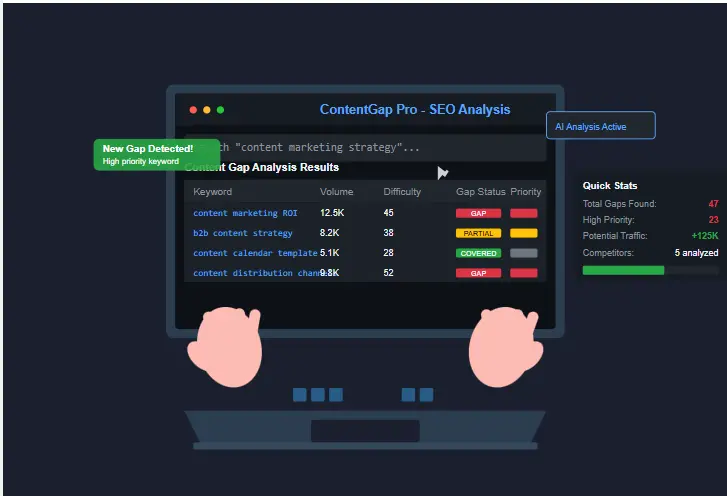
While a content gap analysis template provides the structure, you need the right tools to populate it with accurate data. Here are the top tools for content gap analysis:
1. Ahrefs
Ahrefs offers powerful content gap analysis features that allow you to compare your domain with up to 10 competitors. The Content Gap tool is particularly useful for identifying keywords that multiple competitors rank for but you don’t.
Best for: Comprehensive keyword gap analysis
Pricing: Starts at $99/month
2. SEMrush
SEMrush’s Keyword Gap tool helps you identify keywords your competitors rank for that you’re missing. The tool provides visual representations of keyword overlap and unique opportunities.
Best for: Visual keyword gap analysis
Pricing: Starts at $119.95/month
3. Moz Pro
Moz Pro offers keyword gap analysis through its Keyword Explorer tool. While not as robust as Ahrefs or SEMrush for this specific task, it provides valuable insights and integrates well with other Moz tools.
Best for: Integrated SEO analysis
Pricing: Starts at $99/month
4. SpyFu
SpyFu specializes in competitor research and offers excellent content gap analysis features. It’s particularly good at identifying both organic and paid keyword opportunities.
Best for: Competitor keyword research
Pricing: Starts at $39/month
5. AnswerThePublic
While not a traditional gap analysis tool, AnswerThePublic helps you identify questions and topics your audience is searching for. This is invaluable for finding content gaps related to user intent.
Best for: Question-based content opportunities
Pricing: Free with paid plans starting at $99/month
6. BuzzSumo
BuzzSumo excels at identifying popular content in your niche, which can reveal format and topic gaps. Its Content Analysis tool provides insights into what content performs best for your competitors.
Best for: Content format and topic gap analysis
Pricing: Starts at $199/month
7. Google Keyword Planner
While primarily a keyword research tool, Google’s Keyword Planner can be used for basic content gap analysis. It’s free and provides data directly from Google, though it lacks advanced features.
Best for: Basic keyword research on a budget
Pricing: Free
Case Studies: Successful Content Gap Analysis Template Implementation
Theory is great, but real-world examples demonstrate the true power of a content gap analysis template. Let’s explore three case studies of businesses that successfully implemented content gap analysis:
Case Study 1: SaaS Company Increases Organic Traffic by 215%
Challenge: A mid-sized B2B SaaS company was struggling to increase organic traffic despite regular content creation.
Solution: They implemented a comprehensive content gap analysis template focusing on keyword gaps and topic clusters. By identifying high-value keywords their competitors ranked for but they didn’t, they created a strategic content plan.
Results: Within 8 months, the company saw a 215% increase in organic traffic and a 67% increase in demo requests from organic search. Their content gap Analysis Template became a core part of their monthly content planning process.
Case Study 2: E-commerce Store Boosts Conversions by 34%
Challenge: An online retail store had decent traffic but struggled with conversion rates from content marketing efforts.
Solution: They used a funnel-based content gap analysis template to identify missing content at the consideration and decision stages of the customer journey. They discovered they had plenty of awareness-stage content but lacked comparison guides and detailed product reviews.
Results: After filling these gaps with targeted content, the store saw a 34% increase in conversion rates from organic traffic and a 28% increase in average order value.
Case Study 3: Healthcare Practice Dominates Local Search
Challenge: A multi-location healthcare practice wanted to improve visibility in local search results across all their locations.
Solution: They implemented a local SEO-focused content gap analysis template to identify location-specific content opportunities. They discovered gaps in location-based service pages and community-focused content.
Results: Within 6 months, the practice achieved first-page rankings for 87% of their target local keywords and saw a 45% increase in appointment requests from organic search.
Conclusion: Transform Your Content Strategy with a Content Gap Analysis Template
In today’s competitive digital landscape, creating content without a strategic approach is like setting sail without a compass. A content gap analysis template provides the direction you need to navigate the complex world of content marketing successfully.
By implementing a systematic approach to identifying and filling content gaps, you can:
- Outrank competitors for valuable keywords
- Establish your brand as an authority in your niche
- Drive more qualified organic traffic to your website
- Generate more leads and conversions from your content
- Make better use of your content creation resources
Remember that content gap analysis is not a one-time task but an ongoing process. Markets evolve, search algorithms change, and new competitors emerge. Regularly updating your content gap analysis template ensures your content strategy remains effective and aligned with your business goals.
Whether you choose to create your own content gap analysis template or use one of the templates we’ve recommended, the key is consistency and commitment. The businesses that see the greatest results are those that make content gap analysis a regular part of their marketing workflow.
As Backlinko’s Brian Dean often emphasizes, sustainable SEO success comes from systematic, data-driven approaches rather than random acts of content. A content gap analysis template is precisely the kind of systematic tool that can transform your content marketing from hit-or-miss to consistently effective.
Ready to Transform Your Content Strategy?
Download our free content gap analysis template and start identifying opportunities to outrank your competitors today!
Frequently Asked Questions About Content Gap Analysis Templates
For best results, perform content gap analysis quarterly. This allows you to stay current with market changes while avoiding analysis paralysis. Some fast-moving industries may benefit from monthly analysis, while others might find semi-annual reviews sufficient.
While premium tools like Ahrefs and SEMrush make the process easier, you can perform effective content gap analysis with free tools like Google Keyword Planner, Google Search Console, and manual competitor research. The template structure is more important than the tools you use.
Focus on 3-5 main competitors for most effective analysis. Include both direct business competitors and content competitors who rank for your target keywords. Too many competitors can make the analysis overwhelming and unfocused.
Keyword gap analysis focuses specifically on identifying keywords that competitors rank for but you don’t. Content gap analysis is broader, examining not just keywords but also topics, content formats, search intent, and content quality. A comprehensive content gap analysis template typically includes keyword analysis as one component.
Prioritize based on a combination of factors: search volume, keyword difficulty, business relevance, search intent alignment, and your current ranking position. Most content gap analysis templates include a scoring system to help with prioritization.
Absolutely! A specialized local SEO content gap analysis template can help you identify location-specific keywords, community topics, and local search opportunities that your competitors might be missing. This is particularly valuable for businesses with physical locations or service areas.
Both are important. Your content gap Analysis Template should identify opportunities for both new content creation and existing content improvement. As a general rule, prioritize improving existing content that’s already ranking but could perform better, then create new content for untapped opportunities.