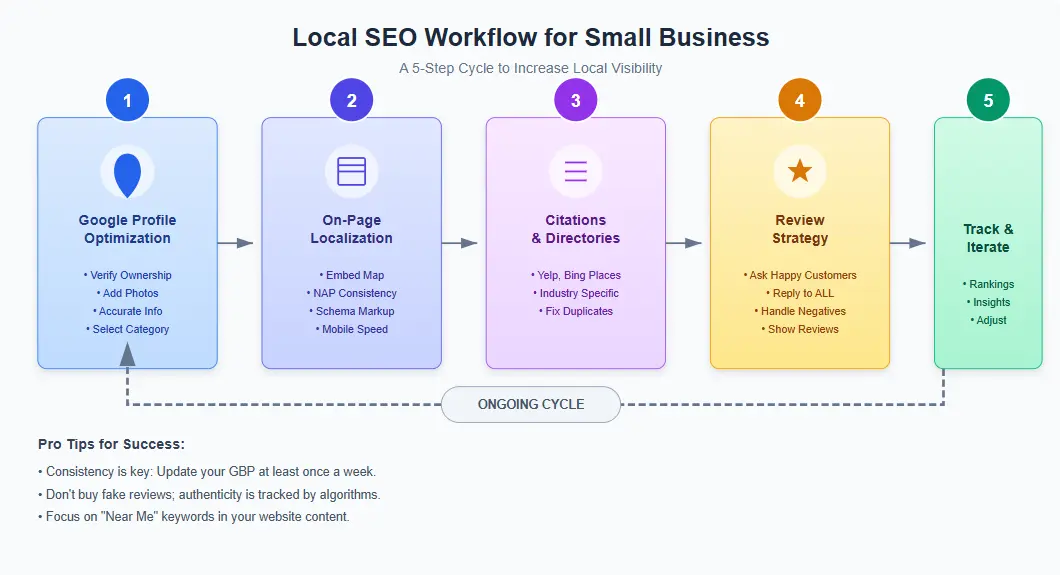
Local SEO on a Budget (2026 Guide): Rank #1 on Google Without Spending Money
In the rapidly evolving digital landscape of 2026, small business owners often feel overwhelmed. The misconception that effective digital marketing requires a deep pocket is pervasive. You see competitors bidding thousands of dollars on Google Ads and hiring expensive agencies, and it’s easy to feel left behind. However, the reality of search engine optimization has shifted dramatically. Google’s algorithm has become significantly smarter, moving away from rewarding pure spending power and instead focusing on user value, relevance, and trust. This is where the concept of local SEO on a budget becomes not just an option, but a powerful strategic advantage.
Most small businesses believe Local SEO requires a big budget, expensive tools, and marketing agencies. They think they need to subscribe to premium software suites or pay for link-building packages. This is false. While paid tools can save time, they are not a prerequisite for ranking. In fact, some of the most successful local rankings are achieved by businesses that simply understand the fundamental rules of the game better than their competitors. If you are looking for a broader understanding of this field, you can explore our comprehensive guide on local SEO.
But in 2026, Google no longer rewards spending — it rewards relevance, consistency, local trust signals, and engagement. The search engine giant wants to provide the best possible answer to a user’s query. If you can prove that you are the most relevant, most trusted, and most helpful business in your specific area, Google will rank you, regardless of your marketing budget.
This comprehensive guide will show you how to do local SEO on a budget step-by-step and rank on Google Maps without spending money on ads or agencies. We will cover everything from the basics of optimization to advanced content strategies, all designed to maximize your visibility while minimizing your costs. Whether you are a plumber, a bakery, or a consultant, these principles apply to you.
What is Local SEO on a Budget?
Before diving into the “how,” we must define the “what.” Local SEO on a budget means ranking your business in Google Search and Google Maps using free or low-cost strategies rather than paid advertising. It is the art and science of maximizing your organic visibility by optimizing the digital assets you already own—your website, your business listing, and your reputation.
According to industry leaders like Moz, local search is essential for connecting with nearby customers. Traditional marketing often feels like a black hole where you throw money and hope for leads. In contrast, local SEO on a budget is about building equity. The work you do today compounds over time. A review you earn today will still be helping you rank three years from now. A blog post you write for free will continue to attract traffic month after month without costing you a cent per click.
It focuses on five core pillars:
- Google Business Profile optimization: Claiming and perfecting your map listing. This is your digital storefront. Ensure you follow our Google Business Profile optimization checklist to cover every detail.
- Local keywords: Targeting terms specific to your geographic area to capture high-intent traffic.
- Citations: Ensuring your business name is listed accurately across the web to build authority.
- Reviews: Managing customer feedback to build trust and influence the algorithm.
- Website SEO: Making sure your site is technically sound and ready for local searchers.
Why Local SEO Works for Small Businesses
Why should you focus on local search rather than global or national SEO? Because for a small business, local SEO is the highest ROI activity available. It levels the playing field against larger corporations. You might not be able to out-spend Amazon or Walmart, but you can absolutely out-rank them in your specific town for specific services.
Local SEO is powerful because it aligns perfectly with consumer behavior. It is a key component of any strategy to increase organic traffic. Here is why it is essential:
- ✔ High purchase intent: When someone searches for “emergency plumber near me,” they are not browsing for fun. They have a leak and they need help now. Ranking for these terms leads to immediate conversions.
- ✔ Low competition (local area): You are only competing with businesses in your specific city or neighborhood, not the whole world. Often, you only have to beat 5-10 serious competitors to dominate the market.
- ✔ Free organic traffic: Unlike pay-per-click ads, where you pay $5, $10, or even $50 every time someone clicks your link, organic traffic is free. Once you rank, the clicks cost you nothing.
- ✔ Faster ranking than global SEO: Because you are targeting a specific location, the pool of competitors is smaller. This means you can see significant results in 2-4 months, whereas national SEO can take a year or more.
Google Maps Ranking Factors (2026 Update)
To execute local SEO on a budget effectively, you need to know the rules of the game. Google uses a complex algorithm, but it largely boils down to three main ranking signals. If you optimize for these three, you will win. These factors are well-documented in the official Google Search Central documentation.
1. Relevance
How well does your business match what the user is searching for? Google looks at your categories, keywords in your description, and the services you list. If you are a vegan bakery, but you are only categorized as “restaurant,” you lack relevance for the search “vegan cake.” A key part of local SEO on a budget is ensuring your categories are laser-focused on what you actually do. However, relevance also relies on a solid technical SEO guide to ensure Google can crawl your site properly.
2. Distance
This is the one factor you cannot control. How close is your business to the user searching (or the location they used in their search)? Google prioritizes proximity. However, you can still influence this by optimizing for “service areas” if you are a service-based business, or by creating content that targets specific neighborhoods within your city to capture broader regional traffic.
3. Prominence
This is where the magic happens for local SEO on a budget. Prominence is a measure of how well-known and trusted your business is online. It is determined by backlinks (links from other sites to yours), directory citations, articles about your business, and—most importantly—reviews. The more prominent you are, the more Google trusts you, and the higher you rank.
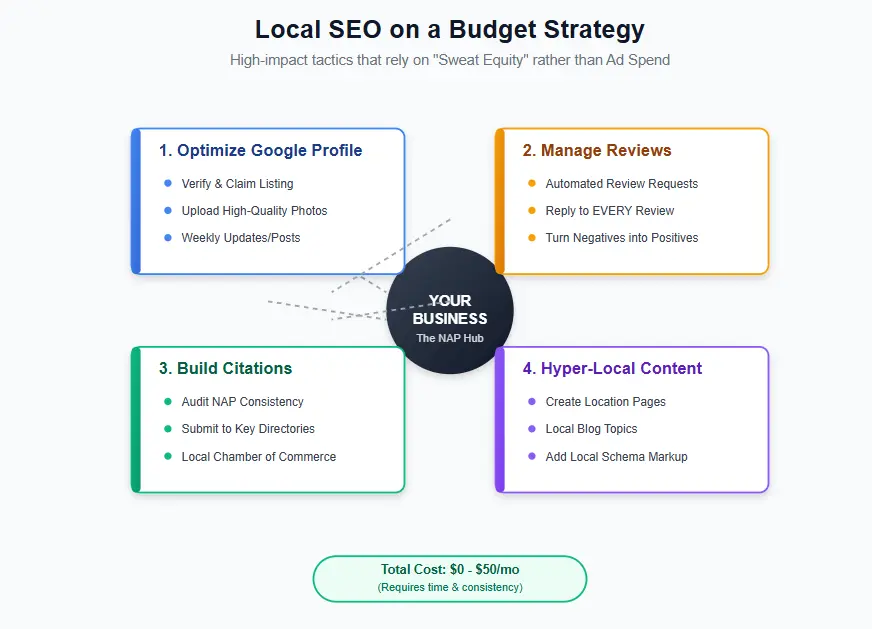
Google Business Profile Optimization (MOST IMPORTANT)
If you do nothing else mentioned in this guide, do this. Your Google Business Profile (GBP), formerly known as Google My Business, is the single most important asset for local ranking. You can set this up directly at Google Business. It is the listing that appears on the map and on the right-hand side of search results. For a strategy based on local SEO on a budget, this is your “home base.”
Optimize it fully with these steps:
The Verification Process
First, you must claim and verify your listing. Google usually does this via postcard, but in 2026, video verification is becoming more common. Ensure your address is serviceable and verifiable.
Primary Category Selection
This is critical. Google allows you to choose one primary category. Do not get fancy here. Choose the category that best describes what you *do*. If you are a plumber, choose “Plumber.” Do not choose “Construction Company” or “Hardware Store.” Relevance depends on this. It is wise to run a quick check using our advanced SEO audit checklist to ensure no technical errors hinder your verification.
Secondary Categories
You can add up to 9 additional categories. Use them! If you are a plumber who also handles water heater installation, add “Water Heater Repair” as a secondary category. This helps you show up for more specific searches without spending money on ads.
NAP Consistency
Ensure your Name, Address, and Phone number are 100% correct and match your website exactly. Inconsistency here confuses Google and hurts your local SEO on a budget efforts.
Visual Assets
Upload high-quality images of your team, your office, your work, and your products. Listings with photos get significantly more clicks. Since you aren’t paying for ads, your conversion rate on the free listing is vital.
Local Keyword Research (FREE METHOD)
Keywords are the bridge between what people type and what you offer. You don’t need expensive tools like Ahrefs or SEMrush to find them. Local SEO on a budget relies on free, creative research methods.
The Google Autocomplete Method
Go to Google and start typing your service. See what Google suggests.
Example:
Start typing “SEO service” and see what Google suggests:
- SEO service near me
- SEO service in Bogra
- affordable SEO service Bogra
- best SEO service for small business
These are real phrases people are using. Write them down. For a structured approach, refer to our keyword research checklist.
The “People Also Ask” Box
When you search for your main term, look for the “People Also Ask” box. This gives you questions people are asking. Use these as headings in your content. It’s free keyword research that tells you exactly what users want to know.
The Formula for Local Keywords
Use these structures to find winning keywords:
- Service + Location (e.g., “Wedding Photographer Chicago”)
- Service + Near Me (e.g., “Auto Repair Near Me”)
- Best + Service + City (e.g., “Best Dentist in London”)
- Cheap/Affordable + Service + City (Great for local SEO on a budget targeting)
On-Page Local SEO Optimization
Once you have your keywords, you need to place them on your website. Your website is your digital hub, and it needs to be optimized for the local searcher.
Title Tags and Meta Descriptions
Your title tag is the blue link in Google search results. It should include your main keyword and location.
Bad: Welcome to Joe’s Bakery
Good (Budget SEO): Best Artisan Bakery in Austin | Joe’s Bread & Pastries
The meta description is the short text under the link. Use it to entice the click. Include a call to action and your phone number.
H1 and H2 Headers
Use your main keyword in your H1 (the main title on the page). Use variations of your local keywords in your H2 and H3 subheaders. This helps Google understand the structure and relevance of your content. For deeper insights on structuring your content, read our content SEO guide.
Embedding the Google Map
On your “Contact” or “Location” page, embed the Google Map of your business. You can get the embed code from your Google Business Profile dashboard. This creates a strong semantic link between your website and your map listing, a crucial tactic for local SEO on a budget.
Mobile Optimization
Most local searches happen on mobile phones. If your site is hard to use on a phone, Google will penalize you. Ensure your buttons are large enough to tap, text is readable without zooming, and the site loads fast. Google’s “PageSpeed Insights” tool is a free way to check this.
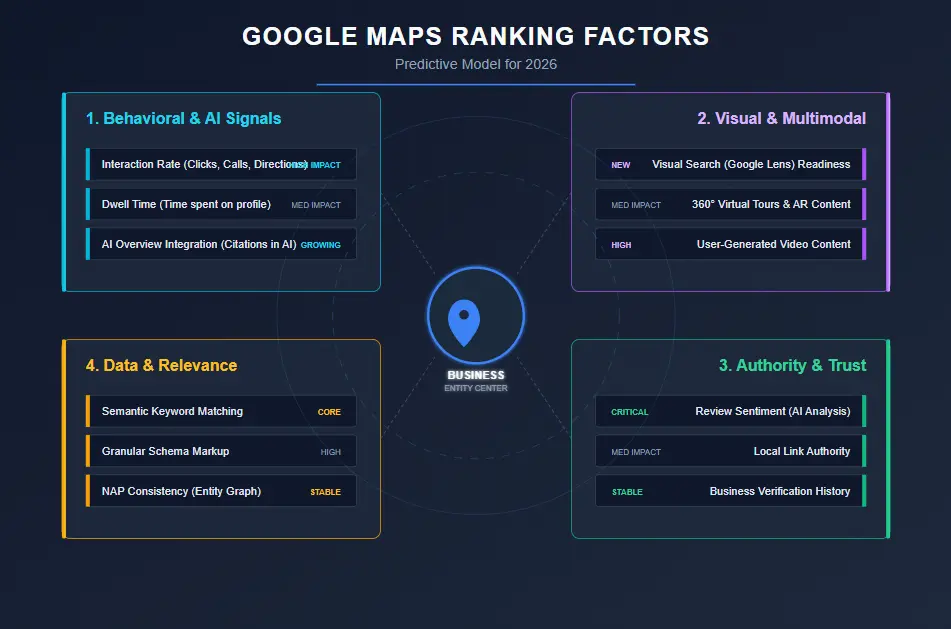
Citations Strategy (FREE LOCAL BACKLINKS)
In the world of local SEO on a budget, citations are your best friend. A citation is any online mention of your business Name, Address, and Phone number (NAP). They act as digital votes of confidence.
Structured Citations
These are listings on business directories. You don’t need to pay for submission services. Start with the “Big Four”:
- Google Business Profile: (Already done)
- Bing Places: Essential for Windows users and Siri searches.
- Yelp: High authority, though sometimes review filters can be aggressive.
- Apple Maps: Crucial for iPhone users. Connect via Apple Maps Connect.
Niche and Local Citations
Next, look for directories specific to your industry.
- Contractors: Houzz, Angie’s List, Thumbtack.
- Doctors: Healthgrades, WebMD.
- Restaurants: TripAdvisor, Zomato, OpenTable.
Also, look for local Chamber of Commerce websites or local business associations. These local links carry immense weight for local SEO on a budget because they are highly relevant to your area. Citation building is a foundational part of any link building guide.
Pro Tip: NAP Consistency is non-negotiable. If your address is “123 Main St” on Google, it cannot be “123 Main Street” on Yelp. It must be identical.
Reviews Strategy (HIGH RANKING FACTOR)
Reviews are the lifeblood of your online reputation. They are the number one trust signal for customers and a top ranking factor for Google. You cannot ignore them if you want local SEO on a budget to work.
The “Keywords in Reviews” Hack
This is a powerful, free trick. When you ask a customer for a review, ask them to mention the service and the location.
Script: “We’d love a review! If you could mention that we are a [Service] in [City], that would really help us out.”
Example Result: “Great SEO service in Bogra. Very helpful team!”
This review now contains the keywords “SEO service” and “Bogra.” Google reads this and reinforces your relevance for those terms. It’s natural, user-generated content that boosts your SEO.
How to Ask for Reviews
Don’t be shy. The happiest customers are often the ones who forget to leave reviews because they are busy.
- At the point of sale: “If you’re happy with our service, please tap this link to leave a review.”
- Email follow-up: Send an automated email 2 days after purchase. Keep it short.
- SMS: Text messaging has the highest response rate.
Responding to Reviews
Reply to EVERY review. Good or bad.
- Good reviews: Say thank you. Use keywords in your reply. “Thanks for choosing us for your plumbing needs in Dallas!”
- Bad reviews: Do not get defensive. Apologize for the experience and offer to take it offline to fix it. This shows potential customers that you care about service.
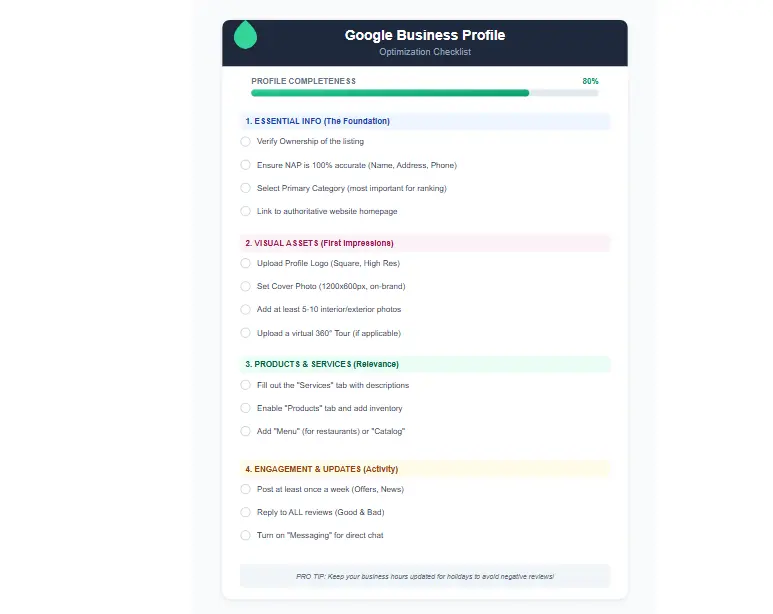
Local Content Strategy
Many small business owners neglect blogging because they think it’s too hard. But content is the fuel for local SEO on a budget. It allows you to rank for hundreds of long-tail keywords that you can’t fit on your homepage.
Create “Local” Content
Don’t write generic articles. Write articles that target your city.
- Service Pages: “Landscaping Services in [Neighborhood Name]”
- Guides: “The Best Parks in [City] for a Family Picnic” (If you sell picnic gear or catering).
- Case Studies: “How We Fixed a Leaky Roof in [City] During the Storm.”
The “Link Bait” Strategy
Create a resource that is so useful that other local websites want to link to it. This builds free backlinks.
Idea: Create a page titled “The Ultimate Guide to Local Schools in [City].” Real estate agents, parent blogs, and local community groups might link to this. These are high-authority local links that cost you nothing but time to create. Content marketing is a long-term play but essential for sustainable growth. Learn more about driving traffic in our guide on how to increase organic traffic.
Free Link Building for Local SEO
Backlinks are when other websites link to yours. They are a major ranking factor. How do you get them without paying for them?
Sponsorships and Charities
Sponsor a local little league team or a charity run. Often, these organizations will link to your website on their “Sponsors” page. It’s a win-win: you help the community and get a great local link.
Local Partnerships
Partner with non-competing businesses. If you are a wedding photographer, partner with a local florist. Write a blog post about “Top 10 Wedding Trends” and ask the florist to contribute a quote and link to their site. Ask them to do the same for you. This strategy is covered in more depth in our link building guide.
Job Postings
Post job openings on your site. Then, share those listings on free job boards like LinkedIn or Indeed. These links can pass authority to your site.
Free SEO Tools
You don’t need to spend hundreds on software. Local SEO on a budget is powered by free tools. Here is the stack:
- ✔ Google Search Console: The holy grail of free data. See what keywords you rank for, what errors Google has found on your site, and who is linking to you.
- ✔ Google Analytics (GA4): Track who visits your site and what they do there. Are they calling you? Filling out forms?
- ✔ Google Business Profile: The insights tab here shows how people found you (direct vs. discovery) and what actions they took.
- ✔ Ubersuggest (free version): Good for basic keyword ideas and content suggestions.
- ✔ ChatGPT: Use it to generate content ideas, outline blog posts, and draft FAQ answers. It’s like having a free copywriter assistant.
For a full comparison of available software, check out our list of the best SEO tools.
Common Mistakes in Local SEO
Even with the best intentions, it’s easy to slip up. Avoid these traps to protect your rankings and ensure your local SEO on a budget strategy doesn’t backfire.
- ❌ Keyword stuffing: Don’t cram your city name 50 times in the footer. It looks spammy and Google can penalize it. Use keywords naturally.
- ❌ Fake reviews: Never buy reviews. Google is getting smarter at detecting patterns in fake reviews, and the damage to your reputation if caught is irreversible.
- ❌ Duplicate listings: Having two Google Business Profile pages for the same location confuses Google and splits your review count, hurting your prominence.
- ❌ Inconsistent NAP: This is the most common error. Track your address and phone number and ensure it is copied exactly everywhere.
- ❌ Thin content: Writing 50 words on a service page isn’t enough. Provide value. Explain the process, answer questions, and show your expertise.
- ❌ Ignoring Mobile: If your phone number isn’t clickable on a mobile phone, you are losing customers.
Local SEO Checklist (QUICK SUMMARY)
To wrap up this guide on local SEO on a budget, use this checklist to track your progress. Print it out and check off each item as you complete it.
✔ GBP Verification: Claimed and verified the listing.
✔ Categories: Selected the most accurate primary and secondary categories.
✔ NAP Consistency: Audited and fixed Name, Address, Phone across all platforms.
✔ Website Optimization: Updated Title tags, H1s, and added location pages.
Photos: Uploaded high-quality logo, cover, and interior photos.
Reviews: Created a system to ask 5 customers for a review this week.
Citations: Listed on top 20 relevant directories.
Content: Published one local-focused blog post.
Need a template to stay organized? Grab our free SEO templates to keep your strategy on track.
FAQ
Can I do local SEO without money?
Yes, absolutely. The strategy of local SEO on a budget is built on the premise that you invest time rather than money. The core tools—Google Business Profile, Search Console, and directory submissions—are free.
How long does local SEO take?
Unlike PPC, which is instant, local SEO on a budget takes time. Usually, you can see initial movement in rankings in 2–8 weeks. However, achieving the #1 spot can take 3–6 months depending on the competition in your niche.
What is the most important factor?
While all factors matter, Google Business Profile optimization is the foundation. Without a verified, complete profile, it is very difficult to rank. Combined with reviews, it forms the core of local ranking.
Do I need backlinks?
Backlinks are helpful for building “Prominence,” but they are not strictly required at the very start. Focus on getting your citations and GBP perfect first. As you grow, seek out local partnership links. Ahrefs provides excellent insights on this in their guide to local SEO.
Is “Local SEO on a Budget” effective for service areas?
Yes. Service area businesses (like plumbers or landscapers) can hide their address in GBP and still rank by setting their service area radius and optimizing for the cities they serve.
Conclusion
Local SEO on a budget is one of the most powerful, accessible, and sustainable strategies for small businesses in 2026. The digital landscape may seem crowded, but the majority of local businesses are neglecting the basics. They are leaving money on the table.
You don’t need money — you need consistency. You need optimization. You need local relevance and trust signals. By following the system outlined in this guide—optimizing your profile, earning reviews, building citations, and creating local content—you can outrank competitors who are spending thousands on ads.
If you follow this local SEO on a budget system, you can rank on Google Maps and grow your business without ads. Start optimizing your profile today, and watch as the free traffic begins to roll in. For further reading, revisit our main guide on local SEO to deepen your understanding.