Best SEO Tools No One Talks About: Hidden Gems That Actually Rank Websites in 2026
Why Popular SEO Tools Are No Longer Enough
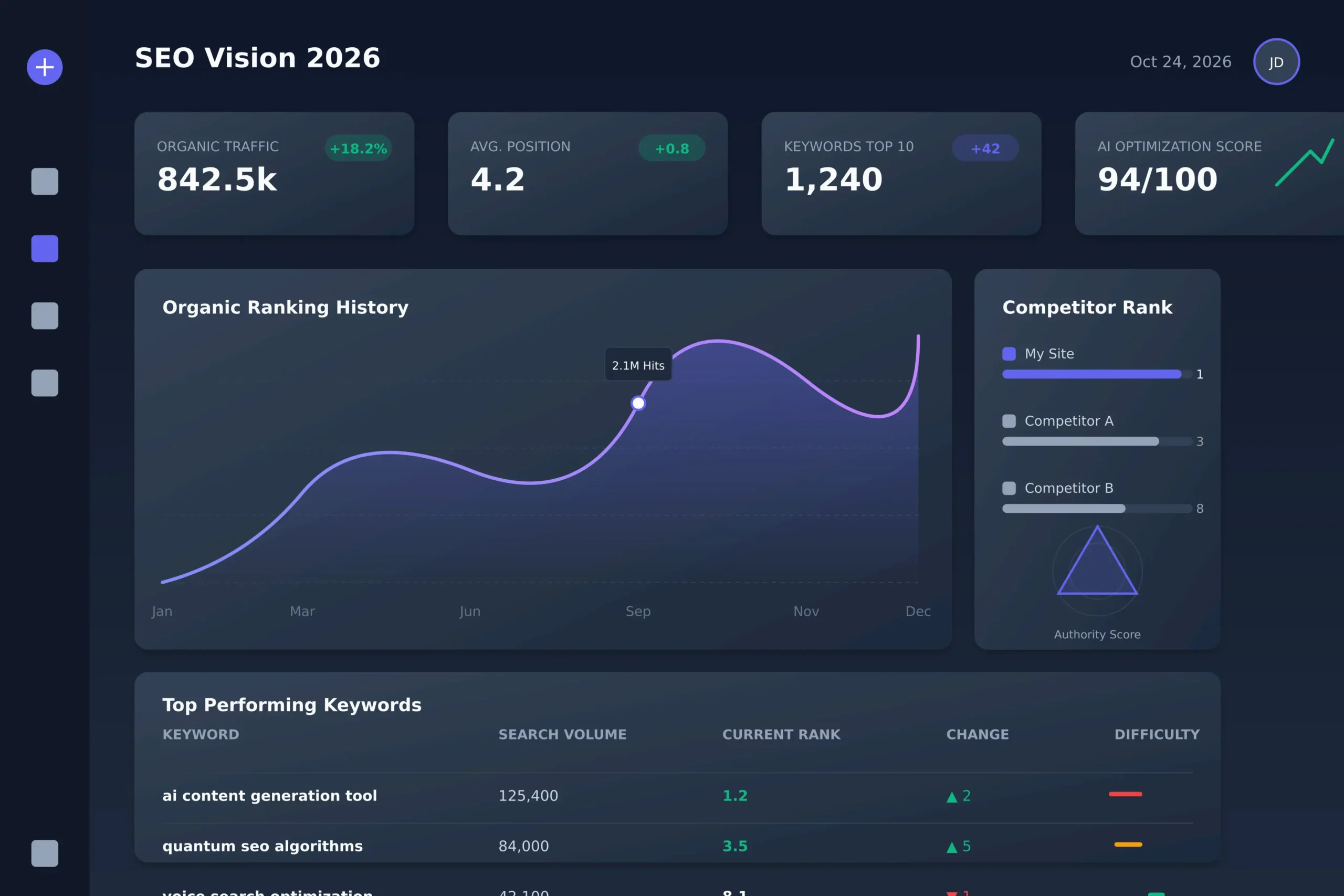
There is a pattern in SEO communities that almost nobody questions. A new blogger starts, reads a roundup post, and buys whichever tool appears in the top three results. The cycle repeats. The result is a massive cluster of websites all using the same keyword data, the same content gaps, and the same competitive intelligence. That is a systemic disadvantage hiding in plain sight.
When a tool becomes truly mainstream, the value of its competitive moat collapses. Every keyword it surfaces gets targeted by thousands of users simultaneously. Every content gap it reveals gets filled within weeks. The data advantage disappears because the data is now public knowledge at scale.
This is precisely why advanced SEO professionals have been quietly building a different kind of toolset—one built around execution speed, semantic depth, and cost efficiency. You can explore the full landscape of these platforms in our comprehensive best SEO tools guide, but in this article we’re going deeper into the hidden gems that deserve your attention in 2026.
In this guide you will find hidden SEO tools used by real agencies, affordable alternatives to expensive platforms, AI-driven content tools that outperform traditional keyword suites, and technical SEO tools that most beginners skip entirely.
Why Hidden SEO Tools Matter for Ranking in 2026
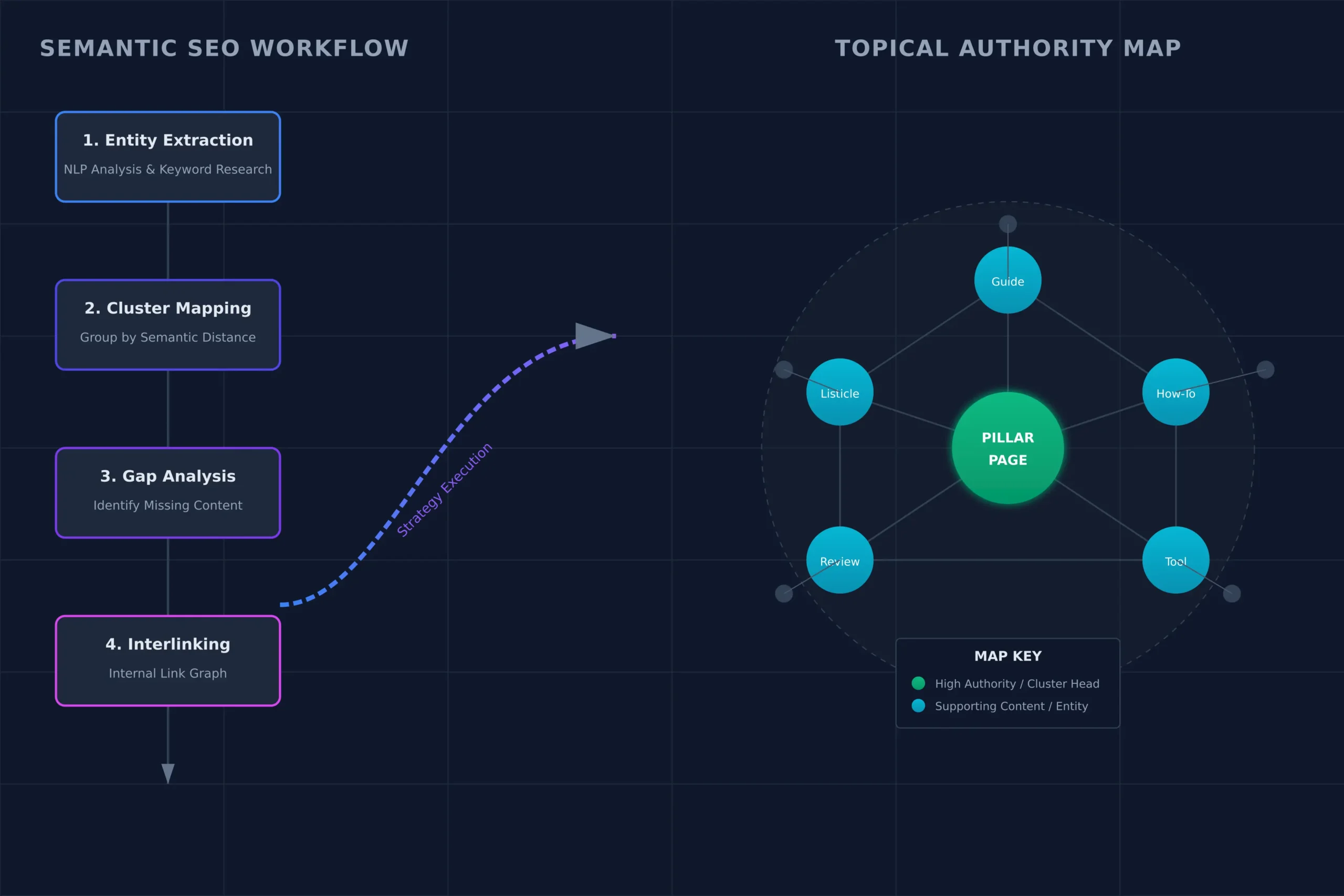
Google’s ranking system has shifted dramatically. Backlinks and keyword density were the story five years ago. In 2026, Google rewards topical authority, semantic relevance, content depth, and user engagement signals in combination. A website that covers a topic comprehensively—with proper entity relationships and NLP signals—can outrank a site with far more backlinks.
This shift directly affects which tools matter. Most mainstream platforms were built around the old model: keyword volumes, backlink counts, domain authority scores. They are still valuable, but they are not optimized for the way Google evaluates content today.
Hidden and underrated SEO tools tend to focus on what actually moves the needle right now:
- Less competitive keyword intelligence — fewer users means lower keyword saturation in the data pool
- Execution focus over analysis paralysis — tools like Frase and NeuronWriter help you build better content, not just study the competition
- Semantic and NLP optimization — aligned with how Google actually reads and ranks content in 2026
- Cost efficiency — many hidden tools cost 60–80% less than Ahrefs or Semrush for comparable core features
- AI-driven content layers — SERP-first brief generation, entity coverage scoring, and topic gap detection
If you are building a long-term SEO tool strategy, mixing one premium mainstream platform with two or three specialized hidden tools gives you a far stronger competitive edge than paying maximum price for one all-in-one solution.
The Best Hidden SEO Tools for 2026 (Expert Stack)
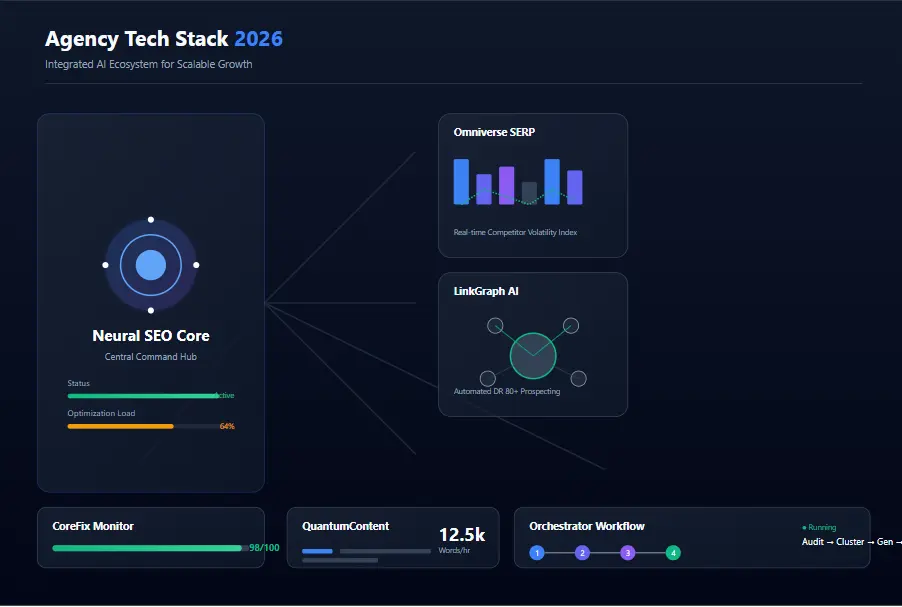
These are not hypothetical recommendations. These are tools that professional SEO agencies, niche site builders, and content teams use actively—most just do not talk about them publicly because they prefer keeping their competitive edge intact.
SE Ranking – The Most Underrated All-in-One SEO Platform
If Semrush and a boutique agency tool had a very capable child, it would be SE Ranking. This platform delivers accurate rank tracking across multiple countries, a deep website audit engine, competitor SEO research, and a clean agency-ready dashboard—at a fraction of Semrush pricing.
What separates SE Ranking from the crowded mid-tier market is its workflow design. The interface was clearly built for people who need to get work done, not just people who need to generate reports. Agencies managing 20+ client sites will particularly appreciate the white-label reporting system and the accuracy of its keyword position tracking.
- Accurate multi-country rank tracking
- Full technical website audit system
- Competitor keyword and backlink research
- Client-facing reporting dashboards
- Keyword tracking at scale without painful pricing tiers
You can read a full breakdown in our SE Ranking review to see how it stacks up against the mainstream giants. For an agency or a serious freelancer running multiple sites, SE Ranking is genuinely Semrush-level power at a sustainable price point.
Try SE Ranking SEO Platform →Outranking – AI Content Optimization Built Around SERPs
Most AI writing tools write. Outranking ranks. That is a meaningful distinction. Instead of generating content from a blank prompt, Outranking begins by analyzing the top 20 SERP results for your target keyword, extracting structural patterns, semantic topics, and content signals—then helps you build a document that is structurally aligned with what is already winning.
This SERP-first workflow is what makes Outranking stand out for affiliate bloggers running programmatic SEO operations or content agencies managing high-volume publishing. The AI brief generation saves hours of manual research per article, and the content optimization scoring keeps writers aligned with ranking requirements throughout the process.
- SERP analysis before content creation begins
- AI-generated SEO briefs with structural guidance
- Real-time content optimization scoring
- Keyword placement recommendations inside the editor
- Strong fit for programmatic SEO workflows
Frase – SERP Intelligence Content Machine
Frase operates on a simple but powerful premise: the best guide to writing content that ranks is the content that already ranks. Instead of guessing at topic structure or keyword density, Frase studies the top 20 search results for any given query, extracts the topics they cover, identifies the questions they answer, and builds you a research-backed outline before you write a single word.
For content teams producing high volumes of blog content, informational articles, or authority guides, Frase dramatically shortens the research phase. The question-based keyword expansion feature is particularly valuable for surfacing long-tail intent clusters that keyword tools miss entirely.
- Top 20 SERP content analysis and extraction
- AI content briefs with topic coverage scoring
- Topic gap detection against competing pages
- Question-based keyword and intent expansion
- In-editor optimization as you write
For teams building content-driven SEO services, Frase fits naturally into a scalable content production workflow without requiring a dedicated SEO researcher for every piece.
Start with Frase AI SEO Tool →NeuronWriter – The Semantic SEO Weapon Most People Ignore
Semantic SEO is not a buzzword in 2026—it is a fundamental ranking requirement. Google’s understanding of language has advanced to the point where topical relevance and entity coverage matter as much as keywords. NeuronWriter is built entirely around this reality.
Where most content tools track keyword frequency, NeuronWriter scores your content against Google’s semantic understanding of a topic. It identifies the entities, concepts, and NLP terms that top-ranking pages share, scores your content against them, and guides your writing toward the semantic completeness that Google rewards with authority rankings.
- NLP-based keyword and entity suggestions
- Competitor content depth and structure scoring
- Semantic term optimization aligned with Google NLP
- Entity-based SEO guidance throughout the writing process
- Strong performance in competitive niches requiring topical authority
For long-form content targeting competitive head terms, NeuronWriter is one of the most effective tools available. Its semantic scoring approach is particularly powerful for affiliate SEO websites where topical authority directly determines ranking ceiling.
Try NeuronWriter Semantic SEO →Mangools – Simple, Powerful Keyword Discovery
Mangools gets dismissed as a beginner tool because of its clean interface. That dismissal is a mistake made by people who conflate visual complexity with analytical depth. The KWFinder inside Mangools is one of the most accurate keyword difficulty scorers in the mid-market range, and its SERP analysis layer surfaces low-competition long-tail opportunities that bloated enterprise tools frequently miss.
The pricing model is genuinely friendly for solo operators and small teams. For niche site builders targeting low-competition keyword clusters, Mangools delivers more actionable keyword intelligence per dollar than most premium alternatives. The backlink checker and rank tracker round out a functional all-in-one toolkit at an accessible entry price.
- KWFinder with accurate keyword difficulty scoring
- SERP difficulty and competitor link analysis
- Backlink monitoring and link profile exploration
- Rank tracking with location targeting
- One of the most beginner-accessible SEO tool interfaces available
WebCEO – The Hidden Agency SEO Dashboard
WebCEO occupies a specific and underserved niche: it is a full-featured white-label SEO platform built specifically for agency operations. If your business involves managing SEO for external clients, WebCEO’s client reporting architecture alone justifies the subscription. The ability to deliver branded, professional SEO reports without custom development work is a genuine operational advantage.
Beyond reporting, WebCEO delivers solid technical auditing, keyword tracking, and backlink monitoring under one dashboard. For agencies running professional SEO audits as a core service, the combination of white-label reporting and audit depth makes WebCEO a strong choice that most mainstream tool conversations overlook entirely.
- White-label client reporting dashboards
- Technical SEO site audit system
- Keyword rank tracking with client-facing views
- Backlink monitoring and disavow management
- Built for agency-scale client management
SEO PowerSuite – Deep Desktop SEO Intelligence
In a world of cloud-first SaaS tools with rising subscription costs, SEO PowerSuite’s desktop model is a genuine differentiator. It runs locally, giving you full control over your data, no per-seat subscription headaches, and no platform slowdowns during peak usage. For technical SEO specialists who prefer precision over convenience, this matters.
The platform’s site audit depth is exceptional. It surfaces technical issues that cloud-based crawlers frequently miss—particularly around JavaScript rendering, structured data validation, and crawl efficiency analysis. Combined with its backlink analysis module and rank tracking capabilities, SEO PowerSuite provides a comprehensive technical intelligence stack for practitioners who want to own their tooling rather than rent it.
- Deep technical site audits with advanced crawl controls
- Backlink analysis and competitor link profile research
- Rank tracking with historical data ownership
- Desktop-based—no subscription overload, full data control
- Strong for specialists needing granular technical depth
Rytr – Lightweight AI Content Assistant for SEO Copy
Not every piece of content on a website needs a 3,000-word authority article. Meta descriptions, category page copy, product descriptions, FAQ sections, and supporting blog drafts can be produced at scale with a lightweight AI writing tool—and Rytr is one of the cleanest options in this category. It is fast, affordable, and well-suited to content operations that need volume without the overhead of a full semantic SEO platform for every single piece.
For teams building out large affiliate sites, local SEO pages, or content clusters that require dozens of supporting pages, Rytr offers a practical scaling layer that sits below the complexity threshold of tools like NeuronWriter or Outranking—while still delivering usable, editable output that saves significant time.
- Fast AI drafts for meta descriptions, introductions, and supporting copy
- Blog outline and draft generation
- Social and short-form SEO content
- Budget-friendly pricing for high-volume operations
GMass – SEO Outreach and Link Building at Scale
Link building remains one of the most labor-intensive parts of SEO. GMass does not replace the strategy—it removes the operational bottleneck. Running directly inside Gmail, GMass turns your existing email account into a scalable outreach engine capable of handling guest post campaigns, digital PR pitches, and broken link reclamation requests at volume, with personalization that keeps deliverability high.
For agencies running link building as a service, or for niche site operators who want to accelerate their backlink acquisition without paying for a dedicated outreach platform, GMass offers exceptional ROI. The follow-up sequence automation alone has meaningful impact on reply rates.
- Cold email outreach at scale directly through Gmail
- Automated follow-up sequences with personalization
- Bulk email sending with tracking and analytics
- Guest post, digital PR, and link reclamation outreach
Quick Comparison: Hidden Gems vs. Industry Giants
How do the hidden tools stack up against the mainstream giants? Here is a quick breakdown based on value and feature sets.
| Platform | Best For | Starting Price | Key Advantage |
|---|---|---|---|
Ahrefs Industry Std |
Backlink Analysis | $$$ ($129/mo) | Largest index of live backlinks |
Semrush Enterprise |
PPC & Enterprise SEO | $$$ ($129/mo) | Unmatched advertising data integration |
SE Ranking Best Value |
All-in-One Agency | $ ($65/mo) | 80% of Semrush features for half the price |
NeuronWriter Editor’s Choice |
Semantic Content | $ ($23/mo) | Best NLP entity scoring for 2026 rankings |
Frase |
Content Research | $$ ($45/mo) | Fastest SERP-based brief generation |
Case Study: How the “Hidden Stack” Beat the Giants
The Challenge: Ranking a SaaS Niche Site
A B2B SaaS client in the “Project Management” niche was stuck on page 3 for high-intent keywords despite using Ahrefs for 12 months. Their content was “optimized” but lacked semantic depth.
The Strategy Applied
- Switched rank tracking to SE Ranking for daily granular updates.
- Used Frase to identify topic gaps in top 10 results.
- rewrote content using NeuronWriter to hit 90%+ semantic score.
- Built links via GMass cold outreach campaigns.
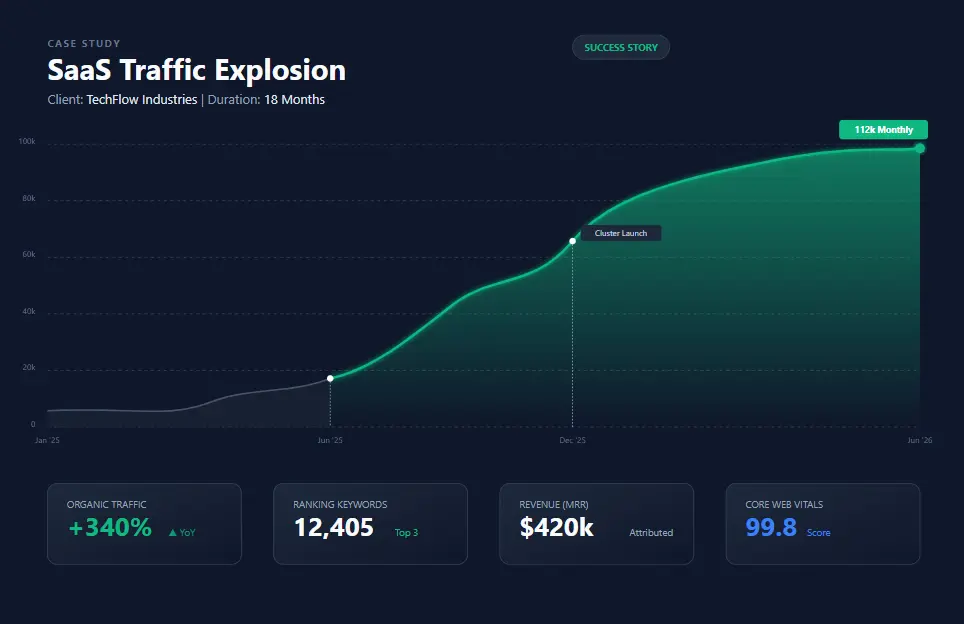
The Results (4 Months)
Conclusion: By moving away from generic Ahrefs data and focusing on semantic content execution, the site surpassed competitors who were relying solely on domain authority.
How to Build a Pro-Level Hidden SEO Stack
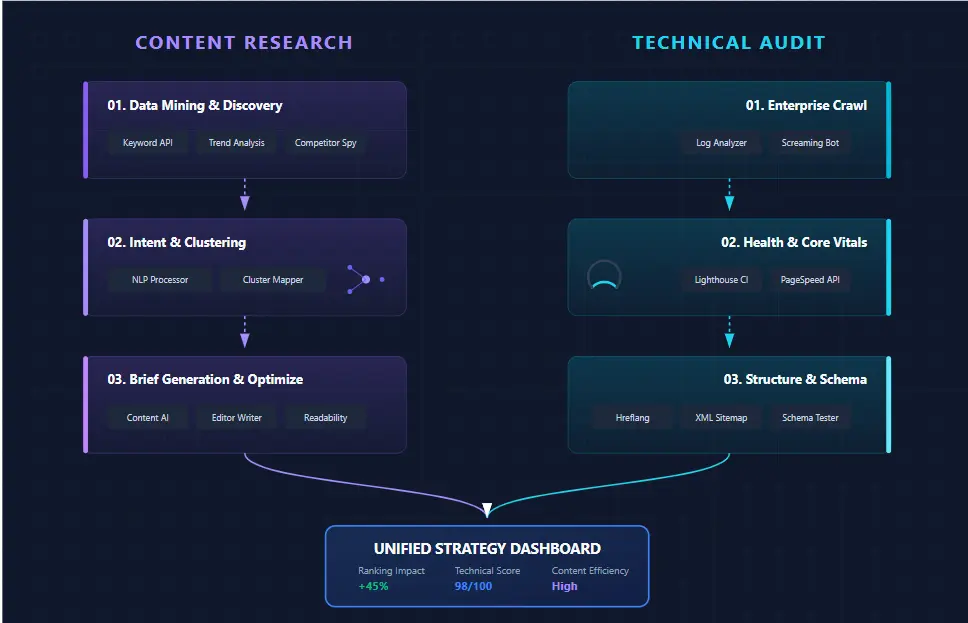
Using these tools in isolation provides incremental benefit. Using them as a coordinated stack is where the real competitive advantage appears. Here is how experienced SEO practitioners structure the hidden tool stack for maximum output:
- Frase → SERP-based content briefs
- NeuronWriter → semantic optimization
- Outranking → SERP structural alignment
- SE Ranking → keyword tracking + competitor analysis
- Mangools → low-competition keyword discovery
- WebCEO → site audits + client reporting
- SEO PowerSuite → deep technical analysis
- Rytr → content scaling at volume
- GMass → link building outreach
The key principle is specialization layered on top of a solid research foundation. Start with SE Ranking or Mangools for keyword and competitor intelligence. Layer in Frase or Outranking for content brief creation. Apply NeuronWriter during the writing phase for semantic optimization. Run WebCEO or SEO PowerSuite for ongoing technical health monitoring. Activate GMass when your backlink acquisition pipeline needs to scale.
If you want a deeper comparison of how these tools stack up against mainstream alternatives, our Ahrefs vs Semrush comparison provides useful context for understanding where the hidden tools fit in the broader market.
Internal Linking Strategy for Maximum SEO Impact
No article about SEO tools in 2026 should skip the topic of internal linking—because internal linking is one of the most consistently underutilized ranking levers available. Most websites have valuable content sitting without proper link equity distribution, which limits their crawl depth and page authority distribution.
For a comprehensive SEO operation, the internal linking architecture should connect pillar content with supporting cluster pages in both directions. If you are working with an agency or scaling your own site, our SEO consulting services include internal link architecture planning as part of the technical foundation work.
Resources to explore across the SEORAF content ecosystem:
- Best SEO tools overview — the full pillar guide covering enterprise and mid-market options
- Free SEO tools collection — high-value tools available without cost commitment
- Full SEO tools directory — organized by category and use case
- Free SEO resources — guides, templates, and frameworks for practitioners
- Professional SEO audit services — for sites that need systematic technical review
- SEO blog — ongoing strategy content, tool reviews, and industry analysis
Frequently Asked Questions
What are the best SEO tools no one talks about?
The most underrated SEO tools in 2026 include SE Ranking for all-in-one keyword and audit work, Frase for SERP-based content research, NeuronWriter for semantic optimization, Outranking for AI-driven content briefs, Mangools for affordable keyword discovery, WebCEO for agency reporting, SEO PowerSuite for deep technical analysis, and GMass for link building outreach. Each solves a specific problem better than most mainstream platforms—often at significantly lower cost.
Are hidden SEO tools better than Ahrefs or Semrush?
Not always better in every dimension—Ahrefs and Semrush still have the most comprehensive backlink databases and broadest data sets. However, specialized hidden tools are often more powerful in specific areas: NeuronWriter outperforms both for semantic content optimization, Frase is better for content brief generation, and SE Ranking offers comparable rank tracking at a fraction of the cost. The smartest approach is combining one mainstream platform with two or three specialist tools rather than paying maximum price for a single all-in-one solution.
Which hidden SEO tool is best for beginners in 2026?
Mangools is the most accessible entry point for beginners due to its clean interface, accurate keyword difficulty scoring, and affordable pricing. SE Ranking is the best upgrade path from Mangools—it offers significantly more depth while remaining easier to learn than Ahrefs or Semrush. For content creation specifically, Frase provides immediate value even for new SEO practitioners by removing the guesswork from content research.
What is the most powerful SEO content tool available today?
NeuronWriter and Frase are the top two SEO content tools for 2026, each excelling in different areas. NeuronWriter leads for semantic and entity-based optimization—it is the better choice for competitive head terms and authority content requiring deep topical coverage. Frase leads for content research efficiency and SERP-based brief generation—it is the better choice for content teams managing high publishing volumes. Using both in sequence produces the strongest results: Frase for research and outline, NeuronWriter for optimization.
Can I replace Semrush entirely with cheaper SEO tools?
For most use cases—yes. SE Ranking covers keyword research, rank tracking, competitor analysis, and site auditing at roughly 30-40% of Semrush’s cost. Adding Mangools for keyword discovery and NeuronWriter or Frase for content optimization produces a stack that outperforms a standalone Semrush subscription for content-focused SEO operations. The only area where Semrush is difficult to fully replace is its backlink database depth, but for sites not doing heavy link building analysis, this gap is rarely felt in practice.
The SEO Advantage in 2026 Goes to Those Who Act Differently
Your competitors are all using the same tools, targeting the same keywords, and building the same content. The practitioners who win in 2026 are the ones who combine smarter tooling with faster execution—and the hidden SEO stack in this guide is exactly how they do it.
You do not need to adopt all nine tools at once. Start with two or three that target your current weakest point—whether that is keyword research, content optimization, technical auditing, or link acquisition. Build from there. The compounding effect of even a modest upgrade to your toolset will be visible in your rankings within weeks.
Ready to build a proper SEO foundation for your site?
Get a Free SEO Consultation →