
📥 Free Keyword Research Checklist
Get our comprehensive keyword research checklist for bloggers and start finding profitable keywords today!
Keyword Research Checklist for Bloggers
PDF • 12 pages • Instant download

Keyword Research Tools for Bloggers: Best Tools to Boost Traffic & Affiliate Revenue
Discover the most effective keyword research tools for bloggers that will help you find profitable keywords, grow your blog traffic, and maximize your affiliate earnings with the right software solutions.
📥 Download our Free Keyword Research Checklist for Bloggers
Get our step-by-step checklist to find profitable keywords using the best research tools and outrank your competition.
Best Paid Keyword Research Tools for Bloggers
Mangools is a comprehensive SEO suite that includes KWFinder, a powerful keyword research tool designed to help bloggers find low-competition keywords with high traffic potential. What sets Mangools apart as one of the premier keyword research tools for bloggers is its perfect balance between functionality and usability, making it ideal for content creators who want professional-grade research without the steep learning curve of enterprise-level solutions.
Key Features:
- Accurate keyword difficulty scores tailored for content creators
- In-depth SERP analysis with domain authority metrics
- Content ideas based on top-ranking pages’ performance
- Historical search volume data with trend analysis
- Local keyword research capabilities for geo-targeted content
- Question-based keyword suggestions for FAQ content
- Competitor keyword gap analysis
Real-World Success Story:
Sarah, a food blogger, used KWFinder among other keyword research tools to find low-competition keywords like “easy vegan meal prep for beginners” with a difficulty score of 23. Within three months, her blog traffic increased by 340%, and her affiliate revenue from kitchen gadgets grew by 180%, proving how effective these solutions can be.
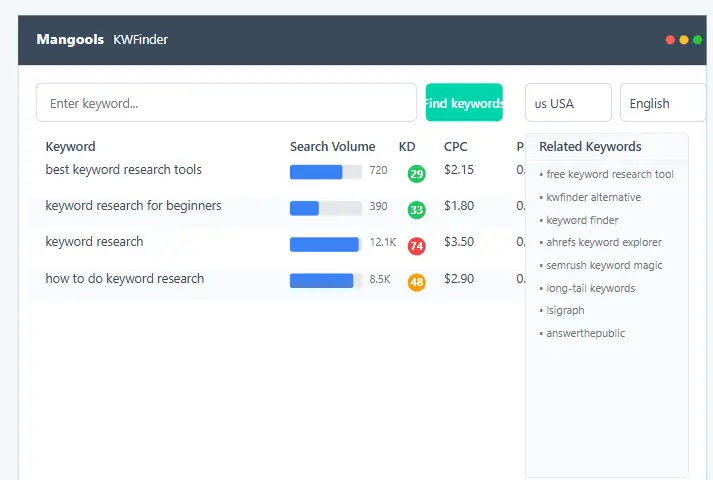
Pros
- Exceptionally user-friendly interface designed for non-technical users
- Highly accurate keyword difficulty metrics specifically calibrated for blog content
- Includes additional SEO tools (SERPChecker, LinkMiner, SiteProfiler) in one package
- Competitive pricing with flexible monthly and annual options
- Excellent customer support with extensive knowledge base
- Regular updates with new features based on user feedback
Cons
- Limited historical data compared to enterprise tools like Ahrefs
- Search volume estimates may vary slightly from Google’s actual data
- No free trial (only limited free version with daily search limits)
- Backlink analysis features are basic compared to dedicated tools
- API access requires higher-tier plans
Pricing Overview:
Mangools offers several plans: Basic ($29.90/month) includes 100 keyword lookups per day, Premium ($39.90/month) offers 500 lookups, and Agency ($79.90/month) provides 1200 lookups. Annual plans save 40%, making the Premium plan just $23.90/month when billed yearly. The value proposition is excellent compared to other keyword research tools for bloggers charging $99+ for similar features.
🚀 Get Mangools Lifetime Deal
Special offer for our readers: Get lifetime access to one of the best keyword research tools for bloggers at a discounted rate! This deal includes all future updates and is perfect for content creators looking for a long-term solution without recurring costs.
Get Mangools Lifetime DealCreated by renowned digital marketer Neil Patel, Ubersuggest has evolved from a simple keyword suggestion tool into a comprehensive SEO platform. Its strength lies in its all-in-one approach, combining keyword research with content ideas, competitive analysis, and site audit features. For bloggers who want everything in one place without switching between multiple solutions, Ubersuggest offers exceptional value.
Key Features:
- Extensive keyword database with over 2 billion keywords
- Comprehensive SEO audit tool with actionable recommendations
- Backlink checker with domain authority metrics
- Content ideas based on competitor analysis
- Competitor keyword analysis and traffic estimation
- Keyword difficulty score with SERP overview
- Historical traffic data for any website
- Top pages by traffic and backlinks
Success Example:
Mike, a travel blogger, used Ubersuggest among other keyword research tools to create a comprehensive guide on “budget travel in Southeast Asia.” The tool suggested including sections on visa requirements, transportation costs, and hidden gems. The post now ranks #1 and generates over 15,000 monthly visitors with affiliate earnings exceeding $4,000/month, showcasing the power of proper research solutions.
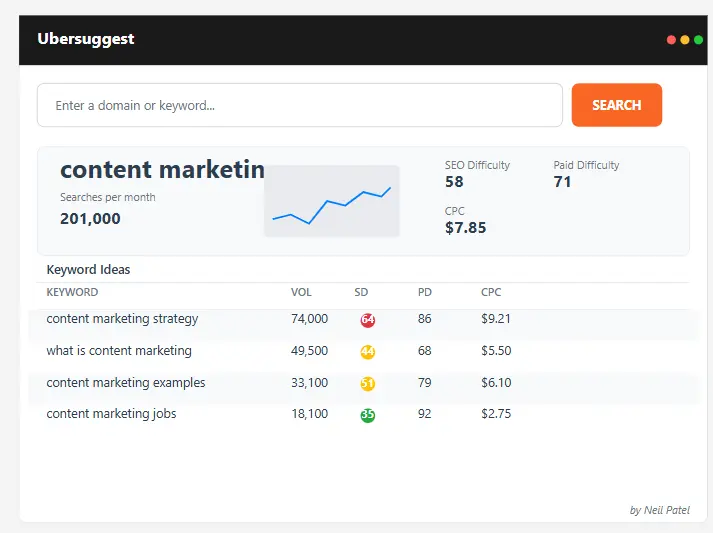
Pros
- Generous free daily searches (up to 3 searches per day)
- Intuitive user interface with visual data representations
- All-in-one SEO solution eliminating need for multiple tools
- Regular feature updates based on user feedback and industry trends
- Excellent educational content and tutorials by Neil Patel
- Competitive pricing especially for individual bloggers
- Mobile app for on-the-go keyword research
Cons
- Data accuracy can be inconsistent for very new or niche keywords
- Limited historical data compared to specialized tools
- Can become expensive as your blog grows and needs more features
- Customer support response times can be slow during peak periods
- Some advanced features require higher-tier plans
- Export functionality limited in lower plans
Pricing Overview:
Ubersuggest offers Individual plans at $12/month (billed annually) or $20/month monthly, Business at $20/month (annually) or $40/month monthly, and Enterprise at $40/month (annually) or $80/month monthly. A 7-day trial is available for just $1, giving you full access to test all features. The Individual plan includes 3 daily reports, 150 tracked keywords, and 10,000 monthly page crawls – sufficient for most content creators starting out.
✅ Try Ubersuggest
Start with free daily searches or upgrade to unlock advanced features! The $1 trial is perfect for testing the full capabilities of one of the most popular keyword research tools for bloggers before committing.
Try Ubersuggest NowWhile Semrush is often considered an enterprise-level tool, its keyword research capabilities are unparalleled among keyword research tools for bloggers. For serious content creators looking to scale their operations and compete with major publications, Semrush offers the most comprehensive keyword database and advanced features. The Keyword Magic Tool alone can generate over 2 million keyword suggestions from a single seed keyword, making it perfect for creating extensive content clusters.
Advanced Features for Bloggers:
- Keyword Magic Tool with 20+ filtering options
- Keyword difficulty score based on real SERP analysis
- Competitive positioning maps to identify content gaps
- Topic research tool with related questions and subtopics
- SEO content template with optimization recommendations
Pricing Overview:
Semrush starts at $119.95/month for the Pro plan, which includes 3,000 reports per day and 500 keywords to track. While pricier than other keyword research tools for bloggers, the depth of data and advanced features justify the investment for serious content creators. The Guru plan at $229.95/month adds historical data and content marketing tools.
Free Keyword Research Tools for Bloggers
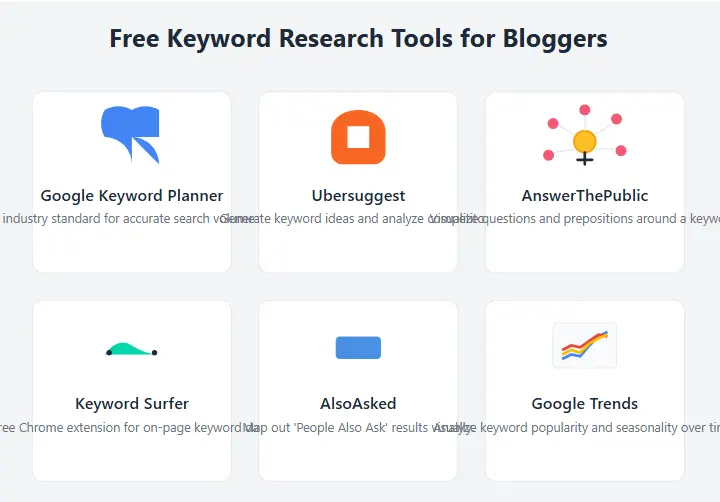
Free keyword research tools for bloggers can help you get started with keyword research
While paid keyword research tools for bloggers offer comprehensive features, several free options can help you get started without any investment. These solutions are particularly valuable for new content creators working with limited budgets or those testing the waters before committing to a paid option. The key is to understand each tool’s strengths and limitations, using them in combination to maximize your research capabilities.
Google Keyword Planner
As Google’s official keyword tool, Keyword Planner provides the most accurate search volume data directly from the source. While designed for advertisers, bloggers can leverage this data to understand search demand. The tool recently updated its interface to show more precise search ranges rather than broad categories, making it more useful for content creators.
Best for: Getting accurate search volume data from Google and discovering new keyword ideas using one of the most reliable solutions.
Pro Tip: Use the “Discover new keywords” feature with your competitor’s URL to find keywords they’re ranking for that you might have missed.
Limitation: Requires a Google Ads account (but no active campaigns needed) and groups search volumes into ranges for lower-traffic keywords.
Google Trends
Google Trends is invaluable among keyword research tools for bloggers for understanding keyword seasonality and identifying emerging trends before they become competitive. The tool’s “Related queries” and “Related topics” features can spark content ideas that are currently gaining traction. Bloggers can use the “Compare” feature to analyze multiple keywords simultaneously, helping prioritize content creation efforts.
Best for: Identifying trending topics, understanding seasonal keyword patterns, and comparing keyword popularity over time.
Pro Tip: Set up email alerts for trending searches in your niche to stay ahead of content opportunities. Use the geographic breakdown to create location-specific content.
Limitation: Doesn’t provide specific search volume numbers, only relative popularity. Data is normalized and may not reflect absolute search volumes.
AnswerThePublic
AnswerThePublic visualizes search questions and phrases around your keyword in an intuitive, visual format. This tool is exceptional among keyword research tools for bloggers for understanding user intent and creating FAQ content that directly addresses what your audience is searching for. The recent update includes comparison questions and preposition-based searches, expanding content possibilities.
Best for: Finding question-based keywords, understanding user intent, and generating comprehensive FAQ content.
Pro Tip: Use the “Comparison” questions to create “vs” posts that perform well in affiliate marketing. Download the data as CSV for deeper analysis in spreadsheets.
Limitation: Limited to 3 free searches per day. Some visualizations can be overwhelming without proper filtering.
AlsoAsked
AlsoAsked maps out the questions people ask about a topic in a visual tree format, showing how searches relate to each other. This helps bloggers understand the user’s journey and create comprehensive content that answers multiple related questions in one piece. The tool is particularly useful for creating pillar content and topic clusters.
Best for: Understanding user question paths and creating comprehensive content that addresses multiple related queries.
Pro Tip: Export the data to identify content gaps in your existing articles and opportunities for internal linking.
Limitation: Limited to 5 free searches per day with basic data. Advanced features require a paid subscription.
Hashtagify
While primarily designed for social media, Hashtagify can help bloggers discover trending topics and related keywords that are gaining traction on social platforms. This is valuable for creating timely content that can leverage social traffic and emerging trends before they become highly competitive in search results, making it one of the unique keyword research tools for bloggers.
Best for: Identifying trending topics and social media keywords that can drive traffic from multiple channels.
Pro Tip: Use the trend analysis to create content about emerging topics before they become saturated in search results.
Limitation: Focuses primarily on social media trends rather than search volume. Limited free features compared to paid plans.
Maximizing Free Keyword Research Tools for Bloggers: A Strategic Approach
While each free tool has limitations, you can create a comprehensive keyword research workflow by combining these solutions strategically:
Step-by-Step Free Tool Workflow:
- Use Google Keyword Planner to find high-volume keywords in your niche
- Check these keywords in Google Trends to identify seasonal patterns and trends
- Input promising keywords into AnswerThePublic to find related questions
- Use AlsoAsked to map out the complete user journey
- Validate ideas by searching Google to see current competition and content gaps
Limitations of Free Keyword Research Tools for Bloggers
While free keyword research tools for bloggers are great for getting started, they come with significant limitations that can impact your content strategy:
- Limited search volume data, often shown in ranges rather than exact numbers
- No keyword difficulty scores, making it hard to assess ranking potential
- Limited number of searches per day, restricting research scope
- No competitive analysis features to understand ranking difficulty
- Missing long-tail keyword suggestions beyond basic variations
- No historical data to track keyword performance over time
- Limited filtering options to refine keyword lists
When to Upgrade from Free Keyword Research Tools for Bloggers:
Consider upgrading to a paid tool when you consistently hit daily search limits, need more accurate data for client work, or want to scale your content production. Most bloggers find the transition necessary after 3-6 months of consistent publishing when they need more sophisticated analysis to maintain growth with professional solutions.
For serious bloggers looking to grow their traffic and revenue significantly, investing in paid keyword research tools for bloggers becomes essential. The time saved and additional insights gained typically provide a return on investment within 2-3 months through increased traffic and affiliate earnings.
How to Choose the Right Keyword Research Tools for Bloggers

Selecting the right keyword research tools for bloggers is a critical decision that impacts your content strategy, time investment, and ultimately, your blog’s success. The ideal solution depends on various factors including your experience level, budget, content goals, and technical requirements. Let’s explore these factors in detail to help you make an informed decision about the best keyword research tools for bloggers.
Skill Level: Beginner vs. Advanced
Your experience with SEO and keyword research significantly influences which keyword research tools for bloggers will serve you best. Beginners need solutions with intuitive interfaces, guided workflows, and educational resources, while advanced users might prioritize data depth, customization options, and advanced filtering capabilities.
For Beginners:
Look for keyword research tools for bloggers with visual dashboards, clear difficulty scores, and built-in tutorials. KWFinder excels here with its color-coded difficulty system and straightforward interface. Ubersuggest also offers a gentle learning curve with its simplified data presentation and extensive educational content from Neil Patel, making it one of the best keyword research tools for bloggers starting out.
For Advanced Users:
You might prefer keyword research tools for bloggers like Semrush or Ahrefs that offer advanced filtering, historical data, API access, and customizable reports. These solutions provide the depth of analysis needed for sophisticated content strategies and competitive research at scale.
Assessment Questions:
- How comfortable are you interpreting SEO metrics with these keyword research tools for bloggers?
- Do you need educational resources built into the keyword research tools for bloggers?
- Will you be using advanced features like API integration with your keyword research tools for bloggers?
- How much time can you dedicate to learning new keyword research tools for bloggers?
Budget Considerations for Keyword Research Tools for Bloggers
Your budget plays a crucial role in selecting keyword research tools for bloggers, but consider it as an investment rather than an expense. The right keyword research tools for bloggers can pay for themselves through increased traffic, better rankings, and higher affiliate revenue. However, it’s important to choose a solution that provides value within your budget constraints.
Free Options (Budget: $0):
Google Keyword Planner, Google Trends, and AnswerThePublic can get you started, but you’ll hit limitations quickly. These are best for testing the waters or supplementing paid keyword research tools for bloggers rather than as a complete solution.
Budget-Friendly ($10-30/month):
Ubersuggest’s Individual plan and KWFinder’s Basic plan offer excellent value for solo bloggers. These keyword research tools for bloggers provide essential features like keyword difficulty scores, search volume data, and basic competitive analysis without breaking the bank.
Mid-Range ($30-100/month):
KWFinder’s Premium and Mangools suite, along with Ubersuggest’s Business plan, offer expanded features and higher limits. This range is ideal for established bloggers looking to scale their content production and optimize their strategy with professional solutions.
Premium ($100+/month):
Semrush and Ahrefs dominate this category with comprehensive features and enterprise-level data. These keyword research tools for bloggers are best for professional content creators, agencies, or those running multiple sites in competitive niches.
Money-Saving Tips for Keyword Research Tools for Bloggers:
- Take advantage of annual plans for 20-40% savings on keyword research tools for bloggers
- Look for lifetime deals during special promotions for keyword research tools for bloggers
- Consider tool bundles that include multiple SEO features in keyword research tools for bloggers
- Start with lower-tier plans and upgrade as needed with keyword research tools for bloggers
Monetization Goals and Keyword Research Tools for Bloggers
Your monetization strategy should influence your selection of keyword research tools for bloggers, as different solutions excel at different types of keyword research. Whether you’re focused on affiliate marketing, display advertising, or selling digital products, the right keyword research tools for bloggers can help you find keywords that align with your revenue goals.
For Affiliate Marketing:
Look for keyword research tools for bloggers with commercial intent data and buyer keyword identification. KWFinder’s SERP analysis helps you see if commercial pages rank for your target keywords. Ubersuggest’s content ideas feature can help you create comparison articles and product reviews that convert well.
For Display Advertising:
Focus on high-volume keywords with broad appeal. Google Keyword Planner’s search volume data is valuable here, while keyword research tools for bloggers like Semrush can help you identify topics with consistent traffic throughout the year.
For Digital Products:
Keyword research tools for bloggers that help you find problem-aware and solution-aware keywords are crucial. AnswerThePublic excels at finding questions that indicate pain points your products can solve. AlsoAsked helps you understand the complete user journey toward purchase.
For Service-Based Businesses:
Local keyword research capabilities become important in keyword research tools for bloggers. KWFinder’s location-based keyword research helps you find service keywords in specific geographic areas. Google Trends can help you identify seasonal demand for your services.
Monetization Alignment Example:
A tech review blogger focusing on affiliate revenue used Semrush among other keyword research tools for bloggers to find “best budget laptop under 500” with high commercial intent. The tool showed that comparison articles and “vs” searches performed well, leading to a content strategy that generated $8,000+ in monthly affiliate commissions, demonstrating the power of proper keyword research tools for bloggers.
Technical Requirements & Integration for Keyword Research Tools for Bloggers
Consider how the keyword research tools for bloggers will fit into your existing workflow and tech stack. Integration capabilities, data export options, and collaboration features can significantly impact your productivity with these solutions.
Integration Needs:
- Does the tool integrate with your content management system?
- Can you export data for analysis in spreadsheets from these keyword research tools for bloggers?
- Is there API access for custom workflows with keyword research tools for bloggers?
- Does it support team collaboration if you work with writers using keyword research tools for bloggers?
- Are there browser extensions for quick keyword analysis with keyword research tools for bloggers?
Workflow Considerations:
Think about how you’ll use the keyword research tools for bloggers in your content creation process. Do you need it for initial research only, or throughout the writing and optimization process? Some keyword research tools for bloggers like Ubersuggest offer content optimization features that help during writing, while others focus purely on research.
Mobile & Remote Access:
If you work across multiple devices or travel frequently, consider keyword research tools for bloggers with mobile apps or cloud-based interfaces. Ubersuggest’s mobile app is particularly useful for on-the-go research and quick keyword checks.
Data Accuracy & Freshness in Keyword Research Tools for Bloggers
The quality of keyword data varies significantly between keyword research tools for bloggers. Consider how important data accuracy is for your strategy and whether you need real-time updates or monthly data refreshes are sufficient for your keyword research tools for bloggers.
Data Sources:
Keyword research tools for bloggers pull data from different sources – some use clickstream data, others rely on Google’s API, while some combine multiple sources. Understand where your tool gets its data and how frequently it’s updated.
Accuracy vs. Consistency:
Sometimes, consistent data is more valuable than perfectly accurate data. If you’re tracking trends over time, choose keyword research tools for bloggers with consistent methodology even if the absolute numbers aren’t perfect.
Step-by-Step Keyword Research Process for Bloggers
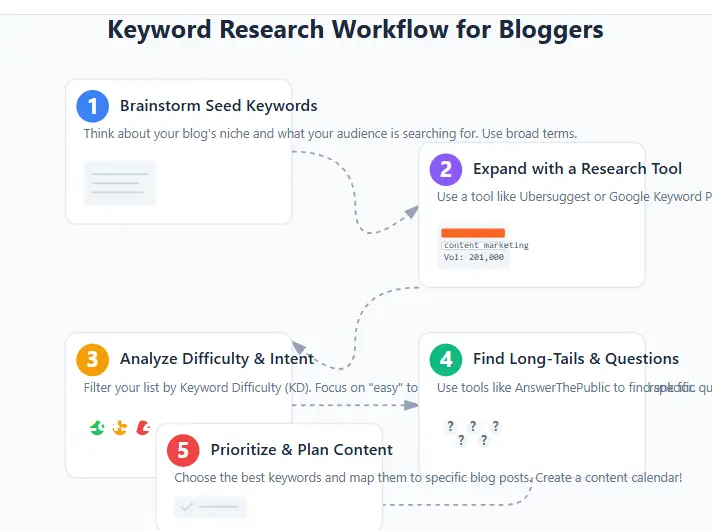
Effective keyword research follows a systematic process that transforms broad ideas into a targeted content strategy. This workflow has been refined through years of experience with successful keyword research tools for bloggers across various niches. Follow these steps to create a comprehensive keyword strategy that drives consistent traffic and revenue using the best solutions.
Step 1: Find Seed Keywords with Keyword Research Tools for Bloggers
Seed keywords are the foundation of your keyword research strategy with keyword research tools for bloggers. These are broad terms related to your niche that represent your core topics. Start by brainstorming 5-10 seed keywords that define your blog’s main categories using your keyword research tools for bloggers. Think about what your target audience might search for when they’re looking for information in your niche.
Brainstorming Techniques with Keyword Research Tools for Bloggers:
- Think about your blog’s main categories or pillars
- Consider problems your audience wants to solve
- Review your most popular existing content for themes
- Analyze competitor sites for their main topics using keyword research tools for bloggers
- Use Google’s “People also ask” and “Related searches” for ideas
Validation Process with Keyword Research Tools for Bloggers:
Once you have your seed keywords, validate them by checking search volume and relevance. Use Google Keyword Planner or other keyword research tools for bloggers to ensure they have sufficient search volume (typically 1,000+ monthly searches for seed keywords) and align with your monetization goals.
Tools for This Step:
Google Keyword Planner, Google Trends, and your own industry knowledge are sufficient for finding seed keywords. At this stage, you’re looking for breadth rather than depth with your keyword research tools for bloggers.
Step 2: Expand with Long-Tail Keywords Using Keyword Research Tools for Bloggers
Long-tail keywords are longer, more specific search queries that typically have lower search volume but higher conversion rates. These keywords are where bloggers find their biggest opportunities, especially when starting out. They represent specific user intent and often have less competition, making them perfect for keyword research tools for bloggers.
Expansion Strategies with Keyword Research Tools for Bloggers:
- Use question-based modifiers: “how to,” “what is,” “why does”
- Add location modifiers for local relevance
- Include year-specific terms for timeliness
- Use comparison terms: “vs,” “alternative,” “review”
- Add audience-specific modifiers: “for beginners,” “for seniors”
Long-Tail Expansion Example:
From the seed keyword “weight loss,” you might generate long-tails like “weight loss for women over 40,” “healthy weight loss meal plan for beginners,” “best weight loss supplements 2026,” and “how to start weight loss journey at home” using your keyword research tools for bloggers. Each of these targets a specific audience segment with clear intent.
Quantity vs. Quality with Keyword Research Tools for Bloggers:
While it’s tempting to generate hundreds of keywords, focus on finding 20-30 high-potential long-tails for each seed keyword using your keyword research tools for bloggers. Look for keywords with decent search volume (50-500 monthly searches), low competition (keyword difficulty under 30), and clear user intent that aligns with your content capabilities.
Tools for This Step:
KWFinder and Ubersuggest excel at generating long-tail variations among keyword research tools for bloggers. AnswerThePublic is perfect for finding question-based long-tails. Google’s autocomplete and “People also ask” features provide real user-generated variations to supplement your keyword research tools for bloggers.
Step 3: Analyze Competition and Difficulty with Keyword Research Tools for Bloggers
Understanding keyword difficulty and competitive landscape is crucial for prioritizing your efforts with keyword research tools for bloggers. Not all keywords with good search volume are worth pursuing – some may be dominated by authority sites that are nearly impossible to outrank without proper keyword research tools for bloggers.
Keyword Difficulty Assessment with Keyword Research Tools for Bloggers:
Most keyword research tools for bloggers provide a keyword difficulty score (typically 0-100). As a general guideline for bloggers:
- 0-20: Easy to rank, great for new blogs
- 21-40: Moderate difficulty, achievable with good content
- 41-60: Difficult, requires authority and strong SEO
- 61-100: Very difficult, dominated by major sites
SERP Analysis with Keyword Research Tools for Bloggers:
Look beyond the difficulty score and analyze the actual search results. Ask yourself:
- Are the top results from major authority sites or smaller blogs?
- Is the content recently updated or outdated?
- Do the top results fully answer the search query?
- Are there opportunities for better, more comprehensive content?
- Are there video or image results you could compete with?
Domain Authority Considerations:
Compare your domain authority with that of top-ranking pages using your keyword research tools for bloggers. If you’re a new blog (DA 0-10), targeting keywords where the top results have DA 30+ will be extremely challenging. Focus on keywords where you’re within 20 points of the top results.
Tools for This Step:
KWFinder’s SERP analysis is excellent for beginners among keyword research tools for bloggers. Ubersuggest provides competitive difficulty scores. Semrush offers the most detailed competitive analysis for advanced users. Manual SERP analysis is always recommended regardless of the keyword research tools for bloggers you use.
Step 4: Prioritize and Select Keywords with Keyword Research Tools for Bloggers
With a expanded list of keywords and competitive analysis complete, it’s time to prioritize which keywords to target first using your keyword research tools for bloggers. This step involves balancing multiple factors to create a strategic keyword list that will drive the best results for your blog.
Prioritization Framework for Keyword Research Tools for Bloggers:
Score each keyword on a scale of 1-10 for these factors using your keyword research tools for bloggers:
- Search Volume: Higher scores for higher monthly searches
- Keyword Difficulty: Higher scores for lower difficulty
- Commercial Intent: Higher scores for keywords with monetization potential
- Content Alignment: Higher scores for keywords matching your expertise
- Trend Potential: Higher scores for growing or stable trends
Prioritization Example:
Keyword A: “best running shoes” (Volume: 10,000, Difficulty: 75, Intent: High) – Score: 25/50
Keyword B: “best running shoes for flat feet women” (Volume: 500, Difficulty: 25, Intent: High) – Score: 40/50
Despite lower volume, Keyword B scores higher due to much lower competition and specific audience targeting, a strategy refined with keyword research tools for bloggers.
Content Planning Integration with Keyword Research Tools for Bloggers:
Group selected keywords into content clusters around your seed keywords. Each cluster should have one pillar page targeting the main seed keyword and several cluster posts targeting related long-tails. This structure helps build topical authority and improves internal linking when using keyword research tools for bloggers.
Timeline Creation with Keyword Research Tools for Bloggers:
Create a realistic content calendar based on your prioritized keywords. Start with easier keywords to build momentum and authority, then gradually tackle more competitive terms as your blog grows. Consider seasonality when planning your content timeline using keyword research tools for bloggers.
Tools for This Step:
Spreadsheet software like Google Sheets or Excel works well for creating prioritization frameworks. Project management tools can help with content calendar creation. Some keyword research tools for bloggers like Ubersuggest offer built-in content planning features.
Step 5: Create and Optimize Content with Keyword Research Tools for Bloggers
With your keyword strategy in place, it’s time to create content that ranks using insights from your keyword research tools for bloggers. This step involves more than just including keywords – it’s about creating comprehensive, valuable content that fully satisfies user intent and outperforms existing search results.
Content Creation Best Practices with Keyword Research Tools for Bloggers:
- Analyze top-ranking pages to understand what Google considers valuable
- Create content that’s significantly better, longer, and more comprehensive
- Include your target keyword naturally in title, headings, and throughout content
- Use related keywords and semantic variations to strengthen topical relevance
- Incorporate multimedia elements like images, videos, and infographics
- Include internal links to related content on your site
- Add external links to authoritative sources when appropriate
On-Page SEO Optimization with Keyword Research Tools for Bloggers:
Beyond keyword inclusion, focus on these technical optimization elements:
- Optimize meta titles and descriptions with target keywords
- Use proper heading structure (H1, H2, H3) with keywords
- Optimize image alt text with descriptive keywords
- Ensure fast page loading speed
- Implement schema markup for enhanced search results
- Create SEO-friendly URLs with keywords
Tools for This Step:
Ubersuggest’s SEO Content Template provides optimization recommendations. Grammarly helps with readability. Canva or Adobe Spark for creating visuals. Google PageSpeed Insights for performance optimization. These complement your keyword research tools for bloggers perfectly.
Step 6: Monitor, Analyze, and Iterate with Keyword Research Tools for Bloggers
Keyword research isn’t a one-time task – it’s an ongoing process of monitoring performance, analyzing results, and refining your strategy with keyword research tools for bloggers. The most successful bloggers continuously optimize their approach based on real data and changing search trends.
Performance Tracking with Keyword Research Tools for Bloggers:
Monitor these key metrics for each targeted keyword using your keyword research tools for bloggers:
- Current ranking position and changes over time
- Click-through rate from search results
- Organic traffic to the page
- Time on page and bounce rate
- Conversion rate for affiliate links or goals
- Featured snippet or rich result attainment
Analysis Framework with Keyword Research Tools for Bloggers:
Monthly, review your keyword performance and categorize results:
- Winning Keywords: Those ranking on page 1 – can you optimize further?
- Improving Keywords: Those moving up – keep doing what works
- Stagnant Keywords: Those not improving – need content upgrades or new backlinks
- Declining Keywords: Those losing positions – investigate why and fix
Strategy Iteration with Keyword Research Tools for Bloggers:
Use your performance data to refine your keyword strategy:
- Identify patterns in your best-performing content
- Find keyword gaps where competitors are outranking you
- Discover new keyword opportunities from your search console data
- Adjust your content mix based on what drives conversions
- Update old content with fresh keywords and information
Continuous Optimization Example:
A finance blogger noticed their “best savings accounts” article was ranking #7 but had low click-through. By analyzing the SERP with their keyword research tools for bloggers, they saw competing pages had APR rates in their titles. Adding current rates to their title and meta description increased CTR by 45% and pushed them to #3 within two weeks.
Tools for This Step:
Google Search Console for ranking and click data. Google Analytics for traffic and behavior analysis. Your chosen keyword research tools for bloggers for tracking keyword positions. Ahrefs or Semrush for competitive analysis.
Common Mistakes Bloggers Make with Keyword Research Tools for Bloggers
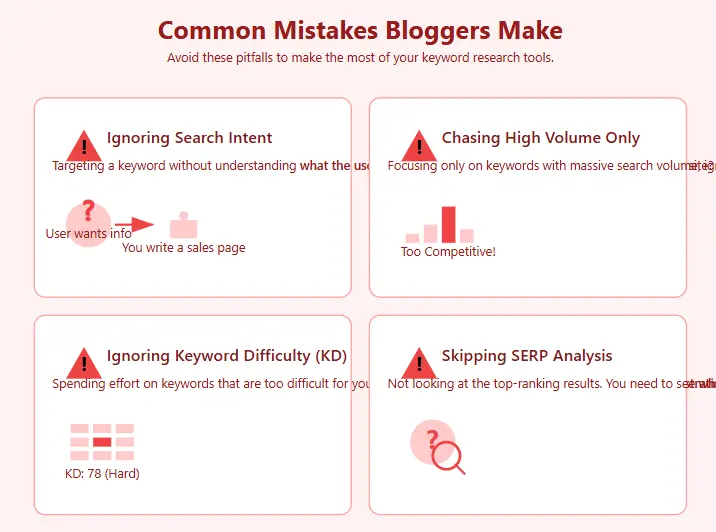
Even experienced bloggers can fall into common traps when using keyword research tools for bloggers that limit their traffic potential and waste valuable time. Understanding these mistakes – and more importantly, how to avoid them – can be the difference between a struggling blog and a thriving online business. Let’s explore the most common pitfalls and their solutions when using keyword research tools for bloggers.
-
Ignoring Search Intent When Using Keyword Research Tools for Bloggers
Perhaps the most critical mistake bloggers make is focusing solely on search volume without considering what users actually want when they search for a keyword. Search intent falls into four main categories: informational (learning), navigational (finding a specific site), commercial (researching products), and transactional (ready to buy). Creating content that doesn’t match the search intent will never rank well, regardless of how well-optimized it is or which keyword research tools for bloggers you use.
How to Avoid This Mistake with Keyword Research Tools for Bloggers:
- Analyze the top 10 search results for your target keyword
- Identify whether results are blog posts, product pages, or category pages
- Look for question-based queries indicating informational intent
- Notice if results include “best,” “review,” or “buy” indicating commercial intent
- Create content that matches the dominant intent type in search results
Quick Intent Test: Search for your keyword and ask yourself: “What would satisfy me if I searched for this?” Your answer should match the type of content you plan to create using your keyword research tools for bloggers. -
Targeting High Competition Keywords Prematurely with Keyword Research Tools for Bloggers
New bloggers often make the mistake of targeting highly competitive keywords from the start without proper keyword research tools for bloggers. While these keywords may have high search volume, they’re typically dominated by authority sites with years of SEO work and thousands of backlinks. Trying to compete for these terms is like bringing a knife to a gunfight – you’ll waste months creating content that never ranks.
The Progressive Difficulty Strategy with Keyword Research Tools for Bloggers:
Instead, follow a progressive approach to keyword difficulty using your keyword research tools for bloggers:
- Months 1-3: Target keywords with difficulty under 20
- Months 4-6: Expand to keywords with difficulty 20-35
- Months 7-12: Target moderate difficulty keywords (35-50)
- Year 2+ Gradually tackle more competitive terms as your authority grows
Building Authority First with Keyword Research Tools for Bloggers:
Use easier keywords to build your domain authority and topical relevance. As you rank for these terms and earn backlinks, you’ll gradually become competitive for more difficult keywords. This approach builds momentum rather than frustration with your keyword research tools for bloggers.
Real-World Example:
A tech blogger initially targeted “best smartphone” (difficulty 85) with no success, even with the best keyword research tools for bloggers. After pivoting to “best budget smartphone under 200” (difficulty 28), they ranked #1 within 2 months. Six months later, with established authority, they were able to rank for “best smartphone” on page 2 – a significant achievement for a newer blog using keyword research tools for bloggers.
-
Relying Exclusively on Free Keyword Research Tools for Bloggers
While free keyword research tools for bloggers are great for getting started, relying on them exclusively severely limits your keyword research capabilities. Free solutions lack crucial features like keyword difficulty scores, competitive analysis, historical data, and comprehensive keyword suggestions. This limitation often leads bloggers to either target the wrong keywords or miss out on valuable opportunities.
The Hidden Costs of “Free” Keyword Research Tools for Bloggers:
- Wasted time creating content for unprofitable keywords
- Missed opportunities that paid keyword research tools for bloggers would reveal
- Slower growth due to inefficient keyword selection
- Inability to scale content production effectively
- Limited competitive intelligence
When to Upgrade from Free Keyword Research Tools for Bloggers:
Consider upgrading to a paid tool when you:
- Consistently hit daily search limits on free keyword research tools for bloggers
- Need more accurate data for business decisions
- Want to scale your content production
- Are working with clients or need professional reports
- Have been blogging for 3+ months with limited growth
ROI Reality Check: If a $30/month keyword research tool for bloggers helps you rank for just one additional affiliate keyword that generates $100/month in commissions, that’s a 40x monthly return. Most paid keyword research tools for bloggers pay for themselves within 1-2 months. -
Neglecting to Update and Optimize Existing Content with Keyword Research Tools for Bloggers
Many bloggers focus exclusively on creating new content while ignoring their existing pages. This is a significant missed opportunity, as updating older content with fresh keywords, information, and optimization using keyword research tools for bloggers can often yield faster ranking improvements than creating new content from scratch.
Content Refresh Strategy with Keyword Research Tools for Bloggers:
- Identify pages ranking on pages 2-3 for valuable keywords
- Analyze why top-ranking pages outperform yours
- Add 1,000+ words of comprehensive, valuable information
- Update statistics, examples, and information with current data
- Improve multimedia elements and user experience
- Re-optimize for related keywords you may have missed
The 20% Rule for Keyword Research Tools for Bloggers:
Spend 20% of your content creation time updating and optimizing existing content. This approach often yields 80% of your ranking improvements, especially for established blogs with a substantial content library using keyword research tools for bloggers.
Content Update Success:
A food blogger updated their 2-year-old “chicken recipes” post by adding 20 new recipes, updating nutritional information, and including video tutorials. Using insights from their keyword research tools for bloggers, the page jumped from position 15 to #3 within 3 weeks, increasing daily traffic from 50 to 500 visitors.
-
Keyword Stuffing and Over-Optimization Despite Using Keyword Research Tools for Bloggers
In an attempt to rank for keywords, many bloggers go overboard with keyword usage, resulting in unnatural content that both readers and search engines reject. Keyword stuffing is an outdated SEO tactic that now results in penalties rather than rankings, even when using the best keyword research tools for bloggers.
Modern Keyword Optimization with Keyword Research Tools for Bloggers:
Instead of stuffing, focus on:
- Natural keyword placement in title and first paragraph
- Using variations and synonyms throughout content
- Including keywords in headings where appropriate
- Writing for humans first, search engines second
- Focusing on topic coverage rather than keyword density
The Readability Test for Keyword Research Tools for Bloggers:
Read your content aloud. If it sounds unnatural or repetitive, you’re likely over-optimizing. Good content should flow naturally while still including relevant keywords and their variations, a balance that keyword research tools for bloggers can help you achieve.
-
Ignoring Local and Seasonal Keywords with Keyword Research Tools for Bloggers
Many bloggers miss out on valuable traffic by ignoring local modifiers and seasonal trends. Even if your blog isn’t location-specific, local keywords can capture valuable search traffic. Similarly, seasonal keywords can provide consistent traffic boosts throughout the year when using keyword research tools for bloggers.
Local Keyword Opportunities with Keyword Research Tools for Bloggers:
- Add city/state names to relevant keywords
- Create location-specific guides or resources
- Target “near me” variations when appropriate
- Consider regional differences in terminology
Seasonal Content Planning with Keyword Research Tools for Bloggers:
Use Google Trends to identify seasonal patterns in your niche. Create content 2-3 months before peak search times to allow time for ranking. Update seasonal content annually to maintain rankings using your keyword research tools for bloggers.
Seasonal Example: A fitness blogger created “summer workout plans” in March, allowing time to rank before the May search peak. Using insights from their keyword research tools for bloggers, the article generated 50,000+ visitors during summer months. -
Failing to Track Keyword Performance with Keyword Research Tools for Bloggers
Without tracking keyword performance, you’re flying blind. Many bloggers publish content and never check whether it’s actually ranking or driving traffic. This makes it impossible to learn from your successes and failures or to refine your strategy over time using keyword research tools for bloggers.
Essential Tracking Metrics with Keyword Research Tools for Bloggers:
- Keyword ranking positions and changes over time
- Click-through rates from search results
- Organic traffic to individual pages
- Conversion rates for affiliate links or goals
- Featured snippet attainment
Tracking Tools and Setup for Keyword Research Tools for Bloggers:
Set up Google Search Console immediately to track keyword performance. Use your keyword research tools for bloggers’ rank tracking feature for more detailed analysis. Create a simple spreadsheet to monitor progress on your target keywords.
Creating a Mistake-Prevention Checklist for Keyword Research Tools for Bloggers
To avoid these common mistakes, create a pre-publishing checklist for every piece of content using your keyword research tools for bloggers:
- Does the content match the search intent for the target keyword?
- Is the keyword difficulty appropriate for my site’s authority?
- Have I used keyword variations naturally throughout the content?
- Is the content significantly better than current top results?
- Have I included relevant multimedia elements?
- Are internal and external links included where appropriate?
- Is the content optimized for mobile and page speed?
- Have I set up tracking for this keyword’s performance?
By systematically avoiding these mistakes and following best practices with your keyword research tools for bloggers, you’ll create a solid foundation for sustainable blog growth through effective keyword research and SEO.
Choose the Right Keyword Research Tools for Your Blog

Effective keyword research is the foundation of successful blogging and affiliate marketing. Throughout this guide, we’ve explored how the right keyword research tools for bloggers and strategies can transform your blog from a hobby into a profitable business. The journey begins with understanding that keyword research isn’t just about finding high-volume terms – it’s about discovering the specific queries your audience is searching for and creating content that perfectly satisfies their needs using the best solutions.
Whether you choose Mangools for its user-friendly interface and accurate difficulty scores, Ubersuggest for its all-in-one approach and content optimization features, or Semrush for enterprise-level data and advanced analysis, investing in the right keyword research tools for bloggers will pay dividends in increased traffic and revenue. Remember that the best tool is one that you’ll actually use consistently – consider your skill level, budget, and specific needs when making your decision about keyword research tools for bloggers.
Next Steps for Your Blog with Keyword Research Tools for Bloggers
As you move forward, focus on these key priorities with your keyword research tools for bloggers:
- Select keyword research tools for bloggers that fit your budget and skill level
- Conduct thorough research for your blog’s main topics using keyword research tools for bloggers
- Create a content calendar based on low-competition, high-value keywords
- Focus on creating comprehensive content that outperforms existing results
- Monitor your performance and continuously refine your strategy
- Invest in learning advanced SEO techniques as your blog grows
Remember that every successful blog started with a single post and a commitment to understanding their audience’s needs. With the right keyword research tools for bloggers and strategies, you’re equipped to create content that not only ranks well but also genuinely helps your readers solve their problems.
📥 Download our Free Keyword Research Checklist for Bloggers
Get our comprehensive step-by-step checklist to find profitable keywords using the best keyword research tools for bloggers and outrank your competition. Includes templates, workflows, and pro tips used by successful bloggers.
🚀 Get Started with Premium Keyword Research Tools for Bloggers
Take your keyword research to the next level with these recommended keyword research tools for bloggers. Both offer excellent value for bloggers:
Join Thousands of Successful Bloggers Using Keyword Research Tools for Bloggers
The bloggers who succeed in 2026 and beyond will be those who master keyword research and create content that truly serves their audience’s needs. The keyword research tools for bloggers and strategies in this guide have helped thousands of bloggers increase their traffic by 300% or more and generate sustainable income from their passion.
Your journey to blogging success starts with the next keyword you research. Choose your keyword research tools for bloggers, follow the process, and start creating content that both ranks and resonates with your audience.
Happy blogging, and may your keywords always rank on page one with the right keyword research tools for bloggers!
Thank you for subscribing! Check your email for the keyword research checklist for bloggers.