
Best AI SEO Software in 2026: 10 Tools Compared by Category, Pricing and Use Case
By Mousume Akter, Founder & Editor, SEORAF. Last verified: November 16, 2026.
Choosing the best AI SEO software is harder than it should be. “AI” now appears on almost every SEO product page, from content editors and keyword research tools to rank trackers and platforms that monitor whether ChatGPT mentions a brand. Those products solve different problems, and they do not all use the same technology. A single ranked list that mixes them can point readers toward the wrong tool.
This guide compares 10 products: Scalenut, Writesonic, Surfer SEO, Dashword, Rankability, NeuronWriter, Frase, Outrank, Nightwatch and LowFruits. They cover several related but distinct areas, including AI-assisted content creation, content optimization, AI search visibility, keyword research and rank tracking. I have grouped them by their main use rather than treating every product as a direct substitute for every other one.
AI can speed up research, content planning, drafting, optimization and monitoring. It cannot supply original expertise, guarantee search rankings or AI citations, or replace editorial review. A content score is not proof that a page is accurate or useful, and an AI visibility report is not a guarantee that an AI platform will mention a brand.
My evaluation approach is research-based. I reviewed vendor pricing pages, product documentation and published feature descriptions where available. I did not run hands-on tests, independently benchmark data accuracy or measure ranking improvements. Prices and limits can change, so the figures below should be checked against each vendor’s current website before purchase. The evaluation section explains the limits of this comparison.
Affiliate disclosure: SEORAF may earn a commission if you purchase through certain links on this page, at no extra cost to you. Any affiliate link will be clearly identified. Vendor links that are not marked as affiliate links are ordinary links to official websites. Commercial relationships do not determine product inclusion, descriptions or editorial conclusions. Products are grouped by category and use case, not presented as a hands-on performance ranking. See the affiliate disclosure and editorial policy for details.
Best AI SEO Software at a Glance
There is no single best AI SEO tool for every workflow. The right choice depends on whether you need to create content, improve existing pages, monitor AI-generated answers, track conventional rankings or find less competitive keywords. Use this shortlist to identify the relevant category before comparing plans.
- AI content creation and GEO workflows: Scalenut, Writesonic and Outrank.
- Content optimization and editorial workflows: Surfer SEO, Dashword, NeuronWriter and Frase.
- AI search visibility and content workflows: Rankability.
- Traditional rank tracking with AI visibility features: Nightwatch.
- Low-competition keyword research: LowFruits.
Quick Comparison Table
The table summarizes each product’s primary purpose. Pricing is indicative and may vary by billing period, currency, promotion, usage limits or plan changes. Annual-billing equivalents are identified where the vendor publishes them.
| Software | Main purpose | AI-related capabilities | Other SEO features | Published pricing information | Best use case |
|---|---|---|---|---|---|
| Scalenut | AI content creation and GEO workflows | AI article creation, content optimization, GEO scoring and AI visibility features | Keyword clustering, content audits, internal linking and on-page optimization | Starter $59/month; Plus $89/month; Professional $199/month. Annual promotions may differ. | Teams creating and refreshing SEO and GEO content |
| Writesonic | AI search visibility and AI-assisted content | AI visibility monitoring, AI articles, sentiment analysis on eligible plans and agentic workflows | Site audits, keyword and SERP data integrations, WordPress integration | Starter $79/month; Basic $199/month; Growth $399/month, shown as annual-billing monthly equivalents | Teams combining AI visibility monitoring with content production |
| Surfer SEO | Content optimization and AI search visibility | AI SEO guidelines, Surfy assistant and AI Search Analytics on eligible plans | Content scoring, page optimization and content research | Discovery $49/month; AI Search Analytics $82/month; Standard $99/month; Pro $182/month; Peace of Mind $299/month, billed yearly where specified | Content teams optimizing pages against search competitors |
| Dashword | Content briefs and optimization | AI Writer and AI-assisted content workflows | Content reports, content scoring, monitoring, API and MCP access | Startup $99/month; Business from $349/month | Editorial teams producing and maintaining SEO content |
| Rankability | AI search visibility and content workflows | AI query tracking, AI platforms monitoring and AI-assisted content projects | Keyword tracking, page audits, site audits and client reporting | Starter $97/month; Agency $297/month; Agency Pro $497/month | Agencies combining AI visibility monitoring and content delivery |
| NeuronWriter | AI-assisted content optimization | AI writing credits, content optimization and AI-monitored questions on eligible plans | Content planning, plagiarism checks, integrations and content management on higher plans | Bronze $23/month; Silver $45/month; Gold $69/month; Platinum $93/month; Diamond $117/month. Annual billing is lower. | Writers and small teams optimizing SEO content |
| Frase | SEO and GEO content platform | SEO and GEO scores, AI visibility tracking and AI-assisted content workflows | Content research, optimization, audits and publishing integrations | Starter $39/month billed yearly; Professional and Scale are higher tiers | Solo creators and content teams managing one or more sites |
| Outrank | Automated AI-assisted content production | AI article generation, rewriting and content workflows | Keyword research, publishing integrations and backlink exchange access | All-in-One $99/month or $999/year | Teams evaluating automated content production and publishing |
| Nightwatch | Rank tracking and AI visibility monitoring | LLM tracking, AI answer visibility, sentiment and citation analysis | Daily rank tracking, site audits, keyword research and reporting | Starter €79/month; Professional €159/month; Agency €399/month, with annual billing discounts | SEO teams monitoring rankings and AI-generated answers |
| LowFruits | Low-competition keyword research | Keyword discovery and SERP-based opportunity analysis; not a full AI content platform | Competitor keyword extraction, SERP analysis, domain exploration and rank tracking | Standard $29.90/month or $20.75/month billed yearly; Premium $79.90/month or $62.45/month billed yearly | Small sites and niche publishers researching less competitive keywords |
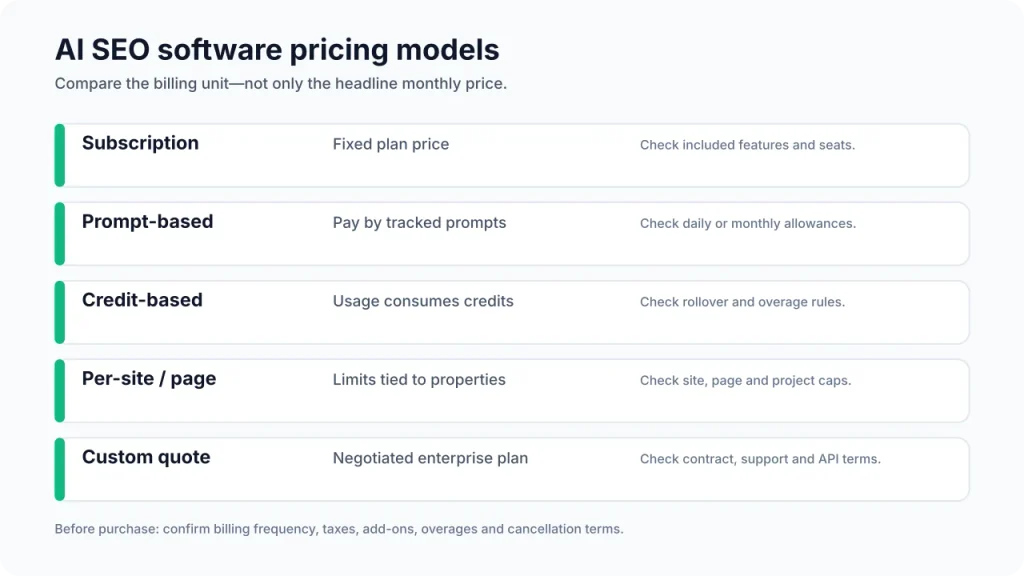
Pricing above is not a like-for-like comparison. Some vendors charge by content reports, projects, prompts, credits or tracked keywords. Others bundle multiple tools into one subscription. Check the exact billing period, usage allowance and add-ons before comparing total cost.
What Is AI SEO Software?
AI SEO software is a broad label for tools that use machine learning, natural language processing or generative AI to support search optimization. The term covers different workflows. Some tools generate draft content, others compare pages with search competitors, and others monitor brand mentions in AI-generated answers. Some products also include conventional SEO features that do not necessarily use AI.
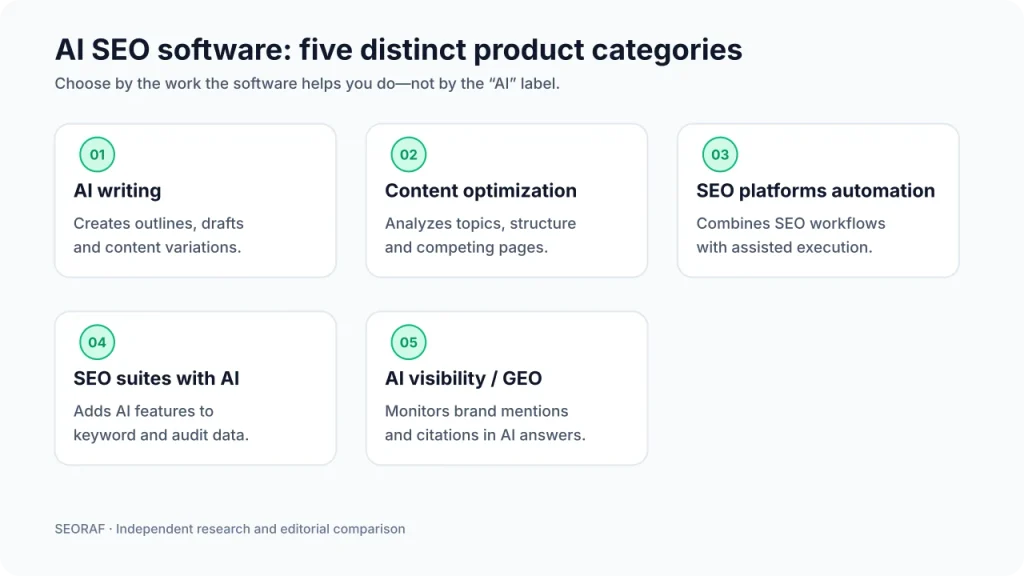
Five Product Types That Are Often Mixed Together
| Category | What it does | Examples in this guide | What it is not |
|---|---|---|---|
| AI content creation | Helps create outlines, drafts, rewrites and other content assets. | Scalenut, Writesonic, Outrank, NeuronWriter and Frase | Proof that generated content is accurate, original or ready to publish |
| AI content optimization | Analyzes content and suggests improvements to coverage, structure or relevance. | Surfer SEO, Dashword, NeuronWriter, Frase and Scalenut | A guarantee of higher rankings or better content quality |
| AI search visibility monitoring | Tracks brand mentions, citations or visibility across selected AI platforms. | Writesonic, Rankability, Nightwatch, Scalenut and Frase | A way to control or guarantee what an AI platform says |
| Traditional SEO research and tracking | Finds keyword opportunities, tracks rankings and analyzes search results. | LowFruits and Nightwatch, with additional research features in several other tools | An AI content generator |
| Automated content workflows | Connects research, content generation, optimization or publishing steps. | Outrank, Scalenut and Writesonic | A substitute for editorial review and publishing controls |
How AI Is Actually Used in SEO Workflows
- Keyword research assistance: AI can help group keywords, identify related topics and organize content ideas. Search volume, difficulty and SERP data still depend on the provider’s underlying data sources. LowFruits, for example, focuses on keyword discovery and SERP analysis rather than acting as a general-purpose AI writer. See SEORAF’s best keyword research tools guide.
- Content creation: AI-assisted tools can create outlines and first drafts. Scalenut, Writesonic and Outrank provide content-generation workflows, but generated material still needs fact-checking, editing and original contribution.
- Content optimization: Surfer SEO, Dashword, NeuronWriter and Frase provide workflows for evaluating or improving content. Scores and recommendations are proprietary measurements, not Google ranking factors.
- Rank tracking: Nightwatch monitors conventional search rankings and selected SERP features. Rank tracking is not the same as AI visibility monitoring.
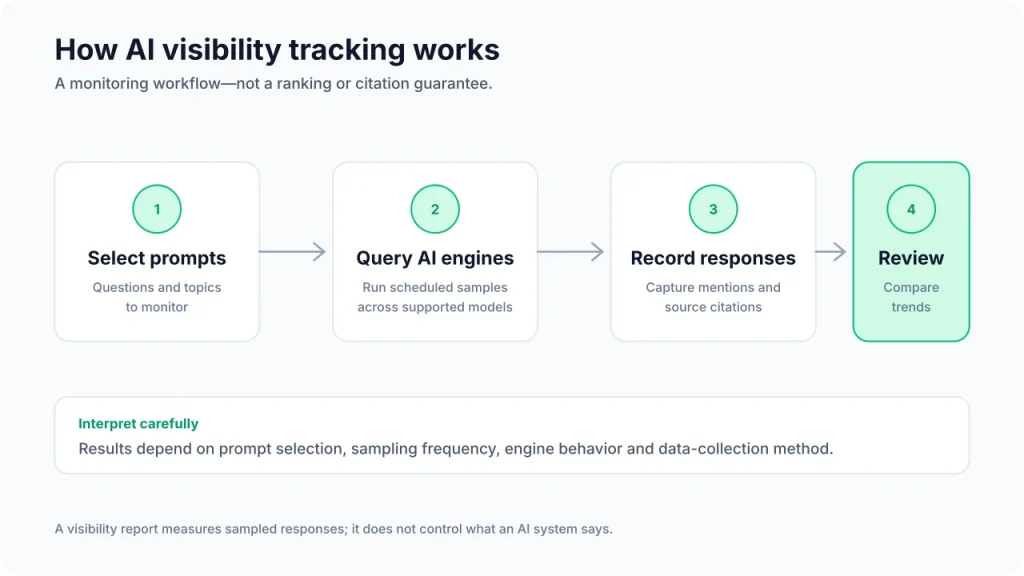
- AI search visibility: Some tools sample prompts and record whether selected AI platforms mention a brand or cite a page. Results depend on the prompts, engines, locations and collection methods used.
AI SEO, GEO and AEO
Generative Engine Optimization (GEO) and Answer Engine Optimization (AEO) describe efforts to make information useful and understandable in AI-generated answers. The terms overlap, and there is no universally accepted measurement standard for either one. Google’s Search Central documentation says site owners do not need special optimization to appear in AI Overviews or AI Mode; standard SEO fundamentals remain relevant. AI visibility tools can help monitor selected results, but they cannot guarantee mentions or citations. For related concepts, see SEORAF’s semantic SEO guide and future-proof SEO article.
How I Evaluated the Software
SEORAF is an independent SEO knowledge resource, not an agency. This comparison is research-based rather than test-based. I used the following approach to keep product descriptions and limitations clear.
- Source priority: vendor pricing pages, product documentation and help centers first. Independent reviews are used only for additional context where appropriate.
- Feature classification: I distinguish AI content creation, content optimization, AI visibility, keyword research and conventional rank tracking. A product is not described as a full AI SEO platform simply because it includes one AI feature.
- Pricing basis: I use published vendor prices where available and identify annual-billing equivalents. Currency differences and promotions can change the final amount.
- Verification limits: I reviewed publicly available product and pricing information. Some vendor pages provide more detail than others, and feature availability may vary by plan.
- No hands-on testing: I did not test the products, benchmark their keyword databases, evaluate AI answer accuracy or measure ranking improvements.
- Selection criteria: products were selected because they serve a relevant SEO workflow, such as content creation, optimization, AI visibility, rank tracking or keyword research.
- Grouping: products are grouped by their main use case, not ranked from best to worst. See SEORAF’s review methodology for the broader editorial approach.
AI SEO Software Reviews
1. Scalenut
Scalenut is an AI-assisted content and SEO platform that combines article creation, content optimization, keyword planning and GEO-oriented workflows. Its product documentation describes tools such as Cruise Mode, Content Optimizer and keyword clustering. The platform is designed to support both new content production and updates to existing pages.
- AI capabilities: AI-assisted article creation, content rewriting, GEO content scoring, prompt coverage recommendations and AI-related visibility features. These are vendor-described capabilities, not independently tested results.
- SEO features: keyword planning, topic clustering, competitor content analysis, content audits, NLP term recommendations and internal linking.
- Plans: the pricing page lists Starter at $59/month, Plus at $89/month and Professional at $199/month on monthly billing. Annual promotions and usage allowances can differ. The vendor’s current promotional pricing should not be confused with its regular monthly rates.
- Free access: the vendor advertises a 7-day free trial on its pricing page. Confirm current trial conditions before signing up.
- Strengths: combines content planning, drafting and optimization in one workflow, with GEO-related features integrated into its content tools.
- Limitations: usage allowances differ by plan, and a GEO score is a vendor-defined metric rather than a Google ranking factor. Generated content still needs independent research and editorial review.
- Best fit: content teams that want AI-assisted article production and optimization in one platform.
View Scalenut’s current plans. Review the official feature overview before choosing a subscription.
2. Writesonic
Writesonic has expanded beyond general AI writing into AI search visibility and SEO-related workflows. Its current positioning includes monitoring brand presence across selected AI platforms, generating AI-assisted articles and identifying visibility gaps. It is therefore relevant to teams that want content production and AI search monitoring in the same subscription.
- AI capabilities: AI search visibility tracking for platforms listed on the vendor’s pricing page, AI article generation, and additional sentiment or workflow features on eligible plans.
- SEO features: site audits, Google Search Console integration, WordPress integration, Google Keyword Planner data and Google SERP data, depending on the plan.
- Plans: the pricing page lists Starter at $79/month, Basic at $199/month and Growth at $399/month as annual-billing monthly equivalents. The annual commitment and plan limits should be checked before purchase.
- Free access: the vendor offers a free-trial route. Trial availability and limits may depend on the selected plan.
- Strengths: combines AI visibility monitoring with content and SEO workflows, reducing the need to manage every task in a separate tool.
- Limitations: prompt and answer allowances vary by plan. AI-generated articles require fact-checking, and visibility reports reflect sampled prompts rather than every possible AI response.
- Best fit: marketers who want AI visibility tracking alongside AI-assisted content production.
View Writesonic’s current plans. Confirm the number of prompts, tracked answers, articles and audits included in the tier you are considering.
3. Surfer SEO
Surfer SEO is primarily a content optimization platform. It helps users research search results, evaluate page coverage and optimize drafts against competing content. Its current product lineup also includes AI search visibility features, so it can support teams that want content optimization and selected AI monitoring in one account.
- AI capabilities: AI SEO optimization guidelines, the Surfy AI assistant and AI Search Analytics on eligible plans. Available AI tracking platforms and prompt allowances depend on the subscription.
- SEO features: Content Score, content research, page optimization, keyword-related insights and content auditing workflows.
- Plans: the published pricing page lists Discovery at $49/month, AI Search Analytics at $82/month, Standard at $99/month, Pro at $182/month and Peace of Mind at $299/month. Several plans are presented with annual billing; verify the billing term and included usage before subscribing.
- Free access: the pricing page uses “Start for Free” calls to action. Check the signup page for current trial conditions and restrictions.
- Strengths: a focused content optimization workflow with AI search features available in selected plans.
- Limitations: content scores are comparative guidance, not proof of quality or a ranking guarantee. AI tracking allowances and refresh frequency differ by plan.
- Best fit: content teams that regularly optimize existing pages and create search-focused articles.
View Surfer’s current plans. See SEORAF’s Surfer SEO review and Frase vs Surfer SEO comparison.
4. Dashword
Dashword is a content marketing and optimization tool focused on helping teams plan, write and improve search-focused content. Its published product information includes content briefs, content reports, content scoring, an AI Writer and content monitoring. The platform also offers API and MCP access, which may be useful for teams connecting content workflows to other tools.
- AI capabilities: AI Writer and AI-assisted content workflows. The platform can help generate content briefs and score drafts, but its scores should be treated as editorial guidance.
- SEO features: content reports, content briefs, content optimization, content monitoring and API/MCP access.
- Plans: Startup is listed at $99/month and includes 30 content reports, five seats, content briefs and an AI Writer allowance. Business starts at $349/month and includes higher report capacity, more seats and bulk report creation.
- Free access: Dashword advertises a free first report and free content scoring. Its pricing page says a credit card is not required for the first report.
- Strengths: clear content-focused positioning, published report allowances and API/MCP access across plans.
- Limitations: it is not a complete SEO suite with a large backlink database or broad rank-tracking toolkit. Report limits matter for teams producing many pages.
- Best fit: editorial teams and content marketers who need briefs, optimization and monitoring rather than an all-in-one SEO database.
View Dashword’s current plans. Check the report allowance and AI Writer terms before selecting a plan.
5. Rankability
Rankability combines AI search visibility monitoring with content workflows and SEO reporting. Its published plans describe tracked AI queries, supported AI platforms, content projects, keyword tracking and audit allowances. The product is particularly relevant to agencies that need to monitor multiple brands or manage content work across client workspaces.
- AI capabilities: AI query tracking, monitoring across supported AI platforms and AI-assisted content projects that can include research, briefs, outlines, drafts and optimization guidance.
- SEO features: Google keyword tracking, page audits, site audits, local and brand audits, client workspaces and reporting.
- Plans: the agency pricing page lists Starter at $97/month, Agency at $297/month and Agency Pro at $497/month. The listed plans include different monthly content project and AI query allowances. Annual prepayment is also available.
- Free access: the vendor advertises a 7-day trial. The pricing page says a payment card is required, and the selected subscription begins after the trial unless canceled.
- Strengths: combines AI visibility monitoring and content delivery, with client workspaces, team access and API/MCP capabilities.
- Limitations: pricing is substantially higher than many individual content optimization tools. Agencies should compare project limits, AI query volume and trial conditions before committing.
- Best fit: agencies and teams managing multiple clients or brands that need AI visibility reporting alongside content workflows.
View Rankability’s current plans. Compare the content project allowance and AI query limits with your expected monthly workload.
6. NeuronWriter
NeuronWriter is an AI-assisted content optimization platform designed to help writers plan and improve SEO-focused articles. Its workflow combines content analysis, optimization suggestions, AI writing credits and content planning. Higher plans add more projects, documents, integrations and team-oriented features.
- AI capabilities: AI writing credits, AI templates and AI-monitored questions on eligible plans. The number of credits and monitored questions varies by tier.
- SEO features: content analysis, optimization recommendations, content planning and, on higher plans, Google Search Console and publishing-related integrations.
- Plans: the official pricing page lists Bronze at $23/month, Silver at $45/month, Gold at $69/month, Platinum at $93/month and Diamond at $117/month. Annual billing offers lower monthly equivalents. Plan limits differ for projects, documents, AI credits and monitored questions.
- Free access: check the official signup page for any current free access or trial offer. Do not assume that a paid plan’s full features are available without payment.
- Strengths: several plan levels, content optimization features and a comparatively low entry price for individual writers.
- Limitations: AI credits, document limits and project allowances can restrict heavier use. Higher-tier features should not be assumed to be available on Bronze or Silver.
- Best fit: bloggers, freelance writers and small content teams that want AI assistance and SEO content optimization.
View NeuronWriter’s current plans. Check the number of content analyses, AI credits and projects included in the plan.
7. Frase
Frase is a content platform that combines research, optimization, publishing and AI-related search features. Its current product positioning includes SEO and GEO scores, AI visibility tracking and content workflows. It is more appropriate to compare Frase with content optimization platforms than with specialist keyword databases or rank trackers.
- AI capabilities: AI-assisted content workflows, SEO and GEO scores, AI visibility features and content-related automation. The supported visibility platforms and usage limits depend on the plan.
- SEO features: content research, optimization, audits, publishing integrations and content monitoring.
- Plans: Starter is listed at $39/month with annual billing, compared with $49 month to month. Professional and Scale are higher tiers. The Starter plan includes one seat, one site, 10 articles and 50 audit pages per month, according to the pricing page.
- Free access: Frase advertises a 7-day trial without a credit card on its pricing page.
- Strengths: connects content research, optimization and publishing, with SEO and GEO-related features in the same workflow.
- Limitations: article and audit limits can affect publishing-heavy teams. It should not be treated as a replacement for a dedicated backlink database or a comprehensive technical SEO crawler.
- Best fit: solo creators, freelancers and in-house content teams that want a connected research-to-publishing workflow.
View Frase’s current plans. See SEORAF’s Frase review.
8. Outrank
Outrank focuses on automated AI-assisted content production. Its All-in-One plan is presented as a workflow for researching keywords, generating SEO-oriented articles and publishing content through supported integrations. It also advertises AI images and access to a backlink exchange. These features make it different from tools whose primary purpose is to score and optimize an existing draft.
- AI capabilities: AI-assisted article generation, rewriting and AI image creation, according to the vendor’s product description.
- SEO features: automated keyword research, publishing integrations and access to a backlink exchange network.
- Plans: the official pricing page lists an All-in-One plan at $99/month or $999/year. The vendor advertises 30 SEO-oriented articles per month and unlimited organization users.
- Free access: the vendor uses a free-start call to action. Confirm the exact trial or free-access terms before relying on them.
- Strengths: combines content generation, keyword research and publishing in a single advertised workflow. It supports several publishing destinations.
- Limitations: automated publishing can create editorial and quality risks if drafts are not reviewed. Backlink exchange access should be assessed carefully against Google’s link spam policies. Do not assume that automated article volume produces useful organic traffic.
- Best fit: teams evaluating an automated content workflow that still have a human review and approval process.
View Outrank’s current plan. Review the publishing workflow, article allowance and backlink-related terms before enabling automation.
9. Nightwatch
Nightwatch is an SEO rank-tracking platform that has expanded into AI visibility monitoring. It tracks conventional search rankings and selected SERP features, while its LLM tracking features monitor how brands appear in responses from supported AI platforms. This makes it different from a content generator or content scoring tool.
- AI capabilities: LLM tracking, brand visibility monitoring, sentiment analysis and citation-related reporting across supported AI platforms. Supported models and prompt limits depend on the plan.
- SEO features: daily rank tracking, local and national tracking, competitor monitoring, site audits, keyword research, reporting and integrations.
- Plans: the official pricing page lists Starter at €79/month, Professional at €159/month and Agency at €399/month. Annual billing offers a discount. Starter includes 500 tracked keywords and 50 AI prompts; higher tiers increase keyword, prompt, website and audit limits.
- Free access: Nightwatch advertises a 14-day free trial without a credit card on its pricing page.
- Strengths: combines conventional rank tracking with AI visibility monitoring and supports location-specific rank checks.
- Limitations: pricing is in euros on the published page, so exchange rates and taxes can affect the final cost. AI tracking is not the same as content optimization or AI article creation.
- Best fit: SEO teams and agencies that need rank tracking and AI search monitoring in one reporting workflow.
View Nightwatch’s current plans. Check the tracked keyword, AI prompt, website and audit-page allowances for the plan you need.
10. LowFruits
LowFruits is a keyword research tool focused on discovering low-competition search opportunities. It analyzes search results to help users identify keywords where weaker or less authoritative websites appear in the SERPs. It belongs in an AI SEO comparison because it supports the research stage of an SEO workflow, but it is not a general-purpose AI article writer or a full AI visibility platform.
- AI capabilities: LowFruits’ main value is keyword discovery and SERP-based opportunity analysis. Do not treat it as an AI content generation or AI answer tracking platform.
- SEO features: keyword ideas from Google autocomplete, SERP analysis, competitor keyword extraction, sitemap extraction, Domain Explorer and keyword rank tracking on subscription plans.
- Plans: Standard is listed at $29.90/month or $20.75/month billed yearly. Premium is listed at $79.90/month or $62.45/month billed yearly. The plans include different credit allowances and tracked keyword limits.
- Free access: free accounts and pay-as-you-go users receive a limited number of free keyword searches. Additional research and SERP extraction may use credits.
- Strengths: focuses on SERP-level competition rather than relying only on a single keyword difficulty number. Its subscription plans include competitor research and rank-tracking features.
- Limitations: it is not a complete SEO suite and does not replace a content optimization platform, backlink database or AI visibility tracker. Subscription credits and pay-as-you-go credits follow different rules.
- Best fit: niche publishers, bloggers and smaller sites researching long-tail keywords and less competitive SERPs.
View LowFruits’ current plans. Read the credit rules carefully before choosing between a subscription and pay-as-you-go credits.
Best AI SEO Software by Use Case
The products below are options to compare, not universal winners. Each use case requires different features, data and usage limits. Choose the tool that solves the workflow problem you actually have.
| Use case | Options to compare | What to check |
|---|---|---|
| AI-assisted content creation | Scalenut, Writesonic, Outrank, NeuronWriter | Article limits, research sources, editing controls, publishing integrations and fact-checking requirements. |
| Content optimization | Surfer SEO, Dashword, NeuronWriter, Frase, Scalenut | How content scores are calculated, competitor selection, document limits and editorial workflow. |
| AI search visibility | Writesonic, Rankability, Nightwatch, Scalenut, Frase | AI platforms covered, prompt allowances, refresh frequency, citation reporting and data collection method. |
| Traditional rank tracking | Nightwatch, LowFruits | Tracked keywords, locations, device types, update frequency and competitor limits. |
| Low-competition keyword research | LowFruits | SERP analysis, weak-site indicators, credit usage and competitor keyword extraction. |
| Editorial content briefs | Dashword, Surfer SEO, Frase, NeuronWriter | Brief creation, topic coverage, team collaboration and report allowances. |
| Automated publishing | Outrank, Scalenut, Frase | CMS permissions, draft approval, revision history and the ability to prevent unreviewed publication. |
| Agency workflows | Rankability, Nightwatch, Scalenut, Dashword | Client workspaces, user seats, white-label reporting, API access and usage limits. |
| Small sites and solo publishers | NeuronWriter, LowFruits, Frase Starter | Whether the tool solves one specific bottleneck without requiring a larger subscription. |
What AI Visibility Tools Can and Cannot Tell You
AI visibility tools submit selected prompts to supported AI platforms and record the responses they receive. Depending on the product, reports may include brand mentions, competitor mentions, citations, sentiment or visibility trends. This can help identify patterns in a monitored sample, but it is not a complete record of what every user sees.
Results depend on prompt selection, location, language, platform version, collection method and refresh frequency. A visibility score does not explain every reason a brand was or was not mentioned. Before paying for a separate tracker, check whether your existing SEO platform already includes enough AI monitoring for your needs.
How to Choose AI SEO Software
Start With Your Bottleneck
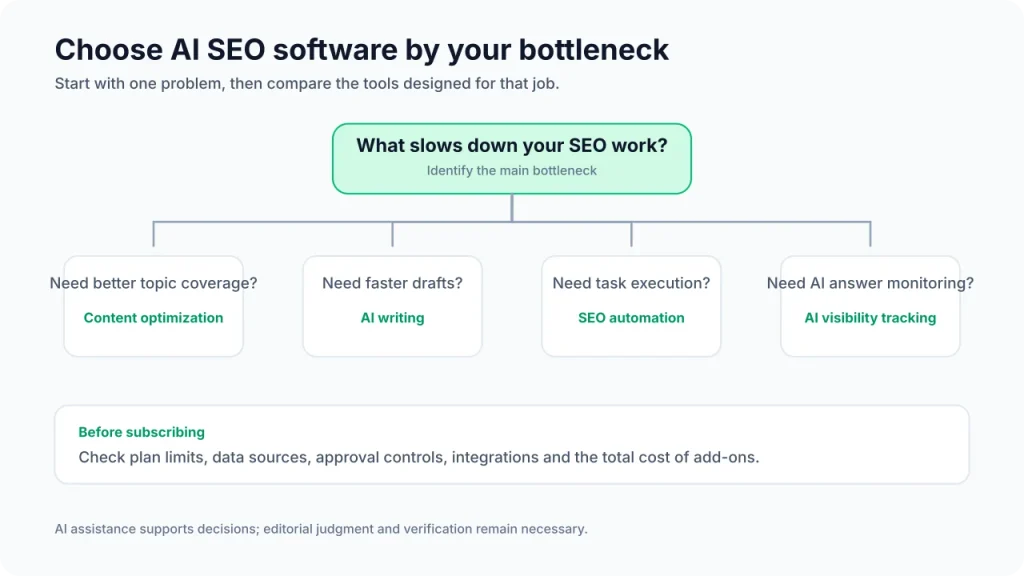
Identify the problem before comparing features. You may need more keyword opportunities, faster content briefs, better page optimization, rank monitoring, AI visibility reporting or a more organized publishing process. These are different needs, so buying a tool with the longest feature list is not necessarily the best decision.
Features That Matter
- Documentation that explains what the AI does and which data sources it uses.
- Published limits for prompts, keywords, pages, reports, projects, credits and seats.
- Clear approval controls for automated content changes and publishing.
- Integrations with the systems you already use, such as Google Search Console, Google Analytics and your CMS.
- Export options and API or MCP access if you plan to connect the tool to other workflows.
- Transparent pricing, cancellation terms and billing frequency.
- Data privacy information explaining how uploaded drafts, website data and connected accounts are handled.
Features That May Be Unnecessary
- A dedicated AI visibility tracker when your current SEO subscription already provides enough prompts and reporting.
- AI article generation if you already have a reliable writing and editorial process.
- An enterprise plan for a single small website with limited publishing needs.
- Automated publishing if you are not ready to review and approve every article.
- Additional keyword research subscriptions when your existing tool already covers your research requirements.
How to Evaluate Pricing
- Check the billing basis. Monthly prices and annual-billing equivalents are not interchangeable. Some vendors charge the full annual amount upfront.
- Identify the usage unit. You may be paying for prompts, credits, articles, reports, documents, projects, sites or tracked keywords.
- Calculate the total cost. Include additional seats, overages, add-ons, API access and currency conversion where applicable.
- Check what happens when you reach a limit. Some products pause usage, require an upgrade or offer additional credits.
- Review cancellation and trial terms. A free trial may require a payment card and automatically convert to a paid subscription.
- Use the vendor’s pricing page. Third-party pricing lists can be outdated, especially when product names and plans change.
How to Avoid Paying for Overlapping Capabilities
Several products now bundle content optimization, AI visibility or keyword research. Buying multiple subscriptions can create overlapping costs. Before adding another tool, list the features already included in your current plans, compare their usage limits and identify what the additional product would let you do that you cannot do now.
For broader comparisons, see SEORAF’s best all-in-one SEO tools, best SEO software and SEO software comparisons.
AI SEO Software vs Traditional SEO Software
| Area | Traditional SEO software | AI SEO software |
|---|---|---|
| Core workflow | Research, tracking, crawling and reporting | Adds recommendations, drafting, monitoring or automation to SEO workflows |
| Data sources | Keyword databases, crawls, backlink indexes and rank checks | May use the same data plus model outputs or sampled AI-platform responses |
| Content assistance | Research, briefs and limited writing support | May include content scoring, drafting, rewriting and optimization |
| Automation | Scheduled reports, alerts and technical checks | May add AI-assisted recommendations or automated task execution |
| Human oversight | Needed to interpret data and make decisions | Needed to check data, recommendations and generated content |
| Main limitation | Requires expertise to interpret and act on data | AI output can be inaccurate, incomplete or unsupported |
Many products are hybrids: conventional SEO data and workflows with AI features added. The useful question is not whether a tool calls itself AI-powered, but which part of your workflow it improves and whether the available evidence supports that claim.
Limitations and Risks of AI SEO Software
- Inaccurate output: language models can produce confident but incorrect statements. Verify factual claims, statistics, product details and citations before publishing.
- Outdated information: model output and tool databases can lag behind current product documentation, pricing and search behavior.
- Unsupported recommendations: a content score or automated suggestion is not proof that a change will improve search performance. Understand what data supports the recommendation.
- Human editorial review: AI assistance does not replace original research, expertise, careful editing or useful first-hand insight.
- Search engine policies: Google’s guidance focuses on helpful, reliable content rather than whether AI was used. Automation intended primarily to manipulate rankings can violate spam policies. Read Google’s guidance on AI-generated content and Search and its current spam policies.
- Privacy and data handling: some tools request website access, Search Console connections or uploaded drafts. Review each vendor’s privacy and data policies before sharing confidential information.
- Automated publishing: publishing large volumes of unreviewed pages can create quality, accuracy and maintenance problems. Keep human approval in the workflow.
- Link-related claims: evaluate backlink exchange or automated link-building features carefully. Links should not be acquired through practices that violate search engine spam policies.
- Overclaiming: no software can guarantee Google rankings, organic traffic, AI citations or brand mentions.
Frequently Asked Questions
What is the best AI SEO software in 2026?
There is no single best option for every website. Scalenut, Writesonic and Outrank focus more on AI-assisted content workflows; Surfer SEO, Dashword, NeuronWriter and Frase support content research or optimization; Rankability and Nightwatch offer AI visibility-related monitoring; and LowFruits focuses on keyword research. Choose according to the task you need to complete.
Is AI SEO software the same as AI writing software?
No. AI writing software generates or edits text. AI SEO software may also include keyword research, content optimization, rank tracking, technical audits or AI search visibility monitoring. Some products combine several of these capabilities.
Which AI SEO tools are best for content optimization?
Surfer SEO, Dashword, NeuronWriter and Frase are relevant options to compare for content optimization. Scalenut also includes content optimization features. Compare how each tool builds its recommendations, what the content reports include and how many documents your plan allows.
Which tools can track AI search visibility?
Writesonic, Rankability and Nightwatch publish AI visibility or LLM monitoring features. Scalenut and Frase also describe AI visibility-related capabilities. Supported platforms, prompt allowances and refresh frequency vary by plan, so check the current product documentation.
Is LowFruits an AI SEO tool?
LowFruits is primarily a keyword research and SERP analysis tool. It helps users discover keyword opportunities and identify weaker websites in search results. It is useful in an SEO research workflow, but it should not be confused with a general-purpose AI content generator or AI visibility platform.
Is Nightwatch an AI writing tool?
No. Nightwatch is primarily a rank-tracking and SEO monitoring platform. Its AI-related features focus on tracking how brands appear in selected AI-generated answers, alongside conventional search ranking data.
Is there free AI SEO software?
Some vendors offer free reports, limited access or time-limited trials. Dashword advertises a free first report, Frase advertises a 7-day trial without a credit card, and Nightwatch advertises a 14-day trial without a credit card. Other vendors have their own trial or limited-access conditions. These offers can change, so verify the terms on the official pricing page. For no-cost SEO resources, see SEORAF’s free SEO tools guide.
Can AI SEO software guarantee higher Google rankings?
No. These tools can help with research, content optimization, monitoring and workflow efficiency, but they cannot guarantee rankings or traffic. Search performance depends on many factors, including content usefulness, competition, technical accessibility and changes in search systems.
Will Google penalize content written with AI assistance?
Not automatically. Google’s published guidance focuses on the quality and purpose of content rather than whether AI was used. Content created primarily to manipulate rankings can violate spam policies, regardless of the production method. Review AI-assisted content for accuracy, usefulness, originality and compliance before publishing.
Can AI SEO software guarantee mentions in ChatGPT or Google AI Overviews?
No. AI visibility tools measure selected prompts and responses. They cannot control what an AI platform says or guarantee that a brand or page will be mentioned. Treat monitoring data as an indicator of observed visibility, not a promise of future citations.
Final Recommendations
Choose the product that addresses your main SEO bottleneck, then confirm its current plan limits and billing terms. These recommendations reflect product positioning and published features, not hands-on performance tests.
- If you need AI-assisted content creation and GEO workflows: compare Scalenut, Writesonic and Outrank. Review article limits, research sources and publishing controls.
- If you need content optimization: compare Surfer SEO, Dashword, NeuronWriter and Frase. Focus on document limits, content research and editorial workflow.
- If you need AI search visibility monitoring: compare Rankability, Nightwatch and Writesonic. Check supported platforms, prompt allowances and refresh frequency.
- If you need rank tracking: consider Nightwatch and compare its location, keyword and reporting limits with your requirements.
- If you need low-competition keyword ideas: evaluate LowFruits for SERP analysis, competitor research and credit usage.
- If you are a beginner or small-site publisher: start with one specific problem, test the available trial or free report and avoid paying for overlapping capabilities.
For related resources, see SEORAF’s AI SEO tools comparison, best SEO tools, best SEO software and SEO software alternatives.
Sources and Update Log
Pricing and product information were reviewed on November 16, 2026. Vendor plans, features, usage limits and promotions can change. Confirm the current details directly with the vendor before making a purchase.
Official Product and Pricing Sources
- Scalenut: Pricing and product features.
- Writesonic: Pricing and plan details.
- Surfer SEO: Pricing and plans.
- Dashword: Pricing and plans.
- Rankability: Pricing and agency plans.
- NeuronWriter: Pricing and plans.
- Frase: Pricing and plans.
- Outrank: Pricing and plan details.
- Nightwatch: Pricing and AI/LLM tracking documentation.
- LowFruits: Pricing and credit usage documentation.
- Google Search Central: Google Search and AI-generated content.
Update log: November 16, 2026 — first published version. The comparison covers 10 products across AI-assisted content creation, content optimization, AI search visibility, rank tracking and keyword research.
This is an independent, research-based editorial comparison, not a hands-on test or a guarantee of results. Product features, prices and plan limits may change. Check each vendor’s current documentation before buying.