
Why My Google Site Is Not Indexed: Complete Troubleshooting Guide
Discover why your new site isn’t appearing in Google search results and how to fix it. Get our comprehensive troubleshooting checklist to solve indexing issues fast.
Introduction: The Frustration of an Unindexed Website
Launching a new website is an exciting milestone. You’ve invested time, effort, and resources into creating valuable content, designing an appealing layout, and ensuring everything works perfectly. However, weeks go by, and when you search for your site on Google, it’s nowhere to be found. This common scenario leaves many website owners wondering, “Why my Google site is not indexed?” Understanding the core reason why my Google site is not indexed is the first step toward resolving this frustrating issue.
When your website isn’t indexed by Google, it’s essentially invisible to search engine users. This means no organic traffic, no visibility, and missed opportunities to connect with your target audience. The question “why my Google site is not indexed” is one that many new website owners face, and the reasons can range from technical issues to content-related problems. In this comprehensive guide, we’ll explore the various factors that could be preventing your site from appearing in Google search results and provide actionable solutions to address each issue, fully answering why my Google site is not indexed.
Understanding why my Google site is not indexed requires knowledge of how Google’s crawling and indexing process works. Google uses automated programs called “crawlers” or “spiders” to discover and scan web pages. When a crawler finds a page, it analyzes the content and adds it to Google’s massive index of web pages. Only indexed pages can appear in search results. If your site isn’t in this index, it won’t show up when users search for relevant terms. This guide will help you identify why my Google site is not indexed and what steps you can take to fix it.
Understanding Google’s Indexing Process
Before diving into the specific reasons why your site might not be indexed, it’s essential to understand how Google’s indexing process works. This knowledge will help you better diagnose and address the question, “Why my Google site is not indexed?” When you’re asking why my Google site is not indexed, you’re really asking about a breakdown in this process.
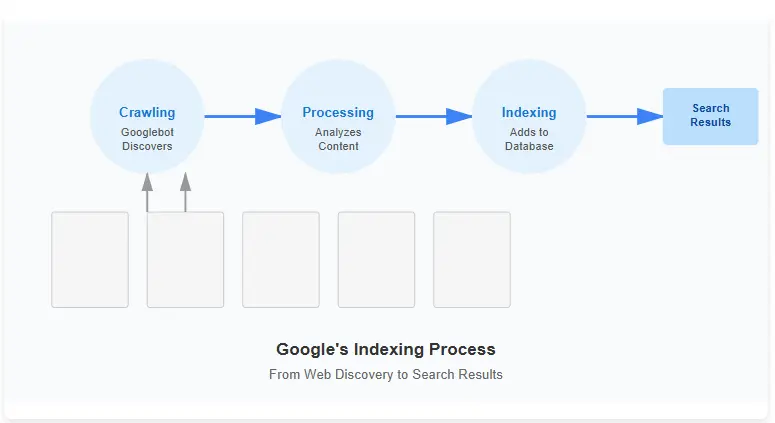
Google’s indexing process consists of three main stages:
- Crawling: Google’s crawlers (also known as Googlebot) discover and scan web pages. They follow links from known pages to find new content and also directly access URLs that have been submitted for crawling.
- Processing: After crawling a page, Google analyzes its content, including text, images, and videos. It also evaluates technical aspects like page load speed and mobile-friendliness.
- Indexing: If Google determines that the page provides value to users and meets its quality guidelines, it adds the page to its index. Indexed pages are eligible to appear in search results for relevant queries.
When asking “why my Google site is not indexed,” it’s important to consider that this process takes time. New websites typically don’t get indexed immediately. It can take anywhere from a few days to several weeks for Google to discover and index a new site. However, if several weeks have passed and your site still isn’t indexed, there may be underlying issues preventing Google from properly crawling and indexing your content, which is a persistent reason why my Google site is not indexed.
Did you know? Google’s index contains hundreds of billions of web pages and is over 100,000,000 gigabytes in size. This massive scale is a key factor in why my Google site is not indexed immediately, as new sites can get lost in the shuffle.
Common Reasons Answering: Why My Google Site Is Not Indexed?
Now that we understand how Google’s indexing process works, let’s explore the common reasons why your new site might not be indexed. These issues range from simple oversights to more complex technical problems, each contributing to the question of “why my Google site is not indexed.”
1. Your Site Is Too New
The most straightforward answer to “why my Google site is not indexed” could simply be that your site is too new. As mentioned earlier, Google’s indexing process takes time. For a brand new website with no existing authority or backlinks, it can take longer for Google to discover and index your pages. Patience is often the first answer to why my Google site is not indexed.
Typically, it takes Google anywhere from a few days to a few weeks to index a new site. If you’ve recently launched your website (within the last week or two), patience might be the best solution. However, if more than a month has passed and your site still isn’t indexed, there are likely other factors at play that explain why my Google site is not indexed.
2. No Inbound Links
Google discovers new content primarily by following links from already indexed pages. If your new website has no inbound links from other sites, Google’s crawlers may have difficulty finding it. This is a common reason why my Google site is not indexed for new website owners who haven’t yet built any backlinks. This lack of pathways is a frequent answer to why my Google site is not indexed.
Without any external links pointing to your site, Google relies solely on direct submission of your sitemap or manual crawling requests. While these methods can work, having at least a few quality inbound links significantly increases the chances of your site being discovered and indexed quickly, solving the issue of why my Google site is not indexed.
3. Robots.txt File Issues
The robots.txt file is a crucial file that tells search engine crawlers which pages or sections of your site they should or shouldn’t crawl. If your robots.txt file is incorrectly configured, it might be blocking Google from accessing your site entirely, which would explain why my Google site is not indexed. An incorrect robots.txt is a definitive technical answer to why my Google site is not indexed.
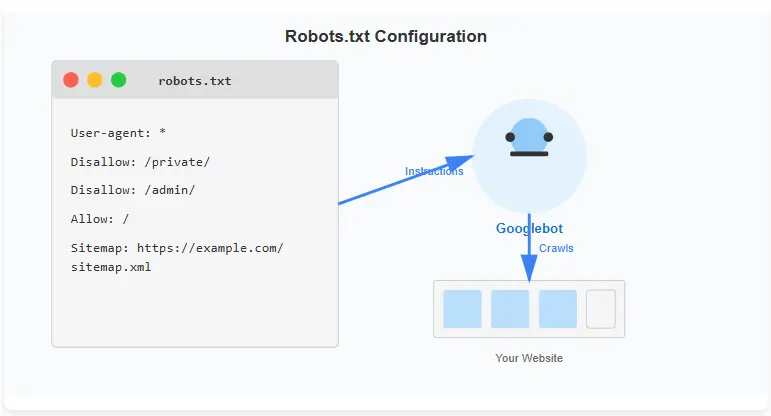
Common mistake: Many website templates or CMS platforms come with a default robots.txt file that might disallow all crawlers with the following directive:
User-agent: *
Disallow: /
This configuration tells all crawlers not to crawl any part of your site, effectively preventing indexing and is a primary reason why my Google site is not indexed.
To check if this is why my Google site is not indexed, navigate to yourdomain.com/robots.txt and ensure that it doesn’t contain directives that would block Googlebot from accessing your important pages. You can learn more about proper robots.txt configuration from Google’s official documentation.
4. Noindex Meta Tags
Another common reason why my Google site is not indexed is the presence of “noindex” meta tags on your pages. These tags explicitly tell search engines not to index a specific page. While sometimes used intentionally for private or admin pages, they can accidentally be applied to important content pages, leading to the question of why my Google site is not indexed.
The noindex directive looks like this in your page’s HTML:
<meta name="robots" content="noindex">To check if this is why my Google site is not indexed, view the page source of your important pages and look for any meta robots tags that contain “noindex.” If you find such tags on pages that should be indexed, remove them to allow Google to include these pages in its index.
5. Technical SEO Issues
Technical SEO problems can significantly impact Google’s ability to crawl and index your site. These issues might be the answer to “why my Google site is not indexed” if they prevent Googlebot from properly accessing or understanding your content. A technical flaw is often the root cause when asking why my Google site is not indexed.
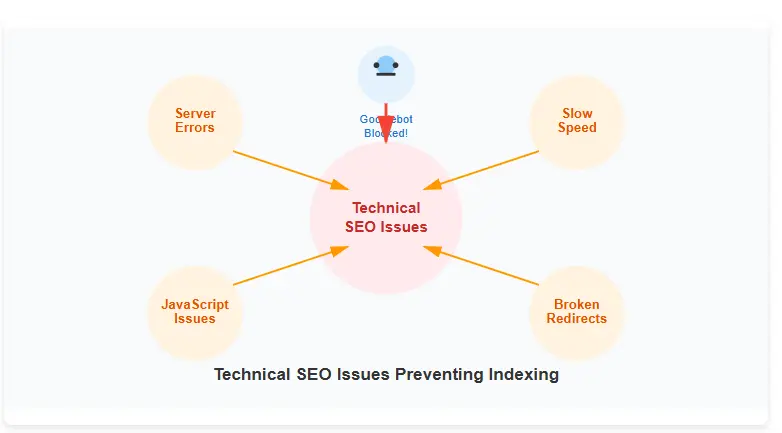
Common technical SEO issues that can prevent indexing include:
- Server errors: If your server frequently returns error codes (like 500 Internal Server Error) when Google tries to access your site, it may stop crawling and indexing your pages. This instability is a direct cause of why my Google site is not indexed.
- Slow page load times: Extremely slow-loading pages may be abandoned by Google’s crawlers before they can be fully processed and indexed. Performance issues are a modern reason why my Google site is not indexed.
- JavaScript-heavy content: If your site relies heavily on JavaScript to render content, and Google’s crawlers have difficulty executing this JavaScript, they may not see your actual content, which is a complex reason why my Google site is not indexed.
- Broken redirects: Incorrectly implemented redirects can create loops or chains that confuse crawlers and prevent proper indexing, a technical issue that explains why my Google site is not indexed.
You can use tools like GTmetrix to analyze your site’s performance and identify potential technical issues that might be preventing indexing. For a comprehensive evaluation of your site’s technical health, consider conducting a thorough technical SEO audit to find out why my Google site is not indexed.
6. Duplicate Content Issues
Google aims to provide diverse and unique content in its search results. If your site contains substantial duplicate content—either within your own site or copied from other sources—Google may choose not to index these pages. This could be why my Google site is not indexed if you’ve used content from other sources without significant modification.
Duplicate content issues can arise from:
- Using manufacturer-provided product descriptions without customization
- Publishing the same content on multiple pages of your site
- Having both www and non-www versions of your site accessible without proper canonicalization
- Having HTTP and HTTPS versions of your site both accessible
To address this potential reason why my Google site is not indexed, ensure your content is unique and implement proper canonical tags to indicate the preferred version of duplicate pages. Tools like Siteliner can help you identify duplicate content issues on your site. If you’re experiencing issues with multiple pages competing for the same keywords, you might be facing keyword cannibalization, which can also impact indexing and is another facet of why my Google site is not indexed.
7. Manual Actions or Penalties
If your site violates Google’s Webmaster Guidelines, it may be subject to a manual action or penalty, which can result in your pages being deindexed or not ranking in search results. This is a more serious reason why my Google site is not indexed, as it indicates that your site has been flagged for problematic practices.
Common reasons for manual actions include:
- Spammy or manipulative link building
- Thin or low-quality content
- Cloaking (showing different content to users and search engines)
- Hidden text or links
- Keyword stuffing
If you suspect a manual action is why my Google site is not indexed, check your Google Search Console account for any notifications. Manual actions will be listed there, along with instructions for fixing the issues and requesting a review. You can learn more about manual actions from Google’s spam policies documentation. If you’ve received a manual action, a proper Google penalty recovery process is essential to regain your indexing status and solve why my Google site is not indexed.
8. Poor Site Structure
A poorly structured website can make it difficult for Google’s crawlers to discover and index all your important pages. If your site lacks a logical hierarchy, has orphan pages (pages with no internal links pointing to them), or has an excessively deep link structure, Google might miss some of your content during the crawling process. This organizational issue could be why my Google site is not indexed, especially for larger sites with many pages.
To address this, ensure your site has a clear, logical structure with important pages accessible within a few clicks from the homepage. Implementing internal linking between related pages also helps crawlers discover more of your content and can be a key to solving why my Google site is not indexed.
9. No XML Sitemap
An XML sitemap is a file that lists all the important pages on your website that you want Google to crawl and index. While not strictly necessary for indexing, having a sitemap makes it easier for Google to discover your content, especially for new websites or sites with complex structures. If you haven’t created and submitted an XML sitemap, this could be why my Google site is not indexed.
Create a comprehensive sitemap that includes all your important pages, and submit it through Google Search Console to help Google discover and index your content more efficiently. You can use tools like XML-Sitemaps.com to generate a sitemap for your site and address why my Google site is not indexed.
10. International Targeting Issues
If your website targets a specific country or language but is hosted in a different location or uses a country-code top-level domain (ccTLD) that doesn’t match your target audience, Google might have difficulty determining the appropriate audience for your content. This could impact how your site is indexed and displayed in search results, potentially explaining why my Google site is not indexed for your intended audience.
For example, if you have a .co.uk site but primarily target US audiences, Google might not index your site for US searches. This targeting mismatch could be why my Google site is not indexed for your intended audience. To address this, use hreflang tags to specify language and regional targeting, or consider using a generic top-level domain (gTLD) like .com with proper geotargeting settings in Google Search Console. You can learn more about international targeting from Google’s international SEO guide.
How to Check if Your Site Is Indexed
Before diving into solutions, it’s important to confirm whether your site is actually indexed or not. If you’re wondering “why my Google site is not indexed,” follow these steps to check your indexing status:
1. Site Search Operator
The simplest way to check if your site is indexed is to use Google’s site search operator. Go to Google and search for “site:yourdomain.com” (replacing yourdomain.com with your actual domain). This search will show all the pages from your domain that are currently indexed by Google. This simple search is the first diagnostic tool for why my Google site is not indexed.
If no results appear, it’s likely that your site isn’t indexed at all. If only a few pages appear, it indicates partial indexing. This information helps narrow down the potential reasons why my Google site is not indexed.
2. Google Search Console
Google Search Console is a free tool that provides detailed insights into how Google sees and interacts with your site. If you haven’t already, set up a Google Search Console account for your website and verify ownership. This tool is essential for diagnosing why my Google site is not indexed.
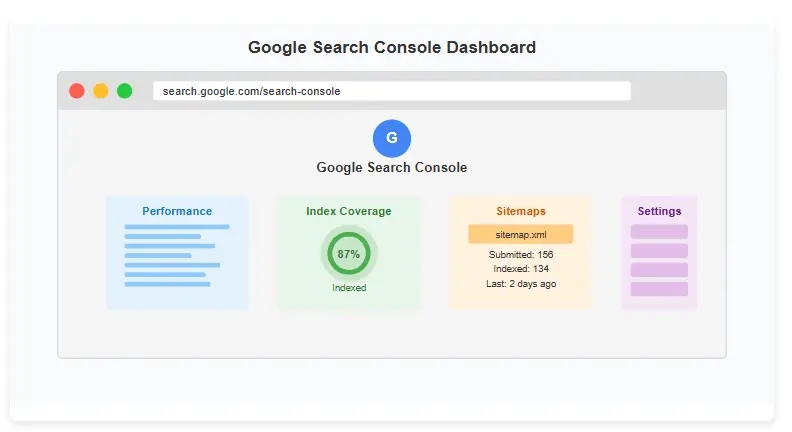
Once verified, you can check the Index Coverage report to see which pages are indexed, which have errors, and which are excluded from indexing. This report provides valuable information to help diagnose why my Google site is not indexed. You can access Google Search Console at search.google.com/search-console.
3. Cache Check
You can also check if Google has cached version of your pages by searching for “cache:yourdomain.com/page-url” in Google. If a cached version exists, it means Google has crawled and indexed that page. If no cache exists, the page may not be indexed, which is another way to investigate why my Google site is not indexed.
Comprehensive Troubleshooting Checklist for “Why My Google Site Is Not Indexed”
Now that we’ve explored the common reasons why your site might not be indexed, let’s create a comprehensive troubleshooting checklist to address the question, “Why my Google site is not indexed?” Follow these steps systematically to identify and resolve indexing issues:
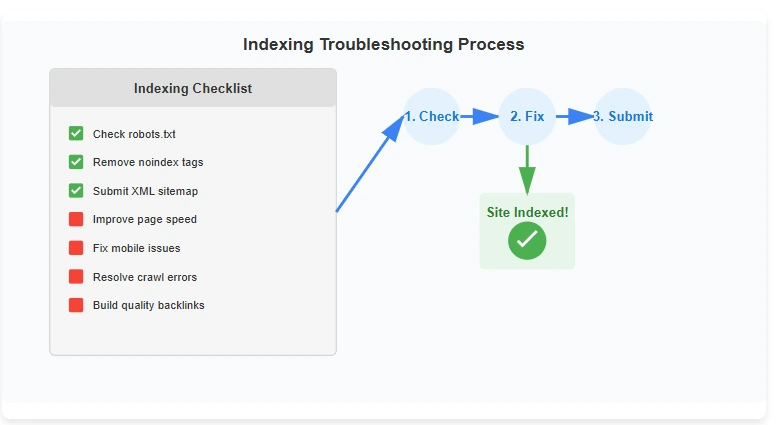
Technical SEO Checklist
Verify robots.txt file
Check your robots.txt file (yourdomain.com/robots.txt) to ensure it’s not blocking Googlebot from accessing your important pages. Look for “Disallow: /” directives that might prevent crawling. This is a critical step in solving why my Google site is not indexed.
Check for noindex meta tags
View the page source of your important pages to ensure they don’t contain meta robots tags with “noindex” directives. Remove any such tags from pages that should be indexed to fix why my Google site is not indexed.
Create and submit XML sitemap
Generate a comprehensive XML sitemap that includes all your important pages. Submit it through Google Search Console to help Google discover your content more efficiently and resolve why my Google site is not indexed.
Check site speed
Use Google’s PageSpeed Insights to analyze your site’s loading speed. Address any issues that might be causing slow page load times, which could discourage Google’s crawlers and be a reason why my Google site is not indexed.
Ensure mobile-friendliness
Test your site with Google’s Mobile-Friendly Test to ensure it provides a good experience on mobile devices. Mobile-friendliness is a crucial factor for indexing and can be why my Google site is not indexed.
Fix crawl errors
Check the Crawl Errors report in Google Search Console to identify and fix any server errors (5xx) or not found errors (404) that might be preventing proper indexing. For detailed guidance on resolving these issues, check out our guide on how to fix crawl errors to understand why my Google site is not indexed.
Implement structured data
Add appropriate structured data (Schema.org markup) to your pages to help Google better understand your content and potentially enhance your search result appearance, which can help with why my Google site is not indexed.
Content Quality Checklist
Ensure content uniqueness
Use plagiarism detection tools to verify that your content is unique and not duplicated from other sources. Rewrite or replace any content that appears elsewhere on the web to fix why my Google site is not indexed.
Add substantial content
Ensure each page contains substantial, valuable content (typically 300+ words) that provides genuine value to users. Thin content with little value may not be indexed and could be why my Google site is not indexed.
Optimize for keywords naturally
Incorporate relevant keywords naturally into your content, including in titles, headings, and body text. Avoid keyword stuffing, which can harm your indexing potential and be a reason why my Google site is not indexed.
Implement proper heading structure
Use a logical heading structure (H1 for main title, followed by H2, H3, etc.) to organize your content and help Google understand its hierarchy and relevance, which can address why my Google site is not indexed.
Authority & Promotion Checklist
Build quality backlinks
Earn backlinks from reputable, relevant websites to help Google discover your site and establish its authority. Focus on quality over quantity when building links to solve why my Google site is not indexed.
Submit to Google Search Console
Submit your URL directly to Google through the “Inspect any URL” feature in Google Search Console to request indexing of specific pages and directly tackle why my Google site is not indexed.
Leverage social media
Share your content on relevant social media platforms to increase visibility and potentially attract traffic that signals relevance to Google, which can help with why my Google site is not indexed.
Submit to relevant directories
Submit your site to reputable, industry-specific directories to gain additional exposure and potentially valuable backlinks, which can help answer why my Google site is not indexed.
Advanced Solutions When “Why My Google Site Is Not Indexed” Persists
If you’ve worked through the checklist above and are still facing the issue of why my Google site is not indexed, there are some advanced solutions you can try to address persistent indexing issues:
1. Request Reconsideration
If you’ve identified and fixed issues that may have violated Google’s guidelines, you can submit a reconsideration request through Google Search Console. This is particularly relevant if you’ve received a manual action notification. In your request, explain what issues you found, how you fixed them, and ask Google to review your site again to resolve why my Google site is not indexed.
2. Check for Hacked Content
Sometimes, websites get hacked without the owner’s knowledge. Hackers might add spammy content or links that can cause Google to stop indexing your site. Use Google Search Console’s Security Issues report to check for any signs of hacking, and regularly scan your site for malware using security tools like Sucuri. A hacked site is a serious reason why my Google site is not indexed.
3. Evaluate Hosting Quality
Poor quality hosting can impact your site’s uptime and performance, which in turn affects indexing. If your site frequently goes offline or loads extremely slowly, Google may give up on trying to index it. Consider upgrading to a more reliable hosting provider if you’re experiencing frequent downtime or performance issues, as this could be why my Google site is not indexed.
4. Implement Canonical Tags Properly
If your site has multiple URLs that display similar or identical content (such as HTTP and HTTPS versions, or www and non-www versions), implement canonical tags to specify which version Google should index. This helps prevent duplicate content issues that might be why my Google site is not indexed properly.
5. Use Fetch as Google
The “Fetch as Google” feature in Google Search Console allows you to see how Googlebot crawls and renders your pages. Use this tool to identify any issues that might prevent Google from properly accessing your content. You can also request indexing directly from this tool after fetching a page to directly address why my Google site is not indexed.
6. Check for Algorithmic Penalties
Besides manual actions, your site might be affected by algorithmic penalties if it engages in practices that Google’s algorithms target, such as spammy link building or thin content. If you suspect an algorithmic penalty is why my Google site is not indexed, conduct a thorough audit of your SEO practices and make necessary improvements.
7. Evaluate Content Quality Objectively
Google increasingly prioritizes high-quality, comprehensive content that provides genuine value to users. Take an objective look at your content and ask yourself:
- Does my content thoroughly answer the questions or address the needs of my target audience?
- Is my content more comprehensive and valuable than what’s currently ranking for my target keywords?
- Does my content demonstrate expertise, authoritativeness, and trustworthiness (E-A-T) on its topic?
If the answer to any of these questions is no, improving your content quality might be the solution to why my Google site is not indexed. You can learn more about Google’s quality guidelines from Google’s quality guidelines documentation.
Preventing Future Issues: Ensuring ‘Why My Google Site Is Not Indexed’ Never Happens Again
Once you’ve resolved the current indexing issues, it’s important to implement practices that prevent future problems. Here are some strategies to ensure your site remains properly indexed and you never have to ask why my Google site is not indexed again:
1. Regular Monitoring with Google Search Console
Make Google Search Console a regular part of your SEO routine. Check the Index Coverage report weekly to identify and address any new indexing issues promptly. Set up email alerts to be notified of critical issues as they arise, which can prevent future instances of why my Google site is not indexed.
2. Consistent Content Creation
Regularly adding fresh, high-quality content to your site signals to Google that your site is active and valuable. This encourages more frequent crawling and indexing of your pages. Aim to publish new content consistently rather than in sporadic bursts to avoid asking why my Google site is not indexed for new pages.
3. Ongoing Technical SEO Maintenance
Technical SEO isn’t a one-time task. Regularly audit your site for technical issues that could impact indexing, such as broken links, redirect chains, or page speed problems. Address these issues promptly to maintain good crawling and indexing conditions and stop wondering why my Google site is not indexed.
4. Sustainable Link Building
Continuously work on building high-quality backlinks from reputable, relevant sites. A strong backlink profile not only helps with indexing but also improves your site’s authority and ranking potential. Focus on earning links naturally through valuable content rather than using manipulative tactics, which can lead to issues like why my Google site is not indexed.
5. Stay Updated on SEO Best Practices
Google’s algorithms and guidelines evolve over time. Stay informed about the latest SEO best practices and algorithm updates to ensure your site continues to meet Google’s expectations for indexing and ranking. Resources like Search Engine Land’s SEO Guide can help you stay current with industry developments and prevent future issues where you ask why my Google site is not indexed.
Conclusion: Taking Control of Your Site’s Indexing
The question “why my Google site is not indexed” can be frustrating, but it’s usually solvable with the right approach. By systematically working through the potential issues outlined in this guide, you can identify and address the factors preventing your site from appearing in Google search results.
Remember that indexing is just the first step in your SEO journey. Once your site is indexed, the focus shifts to ranking well for your target keywords and attracting qualified organic traffic. The technical foundation you establish while solving indexing issues will serve you well as you continue to optimize your site for search engines and users alike.
Patience is key in the world of SEO. Some indexing issues resolve quickly once identified, while others may take weeks to fully address. Monitor your progress using Google Search Console and analytics tools, and don’t hesitate to seek professional help if you encounter complex technical issues beyond your expertise.
By following the troubleshooting checklist and implementing the solutions outlined in this guide, you’ll be well on your way to answering the question “why my Google site is not indexed” and achieving better visibility in Google search results. The final answer to “why my Google site is not indexed” is often a combination of factors we’ve discussed.
Final thought: While technical issues can certainly prevent indexing, ultimately, Google aims to index and rank content that provides the most value to users. Focus on creating exceptional content that genuinely serves your audience’s needs, and the indexing and ranking will follow. This is the long-term solution to “why my Google site is not indexed”.
Frequently Asked Questions About Why My Google Site Is Not Indexed
For a new website, it typically takes anywhere from a few days to several weeks to be indexed by Google. The exact timeline to fix why my Google site is not indexed depends on various factors, including your site’s authority, the presence of inbound links, and whether you’ve submitted a sitemap through Google Search Console. If your site isn’t indexed after 4-6 weeks, it’s worth investigating potential issues.
While Google can discover new sites on its own through links, submitting your site directly can speed up the indexing process. The most effective way to submit your site is by creating an XML sitemap and submitting it through Google Search Console. You can also use the “Inspect any URL” feature to request indexing of specific pages to address why my Google site is not indexed.
No, Google won’t penalize your site for multiple submission requests. However, repeatedly submitting the same pages without making changes won’t necessarily speed up the indexing process. It’s more effective to focus on addressing any technical issues, improving content quality, and building authority through quality backlinks to solve why my Google site is not indexed.
No, Google doesn’t accept payment to index sites faster. Organic indexing is free and based on Google’s assessment of your site’s quality and relevance. While you can pay for Google Ads to appear in search results, this is separate from organic indexing and doesn’t influence how quickly your site is indexed or solve why my Google site is not indexed.
Partial indexing is common, especially for larger sites. However, if important pages aren’t being indexed, it’s worth investigating. Check the Index Coverage report in Google Search Console to see why specific pages might not be indexed. Common reasons include noindex tags, crawl errors, or duplicate content issues, all of which are reasons why my Google site is not indexed.