
How to Fix Keyword Cannibalization: 5 Proven Strategies That Work (2026)
Are your own webpages sabotaging each other in Google search results? You pour your heart and soul into creating content, targeting valuable keywords, only to find your rankings are stagnant or declining. You check your analytics and see that several of your pages are all ranking for the same term — yet none of them are on page one. If this sounds familiar, you need to fix keyword cannibalization fast. This is a common but destructive SEO problem, and this comprehensive guide will walk you through exactly how to execute a proper keyword cannibalization fix, identify its root causes, and implement strategies to prevent it from ever happening again.
What is Keyword Cannibalization? (And Why It’s Killing Your SEO)
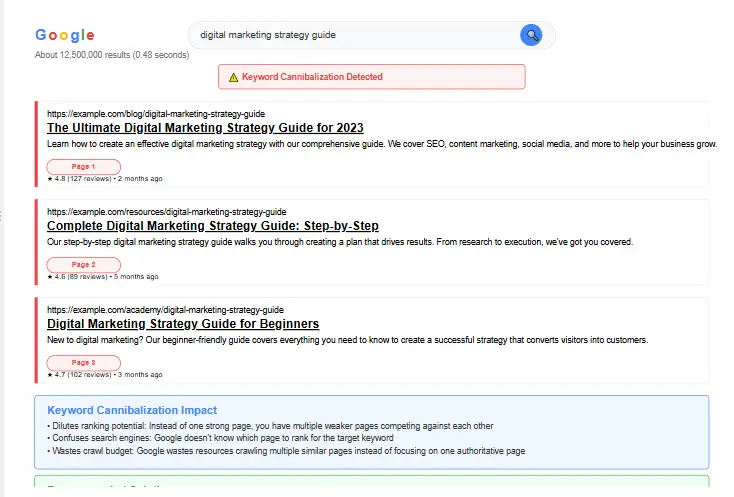
Keyword cannibalization occurs when multiple pages on your website compete for the same or very similar search query. Instead of having one powerful, authoritative page that Google can confidently rank, you force the search engine to choose between several similar, weaker pages.
As a result, your pages end up competing against each other. This dilutes your overall SEO authority and confuses both Google and your users. A proper keyword cannibalization fix restores order and clarity to your site’s structure.
Think of it like this: You have two star salespeople, but you’ve assigned them both to the same client with the exact same pitch. The client gets confused, doesn’t know who to trust, and might end up buying nothing. That’s precisely what happens with keyword cannibalization. You’re sending mixed signals to Google, which often means you need to fix keyword cannibalization to recover lost rankings.
This duplicate keyword ranking issue typically leads to:
- Lower Rankings: Google struggles to determine which page is the most relevant, so it may rank multiple pages from your site lower on the SERP instead of elevating one page to the top. This is the primary reason you must fix keyword cannibalization promptly.
- Diluted Link Equity: When other websites link to your content, that “link juice” (or authority) gets spread thin across multiple competing pages instead of being concentrated into a single, powerful asset. This concept of link equity is fundamental to how search engines evaluate page authority, and failing to execute a cannibalization SEO fix directly weakens it.
- Wasted Crawl Budget: Google has a limited amount of time to crawl and index your site. If it’s spending time indexing multiple pages targeting the same term, it’s not discovering your other valuable content. Therefore, applying a keyword overlap fix improves your site’s overall crawl efficiency.
- Decreased Conversion Rates: When users land on a less-optimal page for their query, they are less likely to convert. You might have a fantastic pillar page for a topic, but if a visitor lands on a thin, outdated blog post instead, you’ve lost a potential customer. This is a business-driven reason to pursue a keyword cannibalization fix.
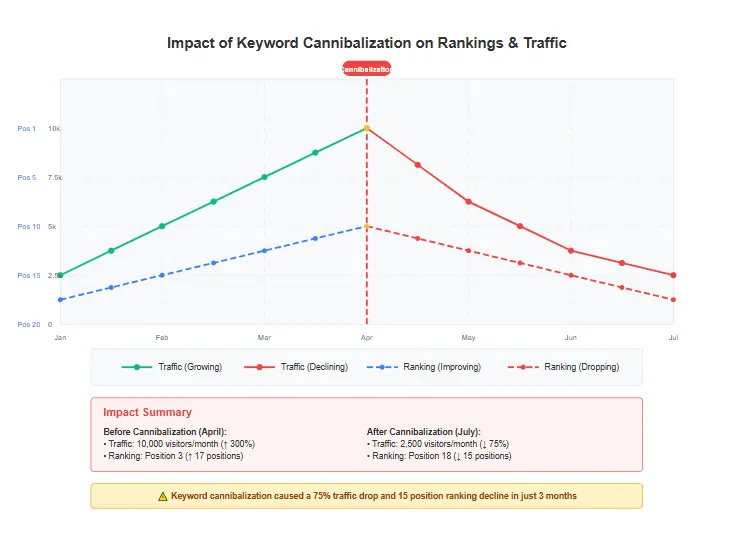
Ignoring keyword cannibalization is like having multiple leaky holes in your SEO bucket. You can keep pouring water in (creating new content), but you’ll never fill it up until you patch the leaks and fix keyword cannibalization once and for all.
How to Identify Keyword Cannibalization on Your Website
You can’t fix keyword cannibalization if you don’t know you have it. Fortunately, there are several straightforward methods to diagnose this issue. The first step toward a successful keyword cannibalization fix is always identification.
1. The Simple Google Search Operator
This is the quickest way to get a snapshot. Go to Google and search for: site:yourdomain.com "your target keyword". Replace “yourdomain.com” with your actual domain and “your target keyword” with the term you suspect is being cannibalized. This uses Google’s own advanced search operators to narrow down results to your own site. Consider this a preliminary step before planning your full keyword cannibalization fix strategy.
If you see more than one page from your site ranking on the first few pages of results for that query, you likely have a cannibalization issue. For example, a search for site:seopro.com "fix keyword cannibalization" might reveal a blog post, a service page, and a case study all competing for the same term. That’s a clear signal you need a keyword overlap fix for that phrase.
2. Using Google Search Console (GSC)
GSC is a goldmine of data for this. Here’s how to use it to find areas where you need to fix keyword cannibalization:
- Log in to your Google Search Console account.
- Navigate to Performance > Search results.
- Click the + New button at the top and select Query. Enter the keyword you want to check.
- Look at the Pages tab below the graph. If you see multiple URLs listed for that single query, you’ve found a duplicate keyword ranking issue and now know exactly where to focus your keyword cannibalization fix efforts.
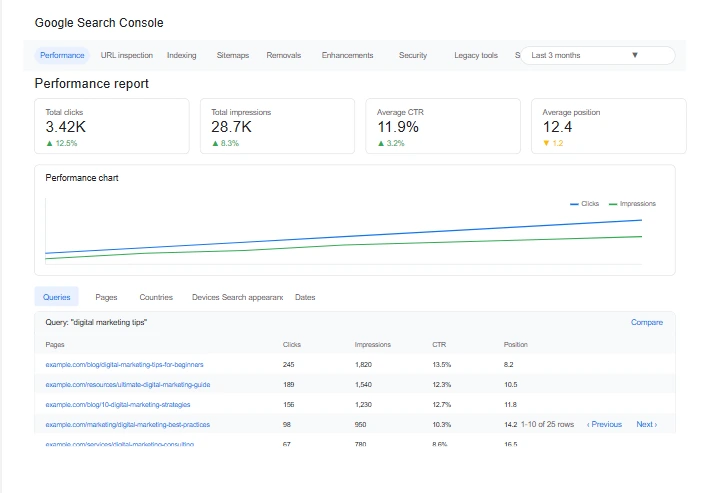
You can also export your full query data (up to 1,000 rows) and use a spreadsheet to pivot the data, showing all the pages that rank for each query. This is a more advanced but highly effective way to find widespread cannibalization across your site and develop a keyword cannibalization fix plan at scale.
3. Leveraging Professional SEO Tools (Ahrefs, Semrush, etc.)
Most premium SEO tools have built-in features that streamline the diagnostic process and make it easier to fix keyword cannibalization efficiently.
- Ahrefs: Use their Site Audit tool. In the report, navigate to Internal Issues > Cannibalization. It will list keywords and the multiple pages on your site that are ranking for them. They have a thorough guide on what keyword cannibalization is and how to fix it, which is a must-read for executing a proper cannibalization SEO fix.
- Semrush: Go to the Keyword Strategy Builder or use the Organic Research tool to see which of your pages are ranking for the same keywords. You can read more about their approach to diagnosing and fixing the issue. This is another excellent resource for learning how to fix keyword cannibalization effectively.
- Tools like KWFinder are also excellent for tracking keyword rankings and spotting potential overlap issues early, giving you a head start on your keyword cannibalization fix before problems grow.
These tools save a massive amount of time and provide a clear, actionable report of all your cannibalization problems, making it much simpler to execute an effective keyword cannibalization fix.
The Root Causes: Why Does Keyword Cannibalization Happen?
Understanding the “why” is crucial to preventing future issues. To truly fix keyword cannibalization, you must understand its origins. It’s rarely intentional — in most cases, it stems from a few common mistakes:
1. Lack of a Clear Content Strategy
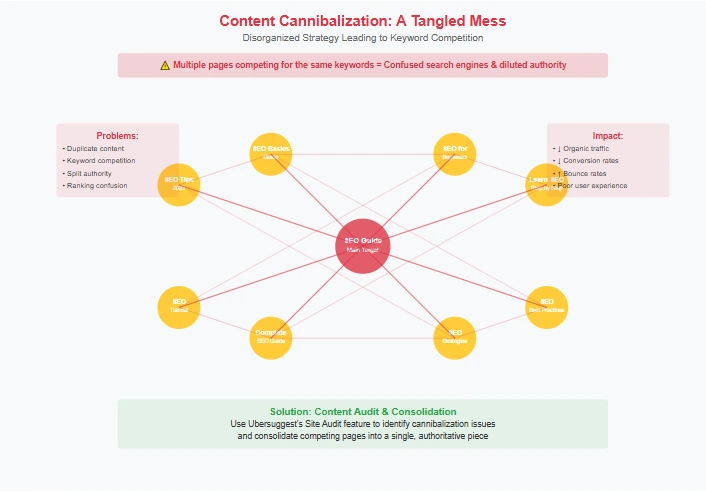
This is the number one cause. Without a central keyword map or content plan, different writers or teams may unknowingly create content that targets the same terms. This often happens when teams are focused on finding high search volume, low competition keywords without checking if they’re already being targeted on the site.
One person writes a “What is SEO” post, and six months later, someone else writes an “Introduction to SEO” article, not realizing the first one exists. This disorganization is a direct cause of the duplicate keyword ranking issue that you’ll eventually need a keyword cannibalization fix for.
2. Ignoring Search Intent
Not all searches for a keyword carry the same intent. Someone searching for “running shoes” might be looking to buy (commercial intent), learn about the best types (informational intent), or find reviews (transactional intent). If you have one page for each of these intents but they all target the exact same keyword “running shoes,” you will create cannibalization.
The solution is to target different, more specific keywords for each intent (e.g., “best running shoes for flat feet,” “buy nike running shoes online,” “how to choose running shoes”). Understanding the four types of search intent is critical to avoiding this trap and can help you fix keyword cannibalization before it starts.
3. Poor Internal Linking Structure
When you link to multiple pages using the exact same anchor text (e.g., “click here to learn about keyword cannibalization”), you’re telling Google that all those destination pages are equally relevant for that phrase. This can confuse search engines and contribute to the overlap problem. Your internal links should be strategic, guiding users and crawlers to your single, most authoritative page on a topic.
Moz has an excellent guide on internal linking best practices that can help you apply a keyword overlap fix caused by poor linking architecture.
4. The “More is More” Mentality
In the early days of SEO, the strategy was often to create as many pages as possible targeting a keyword. This is now an outdated and harmful practice. Google’s algorithms are sophisticated enough to prefer one comprehensive, high-quality page (a “pillar page”) over ten thin, mediocre ones. Adopting a quality-over-quantity approach is a modern way to prevent the need for a cannibalization SEO fix down the road.
The Action Plan: 5 Proven Strategies to Fix Keyword Cannibalization
Once you’ve identified the issue, it’s time to take action. There isn’t a one-size-fits-all solution; the right approach depends on your specific situation. Here are the five most effective strategies to fix keyword cannibalization and reclaim your rankings.
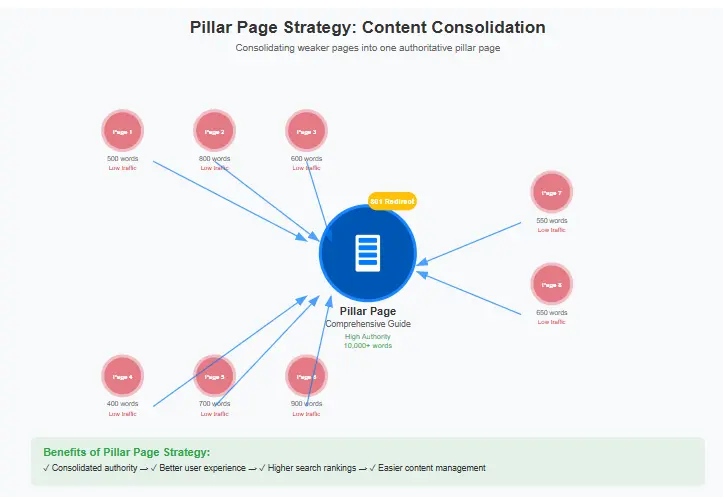
Strategy 1: Consolidate and 301-Redirect (The Merge)
This is the most common and often most effective keyword cannibalization fix, especially when the competing pages have similar content and target the same search intent.
- Identify the “Winner” Page: Look at the competing pages. Which one has the most traffic, the highest quality backlinks, the best conversion rate, and the most comprehensive content? This is your “winner” — the page you will keep. This is the first and most important decision when you fix keyword cannibalization with this method.
- Consolidate the Content: Copy any valuable, unique information from the weaker pages and merge it into your winner page. Make the winner the absolute best, most comprehensive resource on the topic for that keyword. Update its publication date. This consolidation effort is the backbone of any successful keyword cannibalization fix.
- Delete the Loser Pages: Once you’ve saved the content, remove the weaker, overlapping pages from your CMS. This is a necessary step for a clean keyword cannibalization fix.
- Implement 301 Redirects: This is a critical step. Set up 301 redirects from each deleted page’s URL to your new, consolidated winner page. According to Google’s own documentation, a 301 redirect passes the vast majority of link equity from the old pages to the new one, making it even stronger in Google’s eyes. It also ensures any users landing on the old URLs are seamlessly sent to the correct page. This redirect is the technical execution that makes your keyword cannibalization fix stick and preserves SEO value.
Strategy 2: Rewrite and Re-optimize for Different Intent
Use this keyword cannibalization fix strategy when your competing pages actually serve different purposes or target different user intents, but you’ve accidentally used the same keyword. This is a more nuanced approach.
For example, you might have a blog post titled “How to Fix a Leaky Faucet” (informational) and a service page titled “Professional Faucet Repair Services” (commercial). If both are optimized for “fix leaky faucet,” they will cannibalize each other. To fix keyword cannibalization here, you must differentiate.
The solution is to re-optimize them for distinct keywords:
- Keep the blog post targeting “how to fix a leaky faucet” (for the DIY crowd).
- Change the service page’s title tag, H1, and content to target “leaky faucet repair service [Your City]” or “professional plumber to fix faucet.”
This clarifies the purpose of each page for both users and Google, allowing them to rank for different, more specific queries without competing. In other words, you fix keyword cannibalization by respecting search intent.
Strategy 3: The Pillar Page and Cluster Model (The Gold Standard)
This is a proactive, long-term keyword cannibalization fix that not only resolves existing overlap but also builds a powerful, scalable SEO foundation. It’s the best way to structure your content around broad topics. This model was heavily popularized by HubSpot’s topic cluster model.
- Pillar Page: Create one long-form, comprehensive page that covers all aspects of a broad topic. For example, a pillar page for “Content Marketing” would be a 5,000-word guide covering strategy, creation, distribution, and analytics. This page targets the main, broad keyword. It’s the cornerstone of your keyword cannibalization fix and content architecture.
- Cluster Content: Create multiple shorter, more specific blog posts that dive deep into subtopics mentioned in the pillar page. For example, “How to Write a Blog Post Outline,” “15 Content Distribution Tools,” and “How to Measure Content Marketing ROI.” Each of these cluster posts targets a specific long-tail keyword.
- Internal Linking: The magic is in the linking. Every cluster post links back to the main pillar page using descriptive anchor text (e.g., “comprehensive guide to content marketing”). The pillar page also links out to all the related cluster posts. This structure is the ultimate way to fix keyword cannibalization and build topical authority simultaneously.
This structure tells Google that your pillar page is the authority on the main topic, and the cluster posts provide deep dives into related subtopics. It eliminates the duplicate keyword ranking issue by design and builds immense topical authority. Moreover, it’s the most strategic approach to a long-lasting cannibalization SEO fix.
Strategy 4: Use Canonical Tags
This is a technical keyword cannibalization fix best used for pages that are very similar or identical but must exist for a reason (e.g., pages with different URL parameters for tracking or sorting). Think of it as a surgical, precision-based keyword overlap fix.
A rel="canonical" tag is a snippet of code you place in the <head> section of a duplicate page. It tells Google which version of the page is the “master” or “canonical” version that should be indexed and ranked. Google’s guide on canonicalization explains this in detail.
For example, if yourdomain.com/shoes and yourdomain.com/shoes?color=blue show the same content, you would add a canonical tag on the second page pointing to the first: <link rel="canonical" href="https://yourdomain.com/shoes" />. This consolidates ranking signals onto the preferred URL and is a direct way to apply a keyword cannibalization fix for duplicate-like pages.
Strategy 5: Noindex Thin or Unimportant Pages
This is a last-resort keyword cannibalization fix for pages that have little to no SEO value and cannot be consolidated or redirected. For instance, an old, thin blog post that gets no traffic and has no backlinks.
By adding a noindex meta tag to the page’s HTML, you tell Google not to include it in the search results. This effectively removes it from the competition, allowing your stronger pages to rank without interference. However, be cautious with this method — it doesn’t pass any link equity like a 301 redirect does. You can learn more from Google’s documentation on the robots meta tag. Use this cannibalization SEO fix only when other methods aren’t viable.
Proactive Strategies to Prevent Future Keyword Cannibalization
An ounce of prevention is worth a pound of cure. Once you’ve applied a keyword cannibalization fix, you need to ensure the problem doesn’t return. In fact, the best keyword cannibalization fix is one that prevents the issue from ever coming back.
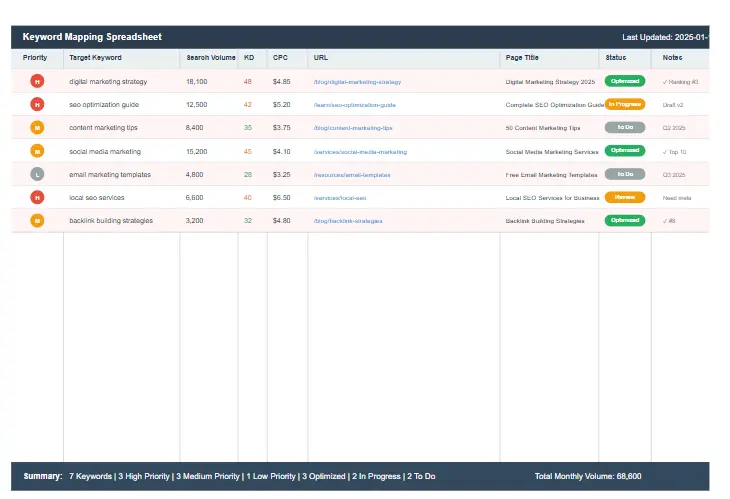
1. Create a Master Keyword Map
Before you write a single word, create a spreadsheet that maps every target keyword to a specific, primary URL on your site. This is your single source of truth and a critical part of any thorough keyword research guide.
If a new content idea comes up, the first step is to check the keyword map. If the keyword is already assigned, you either need to target a different, more specific variation or update the existing page instead. This document is your primary tool for proactive keyword overlap fix prevention.
2. Implement the Pillar/Cluster Model
As mentioned above, this model is inherently designed to prevent cannibalization. By making it the foundation of your content strategy, you build a logical site structure that guides both your team and Google. This is the best structural approach for a long-term keyword cannibalization fix.
3. Maintain a Content Calendar
A shared content calendar ensures everyone on your team knows what is being published and when. It prevents duplicate work and allows for strategic planning around your core topics. A good calendar is an operational tool that helps you stop the duplicate keyword ranking issue before it starts.
4. Conduct Regular Site Audits
Make it a habit to perform a cannibalization audit every quarter. Use the methods outlined in Section 2 to catch any new issues before they spiral out of control and harm your rankings. Regular audits are how you maintain site health and catch new conflicts early, making your next keyword cannibalization fix smaller and simpler.
5. Educate Your Team
Ensure that everyone involved in content creation — from writers and editors to marketing managers — understands what keyword cannibalization is, why it’s harmful, and how to prevent it. A shared understanding is your best defense and the most sustainable way to keep your site’s keyword targeting clean.
Conclusion: Take Control of Your Search Destiny
Keyword cannibalization is a silent killer of SEO performance. It erodes your authority, wastes your resources, and confuses your audience. But it doesn’t have to be.
By learning to identify it, understanding its root causes, and applying the right keyword cannibalization fix strategy, you can transform a chaotic web of competing pages into a powerful, well-organized authority machine.
Remember, the goal is not just to create more content — it’s to build a better, more strategic content ecosystem. Start with an audit, choose your keyword cannibalization fix approach, and put a proactive strategy in place for the future. By doing so, you’ll not only reclaim your lost rankings but also build a more resilient and profitable online presence for years to come.