
The Ultimate Guide to SERP Feature Optimization
Master the art of dominating search results with our comprehensive guide to SERP feature optimization. Boost visibility, increase click-through rates, and outperform your competition.
Get the ChecklistUnderstanding SERP Feature Optimization
In today’s competitive digital landscape, simply ranking #1 in organic search results is no longer enough. The search engine results pages (SERPs) have evolved dramatically, with various features now occupying valuable screen real estate. This is where SERP feature optimization becomes crucial for any successful SEO strategy.
SERP feature optimization refers to the process of structuring and presenting your content in a way that increases the likelihood of it being featured in special search result elements like featured snippets, knowledge panels, local packs, and more. These features often appear above traditional organic results, offering prime visibility that can significantly boost traffic to your website.
According to recent studies from Search Engine Land, SERP features now appear in over 40% of all Google searches, with some queries triggering multiple features. This means that without proper SERP feature optimization, you’re missing out on substantial visibility opportunities, even if your content ranks well organically.
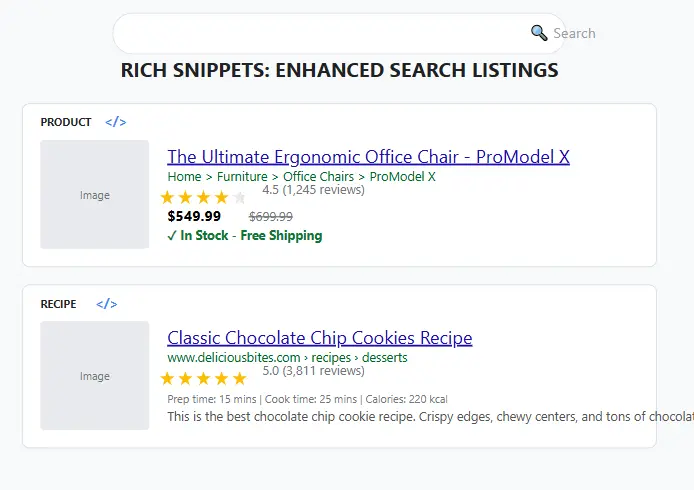
Rich snippets enhance your search listings with additional information, improving visibility and click-through rates
“SERP feature optimization is no longer optional—it’s essential for businesses that want to maintain visibility in an increasingly crowded search landscape.” – John Mueller, Google Search Advocate
In this comprehensive guide, we’ll explore everything you need to know about SERP feature optimization, from understanding different feature types to implementing proven strategies that will help you capture more visibility and drive qualified traffic to your site.
Table of Contents
Types of SERP Features
Before diving into optimization strategies, it’s essential to understand the various SERP features that Google and other search engines display. Each feature serves a different purpose and requires a unique approach to SERP feature optimization.
Featured Snippets
Highlighted excerpts that directly answer a user’s query, appearing at the top of search results.
Local Pack
Map-based results showing local businesses relevant to location-based searches.
Shopping Results
Product listings with images, prices, and retailers for e-commerce queries.
Video Carousels
Horizontal scrollable list of videos, often from YouTube, relevant to the query.
People Also Ask
Expandable questions related to the original search query.
Image Pack
Horizontal row of images relevant to the search query.
Top Stories
News articles and recent blog posts relevant to time-sensitive queries.
Knowledge Panel
Information box about entities like people, places, or organizations.
Each of these features presents a unique opportunity for SERP feature optimization. For example, featured snippets typically require concise, well-structured content that directly answers specific questions, while local pack optimization demands accurate business listings and location-specific content.
It’s important to note that the SERP features displayed can vary significantly based on the search intent behind a query. Informational queries often trigger featured snippets and People Also Ask boxes, while commercial queries might show shopping results and review snippets. Understanding this relationship between search intent and SERP features is fundamental to effective SERP feature optimization.
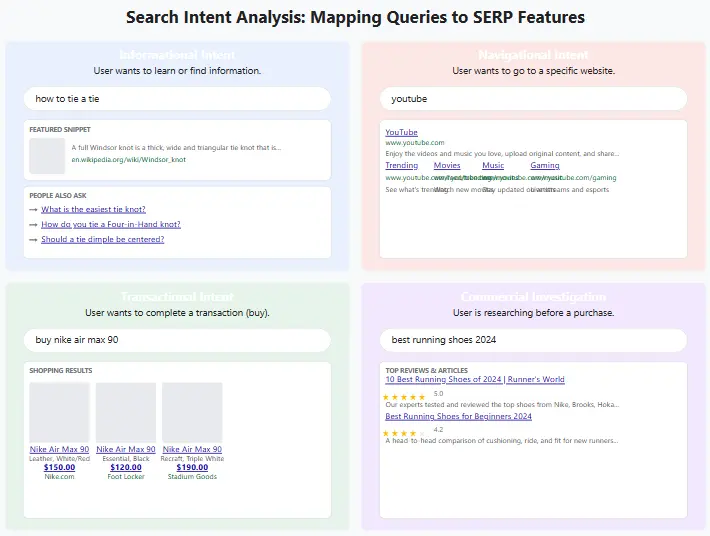
Understanding search intent is crucial for targeting the right SERP features with your content
For more detailed information on SERP feature types, Ahrefs’ guide to SERP features provides an excellent breakdown.
Why SERP Feature Optimization Matters
As search engines continue to evolve, the importance of SERP feature optimization has grown exponentially. Here’s why focusing on these special result elements should be a priority in your SEO strategy:
Enhanced Visibility and Click-Through Rates
SERP features typically appear above traditional organic results, giving them prime visibility. Studies from SEMrush show that featured snippets alone can capture 8-15% of clicks from the search results page, even when the same content also appears in the regular organic listings below. By implementing effective SERP feature optimization strategies, you can capture this valuable traffic before users even see your competitors.

SERP features appear above traditional organic results, capturing valuable user attention and clicks
Authority and Credibility Boost
When your content appears in SERP features, it sends a strong signal of authority to users. Google is essentially endorsing your content as the best answer to a query, which can significantly enhance brand perception and trust. This authority factor is a key benefit of successful SERP feature optimization that extends beyond just traffic numbers.
Competitive Advantage
Many businesses still focus solely on traditional organic rankings, leaving SERP features wide open for competitors who understand SERP feature optimization. By targeting these features, you can establish a competitive advantage and capture market share that others are missing.
Voice Search Optimization
With the rise of voice assistants like Alexa, Google Assistant, and Siri, SERP feature optimization has become even more critical. Voice assistants often read featured snippets as their answers to user queries. By optimizing for these features, you’re simultaneously optimizing for voice search, positioning your brand for the future of search. Voice search statistics show that over 50% of users now use voice search for daily queries.
Zero-Click Search Mitigation
While some SERP features contribute to “zero-click searches” (where users get answers without visiting a website), proper SERP feature optimization can actually mitigate this trend. By providing value within the feature while creating curiosity for more information, you can still drive traffic to your site even when appearing in features that might otherwise result in zero clicks.
By the Numbers: The Impact of SERP Features
- 40%+ of all Google searches now include SERP features
- Featured snippets receive 8-15% of clicks on average
- Local pack results appear in 33% of mobile searches
- Video carousels increase click-through rates by up to 41%
- Pages with rich snippets see a 30% increase in click-through rates
Strategies for SERP Feature Optimization
Effective SERP feature optimization requires a multi-faceted approach tailored to the specific features you want to target. Below, we’ll explore proven strategies for the most important SERP features:
Featured Snippet Optimization
Featured snippets are perhaps the most coveted SERP feature, as they appear at the top of the results page and can significantly boost visibility. Here’s how to optimize for them:
Identify Snippet Opportunities
Start by researching keywords that already trigger featured snippets in your niche. Tools like Ahrefs, SEMrush, or even manual searches can help identify these opportunities. Focus on question-based queries and “how-to” searches, as these commonly trigger featured snippets.
Structure Content for Snippets
Organize your content in a way that makes it easy for Google to extract and display as a featured snippet. Use clear headings, short paragraphs, and bullet points or numbered lists. For SERP feature optimization, aim to provide concise answers (40-50 words) to specific questions within your content.
Use Schema Markup
Implement appropriate schema markup to help search engines understand your content structure. FAQPage, HowTo, and QAPage schemas are particularly useful for SERP feature optimization targeting featured snippets. Schema.org provides comprehensive documentation for implementing structured data.
Monitor and Refine
Track your performance in featured snippets using Google Search Console and third-party tools. If you’re not winning snippets for target keywords, analyze the current snippet winners and adjust your content accordingly. SERP feature optimization is an ongoing process that requires continuous refinement.
Local Pack Optimization
For businesses with physical locations, local pack optimization is essential. Here’s how to improve your visibility in local search results:
- Claim and Optimize Your Google Business Profile: Complete every section of your profile, including accurate business hours, photos, services, and attributes. Regularly update your profile with fresh content and respond to reviews promptly.
- Ensure NAP Consistency: Your business name, address, and phone number (NAP) should be consistent across all online directories and your website. Inconsistencies can harm your local SERP feature optimization efforts.
- Generate Reviews: Encourage customers to leave reviews on your Google Business Profile and other relevant review sites. Positive reviews are a key ranking factor for local pack results.
- Create Location-Specific Content: Develop content that’s relevant to your local area, including location-specific landing pages, blog posts about local events, and community involvement.
- Build Local Citations: Get listed in reputable local directories and industry-specific websites. Quality local citations are crucial for successful SERP feature optimization in local packs. BrightLocal offers excellent tools for managing local citations.
People Also Ask (PAA) Optimization
The People Also Ask section provides another opportunity for SERP feature optimization. Here’s how to target these expandable question boxes:
- Research Common Questions: Use tools like AnswerThePublic, AlsoAsked, or Google’s own PAA results to identify questions related to your target keywords.
- Create Comprehensive FAQ Sections: Develop detailed FAQ sections on your website that address these questions. Each question should have a clear, concise answer followed by more detailed information.
- Use Question-Based Headings: Structure your content with headings that directly match the questions users are asking. This makes it easier for Google to match your content to PAA queries.
- Implement FAQPage Schema: Use structured data to mark up your FAQ content, helping search engines understand the question-answer format of your content.
Video Carousel Optimization
Video content can appear in dedicated carousels in search results, providing another avenue for SERP feature optimization:
- Create High-Quality, Relevant Videos: Produce videos that directly address common search queries in your niche. How-to guides, tutorials, and product demonstrations perform particularly well.
- Optimize Video Metadata: Use keyword-rich titles, descriptions, and tags for your videos. Include your target keyword early in the title and description.
- Add Video Transcripts: Provide transcripts for your videos to help search engines understand the content and improve accessibility.
- Use VideoObject Schema: Implement structured data to provide search engines with additional information about your videos, including duration, thumbnail URL, and upload date.
- Host on YouTube: Since Google owns YouTube, videos hosted on the platform often have an advantage in appearing in video carousels. Ensure your YouTube channel is optimized with relevant keywords and categories. vidIQ offers excellent tools for YouTube optimization.
Rich Snippet Optimization
Rich snippets enhance your regular organic listings with additional information, improving visibility and click-through rates. Here’s how to optimize for them:
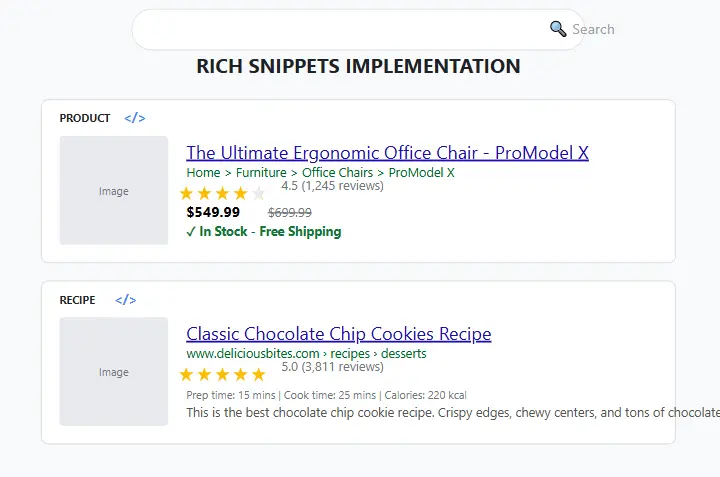
Proper implementation of rich snippets through schema markup can significantly improve your search visibility
| Rich Snippet Type | Schema Markup | Optimization Tips |
|---|---|---|
| Reviews | AggregateRating | Encourage customer reviews and display ratings prominently |
| Recipes | Recipe | Include cooking time, ingredients, and nutritional information |
| Events | Event | Provide date, location, and ticket information |
| Products | Product | Include price, availability, and product images |
| Articles | Article, NewsArticle | Include author, publication date, and headline |
| FAQs | FAQPage | Structure content as clear question-answer pairs |
Knowledge Panel Optimization
Knowledge panels appear for entities like businesses, people, and organizations. While you can’t directly control these panels, you can influence their content through strategic SERP feature optimization:
- Establish Entity Authority: Build a strong online presence across multiple platforms, including Wikipedia, Wikidata, and authoritative industry websites.
- Implement SameAs Schema: Use the sameAs property in your schema markup to connect your website to your social profiles and other official online properties.
- Claim Your Knowledge Panel: If you’re eligible, claim your knowledge panel through Google to verify your identity and suggest edits.
- Build Structured Citations: Develop consistent, structured mentions of your entity across authoritative websites, using the same name, description, and categorization. Brandify offers tools for managing your brand’s online presence.
Essential Tools for SERP Feature Optimization
Successful SERP feature optimization requires the right tools to identify opportunities, track performance, and implement changes. Here are some essential tools to add to your SEO arsenal:
Ahrefs
Offers comprehensive SERP analysis, including keyword tracking with SERP feature data, content gap analysis, and competitor research. The Organic Keywords report shows which SERP features appear for your target keywords.
SEMrush
Provides detailed SERP feature tracking and analysis. The Keyword Magic Tool shows which SERP features appear for specific keywords, while the Position Tracking tool monitors your visibility in various SERP features over time.
Schema Markup Validator
Essential for testing your structured data implementation. Google’s Rich Results Test and Schema.org’s validator help ensure your markup is correctly formatted for optimal SERP feature optimization.
AlsoAsked
Visualizes the “People Also Ask” data for any search query, helping you understand the relationships between questions and identify content opportunities for PAA optimization.
Google Business Profile Insights
Provides valuable data on how customers find your business listing, including search queries used and actions taken. Essential for tracking local pack SERP feature optimization efforts.
AnswerThePublic
Generates a comprehensive list of questions, prepositions, and comparisons related to your keyword, helping you create content that targets featured snippets and PAA boxes.
SurferSEO
Analyzes top-ranking pages for your target keywords, including SERP features, and provides data-driven recommendations for content optimization to increase your chances of winning featured snippets.
Google Search Console
The Performance report shows which queries trigger SERP features for your site, while the Enhancements report highlights opportunities for improving rich snippets and other search features.
When implementing your SERP feature optimization strategy, it’s best to use a combination of these tools to get a comprehensive view of opportunities and track your progress across different feature types.
SERP Feature Optimization Checklist
Use this comprehensive checklist to ensure you’ve covered all aspects of SERP feature optimization for your website:
Content Optimization
- Research keywords that trigger SERP features in your niche
- Analyze current SERP feature winners for target keywords
- Create content that directly answers specific user questions
- Structure content with clear headings and subheadings
- Use concise paragraphs (2-3 sentences maximum)
- Incorporate bullet points and numbered lists for scannability
- Include target keywords in headings and early in content
- Add internal links to related content on your site
- Ensure content is comprehensive and covers the topic in depth
- Update and refresh content regularly to maintain relevance
Technical SEO for SERP Features
- Implement appropriate schema markup for all content types
- Test schema markup using Google’s Rich Results Test
- Ensure fast page loading speed (Core Web Vitals optimization)
- Implement mobile-first responsive design
- Create and submit XML sitemaps to search engines
- Optimize images with descriptive alt text and proper sizing
- Implement breadcrumb navigation with structured data
- Ensure proper URL structure is clean and descriptive
- Set up canonical tags to avoid duplicate content issues
- Monitor crawl errors in Google Search Console regularly
Local SERP Feature Optimization
- Claim and fully optimize Google Business Profile
- Ensure NAP consistency across all online directories
- Generate and respond to customer reviews regularly
- Create location-specific landing pages for each service area
- Add local business schema markup to your website
- Build high-quality local citations from authoritative directories
- Create content relevant to your local area and community
- Upload high-quality photos and videos to your business profile
- Use Google Posts to share updates and offers
- Monitor local pack rankings for target keywords
Video SERP Feature Optimization
- Create high-quality, relevant video content
- Optimize video titles with target keywords
- Write detailed, keyword-rich descriptions
- Add relevant tags to improve discoverability
- Create custom thumbnails that stand out
- Add transcripts and captions to all videos
- Implement VideoObject schema markup
- Embed videos on relevant pages of your website
- Encourage engagement through likes, comments, and shares
- Host videos on YouTube for maximum visibility
Monitoring and Analysis
- Set up SERP feature tracking in SEO tools
- Monitor featured snippet wins and losses
- Analyze click-through rates for different SERP features
- Track visibility in People Also Ask sections
- Monitor local pack performance and visibility
- Analyze video carousel rankings and performance
- Review rich snippet appearance in search results
- Monitor mobile vs. desktop SERP feature differences
- Analyze competitor SERP feature strategies
- Regularly review and update your SERP feature optimization strategy
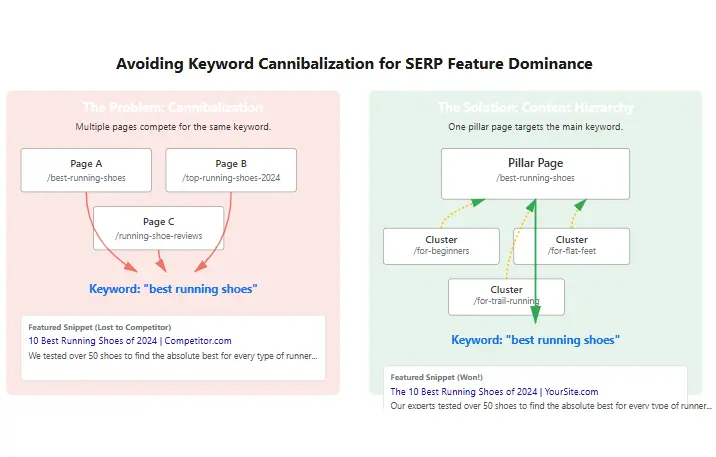
Avoid keyword cannibalization to ensure your pages don’t compete against each other for SERP features
By systematically working through this checklist, you’ll ensure that your SERP feature optimization efforts are comprehensive and effective across all relevant feature types.
Success Stories and Case Studies
Real-world examples can provide valuable insights into effective SERP feature optimization strategies. Let’s examine some success stories:
Case Study 1: E-commerce Site Increases Traffic by 67% with Rich Snippets
An online electronics retailer implemented Product schema markup across their entire product catalog, including detailed specifications, pricing, availability, and review ratings. Within three months, they saw:
- 67% increase in organic traffic from product pages
- 45% higher click-through rates for pages with rich snippets
- 23% increase in conversion rate for organic traffic
- Appearance in shopping carousels for 35% of target keywords
The key to their success was implementing comprehensive product markup and ensuring all product information was accurate and up-to-date. This SERP feature optimization effort significantly enhanced their visibility in search results.
Case Study 2: B2B Service Provider Dominates Featured Snippets
A financial consulting company focused on SERP feature optimization for their educational blog content. They restructured their articles to directly answer common questions, implemented FAQPage schema, and created comprehensive guides targeting question-based keywords. The results were impressive:
- Featured snippet appearances increased from 5 to 87 within six months
- Organic traffic grew by 124% year-over-year
- Time on page increased by 38% for optimized content
- Lead generation from organic traffic increased by 76%
This case demonstrates how focusing on SERP feature optimization for informational content can drive significant business results for B2B companies.
Case Study 3: Local Business Triangulates Local Pack Results
A multi-location dental practice implemented a comprehensive local SERP feature optimization strategy. They optimized each location’s Google Business Profile, created location-specific landing pages, and built consistent citations across directories. Their results included:
- Local pack appearances for 78% of targeted location-based keywords
- 156% increase in calls from Google Business Profile listings
- 43% increase in new patient appointments from organic search
- First-page local rankings for all three of their locations
This case highlights the importance of location-specific SERP feature optimization for businesses with multiple physical locations.
Future Trends in SERP Features
As search engines continue to evolve, so do SERP features. Staying ahead of these trends is crucial for maintaining an effective SERP feature optimization strategy. Here are some emerging trends to watch:
AI-Generated Content Summaries
With the rise of AI technologies like GPT, search engines are beginning to experiment with AI-generated summaries that directly answer user queries. These AI-powered snippets may eventually replace traditional featured snippets for certain types of queries. To prepare for this trend, focus on creating authoritative, well-structured content that AI systems can easily summarize. OpenAI’s research provides insights into how AI systems process and summarize content.
Visual Search Integration
Visual search capabilities are expanding, with platforms like Google Lens allowing users to search using images rather than text. This will likely lead to new SERP features that blend visual and text-based results. Optimize your images with descriptive alt text, structured data, and high-quality visuals to prepare for this shift in SERP feature optimization.
Interactive SERP Features
We’re seeing more interactive elements appearing in search results, such as calculators, quizzes, and tools that can be used directly within the SERP. Creating content that offers interactive elements can position you for these emerging SERP feature optimization opportunities.
Personalized SERP Features
As search engines gather more user data, SERP features will become increasingly personalized based on individual search history, preferences, and context. This means that SERP feature optimization will need to account for different user segments and their unique needs.
Voice-First SERP Features
With the growing adoption of voice assistants, we can expect more SERP features designed specifically for voice-first interactions. This will likely include more conversational question-answer formats and shorter, more direct answers. Optimizing for voice search will become an integral part of SERP feature optimization. Google Assistant developer resources provide insights into optimizing for voice search.
Augmented Reality (AR) Integration
For certain queries, especially those related to physical products or locations, AR features may begin appearing in SERPs. Imagine being able to virtually place furniture in your room or see how a product looks in your home directly from the search results. Preparing for this trend will require 3D models and AR-compatible content as part of your SERP feature optimization strategy. Google’s AR resources offer guidance on implementing AR experiences.
While these trends are still developing, forward-thinking businesses should begin incorporating them into their long-term SERP feature optimization strategies to maintain a competitive edge as search continues to evolve.
Conclusion
SERP feature optimization has transformed from a niche SEO tactic to an essential component of any comprehensive search strategy. With SERP features now appearing in over 40% of all searches, businesses that ignore these opportunities are missing out on significant visibility and traffic.
By implementing the strategies outlined in this guide—focusing on content structure, technical implementation, and ongoing monitoring—you can dramatically increase your chances of appearing in featured snippets, local packs, video carousels, and other valuable SERP features.
Remember that effective SERP feature optimization requires a patient, systematic approach. Results may not appear overnight, but with consistent effort and the right strategies, you can establish your brand as an authority in your niche and capture valuable SERP real estate that drives qualified traffic to your website.
As search engines continue to evolve, staying informed about new SERP features and optimization techniques will be crucial. Make SERP feature optimization an ongoing priority in your SEO efforts, and you’ll be well-positioned to adapt to whatever changes come next in the dynamic world of search.
“The future of SEO isn’t just about ranking #1—it’s about dominating the entire search results page through strategic SERP feature optimization.”
Ready to Dominate the SERPs?
Implement our proven SERP feature optimization strategies and start capturing more visibility, traffic, and conversions today.
Download the Checklist