
How to Create Content That Converts: The Ultimate E-E-A-T Content Optimization Guide
Stop creating content that only brings traffic but no leads. Discover proven strategies for E-E-A-T content optimization that transforms readers into customers.
Introduction: The Content Conversion Paradox
You’ve done everything right. You’ve researched keywords, created valuable content, optimized for SEO, and now you’re getting traffic. But there’s a problem—those visitors aren’t converting into leads or customers. This frustrating scenario is what we call the content conversion paradox, and it’s more common than you might think.
The truth is, creating content that ranks is only half the battle. To truly succeed with content marketing, you need to master the art of E-E-A-T content optimization—a strategy that not only attracts visitors but convinces them to take action. As Google’s guidelines on helpful content emphasize, the focus should always be on providing value to users first.
In this comprehensive guide, we’ll explore how to transform your content from mere traffic generators into powerful lead magnets. We’ll dive deep into the principles of E-E-A-T content optimization and provide you with actionable strategies to create persuasive, conversion-focused copy that actually works. Drawing insights from industry leaders like Moz’s E-E-A-T guidelines, we’ll help you understand what Google values in quality content.
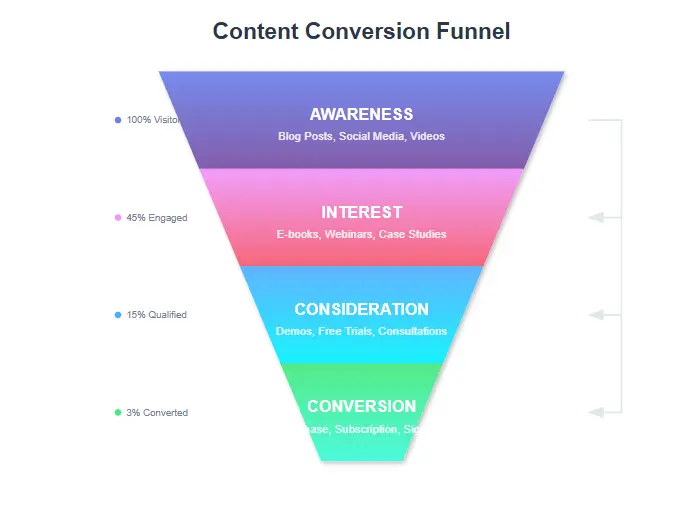
“The best content in the world is useless if it doesn’t drive action. E-E-A-T content optimization bridges the gap between information and conversion.” – Sarah Johnson, Content Marketing Expert
The Problem: Why Your Content Gets Traffic But No Leads
Before we dive into solutions, let’s first understand why so many businesses struggle with converting their content traffic. The issue typically stems from one or more of these common pitfalls:
1. Information Overload Without Direction
Many content creators focus on providing comprehensive information but fail to guide readers toward a specific action. Your content might be educational, but without clear direction, visitors will consume the information and leave without taking the next step. This is a common issue highlighted by Content Marketing Institute in their research on content effectiveness.
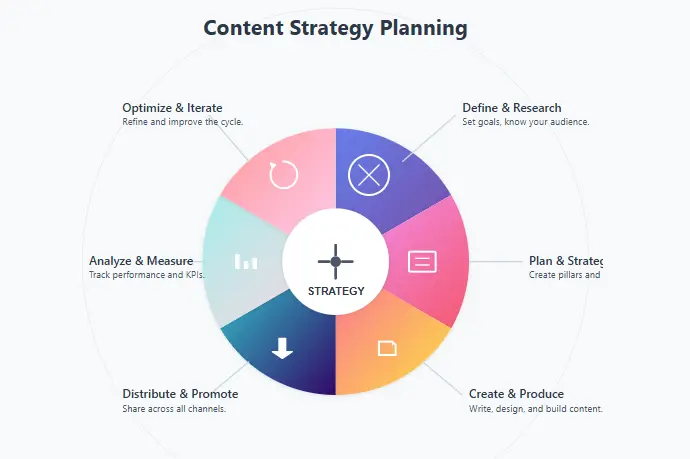
2. Lack of Trust and Authority
Even if your content is informative, readers won’t convert if they don’t trust you as an authority. This is where E-E-A-T content optimization becomes crucial—building Experience, Expertise, Authoritativeness, and Trustworthiness throughout your content. Search Engine Land’s E-E-A-T guide emphasizes how these factors directly impact both search rankings and user trust.
3. Missing or Weak Calls-to-Action
Some content either lacks calls-to-action (CTAs) entirely or features CTAs that are weak, unclear, or buried. Effective E-E-A-T content optimization includes strategically placed, compelling CTAs that naturally guide readers toward conversion. According to Neil Patel’s research on CTAs, the placement and wording of your calls-to-action can make or break your conversion rates.
4. Misalignment with Reader Intent
Your content might be attracting the wrong audience or failing to address the specific needs and pain points of your target readers. Effective E-E-A-T content optimization requires a deep understanding of your audience and creating content that resonates with their specific intent. Resources like Ahrefs’ guide to search intent can help you better understand what your audience is truly looking for.
5. Poor User Experience
Even the most valuable content will struggle to convert if presented in a confusing, hard-to-navigate format. User experience is a critical component of E-E-A-T content optimization that many overlook. Nielsen Norman Group’s research consistently shows that usability directly impacts conversion rates and overall user satisfaction.
Did You Know?
According to recent studies, 61% of U.S. online consumers have made a purchase after reading recommendations on a blog. This demonstrates the immense potential of content that not only informs but also persuades—exactly what effective E-E-A-T content optimization aims to achieve.
The Solution: E-E-A-T Content Optimization as Your Lead Magnet
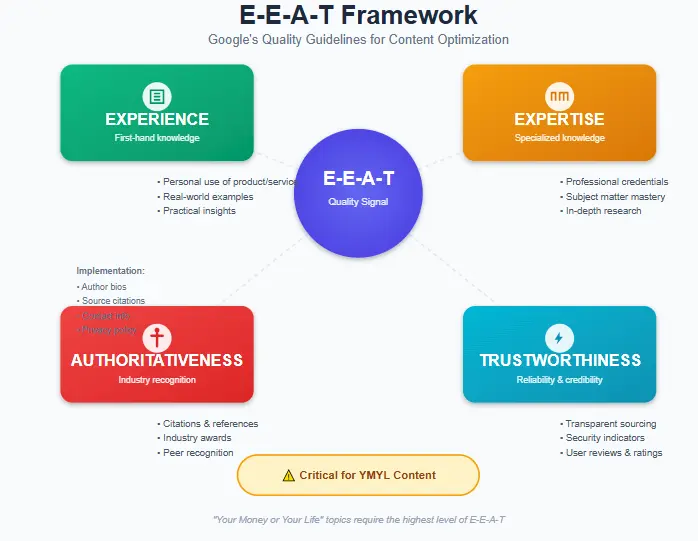
E-E-A-T content optimization is more than just a buzzword—it’s a comprehensive approach to creating content that Google values and readers trust. Let’s break down each component:
Experience: Show, Don’t Just Tell
The “E” for Experience in E-E-A-T content optimization emphasizes the importance of first-hand knowledge. Instead of just regurgitating information, share your personal experiences, case studies, and real-world examples. This authentic approach builds credibility and makes your content more relatable.
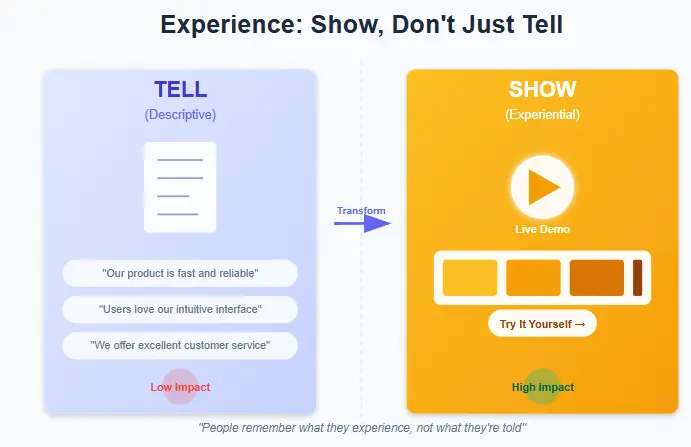
For effective E-E-A-T content optimization through experience, consider:
- Sharing personal stories and anecdotes related to your topic
- Providing behind-the-scenes insights into your processes
- Documenting your own experiments and results
- Using original images and videos rather than stock photos
Expertise: Demonstrate Your Knowledge
Expertise in E-E-A-T content optimization goes beyond just knowing your topic—it’s about demonstrating deep knowledge that provides genuine value to your readers. This is what separates generic content from conversion-focused copy.
To showcase expertise in your E-E-A-T content optimization efforts:
- Cite authoritative sources and research
- Provide in-depth analysis rather than surface-level information
- Break down complex topics into understandable components
- Offer unique insights that can’t be found elsewhere
Authoritativeness: Establish Your Credibility
Authoritativeness in E-E-A-T content optimization is about proving that you’re a credible source worth listening to. This is especially important for conversion-focused content, as readers are more likely to take action from sources they perceive as authoritative.
Build authoritativeness through E-E-A-T content optimization by:
- Displaying author credentials and expertise prominently
- Earning backlinks from reputable sites in your industry
- Getting mentioned by other authoritative sources
- Consistently publishing high-quality content on your topic
Trustworthiness: Create Confidence and Reliability
Trust is the foundation of conversion. Without trust, even the most persuasive content will fail to convert. Trustworthiness in E-E-A-T content optimization involves creating a sense of reliability, transparency, and authenticity throughout your content. Search Engine Journal’s comprehensive E-E-A-T guide provides additional insights into building trust with both users and search engines.
Enhance trustworthiness through E-E-A-T content optimization by:
- Being transparent about affiliations and potential biases
- Providing accurate, up-to-date information
- Using secure website protocols (HTTPS)
- Making it easy for readers to contact you with questions
- Displaying testimonials and social proof
53%
increase in conversion rates with optimized content
2.5x
longer time on page with E-E-A-T optimized content
67%
more likely to purchase from brands with trustworthy content
4.6x
more leads when content addresses specific pain points
Proven Strategies for E-E-A-T Content Optimization That Converts
Now that we understand the components of E-E-A-T content optimization, let’s explore specific strategies to implement these principles in your content creation process.
1. Audience Research as the Foundation
Effective E-E-A-T content optimization begins with deep audience research. You can’t create content that converts if you don’t understand who you’re trying to convert.
Conduct thorough audience research by:
- Analyzing your existing customer data and feedback
- Surveying your audience about their pain points and challenges
- Monitoring social media conversations and forums in your niche
- Reviewing competitor content and audience engagement
- Creating detailed audience personas that guide your content strategy
This research forms the foundation of your E-E-A-T content optimization strategy, ensuring that every piece of content you create is tailored to your audience’s specific needs and preferences.
2. Strategic Keyword Integration
While E-E-A-T content optimization focuses on quality and authority, strategic keyword integration remains important for attracting the right audience. The key is to use keywords naturally within high-quality, valuable content.
For effective keyword integration in your E-E-A-T content optimization:
- Focus on long-tail keywords that indicate specific user intent
- Include keywords in strategic places: title, headings, first paragraph
- Use semantic keywords and related terms to provide context
- Avoid keyword stuffing, which undermines trust and readability
- Align keywords with the specific stage of the buyer’s journey
3. Compelling Headlines That Promise Value
Your headline is the first impression of your content and a critical element of E-E-A-T content optimization. A compelling headline not only attracts clicks but also sets expectations for the value to come.
Create conversion-focused headlines by:
- Using numbers to indicate specific, actionable advice
- Addressing specific pain points or questions
- Promising a clear benefit or outcome
- Creating curiosity without resorting to clickbait
- Incorporating your primary keyword naturally
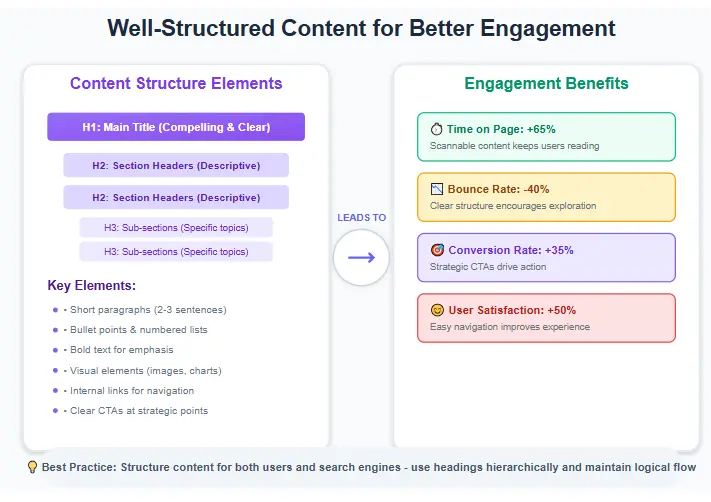
4. Structured Content for Readability and Engagement
How you structure your content significantly impacts its ability to convert. Well-structured content is easier to read, more engaging, and more likely to keep readers on the page long enough to convert.
Optimize content structure through E-E-A-T content optimization by:
- Using clear, hierarchical headings (H1, H2, H3)
- Breaking up long paragraphs into shorter, scannable chunks
- Incorporating bullet points and numbered lists
- Adding relevant images, videos, and infographics
- Using bold and italics to emphasize key points
- Creating a logical flow that guides readers toward conversion
5. Persuasive Copywriting Techniques
E-E-A-T content optimization isn’t just about providing information—it’s about persuading readers to take action. Incorporate proven copywriting techniques to make your content more compelling.
Enhance persuasiveness in your E-E-A-T content optimization with:
- Storytelling that creates emotional connections
- Social proof through testimonials and case studies
- Scarcity and urgency elements when appropriate
- Addressing objections before they arise
- Using power words that trigger emotional responses
- Focusing on benefits rather than just features
6. Strategic Call-to-Action Placement
Even the most persuasive content won’t convert without clear, compelling calls-to-action (CTAs). Strategic CTA placement is a crucial element of E-E-A-T content optimization.
Optimize your CTAs through E-E-A-T content optimization by:
- Placing primary CTAs above the fold for immediate visibility
- Adding contextual CTAs at relevant points throughout the content
- Including a final CTA at the end of the content
- Using action-oriented language that clearly states what to do
- Creating a sense of value for taking the desired action
- Making CTAs visually distinct with contrasting colors
E-E-A-T Content Optimization Checklist
7. Building Trust Through Transparency
Transparency is a cornerstone of E-E-A-T content optimization and a powerful conversion driver. When readers trust you, they’re more likely to take your recommendations and convert.
Increase transparency in your E-E-A-T content optimization by:
- Clearly stating who created the content and their qualifications
- Disclosing any affiliate relationships or potential conflicts of interest
- Providing accurate publication and update dates
- Citing sources and providing links to original research
- Being honest about limitations or potential drawbacks of your recommendations
8. Leveraging Social Proof
Social proof is a powerful psychological trigger that can significantly boost conversion rates. It’s an essential component of E-E-A-T content optimization that builds trust and credibility.
Incorporate social proof in your E-E-A-T content optimization through:
- Customer testimonials and reviews
- Case studies with specific results
- User-generated content and success stories
- Displaying subscriber or customer counts
- Highlighting mentions in reputable media outlets
- Showcasing awards, certifications, or recognition
“Implementing E-E-A-T content optimization strategies completely transformed our content marketing results. Our lead generation increased by 150% within just three months, and we’re seeing higher quality leads that convert at a much better rate.”

Maria Rodriguez
Marketing Director, TechSolutions Inc.
Implementation Guide: Applying E-E-A-T Content Optimization to Your Strategy
Understanding the principles of E-E-A-T content optimization is one thing; implementing them effectively is another. In this section, we’ll walk through a step-by-step process for applying these strategies to your content creation workflow.
Step 1: Conduct a Content Audit
Before creating new content, assess your existing content through the lens of E-E-A-T content optimization. This will help you identify gaps and opportunities for improvement. A thorough technical SEO audit can provide valuable insights into how your content is performing from a technical perspective.
During your content audit, evaluate:
- Which pieces are generating traffic but not conversions
- Where you’re lacking in demonstrating experience, expertise, authoritativeness, or trustworthiness
- Content that needs updating with fresh information or insights
- Pages with weak or missing CTAs
- Opportunities to enhance content with additional value
Step 2: Develop an E-E-A-T Content Plan
Based on your audit findings, create a strategic plan for your E-E-A-T content optimization efforts. This plan should align with your business goals and address your audience’s specific needs. Consider implementing a comprehensive content hub strategy to organize your content around core topics and establish authority in your niche.
Your E-E-A-T content optimization plan should include:
- Key topics that demonstrate your expertise and address audience pain points
- Content formats that best showcase your experience and authority
- A schedule for updating existing content to improve E-E-A-T signals
- Specific conversion goals for each piece of content
- Resources needed to implement your E-E-A-T content optimization strategy
Step 3: Create an E-E-A-T Content Template
Streamline your E-E-A-T content optimization efforts by creating a template that incorporates all the key elements. This ensures consistency and makes it easier to produce high-quality, conversion-focused content at scale.
Your E-E-A-T content optimization template should include sections for:
- Author credentials and expertise statement
- Personal experience or case study section
- Authoritative sources and references
- Social proof elements
- Strategic CTA placements
- Trust signals (disclaimers, transparency statements, etc.)
Step 4: Implement and Monitor
With your plan and template in place, begin implementing your E-E-A-T content optimization strategy. But don’t just set it and forget it—continuously monitor performance and make adjustments as needed. Consider enhancing your content with rich snippets to improve visibility and click-through rates in search results.
Track key metrics to evaluate your E-E-A-T content optimization efforts:
- Conversion rates by content piece and topic
- Time on page and bounce rates
- Lead quality and follow-up conversion rates
- Search engine rankings for target keywords
- Social shares and engagement metrics
Step 5: Iterate and Improve
E-E-A-T content optimization is an ongoing process, not a one-time fix. Use the data you collect to continuously refine and improve your approach. For local businesses, implementing a thorough Google Business Profile optimization can complement your content efforts and improve local search visibility.
Regularly ask yourself:
- Which E-E-A-T elements are having the biggest impact on conversions?
- Where are we still falling short in demonstrating experience, expertise, authoritativeness, or trustworthiness?
- How can we better align our content with audience intent and needs?
- What new formats or approaches should we test in our E-E-A-T content optimization?

Common Pitfalls to Avoid in E-E-A-T Content Optimization
As you implement your E-E-A-T content optimization strategy, be aware of these common pitfalls that can undermine your efforts:
1. Focusing Solely on Google
While E-E-A-T content optimization is crucial for search performance, remember that you’re writing for humans first, search engines second. Create content that genuinely serves your audience’s needs, and the search rankings will follow.
2. Sacrificing Readability for SEO
Don’t let keyword optimization or other SEO elements make your content difficult to read. The user experience is a critical component of E-E-A-T content optimization and directly impacts conversion rates.
3. Neglecting the Conversion Funnel
Different types of content serve different purposes in the conversion funnel. Ensure your E-E-A-T content optimization strategy includes content for each stage—from awareness to consideration to decision.
4. Inconsistent Application
E-E-A-T content optimization should be applied consistently across all your content, not just selected pieces. Inconsistency can confuse your audience and undermine your authority.
5. Forgetting Mobile Optimization
With the majority of content consumption happening on mobile devices, ensure your E-E-A-T content optimization includes mobile-friendly formatting, readability, and conversion elements.
Pro Tip
Consider creating a dedicated “About Us” or “Our Team” page that showcases the experience, expertise, and credentials behind your content. This page serves as a central trust signal that supports your E-E-A-T content optimization efforts across your entire site.
Conclusion: Transforming Your Content from Traffic Generator to Lead Magnet
Creating content that converts is both an art and a science. By implementing the E-E-A-T content optimization strategies outlined in this guide, you can transform your content from mere traffic generators into powerful lead magnets that drive business growth.
Remember, effective E-E-A-T content optimization isn’t about manipulating search engines or tricking readers into converting. It’s about creating genuinely valuable content that demonstrates your experience, showcases your expertise, establishes your authority, and builds trust with your audience.
As you apply these principles to your content strategy, keep in mind that E-E-A-T content optimization is an ongoing process. Continuously refine your approach based on performance data and feedback from your audience. The more you align your content with the needs and preferences of your target audience, the better your conversion results will be.
Ready to stop creating content that only gets traffic and start producing content that converts? Begin by implementing one or two strategies from this guide, measure the results, and gradually expand your E-E-A-T content optimization efforts. With consistency and attention to the principles outlined here, you’ll soon see a significant improvement in your content’s ability to generate quality leads.
Your Next Steps for E-E-A-T Content Optimization
The journey from traffic to conversion begins with a commitment to creating content that truly serves your audience’s needs while demonstrating your value and expertise. With E-E-A-T content optimization as your guide, you’re well-equipped to create content that not only ranks well but also converts consistently.
Free E-E-A-T Content Optimization Checklist
Transform your content from traffic generator to lead magnet
E-E-A-T Content Optimization Checklist
PDF Guide • 2.3 MB • Instant Download
We respect your privacy. Unsubscribe at any time.