
Practical SEO That Builds Traffic, Trust, and Sustainable Income
Welcome to SEORAF. If you want Practical SEO—clear systems, repeatable actions, and measurable improvements—start here. This page shows the exact order to build organic traffic, strengthen site structure, and turn visitors into subscribers and clients.
On this page
Tip: Start page = hub. Keep it clean, fast, and action-focused.
Start with one high-impact action
If you already have pages but traffic is slow, begin with a focused audit and fix blockers first. If you’re starting new, begin with keyword mapping so every page matches search intent and has a clear job.
Next steps: SEO audit service and the step-by-step keyword research guide.
What Practical SEO Means on SEORAF
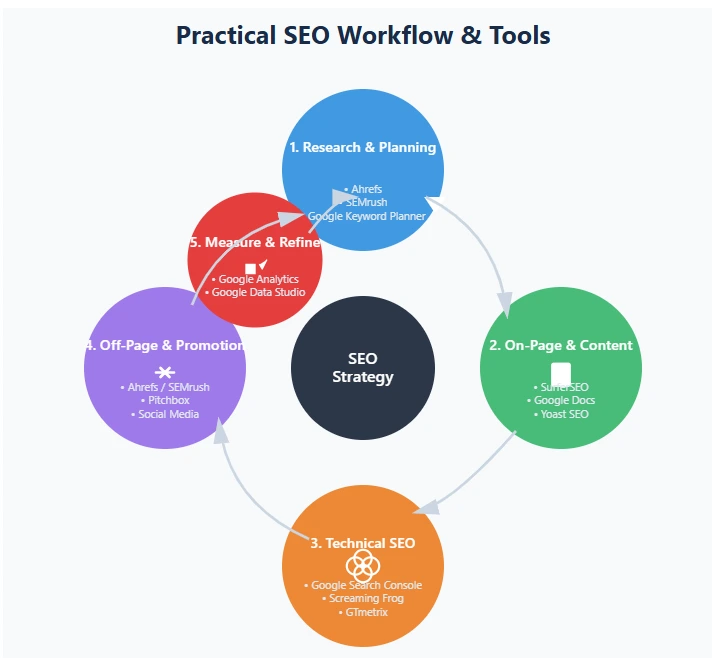
Practical SEO is an execution-first approach. Instead of collecting tips, you follow a repeatable workflow that improves rankings over time. Most websites don’t fail because owners are lazy—websites fail because effort is scattered. Practical SEO removes confusion by making the order clear.
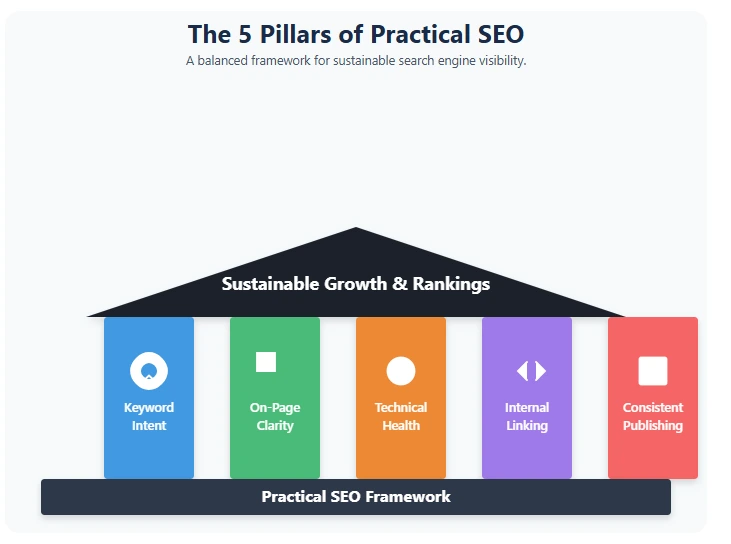
On SEORAF, Practical SEO is built on five pillars: intent-first keyword planning, clean on-page structure, technical health, strategic internal linking, and consistent publishing. When these stay aligned, growth becomes predictable—and your site becomes easier to scale.
If you want the strongest foundation, start with keyword research because it controls what pages you create, what titles you write, and what internal links you build. Then use an SEO audit to remove blockers.
Who This Start Page Is For
This page is for website owners, bloggers, and service providers who want sustainable organic growth without relying on paid ads. If you want faster progress with less wasted effort, you need a simple system: build pages with intent, strengthen structure, and improve technical performance.
This is for you if:
- You want steady organic traffic (not spikes)
- You want clearer site structure and stronger internal linking
- You want content that ranks and converts
- You want a weekly process you can repeat
- You prefer systems over “secret tricks”
Avoid common traps:
- Publishing many pages without a keyword map
- Weak titles that don’t match intent
- Orphan pages (no internal links)
- Ignoring speed + indexing problems
- Chasing trends instead of building clusters
Choose Your Practical SEO Path
Pick one path for 30 days. Keep it simple, repeat weekly, and track improvements.
Path A: Starting from scratch
Build foundations: keyword map, page structure, and a few strong pages.
- Create intent groups (informational vs buyer intent)
- Build 1 pillar + 2 supporting pages
- Write titles that match the exact query
- Add internal links both directions
Path B: Many pages, low traffic
Fix structure before publishing more. An audit gives the fastest clarity.
- Find indexing + speed blockers
- Improve titles for intent + CTR
- Strengthen internal links site-wide
- Update 5 key pages first
Path C: Traffic + monetization
Build trust first, then recommend tools inside workflows.
- Target 10–20 buyer-intent keywords
- Publish comparisons + reviews + tutorials
- Guide users with internal links
- Capture emails early
Free Practical SEO Resources
These resources are designed to be used, not skimmed. Each one supports a specific step in the workflow: auditing, keyword mapping, on-page fixes, and internal linking.
Start with the essentials
- SEO Audit Checklist — find technical + on-page blockers
- Keyword Research Template — map intent + clusters
- On-Page Checklist — titles, headings, images, FAQs
- 30-Day Plan — repeatable weekly rhythm
Do this week (simple)
Guides to Learn the System
Use these in order. When the foundation is strong, publishing becomes faster and rankings become stable.
Tools Workflow (Soft, Honest)
Tools should support decisions, not replace them. Use a simple weekly workflow: audit key pages, map intent, optimize content structure, build internal links, then track what improved.
Weekly routine (30–90 minutes)
- Check indexing + errors (Search Console)
- Improve 1 title + intro for intent
- Add 5 contextual internal links
- Update 1 old page with better headings
- Track rankings + clicks
Internal linking rule
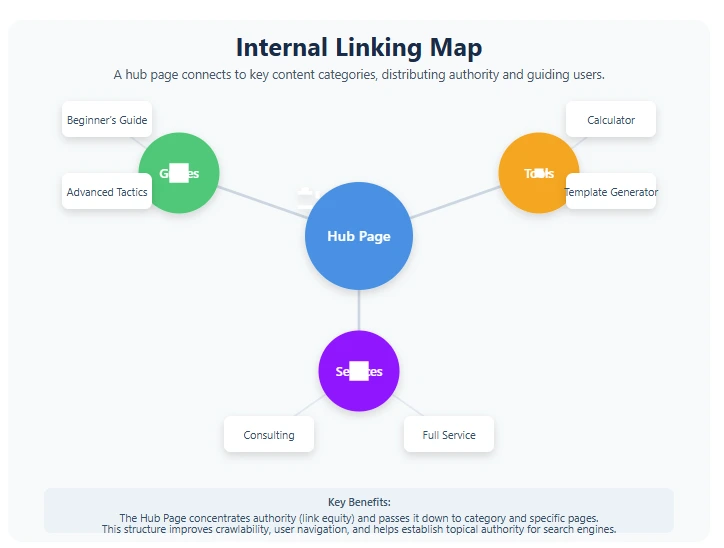
- Link when you mention a topic that has a dedicated page
- Use descriptive anchors (not “click here”)
- Guide users: Start → Guides → Tools → Services
- 2+ contextual links per main section
SEO Services
If you want faster clarity and a clean action plan, these services focus on audits, keyword mapping, and content improvements. The goal is simple: identify what blocks growth and fix the highest-impact issues first.
Keyword Research
Intent mapping, clusters, and page plan for faster rankings.
FAQ
How many internal links should a page have?
For long pages, aim for 10–25 contextual internal links where they fit naturally. Link to the next step, supporting guides, and related pages. Relevance matters more than quantity.
What is the fastest SEO improvement for most sites?
Fix indexing + speed blockers, improve titles for intent/CTR, then strengthen internal links. This typically delivers the fastest measurable impact.
Do I need expensive tools?
No. Start with free tools (Search Console + Analytics). Add paid tools only when they clearly support your next step and save time.
How long does Practical SEO take to show results?
Some fixes show movement in weeks, but meaningful growth often takes 3–6 months of consistent work. Practical SEO is designed for sustainable compounding results.
How often should I update content?
Review your key pages quarterly. Update titles, headings, internal links, and freshness signals—especially for pages that already get impressions but low clicks.
Contact
Email your website URL and your goal (traffic, leads, or income). I’ll point you to the best Practical SEO next step.
Email: contact.mousume@seoraf.com