
How to Increase Organic Traffic: A Comprehensive Guide for Sustainable Growth
Learning how to increase organic traffic is one of the most valuable skills for any website owner or digital marketer. Unlike paid advertising, organic search traffic provides sustainable, long-term results without continuously draining your budget. In this comprehensive guide on how to increase organic traffic, we’ll walk you through a proven system to boost organic traffic and grow your online presence. Whether you’re a beginner or have some SEO experience, these strategies will help you increase website traffic organically and achieve lasting results in search rankings.
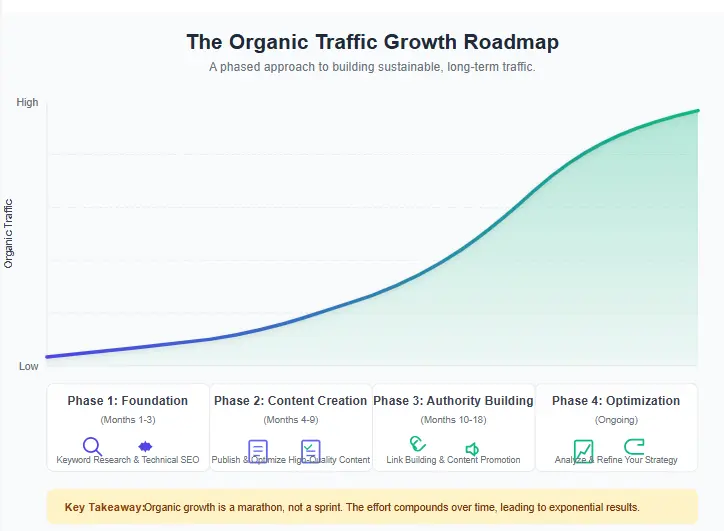
Table of Contents
- Quick Wins (Today)
- 30-Day Plan
- 90-Day Plan
- Step 1: Fix Technical SEO
- Step 2: Keyword Research for How to Increase Organic Traffic
- Step 3: Content Refresh
- Step 4: Internal Linking System
- Step 5: On-Page Optimization Checklist
- Step 6: Topical Authority Strategy
- Step 7: Backlinks
- Step 8: Local SEO
- Step 9: Measure + Iterate
- Content Update Checklist Template
- Internal Linking Plan Template
- Weekly SEO Tracking Sheet
- Frequently Asked Questions
Quick Wins (Today)
When starting to learn how to increase organic traffic, it’s important to see some immediate results to stay motivated. Here are quick wins you can implement today to boost organic traffic:
- Fix title tags: Update your most important pages with compelling, keyword-rich title tags under 60 characters.
- Improve meta descriptions: Write compelling meta descriptions for your top 10 pages that encourage clicks.
- Check for indexing issues: Use Google Search Console to ensure your important pages are indexed.
- Fix broken internal links: Use a tool to find and fix broken internal links on your site.
- Update your oldest blog post: Refresh one high-potential blog post with new information and optimized formatting.
These quick wins will set the foundation for your strategy to increase website traffic organically and provide immediate momentum for how to increase organic traffic.
30-Day Plan
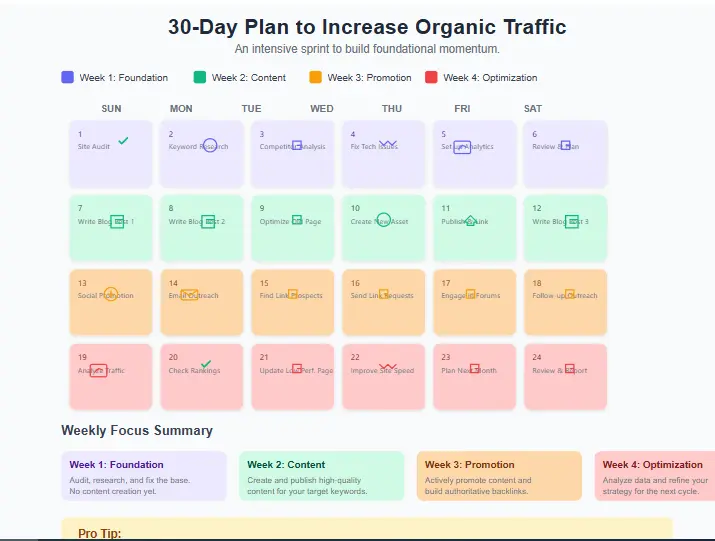
Learning how to increase organic traffic requires a structured approach. Here’s your 30-day plan to establish a strong foundation for how to increase organic traffic:
Want a printable version of this guide?
Enter your name and email below to instantly download our comprehensive PDF checklist on how to increase organic traffic. Perfect for quick reference!
Week 1: Technical Foundation
- Conduct a full technical SEO audit
- Submit an updated XML sitemap
- Check and fix crawl errors in Google Search Console
- Improve page loading speed for top pages
- Set up canonical tags where needed
Week 2: Keyword Research & Content Planning
- Research primary and secondary keywords
- Analyze competitor keywords and content gaps
- Create a content calendar for the next 90 days
- Map keywords to user intent
- Identify content refresh opportunities
Week 3: Content Creation & Optimization
- Update 3-5 existing high-potential posts
- Create 2 new comprehensive pieces of content
- Optimize all on-page elements (titles, headings, etc.)
- Add internal links between related content
- Implement schema markup for key pages
Week 4: Promotion & Measurement
- Begin basic outreach for backlinks
- Share new content on relevant platforms
- Set up tracking in Google Analytics
- Document baseline metrics
- Plan next month’s priorities based on results
90-Day Plan
After implementing the 30-day plan, it’s time to scale your efforts on how to increase organic traffic. This 90-day plan focuses on building authority and momentum to grow organic search traffic significantly:
- Months 1-2: Continue publishing 2-4 high-quality pieces of content per week, focusing on your target keyword clusters. Refresh 5-10 older posts each month.
- Month 2: Implement a systematic internal linking strategy across your site. Begin building relationships with other site owners for future link opportunities.
- Month 3: Analyze which content types and topics are performing best. Double down on successful formats and begin creating topic clusters to establish authority.
- Ongoing: Monitor your rankings and traffic weekly, adjusting your strategy based on what’s working. Continue technical SEO maintenance to ensure your site remains optimized.
By following this 90-day plan on how to increase organic traffic, you’ll create a sustainable system to increase website traffic organically and build lasting SEO value.
Step 1: Fix Technical SEO
Before you can effectively increase organic traffic, your website needs a solid technical foundation. Search engines need to be able to crawl, understand, and index your content efficiently. This first step is non-negotiable for anyone serious about learning how to increase organic traffic.
Ensure Proper Indexing
First, verify that Google can find and index your important pages. Use Google Search Console to check for any indexing issues:
- Check the Coverage report for errors
- Submit your XML sitemap if you haven’t already
- Review your robots.txt file to ensure it’s not blocking important content
- Use the URL Inspection tool to check individual pages
For more detailed guidance, refer to Google’s official documentation on SEO fundamentals.
Improve Core Web Vitals
Core Web Vitals are essential user experience metrics that impact rankings. To boost organic traffic, focus on these basics:
- Largest Contentful Paint (LCP): Aim for under 2.5 seconds by optimizing images and server response time
- First Input Delay (FID): Keep under 100ms by minimizing JavaScript execution
- Cumulative Layout Shift (CLS): Maintain a score below 0.1 by specifying image dimensions and avoiding insertions of content above existing content
Optimize Your XML Sitemap
Your XML sitemap helps search engines discover and understand your site structure. When learning how to increase organic traffic, ensure your sitemap:
- Includes all important pages (but no low-value or duplicate content)
- Is automatically updated when you add or remove content
- Is submitted to Google Search Console
- Is free of errors (use a sitemap validation tool to check)
Implement Canonical Tags
Canonical tags prevent duplicate content issues by telling search engines which version of a page is the primary one. This is especially important for:
- Product pages with URL parameters
- Print-friendly versions of articles
- Mobile and desktop versions of your site
- Similar pages with slight variations
By fixing these technical SEO fundamentals, you’re creating a solid foundation for your efforts to increase website traffic organically and learning how to increase organic traffic effectively.
Step 2: Keyword Research for How to Increase Organic Traffic
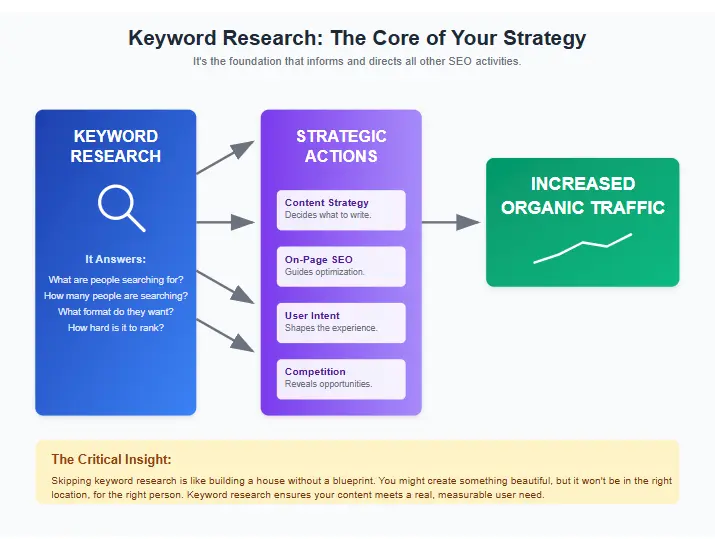
Effective keyword research is the cornerstone of any strategy to increase organic traffic. However, it’s not just about finding high-volume keywords—it’s about understanding user intent and creating content that meets those needs. This step is crucial for anyone learning how to increase organic traffic effectively.
Comprehensive Keyword Research
Begin by creating a comprehensive list of potential keywords using multiple sources:
- Google Search Console (queries where you already rank)
- Competitor analysis (tools like Ahrefs, SEMrush, or Moz)
- Google’s “People Also Ask” and “Related Searches”
- Answer the Public or similar tools for question-based queries
- Industry forums and communities where your audience gathers
For a structured approach, use our free keyword research template to organize your findings on how to increase organic traffic.
Understanding Search Intent
Modern SEO is about matching user intent. Categorize your keywords by intent:
- Informational: “how to,” “what is,” “guide to” – users seeking knowledge
- Navigational: “brand name,” “product name” – users looking for a specific site
- Commercial Investigation: “best,” “review,” “comparison” – users researching before buying
- Transactional: “buy,” “price,” “discount” – users ready to purchase
Understanding intent helps you create content that satisfies both users and search engines, which is essential when learning how to increase organic traffic.
Keyword Prioritization
Not all keywords are created equal. Prioritize based on:
- Relevance: How closely does the keyword match your offerings?
- Search volume: How many people are searching for this term?
- Difficulty: How hard is it to rank for this keyword?
- Business value: Will traffic from this keyword lead to conversions?
Focus on keywords with good balance of volume, relevance, and attainability—especially when starting your journey to increase website traffic organically.
Step 3: Content Refresh
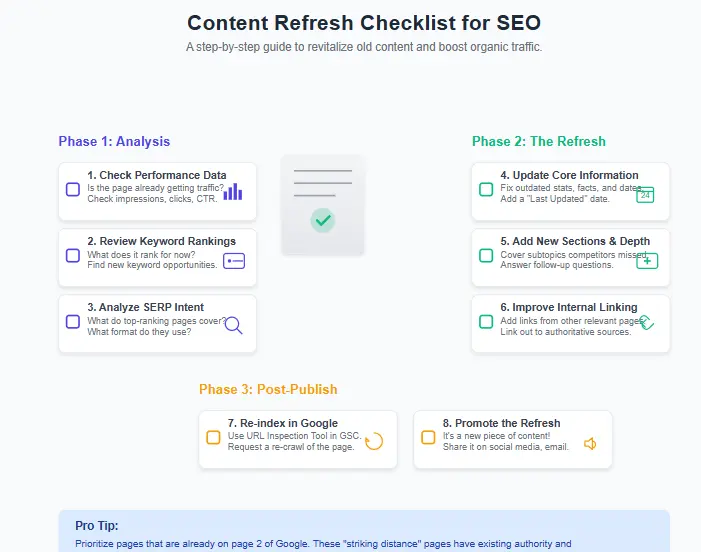
One of the most effective ways to boost organic traffic is by refreshing existing content rather than constantly creating new content. Google favors fresh, accurate information, and updating old posts can yield significant ranking improvements. This tactic is a core component of any strategy on how to increase organic traffic.
Identify Refresh Opportunities
Use Google Analytics and Search Console to find pages with potential:
- Pages that previously ranked well but have declined
- Pages ranking on page 2 (high potential with small improvements)
- Content that’s outdated but still relevant to your audience
- Posts with high engagement but low search visibility
Content Refresh Process
Follow this systematic approach to revitalize your content and learn how to increase organic traffic:
- Analyze current performance: Check rankings, traffic, and engagement metrics
- Research competitors: See what’s ranking for your target keywords now
- Update information: Add new data, examples, and current insights
- Improve formatting: Add subheadings, bullet points, and visual elements
- Enhance depth: Add sections to make your content more comprehensive
- Optimize for new keywords: Include relevant terms you may have missed
- Update internal links: Link to newer content and fix broken links
- Update publish date: Indicate the content has been refreshed
Content Pruning and Consolidation
Sometimes the best way to increase website traffic organically is by removing or consolidating underperforming content:
- Delete: Remove content with no traffic, backlinks, or business value
- Noindex: Keep content with some value but that shouldn’t rank in search
- Consolidate: Merge similar posts into one comprehensive resource
- Redirect: Ensure all deleted/consolidated content redirects properly
By refreshing your content strategically, you can often achieve faster results than creating entirely new pieces, which is a key insight for how to increase organic traffic.
Step 4: Internal Linking System
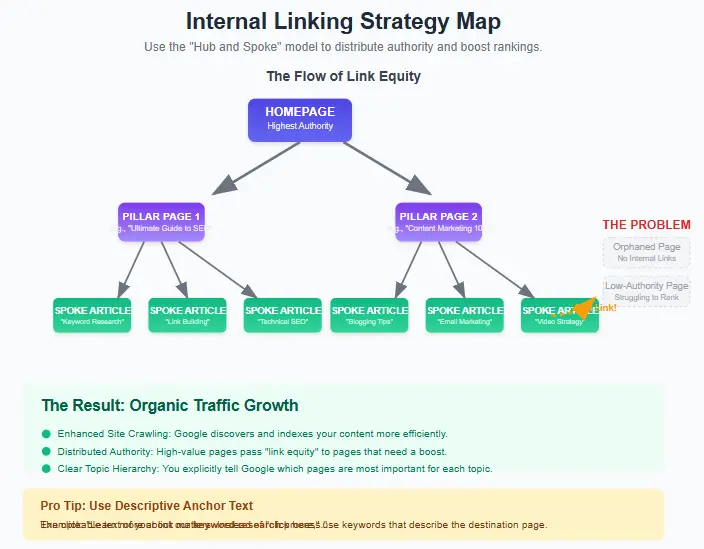
A strategic internal linking system is one of the most underestimated tactics to increase organic traffic. Internal links help search engines discover and understand your content while distributing authority throughout your site. This is a powerful, yet often overlooked, method for how to increase organic traffic.
Internal Linking Benefits
Proper internal linking provides several key benefits:
- Helps search engines find and index your content
- Distributes PageRank across your site
- Improves user experience and navigation
- Increases time on site and reduces bounce rate
- Provides context about page relationships
Creating an Internal Linking Strategy
Develop a systematic approach to internal linking as part of your how to increase organic traffic strategy:
- Audit existing links: Use a tool to analyze your current internal link structure
- Identify hub pages: Find high-authority pages that can pass link value to others
- Map content relationships: Group related content into topic clusters
- Link contextually: Add internal links where they make natural sense in the content
- Use descriptive anchor text: Avoid generic phrases like “click here”
- Balance link distribution: Ensure no pages are orphaned (without internal links)
- Monitor and adjust: Regularly review your internal link structure
Best Practices for Internal Links
Follow these guidelines when implementing internal links as part of your how to increase organic traffic strategy:
- Keep the number of internal links per page reasonable (typically under 100)
- Ensure every important page is accessible within 3-4 clicks from the homepage
- Use keyword-rich but natural anchor text
- Link to both newer and older content to maintain relevance
- Consider adding contextual links in your newest content to older posts
- Use our internal linking template to track your strategy
A well-executed internal linking strategy can significantly boost organic traffic by improving both search engine crawling and user experience.
Step 5: On-Page Optimization Checklist
On-page optimization is fundamental to any strategy to increase organic traffic. These elements help search engines understand your content and can directly impact your rankings. Mastering this step is key to understanding how to increase organic traffic on a page-by-page basis.
Title Tags and Meta Descriptions
These elements appear in search results and significantly influence click-through rates:
- Title tags: Keep under 60 characters, include primary keyword early, and make compelling
- Meta descriptions: Keep under 160 characters, include keywords naturally, and create a call-to-action
- Unique tags: Ensure each page has a unique title and meta description
- Brand inclusion: Consider adding your brand name at the end of title tags
Heading Structure
Proper heading structure helps both users and search engines navigate your content:
- Use only one H1 tag per page (typically your title)
- Follow hierarchical order (H1 → H2 → H3)
- Include target keywords in headings where natural
- Keep headings concise and descriptive
- Use headings to break up long content and improve readability
Content Optimization
Your content needs to be both comprehensive and well-optimized for how to increase organic traffic:
- Include your primary keyword in the first 100 words
- Use variations and related terms throughout the content
- Maintain natural keyword density (avoid stuffing)
- Write for humans first, then optimize for search engines
- Include relevant entities and concepts (not just keywords)
- Ensure sufficient content depth for the topic
FAQ and Schema Markup
These elements can enhance your search appearance and increase click-through rates:
- Add FAQ sections to content where appropriate
- Implement FAQPage schema for eligible content
- Use HowTo schema for tutorials and guides
- Add Article schema for blog posts
- Consider Review schema for product/service pages
For detailed guidance on schema implementation, refer to Google’s search documentation.
Step 6: Topical Authority Strategy
Building topical authority is an advanced strategy to significantly increase organic traffic. When Google recognizes your site as an authority on a specific topic, it’s more likely to rank your content higher for related queries. This approach represents a more sophisticated understanding of how to increase organic traffic at scale.
Understanding Topical Authority
Topical authority is about comprehensive coverage of a subject area. Instead of just creating individual pages targeting specific keywords, you build a network of interconnected content that demonstrates expertise across an entire topic.
Google’s algorithms increasingly prioritize sites that demonstrate deep expertise, and topical authority is a key signal of this expertise.
Creating Topic Clusters
The most effective way to build topical authority is through topic clusters:
- Pillar page: A comprehensive guide covering all aspects of a broad topic
- Cluster content: Detailed articles addressing specific subtopics
- Internal links: Strategic connections between pillar and cluster content
For example, if you’re building authority around “digital marketing,” you might create:
- Pillar page: “Complete Guide to Digital Marketing”
- Cluster content: “SEO Basics,” “Social Media Marketing,” “Email Marketing,” etc.
- All cluster pages link back to the pillar page with appropriate anchor text
Developing Authority Content
When creating content to build topical authority and learning how to increase organic traffic:
- Aim for comprehensiveness over keyword density
- Include unique insights, data, or perspectives
- Address user questions at all levels of expertise
- Update content regularly to maintain freshness
- Ensure all content within a topic links to each other
Measuring Topical Authority
Track your authority growth through:
- Keyword rankings for topic-related terms
- Featured snippet appearances
- “People Also Ask” inclusions
- Growth in organic traffic for topic clusters
- Increasing average keyword ranking positions
Building topical authority takes time but creates a sustainable competitive advantage that can dramatically increase website traffic organically.
Step 7: Backlinks
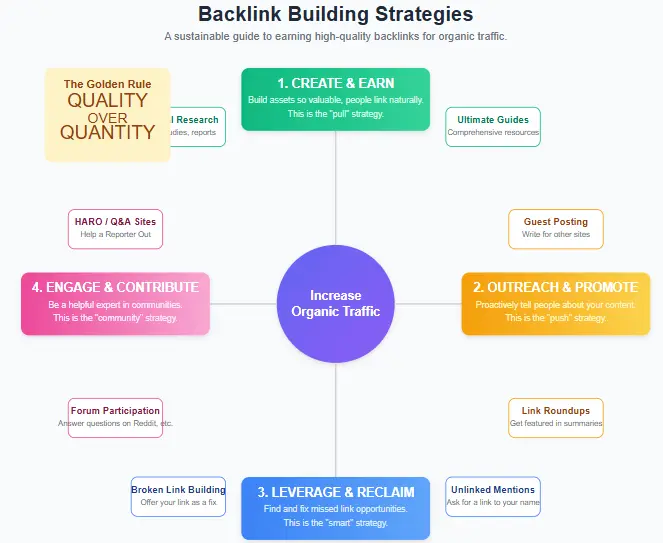
While many aspects of SEO have evolved, backlinks remain a critical ranking factor when learning how to increase organic traffic. However, the approach to building them has changed—quality now far outweighs quantity.
Understanding Modern Link Building
Effective link building today focuses on:
- Earning links through valuable content and relationships
- Relevance over raw authority metrics
- Natural link profiles with diverse anchor text
- Links that drive referral traffic, not just SEO value
Google’s algorithms are sophisticated at detecting manipulative link building, so focus on sustainable approaches for how to increase organic traffic.
Beginner-Friendly Link Tactics
If you’re just learning how to increase organic traffic, start with these safe approaches:
- Resource page link building: Find pages listing resources and request inclusion
- Broken link building: Find broken links on relevant sites and offer your content as replacement
- Unlinked brand mentions: Find mentions of your brand without links and request them
- Guest posting: Contribute valuable content to reputable sites in your niche
- Directory submissions: List your site in relevant, high-quality directories
For more detailed tactics, check out our guide on easiest backlinks to build.
Advanced Link Building Strategies
As you become more experienced in how to increase organic traffic, consider these approaches:
- Data-driven content: Create original research or studies that naturally attract links
- Expert roundups: Compile insights from multiple experts, who often link to the final piece
- Comprehensive guides: Create definitive resources that become reference points
- Linkable assets: Develop tools, templates, or interactive content that earns links
- Relationship building: Develop genuine connections with others in your industry
Monitoring Your Backlink Profile
Regularly review your backlinks to ensure quality:
- Use Google Search Console to monitor new links
- Conduct regular backlink audits with tools like Ahrefs or Moz
- Disavow toxic or spammy links that could harm your rankings
- Analyze competitor backlinks to identify opportunities
- Track referral traffic from backlinks to measure their true value
Remember, a few high-quality, relevant backlinks are worth more than hundreds of low-quality ones when it comes to increasing organic traffic.
Step 8: Local SEO
If your business serves a specific geographic area, local SEO is essential to increase organic traffic from nearby customers. Even if you operate nationally or globally, local signals can influence your overall search visibility and play a role in how to increase organic traffic for specific queries.
Google Business Profile Optimization
Your Google Business Profile (formerly Google My Business) is the foundation of local SEO:
- Claim and fully complete your profile
- Select the most accurate business categories
- Include consistent NAP (Name, Address, Phone) information
- Add high-quality photos of your business
- Regularly update with posts, offers, and events
- Encourage and respond to customer reviews
Local Content Strategy
Create content that targets local search intent:
- Develop location-specific landing pages if you serve multiple areas
- Create content about local events, news, or topics
- Include local keywords naturally in your content
- Feature local case studies or customer success stories
- Highlight community involvement or local partnerships
Local Citations and Consistency
Build consistent local citations across the web:
- Ensure your NAP is consistent across all directories
- Submit to relevant local directories and industry-specific sites
- Seek mentions in local news, blogs, and community resources
- Check for duplicate listings and consolidate them
- Monitor for accuracy using tools like Moz Local or BrightLocal
Local Link Building
Earn links from locally relevant sources:
- Sponsor local events or organizations
- Join local business associations and chambers of commerce
- Partner with complementary local businesses
- Participate in community events and get coverage
- Offer expertise to local journalists or bloggers
For businesses with physical locations or service areas, local SEO can significantly boost organic traffic from nearby customers who are often ready to convert.
Step 9: Measure + Iterate
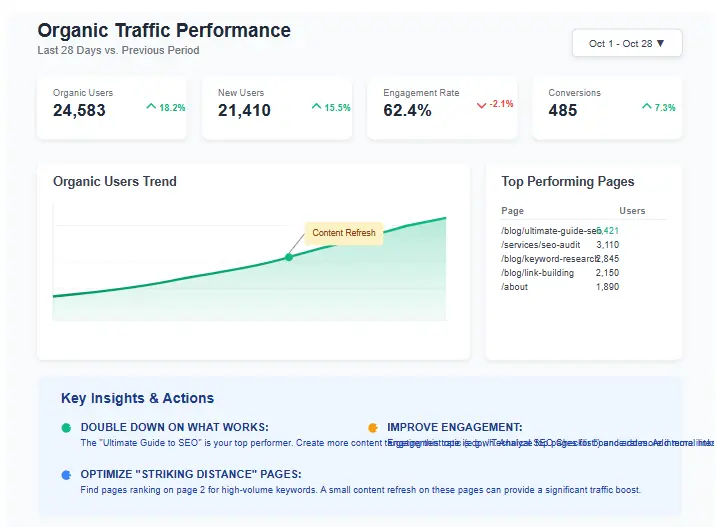
The final step in mastering how to increase organic traffic is establishing a measurement system to track progress and identify opportunities for improvement. Without measurement, you’re flying blind.
Key Performance Indicators
Track these essential metrics to evaluate your SEO performance and how to increase organic traffic:
- Organic traffic: Total visitors from organic search
- Keyword rankings: Positions for target keywords
- Click-through rate: Percentage of impressions that result in clicks
- Impressions: How often your pages appear in search results
- Pages per session: How many pages visitors view
- Average session duration: How long visitors stay on your site
- Conversion rate: Percentage of visitors who take desired actions
- Index coverage: Percentage of your pages indexed by Google
Google Analytics 4 Setup
Properly configure GA4 to track organic performance:
- Set up organic search traffic segmenting
- Create dashboards for key metrics
- Set up conversion tracking for business goals
- Enable Google Search Console integration
- Configure annotations for significant changes
Google Search Console Monitoring
Regularly check GSC for insights and issues:
- Monitor Performance report for trends
- Check Index Coverage for errors
- Review Core Web Vitals and mobile usability
- Analyze which queries/pages drive traffic
- Identify and fix any manual actions
Monthly Reporting Process
Establish a routine to review and act on your data:
- Gather key metrics from GA4 and GSC
- Compare against previous period and goals
- Identify top-performing content and keywords
- Find underperforming pages needing attention
- Look for new keyword opportunities
- Check for technical issues or errors
- Update your strategy based on findings
Remember that SEO is iterative—use your data to continuously refine your approach to increase website traffic organically.
Content Update Checklist Template
Use this systematic approach when refreshing content to boost organic traffic:
Pre-Update Analysis
- □ Current keyword rankings
- □ Organic traffic trends
- □ Top competing pages
- □ Backlink profile
- □ User engagement metrics
Content Improvements
- □ Update outdated information
- □ Add new sections/subtopics
- □ Include recent data/statistics
- □ Improve readability and formatting
- □ Add relevant internal links
- □ Optimize for new keywords
- □ Add multimedia elements
- □ Include FAQ section
SEO Elements
- □ Update title tag
- □ Rewrite meta description
- □ Optimize heading structure
- □ Add schema markup
- □ Check image alt text
- □ Update publish date
Post-Update
- □ Submit to Google for reindexing
- □ Update internal links pointing to page
- □ Promote updated content
- □ Monitor performance changes
- □ Document results for future reference
Internal Linking Plan Template
Use this template to develop and track your internal linking strategy for how to increase organic traffic:
Hub Pages Identification
- □ Identify high-authority pages (by traffic/backlinks)
- □ Determine primary topic areas
- □ Map content relationships
- □ Prioritize pages needing more internal links
Link Implementation
- □ Add contextual links in new content
- □ Update older content with new links
- □ Ensure descriptive anchor text
- □ Balance link distribution across site
- □ Check for orphan pages
Ongoing Maintenance
- □ Schedule regular link audits
- □ Fix broken internal links
- □ Add links to new content as published
- □ Monitor link equity distribution
- □ Adjust strategy based on performance
Weekly SEO Tracking Sheet
Use this simple tracking system to monitor your progress and identify trends in how to increase organic traffic:
| Metric | Week 1 | Week 2 | Week 3 | Week 4 | Notes |
|---|---|---|---|---|---|
| Organic Traffic | |||||
| Keyword Rankings (Top 10) | |||||
| Impressions | |||||
| Click-Through Rate | |||||
| Indexed Pages | |||||
| New Backlinks | |||||
| Pages Updated | |||||
| New Content Published |
Ready to Boost Your Organic Traffic?
Implementing these strategies can significantly increase your website’s visibility, but every site has unique challenges and opportunities. Get a free SEO audit to identify your biggest growth opportunities and create a customized strategy on how to increase organic traffic.
Get Your Free SEO AuditFrequently Asked Questions
Transform Your Organic Traffic Strategy
Increasing organic traffic is a marathon, not a sprint. Let our SEO experts create a customized roadmap for your website’s unique challenges and opportunities. Schedule a free consultation to discuss how we can help you achieve sustainable growth.
Schedule Free Consultation