
The Ultimate Local SEO Guide That Will Put Your Business on the Map
Every day, millions of customers search for businesses just like yours. But here is the hard truth: if you are not showing up in local search results, you might as well not exist. This comprehensive Local SEO Guide will walk you through everything you need to dominate your local market.
Why Most Local Businesses Stay Invisible on Google
Let me paint a picture for you. Sarah owns a fantastic bakery in downtown Austin. Her pastries are legendary among locals. But when someone new moves to town and searches “best bakery near me” on Google, Sarah’s shop is nowhere to be found.
Instead, they find her competitor three blocks away. A bakery with mediocre reviews but excellent local SEO. That competitor gets the new customer, the repeat business, and the word-of-mouth referrals. Sarah loses out, not because her product is worse, but because her online presence is invisible.
This happens to thousands of businesses every single day. The internet has changed how customers find local services. Gone are the days when a yellow pages listing was enough. Today, your Google presence can make or break your business.
The good news? Local SEO is something you can control. This Local SEO Guide will show you exactly how to turn your invisible business into a local powerhouse that attracts customers like a magnet.
What is Local SEO Exactly?
Local SEO is the practice of optimizing your online presence to attract more business from relevant local searches. These searches happen on Google and other search engines when people look for products or services near their location.
Think about your own behavior. When you need a dentist, a restaurant, or a plumber, you probably search for something like “dentist near me” or “plumber in [your city].” The businesses that appear at the top of those results have mastered local SEO.
Unlike traditional SEO, which focuses on ranking in search results globally or nationally, local SEO narrows the competition to your geographic area. This levels the playing field for small businesses competing against larger corporations.
A pizza shop in Chicago does not need to compete with Domino’s national website. They just need to rank higher than other pizza places in their neighborhood. That is the power of local SEO.
This Local SEO Guide focuses primarily on Google, which controls over 90% of the search engine market. What works for Google typically works for other search engines too.
Why Local SEO Matters More Than Ever in 2026
The numbers do not lie. According to recent studies, 46% of all Google searches have local intent. That means nearly half of the billions of daily searches are people looking for local businesses.
Here is something even more striking: 76% of people who search for something nearby on their smartphone visit a related business within a day. And 28% of those searches result in a purchase.
Let that sink in. Nearly one in three local searches leads to money changing hands. The connection between search and sales has never been stronger.
Mobile usage continues to skyrocket. People are searching while walking down the street, sitting in their cars, or standing in line at the grocery store. They want answers now, and they want those answers to be nearby.
Voice search is another game-changer. When someone asks Siri or Google Assistant for “the best hair salon nearby,” they are performing a local search. Voice searches tend to be more conversational and location-specific.
The pandemic accelerated the shift to local shopping. People became more conscious of supporting neighborhood businesses. This trend has not reversed. Local SEO helps you capture this growing market of conscious consumers.
Google’s Local Ranking Factors: What Really Matters
Google uses three primary factors to determine local search rankings. Understanding these factors is crucial for any effective Local SEO Guide.
Relevance
How well does your business match what the searcher is looking for? If someone searches for “vegan restaurant,” Google will prioritize restaurants that serve vegan food over general restaurants that happen to have one vegan option.
Distance
How far is your business from the searcher’s location? Google uses the searcher’s device location, the location specified in their search, or your business address to calculate this. Closer businesses generally rank higher.
Prominence
How well-known and established is your business? Google looks at information from across the web, including links, articles, directories, and review counts and scores. More prominent businesses rank higher.
Beyond these three core factors, Google considers dozens of other signals. Your website quality, citation consistency, review velocity, and social signals all play a role.
The algorithm is constantly evolving. What worked five years ago might not work today. This is why staying updated with a current Local SEO Guide is essential for your success.
Understanding the Google Map Pack
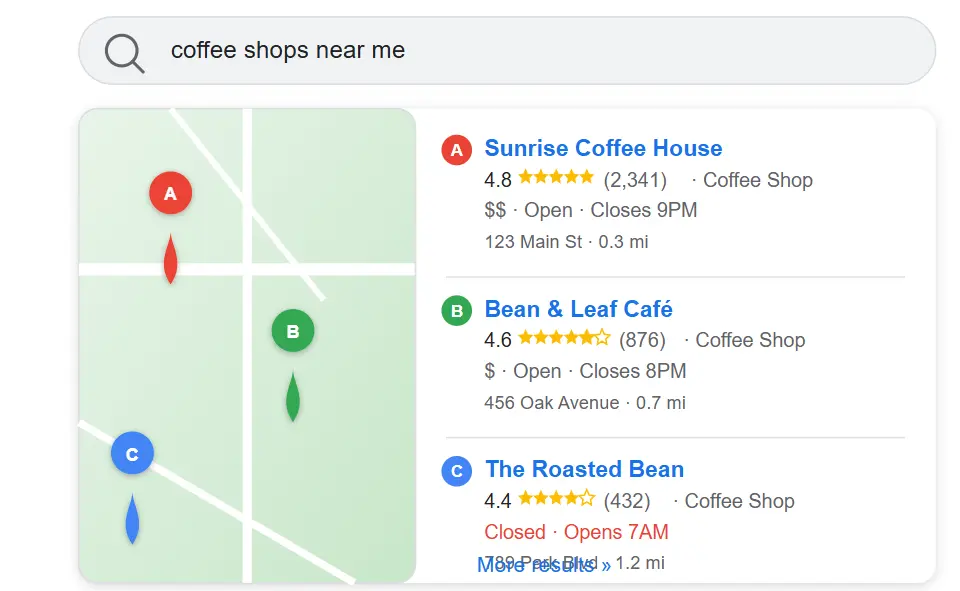
The Map Pack, also called the Local Pack or 3-Pack, is the holy grail of local search. It is the box that appears at the top of Google search results showing three local businesses on a map.
When you search for a local business, you will typically see a map with three business listings below it. Each listing shows the business name, rating, number of reviews, price range, and address. This prominent placement gets the majority of clicks from local searches.
Studies show that the Map Pack captures approximately 44% of clicks for local searches. The first organic result below the Map Pack gets about 29%. Being in that top three can literally double your traffic compared to ranking fourth.
The Map Pack used to show seven businesses. Google reduced it to three, making competition fiercer. But the businesses that crack the Map Pack enjoy incredible visibility and trust.
Below the Map Pack, you will find organic search results. These are traditional web page listings. A complete local SEO strategy targets both the Map Pack and organic results. This Local SEO Guide will help you optimize for both.
Google’s official guidelines provide insight into how they evaluate businesses for local rankings.
Step 1: Claim and Optimize Your Google Business Profile
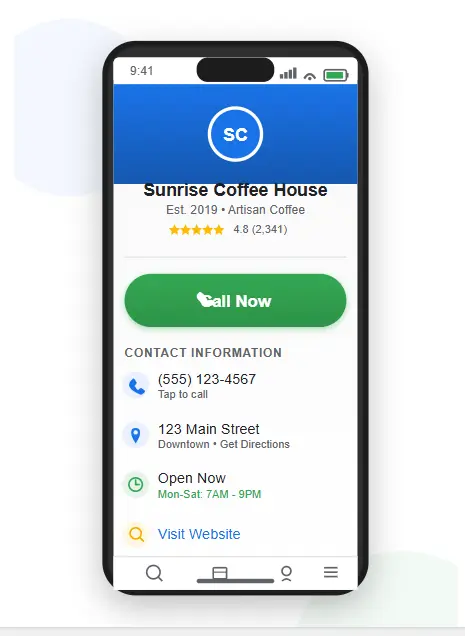
Your Google Business Profile (formerly Google My Business) is the foundation of local SEO. Without it, you cannot appear in the Map Pack. Period. This is the most critical section of any Local SEO Guide.
Claiming your profile is free and straightforward. Go to Google Business Profile, sign in with your Google account, and search for your business. If it exists, claim it. If not, create it from scratch.
Once claimed, verification is essential. Google typically sends a postcard to your business address with a verification code. Some businesses can verify by phone or email. Do not skip this step.
Complete Every Section
Google rewards thoroughness. Fill out every possible field in your profile. Incomplete profiles send negative signals to both Google and potential customers.
- Business Name: Use your exact legal business name. Do not add keywords or location modifiers.
- Category: Choose the most specific primary category. Add secondary categories if relevant.
- Address: Use your actual physical address. If you serve customers at their locations, hide your address and define service areas.
- Phone Number: Use a local area code when possible. Avoid toll-free numbers for local businesses.
- Website: Link to your website, preferably a location-specific landing page.
- Hours: Keep these accurate and updated for holidays.
- Photos: Add high-quality photos of your exterior, interior, team, and products.
- Description: Write a compelling 750-character description including your main services and location.
Choose the Right Categories
Categories are crucial. They tell Google what type of business you are. Choosing the right primary category can significantly impact your rankings.
Be specific. “Restaurant” is acceptable, but “Italian Restaurant” is better. “Pizza Restaurant” is even more specific. Look at what categories your top-ranking competitors are using.
You can add up to nine additional categories. Use these for secondary services, but keep them relevant. A pizza place might add “Takeout Restaurant” and “Italian Restaurant” as secondary categories.
Posts and Updates
Google Business Profile allows you to create posts similar to social media. Use these to share offers, events, news, and product updates. Regular posting shows Google your business is active.
Posts appear in your Business Profile when people find you on Search and Maps. They expire after seven days, so maintain a consistent posting schedule.
Step 2: Build a Review Strategy That Builds Trust
Reviews are social proof. They tell both Google and potential customers that your business is legitimate and trustworthy. Businesses with more reviews and higher ratings consistently rank better in local search.
Quantity matters, but so does quality. A business with 50 reviews averaging 4.8 stars will outrank a competitor with 100 reviews averaging 3.5 stars. However, a business with 200 reviews and 4.6 stars might outrank both.
How to Get More Reviews
Ask. It sounds simple, but most businesses never ask. Train your staff to request reviews after successful transactions. Create a simple process that makes leaving reviews easy for customers.
Send follow-up emails or text messages with direct links to your Google review page. Make it as frictionless as possible. The easier you make it, the more reviews you will receive.
Timing matters. Ask for reviews when customer satisfaction is highest. For a restaurant, this might be immediately after a great meal. For a service business, ask after the customer sees the results.
Respond to Every Review
Responding to reviews shows engagement and professionalism. Thank customers for positive reviews. Address negative reviews professionally and try to resolve issues publicly.
Google values businesses that engage with their reviews. It signals an active, customer-focused business. Set up notifications so you can respond promptly.
When responding to negative reviews, stay calm and professional. Acknowledge the issue, apologize if appropriate, and offer to make it right. Your response is visible to potential customers and can actually improve their perception of your business.
Never Buy or Fake Reviews
This should go without saying, but buying reviews is dangerous. Google is sophisticated at detecting fake reviews. Getting caught can result in your profile being suspended or your business being delisted.
Focus on providing excellent service and genuinely asking satisfied customers for their feedback. Authentic reviews build lasting trust and better rankings.
Step 3: Master Local Keywords That Drive Traffic
Keyword research for local SEO differs from traditional SEO. You need to understand how people in your area search for your services. This Local SEO Guide section will help you identify the right keywords.
Local searches typically include geographic modifiers. Someone might search “plumber Denver” or “plumber near me” or “plumber open now.” Understanding these patterns helps you optimize effectively.
Types of Local Keywords
- Explicit Location Keywords: “pizza Brooklyn,” “dentist Chicago downtown”
- Near Me Searches: “restaurant near me,” “gas station nearby”
- Implied Local Keywords: “best pizza” (searched from a mobile device)
- Service + Location: “car repair 90210,” “hair salon midtown”
Use our Keyword Intent Tool to discover what your potential customers are actually searching for in your area.
Where to Use Local Keywords
Place your primary local keywords strategically throughout your online presence. Include them in your Google Business Profile description, website title tags, meta descriptions, headers, and page content.
Do not keyword stuff. Write naturally for humans while keeping search engines in mind. A well-written sentence like “We provide expert plumbing services to homeowners in Austin, Texas” works better than awkwardly stuffed keywords.
Create Location-Specific Pages
If you serve multiple cities or neighborhoods, create dedicated pages for each location. A cleaning company serving three cities should have a page optimized for each city.
Each page should include unique content relevant to that location. Mention local landmarks, neighborhoods, and community references. This shows Google genuine local relevance.
Step 4: Build Consistent Citations Across the Web
Citations are mentions of your business name, address, and phone number (NAP) on other websites. They help Google verify your business information and build trust in your legitimacy.
Consistency is everything. Your business information should be identical across all citations. Even small variations like “St.” versus “Street” or “(555) 123-4567” versus “555-123-4567” can cause problems.
Core Citation Sources
Start with the most important directories. Google Business Profile is number one. Then focus on Facebook, Yelp, Yellow Pages, Bing Places, Apple Maps, and industry-specific directories.
Data aggregators feed information to hundreds of smaller directories. The major ones are Infogroup, Acxiom, Neustar Localeze, and Foursquare. Getting listed with these creates a ripple effect across the web.
How to Build Citations
You can build citations manually, use citation-building services, or both. Manual building gives you more control but takes significant time. Services like Moz Local, BrightLocal, or Yext can automate the process.
Start with the most authoritative directories in your industry. A restaurant should prioritize Yelp, OpenTable, and TripAdvisor. A contractor should focus on Houzz, Angi, and HomeAdvisor.
Audit Your Existing Citations
Search for your business online to find existing citations. Check each one for accuracy. Incorrect citations can actively harm your rankings. Update or claim any listings with wrong information.
Use our SEO Audit Tool to identify citation inconsistencies and other issues affecting your local search performance.
Step 5: Optimize Your Website for Local Search
Your website is your digital storefront. It needs to be optimized for both users and search engines. A well-optimized website supports your local SEO efforts and converts visitors into customers.
Essential On-Page Elements
- Title Tags: Include your primary keyword and location. “Best Pizza in Brooklyn | Tony’s Pizzeria”
- Meta Descriptions: Write compelling descriptions that include your location and main service.
- Header Tags: Use H1 for your main headline including your service and location.
- NAP Information: Display your name, address, and phone number prominently in your header or footer.
- Contact Page: Create a dedicated contact page with an embedded Google Map.
Mobile Optimization
Over 60% of local searches happen on mobile devices. If your website is not mobile-friendly, you are losing more than half your potential customers.
Google uses mobile-first indexing. This means they evaluate your website based on its mobile version. A poor mobile experience directly hurts your rankings.
Test your website on various mobile devices. Check load times, button sizes, text readability, and navigation. Every element should be easily usable on a small screen.
Page Speed
Speed matters. Google has explicitly stated that page speed is a ranking factor. Slow websites frustrate users and increase bounce rates.
Use tools like Google PageSpeed Insights to analyze your website’s performance. Compress images, minimize code, enable browser caching, and consider a content delivery network (CDN).
Local Content Marketing
Create content that appeals to your local audience. Blog about local events, community involvement, local news related to your industry, and customer success stories from your area.
This content demonstrates your connection to the community and provides more opportunities to rank for local searches. It also gives people reasons to link to and share your content.
Step 6: Build Local Backlinks That Boost Authority
Backlinks remain one of Google’s most important ranking signals. For local SEO, the quality and relevance of links matter more than quantity. One link from a respected local source can outweigh dozens of low-quality links.
Local Link Building Strategies
Chambers of Commerce are excellent sources of local backlinks. Join your local chamber and get listed in their member directory. Business associations and professional organizations offer similar opportunities.
Sponsor local events, sports teams, or charities. Many organizations link to their sponsors on their websites. These links are highly relevant and trusted by Google.
Partner with complementary local businesses. A wedding photographer might exchange links with a florist, caterer, and venue. These partnerships benefit both parties.
Local Media Coverage
Earn coverage in local newspapers, magazines, and blogs. Send press releases for newsworthy events. Offer expert commentary on local issues related to your industry.
Local journalists are often looking for sources. Register with services like HARO (Help a Reporter Out) and respond to queries from journalists covering your area.
Monitor Your Backlink Profile
Use tools like Google Search Console to monitor your backlinks. Disavow any spammy or harmful links that could negatively impact your rankings.
Focus on earning links naturally through great content and community involvement. Avoid buying links or participating in link schemes, which violate Google’s guidelines.
Advanced Local SEO Strategies for Maximum Impact
Once you have mastered the basics, these advanced strategies can give you an edge over competitors. This Local SEO Guide section reveals tactics used by top local SEO professionals.
Schema Markup
Schema markup is code that helps search engines understand your content better. LocalBusiness schema tells Google exactly what your business is, where it is located, and what services you offer.
Implementing schema markup can result in rich snippets in search results. Your business might appear with star ratings, price ranges, and other details directly in the search results.
Voice Search Optimization
Voice searches are conversational and often question-based. Optimize for phrases like “Where can I find…” or “What is the best…” in your content.
Create FAQ pages that answer common questions about your business and services. This positions you to capture voice search traffic.
Google Business Profile Q&A
The Q&A section of your Google Business Profile allows anyone to ask questions. Monitor this section and answer questions promptly. You can also seed common questions yourself.
This provides additional information to potential customers and shows Google your business is active and engaged.
Local Landing Pages
Create dedicated landing pages for specific services and locations. A dentist might have separate pages for teeth whitening, dental implants, and general dentistry, each optimized for local searches.
These pages allow you to target more specific keywords and provide highly relevant information to searchers.
Review Velocity
The rate at which you receive reviews matters. Getting 10 reviews in one month then none for six months looks unnatural. Aim for a steady, consistent flow of new reviews.
Google’s SEO Starter Guide provides additional technical guidance for advanced optimization.
Common Local SEO Mistakes to Avoid
Even well-intentioned businesses make mistakes that hurt their local rankings. Learn from these common pitfalls to avoid wasting time and effort.
Inconsistent NAP Information
This is the number one mistake. Your business name, address, and phone number must be consistent everywhere. Even small inconsistencies confuse Google and hurt your rankings.
Ignoring Negative Reviews
Negative reviews happen to every business. Ignoring them makes things worse. Respond professionally and try to resolve issues. This shows potential customers you care.
Keyword Stuffing
Cramming keywords into your content unnaturally hurts readability and can result in penalties. Write for humans first, then optimize for search engines.
Duplicate Google Business Profiles
Multiple profiles for the same business confuse Google and split your review equity. Merge or remove duplicates promptly.
Neglecting Your Website
Some businesses focus entirely on their Google Business Profile and ignore their website. Both need attention. Your website provides additional signals and converts visitors into customers.
Buying Reviews or Links
Shortcuts backfire. Google is sophisticated at detecting artificial signals. The risk of penalties far outweighs any temporary benefits.
Ignoring Analytics
What gets measured gets improved. Track your rankings, traffic, and conversions. Use data to guide your optimization efforts.
Local SEO Checklist: Your Action Plan
Use this checklist to ensure you have covered all the essentials from this Local SEO Guide.
- Claim and verify your Google Business Profile
- Complete every section of your Google Business Profile
- Choose the most specific primary category
- Upload high-quality photos of your business
- Create a system for consistently requesting reviews
- Respond to all reviews within 24-48 hours
- Research and document your target local keywords
- Optimize title tags and meta descriptions with local keywords
- Display your NAP prominently on your website
- Ensure your website is mobile-friendly
- Improve page load speed
- Build citations on major directories
- Audit and correct existing citations
- Earn backlinks from local sources
- Implement LocalBusiness schema markup
- Create location-specific landing pages if applicable
- Post regularly to your Google Business Profile
- Monitor your rankings and analytics monthly

Frequently Asked Questions About Local SEO
How long does it take to see results from local SEO?
Local SEO is not overnight magic. Most businesses start seeing improvements within 3-6 months of consistent optimization. Competitive markets may take longer. The key is patience and persistence. Continue optimizing even after you see results, as local SEO is an ongoing process.
Can I do local SEO myself or do I need to hire someone?
You can absolutely do local SEO yourself, especially the fundamentals covered in this Local SEO Guide. Claiming your Google Business Profile, building citations, and getting reviews require no technical expertise. However, competitive markets or businesses with limited time may benefit from professional help. Our Local SEO Service can handle everything for you.
Does local SEO work for businesses without a physical location?
Yes. Service-area businesses can use local SEO effectively. You can hide your address on your Google Business Profile and define service areas instead. Focus on building citations, earning reviews, and creating location-specific content for the areas you serve.
How many reviews do I need to rank well?
There is no magic number. What matters is having more reviews and higher ratings than your competition. Look at the top-ranking businesses in your area. That gives you a benchmark. Focus on consistent, authentic review generation rather than hitting specific numbers.
What is the difference between organic SEO and local SEO?
Organic SEO focuses on ranking in standard search results without geographic constraints. Local SEO specifically targets searches with location intent. Local SEO emphasizes Google Business Profile optimization, citations, and reviews, while organic SEO focuses more on website content and backlinks. Most local businesses need both.
Ready to Dominate Your Local Market?
Stop losing customers to competitors with better local visibility. Our expert team can implement everything covered in this Local SEO Guide and more. Get started today and watch your local rankings climb.
Your Path to Local Search Success
Local SEO is not a mystery. It is a systematic process of optimizing your online presence to attract local customers. This Local SEO Guide has given you the complete blueprint.
Start with your Google Business Profile. It is the foundation of everything else. Claim it, verify it, complete it, and keep it active. Then build your reviews, fix your citations, and optimize your website.
The businesses that dominate local search are not necessarily the best businesses. They are the businesses that understand and implement local SEO consistently. Now you understand it too.
Implementation is everything. Reading this guide will not help your rankings. Taking action will. Start with one step today. Claim your profile. Ask one customer for a review. Fix one citation. Small actions compound into big results.
Your customers are searching for you right now. Make sure they can find you. The opportunity is there. This Local SEO Guide has shown you how. Now it is up to you.
If you need help implementing any of these strategies, we are here for you. Our team lives and breathes local SEO. We would love to help your business reach its full potential in local search.