
Ultimate Guide: How to Recover from a Google Algorithm Update
Discover proven strategies and step-by-step techniques to regain your rankings and traffic after a Google algorithm update. Learn from experts who’ve helped hundreds of websites recover.
Get Free Recovery Audit
Table of Contents
- Introduction to Google Algorithm Updates
- Types of Google Algorithm Updates
- Signs Your Website Has Been Affected
- Immediate Steps to Take After an Update
- Long-Term Recovery Strategies
- Case Studies of Successful Recoveries
- Tools and Resources for Monitoring
- Preventive Measures for Future Updates
- Conclusion
Introduction to Google Algorithm Updates
Learning how to recover from a Google algorithm update is crucial for any website owner or digital marketer. Google updates its search algorithm hundreds of times each year, with major updates happening several times annually. These updates can significantly impact your website’s rankings and traffic, sometimes overnight. Understanding how to recover from a Google algorithm update is not just about fixing what’s broken—it’s about adapting to Google’s evolving standards for quality content and user experience.
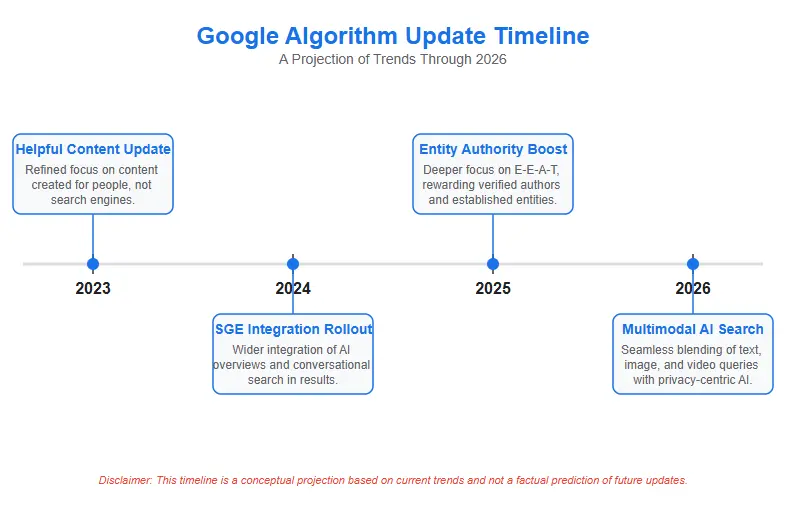
Timeline of major Google algorithm updates over the years
When your website experiences a sudden drop in rankings or traffic following an algorithm update, it can be devastating. However, with the right approach and knowledge on how to recover from a Google algorithm update, you can not only regain your previous position but potentially improve your site’s overall SEO health. This comprehensive guide will walk you through the process of identifying algorithm impacts, implementing recovery strategies, and building resilience against future updates.
Before diving into specific recovery techniques, it’s important to understand why Google updates its algorithm so frequently. The primary goal is to improve search results for users by delivering the most relevant, high-quality content possible. When learning how to recover from a Google algorithm update, remember that Google isn’t targeting your website specifically—it’s refining its criteria for what constitutes valuable content. For the latest updates, always check Google’s official algorithm update history. Additionally, our guide on Google Algorithm Update 2025 provides insights into upcoming changes.
Types of Google Algorithm Updates
Understanding the different types of algorithm updates is essential when learning how to recover from a Google algorithm update. Each type affects websites differently and requires specific recovery approaches.
Core Updates
Core updates are broad changes to Google’s search algorithm and systems. They’re not focused on specific features but rather represent significant shifts in how Google assesses content overall. When learning how to recover from a Google algorithm update, core updates often require the most comprehensive recovery strategies as they can affect multiple aspects of your SEO simultaneously. For detailed information on core updates, visit Google’s Search Central Blog.
Targeted Updates
Targeted updates focus on specific aspects of search, such as page experience, mobile-friendliness, or specific content types. These updates include:
- Page Experience Update: Focuses on user experience signals like Core Web Vitals, mobile-friendliness, and safe browsing
- Helpful Content Update: Prioritizes content created primarily for people rather than search engines
- Product Reviews Update: Aims to reward high-quality product reviews
- Spam Updates: Target spammy content and tactics
Unconfirmed Updates
Sometimes, SEO professionals notice significant ranking fluctuations without official confirmation from Google. These unconfirmed updates still impact websites and require attention when developing your strategy on how to recover from a Google algorithm update. To track these updates, resources like Search Engine Roundtable provide valuable insights from industry experts.
Did You Know?
Google makes thousands of changes to its search algorithms each year. While most are minor, several major updates can significantly impact rankings. Understanding how to recover from a Google algorithm update starts with recognizing which type of update affected your site.
Signs Your Website Has Been Affected
Identifying the impact of an algorithm update is the first step in learning how to recover from a Google algorithm update. Here are the key indicators to watch for:
Sudden Traffic Drops
The most obvious sign is a significant decrease in organic traffic, typically occurring around the time of a known algorithm update. Check your Google Analytics for sharp declines that coincide with update announcements.
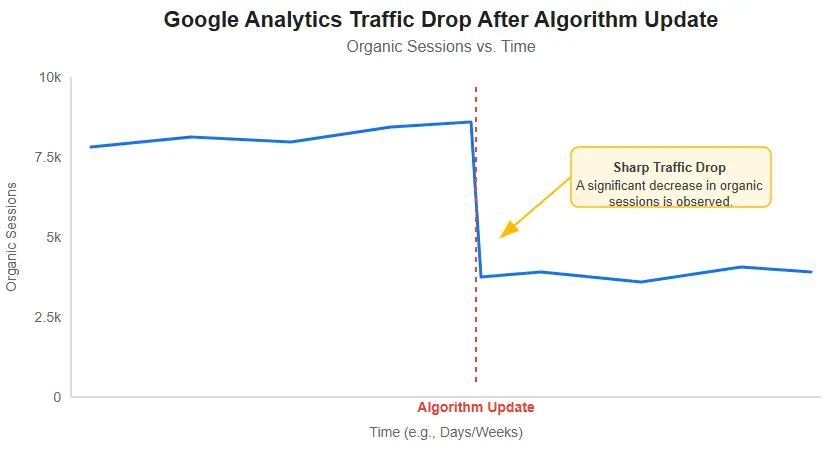
Example of a sudden traffic drop following a Google algorithm update
Keyword Ranking Changes
Monitor your keyword rankings using tools like Ahrefs, SEMrush, or Moz. A widespread drop in rankings across multiple keywords is a clear sign of algorithm impact. When determining how to recover from a Google algorithm update, analyzing which keywords were most affected can provide valuable insights into what aspects of your site need improvement. For more information on traffic drops, check our detailed guide on Google Traffic Drop.
Decreased Click-Through Rates
If your impressions remain stable but click-through rates drop, your pages may be ranking lower or your snippets may have changed. This is another important factor to consider when developing your strategy on how to recover from a Google algorithm update.
Google Search Console Messages
Check your Google Search Console for any messages or manual actions. While algorithm updates are typically automated, Google may provide insights into issues they’ve detected on your site. For help interpreting Search Console data, Google’s Webmaster Help Center offers detailed documentation.
“The key to understanding how to recover from a Google algorithm update is recognizing the symptoms early. The sooner you identify the impact, the faster you can implement recovery strategies.” – John Mueller, Google Search Advocate
Immediate Steps to Take After an Update
When you realize your website has been affected by an algorithm update, taking immediate action is crucial. Here’s how to recover from a Google algorithm update in the first 48 hours:
1 Confirm the Update
Verify that an algorithm update has rolled out by checking reliable SEO news sources and Google’s official announcements. Understanding which update affected your site is fundamental to knowing how to recover from a Google algorithm update effectively. Google’s Search Liaison Twitter account often provides timely updates on algorithm changes.
2 Analyze the Impact
Dive into your analytics to identify exactly which pages and keywords have been affected. Compare data from before and after the update to pinpoint the scope of the impact. This analysis is a critical component of any strategy on how to recover from a Google algorithm update.
3 Don’t Panic and Make Rash Changes
Resist the urge to immediately make sweeping changes to your site. The first 72 hours after an update can be volatile as Google refines the rollout. Patience is often an overlooked aspect of learning how to recover from a Google algorithm update.
4 Benchmark Your Performance
Document your current rankings, traffic, and other key metrics. This baseline will help you measure the effectiveness of your recovery efforts. Proper benchmarking is essential for tracking your progress as you implement strategies on how to recover from a Google algorithm update.
5 Review Google’s Guidelines
Revisit Google’s Webmaster Guidelines and quality raters guidelines to ensure your site aligns with current best practices. These documents often provide clues about what Google values, which is invaluable when determining how to recover from a Google algorithm update. The Google Quality Rater Guidelines offer particularly valuable insights.
Long-Term Recovery Strategies
After the initial assessment, it’s time to implement a comprehensive recovery plan. Here’s how to recover from a Google algorithm update with proven long-term strategies:
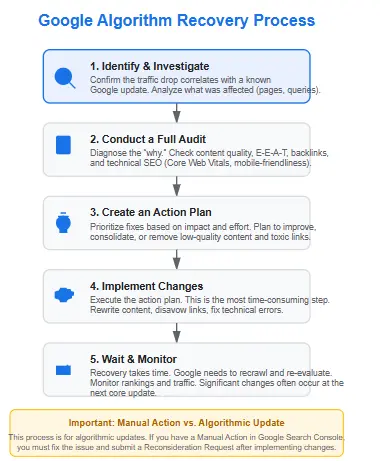
Step-by-step process for recovering from a Google algorithm update
Content Quality Enhancement
Most algorithm updates focus on content quality. To recover:
- Audit your content for expertise, authoritativeness, and trustworthiness (E-A-T)
- Update outdated information and statistics
- Improve content depth and comprehensiveness
- Add unique insights, data, or perspectives
- Remove or improve thin content
- Ensure content satisfies user intent
When learning how to recover from a Google algorithm update, remember that content quality is almost always a factor. Google’s algorithms increasingly reward content that demonstrates genuine expertise and provides real value to users.
Technical SEO Improvements
Technical issues can exacerbate the impact of algorithm updates. Focus on:
- Page speed optimization
- Mobile-friendliness
- Crawlability and indexability
- Site structure and navigation
- Schema markup implementation
- Core Web Vitals optimization
Technical SEO is a critical component of any plan on how to recover from a Google algorithm update. Even the best content can’t rank well if technical issues prevent Google from properly crawling and understanding your site. If you’re experiencing slow loading times, our guide on how to fix a slow website provides practical solutions.
Backlink Profile Audit
Quality backlinks remain a crucial ranking factor. To improve your backlink profile:
- Identify and disavow toxic backlinks
- Remove unnatural links where possible
- Focus on earning high-quality, relevant links
- Diversify anchor text distribution
- Implement a strategic link-building campaign
A healthy backlink profile is essential when learning how to recover from a Google algorithm update. Google’s algorithms increasingly sophisticated in identifying manipulative link practices, so focus on quality over quantity.
User Experience Optimization
Google increasingly prioritizes sites that provide excellent user experiences. To optimize:
- Improve site navigation and internal linking
- Enhance readability with proper formatting
- Optimize for mobile devices
- Reduce intrusive interstitials and pop-ups
- Ensure fast loading times
- Implement intuitive design elements
User experience signals are becoming more important in Google’s algorithms, making them a key consideration when developing your strategy on how to recover from a Google algorithm update.
Pro Tip
When implementing recovery strategies, focus on making improvements that benefit users rather than simply trying to please algorithms. Google’s updates increasingly reward sites that prioritize user experience, making this approach the most sustainable way to recover from a Google algorithm update. For specific penalty-related issues, our Google Penalty Recovery guide offers targeted solutions.
Case Studies of Successful Recoveries
Real-world examples provide valuable insights into how to recover from a Google algorithm update. Here are three case studies illustrating successful recovery strategies:
Case Study 1: E-commerce Site Recovery from Product Reviews Update
An online retailer experienced a 40% traffic drop following the Product Reviews Update. Their recovery strategy included:
- Rewriting product descriptions to include personal experiences with products
- Adding pros and cons sections for each product
- Incorporating user-generated content and reviews prominently
- Creating comparison guides for similar products
- Adding visual elements like product videos and detailed image galleries
Within three months, the site not only recovered its lost traffic but saw a 15% increase in conversions. This case demonstrates how focusing on user value is essential when learning how to recover from a Google algorithm update.
Case Study 2: Health Blog Recovery from Core Update
A health information blog lost 60% of its traffic after a core update targeting medical content. Their recovery involved:
- Having all medical content reviewed and updated by qualified professionals
- Adding author bios with credentials for all health-related articles
- Citing scientific studies and linking to authoritative sources
- Adding disclaimers and clear sourcing information
- Improving content structure with clear headings and FAQ sections
After four months of focused improvements, the blog regained 80% of its lost traffic and established itself as a more authoritative source in its niche. This case highlights the importance of E-A-T (Expertise, Authoritativeness, Trustworthiness) when determining how to recover from a Google algorithm update.
Case Study 3: News Site Recovery from Helpful Content Update
A digital news publication saw a 35% decline in organic traffic after the Helpful Content Update. Their recovery strategy included:
- Conducting a content audit to identify articles created primarily for search engines
- Rewriting content to focus on reader needs rather than keyword targeting
- Removing thin, aggregated content that offered no unique value
- Adding original research, interviews, and expert insights
- Improving the overall reading experience with better formatting and multimedia
Within six months, the site not only recovered its traffic but improved reader engagement metrics by 25%. This case illustrates why creating content primarily for users is the most effective approach to how to recover from a Google algorithm update.
Tools and Resources for Monitoring and Recovery
Having the right tools is essential when learning how to recover from a Google algorithm update. Here are the most valuable resources for monitoring and recovery:
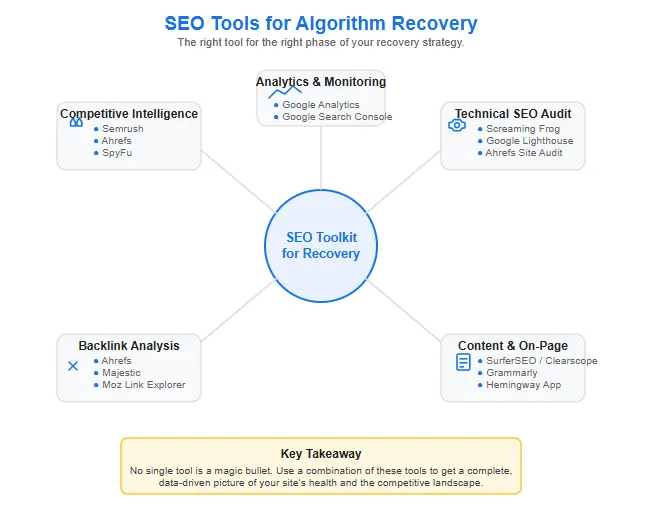
Essential SEO tools for monitoring and recovering from algorithm updates
Google Analytics
Monitor traffic patterns, user behavior, and conversion metrics to identify the impact of algorithm updates on your site’s performance.
Google Search Console
Track keyword rankings, click-through rates, and indexation issues. This tool is invaluable for identifying which pages are most affected by updates.
Ahrefs
Monitor backlink profiles, track keyword rankings, and analyze competitor strategies to inform your recovery efforts.
SEMrush
Track keyword position changes, conduct content audits, and identify technical SEO issues that may be impacting your rankings.
PageSpeed Insights
Analyze and improve your page loading speeds, which is increasingly important for rankings and user experience.
Screaming Frog
Conduct comprehensive technical SEO audits to identify issues that may be exacerbating the impact of algorithm updates.
When determining how to recover from a Google algorithm update, these tools provide the data and insights needed to make informed decisions. Regular monitoring with these resources can also help you identify future algorithm impacts more quickly.
Preventive Measures for Future Updates
The best strategy on how to recover from a Google algorithm update is to build a site that’s resilient to future changes. Here are preventive measures to reduce vulnerability:
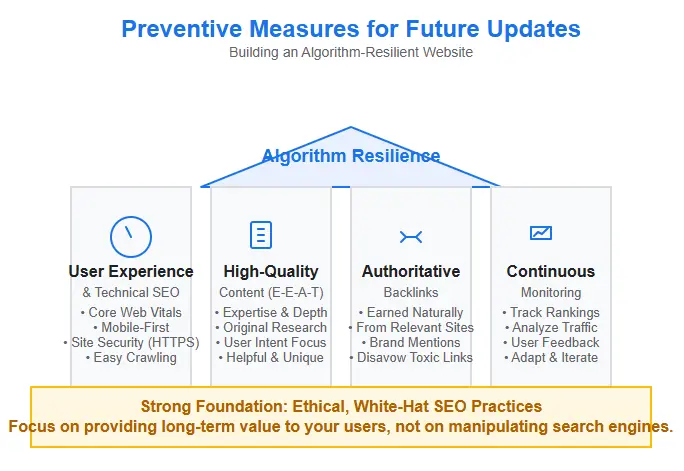
Proactive strategies to protect your website from future algorithm updates
Focus on User Value First
Create content that genuinely helps your audience. When you prioritize user needs over search engine manipulation, your site naturally aligns with Google’s goals, making it less vulnerable to algorithm updates.
Diversify Traffic Sources
Don’t rely solely on organic search. Develop email marketing, social media, and referral traffic channels to create a more stable business model that can weather algorithm fluctuations.
Stay Informed About SEO Trends
Follow reputable SEO blogs and Google’s official channels to stay ahead of potential changes. Understanding the direction of Google’s algorithms helps you prepare for future updates. Resources like Marie Haynes’ SEO blog provide expert analysis of algorithm updates.
Regular Site Audits
Conduct quarterly SEO audits to identify and address issues before they become problems. Regular maintenance prevents the accumulation of issues that could make you vulnerable to algorithm updates.
Build a Strong Brand
Brand signals are increasingly important in Google’s algorithms. Focus on building brand recognition and authority in your niche to create a natural defense against algorithm volatility. For local businesses, our Google Business Profile Optimization Checklist can help improve your local visibility.
Implement E-A-T Best Practices
Consistently demonstrate expertise, authoritativeness, and trustworthiness across your content. This is especially important for YMYL (Your Money or Your Life) topics but is becoming a factor across all niches.
“The most effective strategy for how to recover from a Google algorithm update is to build a site that doesn’t need recovery. Focus on creating exceptional user experiences and valuable content, and algorithm updates will become opportunities rather than threats.” – Marie Haynes, SEO Consultant
Conclusion
Learning how to recover from a Google algorithm update is an essential skill for any website owner or digital marketer. While algorithm updates can be disruptive, they also present opportunities to improve your site and align more closely with Google’s goal of delivering the best possible results to users.
The key to successful recovery is a methodical approach: identify the impact, analyze the causes, implement targeted improvements, and monitor results. Remember that recovery takes time—often weeks or months rather than days. Patience and persistence are crucial when implementing strategies on how to recover from a Google algorithm update.
Ultimately, the most sustainable approach to algorithm updates is to focus on creating exceptional content and experiences for your users. When you prioritize user value over algorithm manipulation, you build a site that not only recovers from updates but thrives despite them.
As Google continues to refine its algorithms, the fundamental principles remain constant: provide valuable content, ensure excellent user experience, and demonstrate expertise and authority in your niche. By embracing these principles, you’ll not only know how to recover from a Google algorithm update but build a site that’s resilient against future changes. For ongoing updates and insights, Search Engine Land is an excellent resource to follow.
Struggling with Algorithm Recovery?
Get a free, personalized audit of your site with specific recommendations on how to recover from a Google algorithm update.