
9 Proven Content SEO Guide Tips to Rank Higher Faster
This premium Content SEO Guide shows how to plan, write, optimize, and update content so it can rank in Google, satisfy search intent, increase organic traffic, and support leads or affiliate conversions without sounding forced.
Content SEO is the process of planning, writing, optimizing, and improving content so search engines can understand it and users can benefit from it. A strong Content SEO Guide helps you create pages that match search intent, cover the topic deeply, improve on-page signals, and guide readers toward the next useful action.
A high-quality Content SEO Guide is not just a post about keywords. It is a complete framework for building pages that deserve to rank. Strong content SEO combines topic research, clear headings, search intent matching, on-page optimization, internal linking, and content updates. When these pieces work together, your page becomes easier for Google to understand and more useful for the reader.
For Seoraf, this page matters because it is both a ranking page and a support page. It should target informational searches like Content SEO Guide, content SEO, and how to optimize content for SEO, while also linking naturally to your Content Outline Generator, Keyword Intent Tool, Title & Meta Analyzer, and Best SEO Tools page.
A practical Content SEO Guide helps turn random publishing into a repeatable growth system. Instead of guessing what to write, you learn how to pick the right topic, understand user intent, structure the page clearly, add better metadata, and connect supporting pages with internal links.
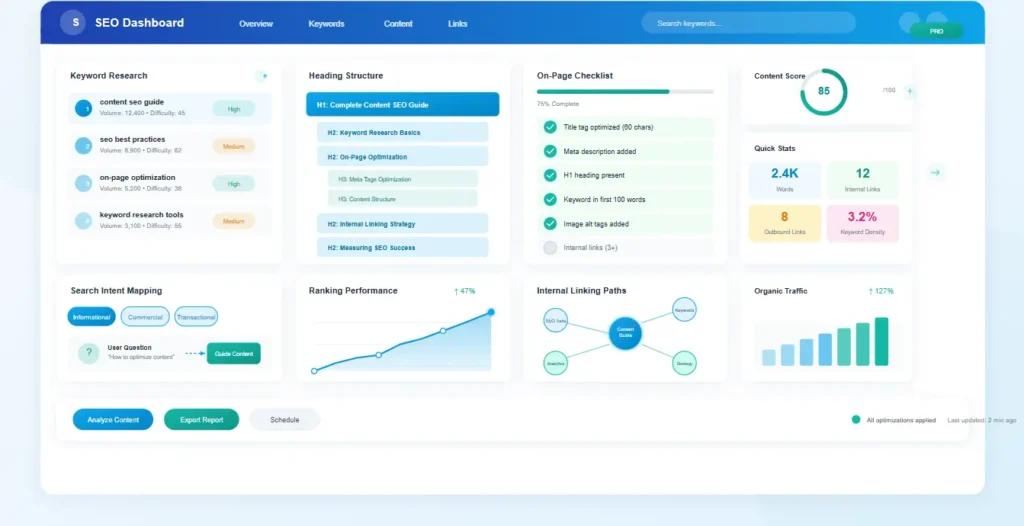
If your goal is higher visibility, stronger topical authority, and better content performance, this Content SEO Guide should be one of the most important pages in your site structure.
What Is a Content SEO Guide and Why Does It Matter?
Content SEO means optimizing content so it can rank in search engines and help users complete the goal behind their search.
Content SEO includes keyword targeting, topic coverage, search intent matching, metadata, readability, internal linking, semantic relevance, and content freshness. Many sites publish frequently but still do not rank because the content lacks structure, misses user intent, or does not connect properly to the rest of the website.
A true Content SEO Guide should explain that ranking is not only about using a keyword. It is about building a page that is useful, complete, easy to scan, and clearly aligned with what searchers want. A good page answers the core question early, expands into related subtopics naturally, and creates a logical flow from learning to action.
Topic clarity
Each page should focus on one main topic so Google can understand exactly what the page is about.
Intent alignment
Your page needs to reflect what the user expects to see when they search for a specific topic.
Site-wide value
A strong Content SEO Guide supports other pages by linking into tools, guides, and conversion paths naturally.
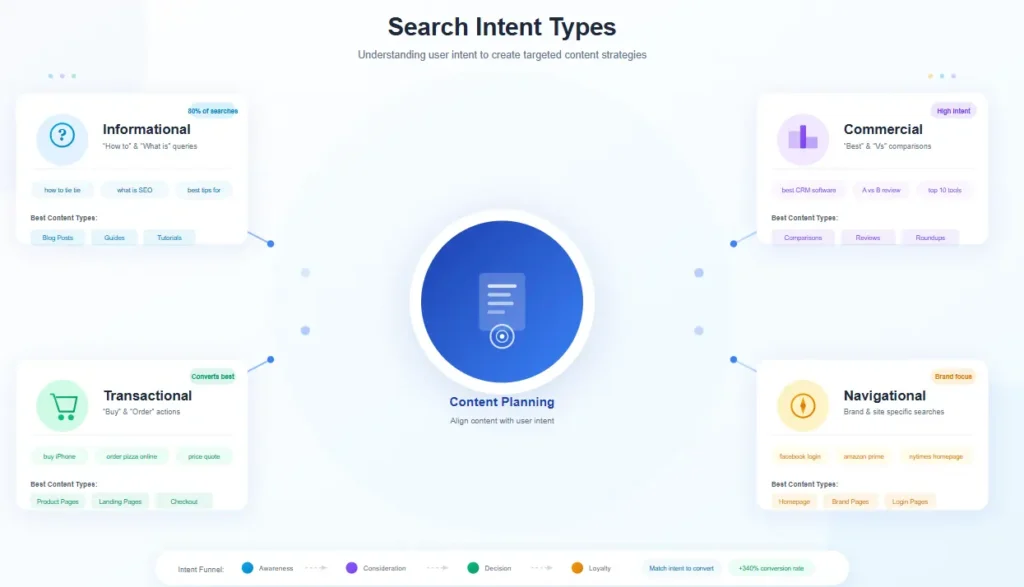
In short, content SEO is the system behind pages that rank, support authority, and create long-term value for your site.
Why Content SEO Matters for Rankings, Traffic, and Conversions
Without content SEO, even useful writing can stay invisible. Search engines need clear signals to understand topic relevance, content quality, and page purpose. Readers also need clarity. If a page is hard to read, poorly structured, or mismatched with search intent, it usually performs weakly even if the idea is good.
A complete Content SEO Guide does more than explain theory. It helps site owners understand why some pages rank and why others stay buried. When your Content SEO Guide is detailed, well structured, and connected to related tools or guides, it becomes an authority page that improves the rest of your SEO system too.
| Content SEO factor | Why it matters | Business impact |
|---|---|---|
| Search intent match | Helps the page satisfy what the user actually wants | Better rankings and stronger engagement |
| Clear structure | Makes the page easier to read and easier for Google to interpret | Improved dwell time and snippet potential |
| Internal links | Connects your guide to related pages and tools | Supports topical authority and money pages |
| Topical depth | Shows that your site covers the subject seriously | Builds trust and relevance over time |
| Metadata optimization | Improves how the page looks in search results | Higher click-through rate |
That is why a premium Content SEO Guide is worth creating. It brings traffic, strengthens your topical map, and helps readers move toward tools, resources, services, or affiliate decision pages naturally.
Tip 1: Start With Search Intent Before You Write
Search intent is one of the strongest ranking levers in content SEO. If your page does not match what users want, then even good writing and strong on-page optimization may not be enough to compete.
For the keyword cluster around Content SEO Guide, the main intent is informational. Users want to understand what content SEO is, why it matters, how it works, and how to improve their pages. They are usually not looking for a direct purchase page first. That means this content should teach clearly, answer directly, and only then guide users toward tools or services.
Informational intent
Define the concept, explain the process, and make the content useful enough that readers feel confident applying it.
Commercial support
After teaching the topic well, link to relevant Seoraf tools, resources, or service pages that help users take action.
Before finalizing any guide page, review the current first-page results for your keyword. Study the type of pages ranking, how deep they go, which questions they answer, and how they structure headings. That gives you a practical benchmark for what Google already rewards.
Tip 2: Plan the Content SEO Guide Before Writing a Single Section
Strong content starts with planning, not typing. A page without a plan often becomes repetitive, shallow, or messy. Planning helps you choose the right keyword, build a logical outline, cover the topic properly, and create better internal linking opportunities.
Choose one primary keyword
For this page, Content SEO Guide is the best primary keyword because it is specific and fits the page intent naturally.
Add supporting keywords
Use related phrases like content SEO, content optimization guide, how to optimize content for SEO, and SEO content strategy.
Define the page goal
This page should attract traffic, build authority, and move readers toward useful tools or conversion pages.
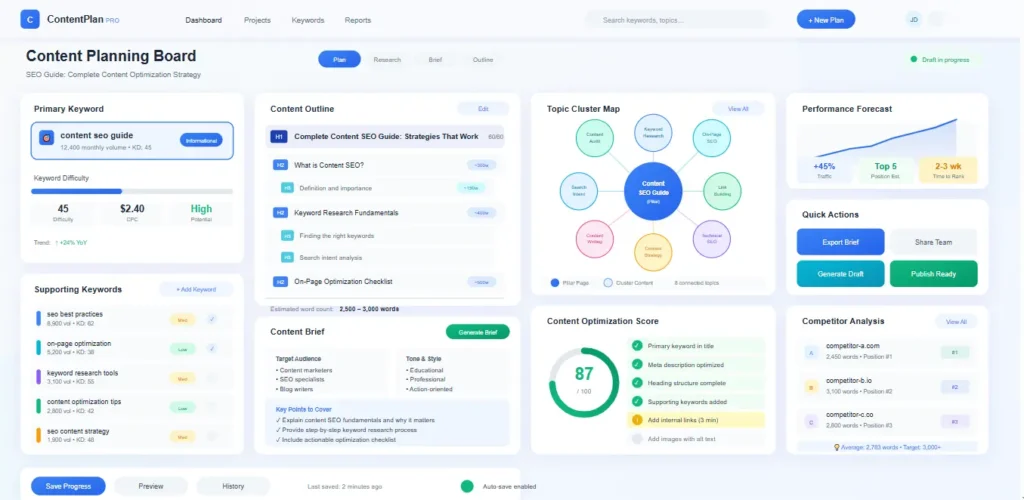
A good outline also helps you avoid thin content. Your H2 and H3 structure should reflect the natural questions a reader would ask while learning the topic.
- Use one clear H1 that includes the focus keyword naturally.
- Answer the main question early in the page.
- Use sections that cover definition, benefits, workflow, mistakes, and updates.
- Add FAQs to expand topical coverage.
- Link the page to relevant tools, resources, and commercial pages.
Need Faster Content Planning?
Use Seoraf’s tools to build outlines, improve metadata, and structure better SEO content without guesswork.
Tip 3: Write a Content SEO Guide That Still Feels Human
Writing SEO-friendly content does not mean writing stiff content. It means writing clearly for humans while giving search engines enough structure and context to understand the topic properly.
The best pages usually answer the core question quickly, then expand into supporting ideas with clear headings, short paragraphs, and practical examples. This improves readability, reduces friction, and increases engagement, especially on mobile devices.
Use descriptive headings
Headings should move the article forward and signal clearly what each section covers.
Keep paragraphs short
Short paragraphs are easier to scan and create a better reading experience on smaller screens.
Answer first, explain second
Give readers the direct answer first, then expand with details, examples, and context.
Avoid fluff
Every section should add value. Cut filler lines that do not teach, clarify, or guide action.
One of the biggest mistakes in weak content is forced repetition. You do not need to stuff Content SEO Guide into every paragraph. Use it naturally in high-value places such as the title, H1, intro, key headings, and a few strong body references. Then rely on semantic relevance and useful coverage to support the topic.
Tip 4: Optimize the On-Page Content SEO Elements Properly
Even strong writing needs on-page optimization. These elements help search engines interpret your page and help users decide to click it.
Title tag
Use the primary keyword early and make the title benefit-driven. A number and positive sentiment can improve CTR.
Meta description
Write a clear promise that explains what the reader will learn and why the page is worth clicking.
URL structure
Keep the slug short, descriptive, and aligned with the focus keyword.
Heading hierarchy
Use one H1, then clean H2 and H3 sections that support readability and clear topic flow.
Image alt text
Describe the image accurately and use context naturally rather than stuffing keywords unnaturally.
Internal links
Link to relevant Seoraf tools, resources, and service pages so the guide supports the rest of your site.
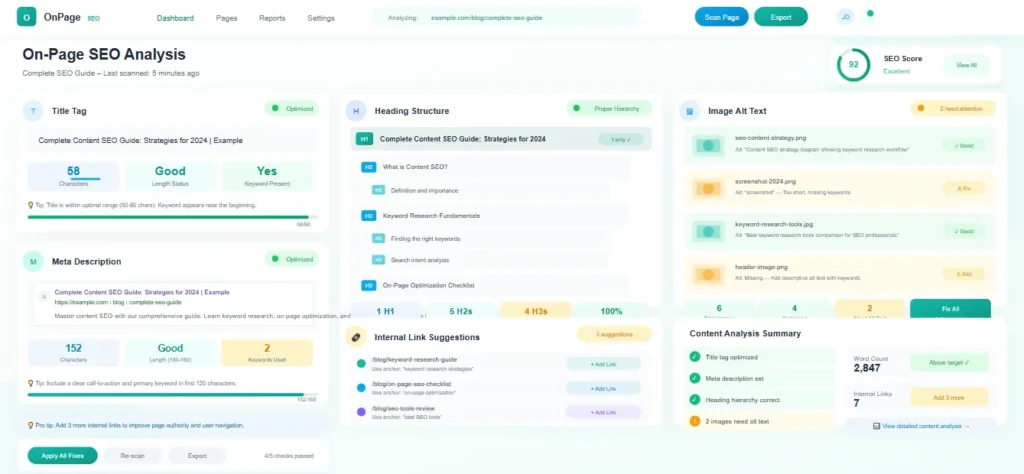
For general best practices, Google Search Central remains one of the most reliable references. Review the Google SEO Starter Guide and Google’s guidance on helpful, reliable, people-first content.
Tip 5: Use Internal Linking to Turn This Guide Into a Growth Asset
Internal linking is one of the easiest and most overlooked ways to improve content SEO. It helps search engines understand relationships between pages and helps users move naturally from awareness content into action-based content.
Your Content SEO Guide should act like a bridge page. It can pass internal link value to related tools, supporting guides, and commercial pages while helping readers move from learning to action naturally.
| Link destination | Why it fits this guide | SEO role |
|---|---|---|
| Content Outline Generator | Turns theory into a practical content planning tool | Tool support |
| Title & Meta Analyzer | Supports the on-page optimization section naturally | Engagement support |
| Keyword Intent Tool | Fits perfectly with the search intent section | Cluster relevance |
| Best SEO Tools | Useful for readers who want commercial tool comparisons | Money page support |
| SEO Audit Service | Good next step for users who need expert help | Lead generation |
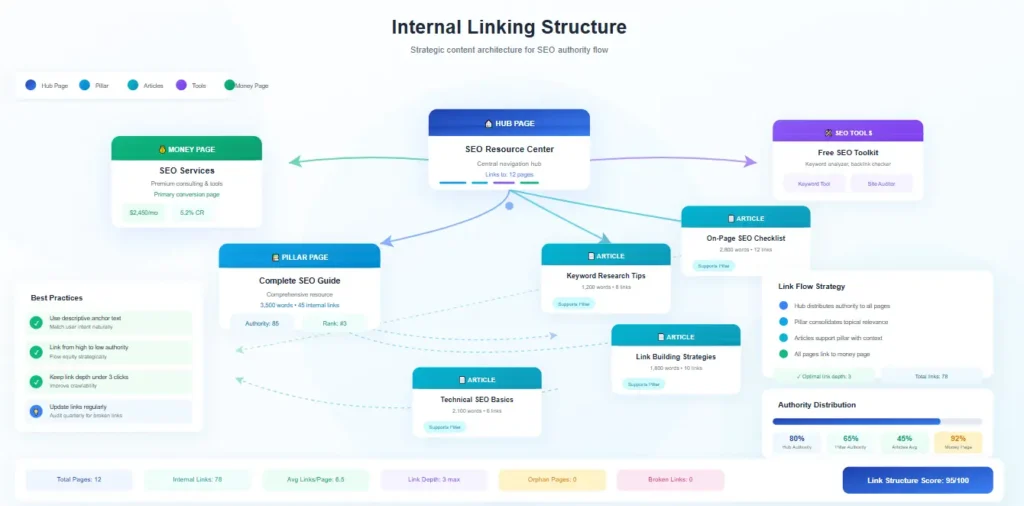
The best structure for Seoraf is simple: Hub page → Pillar guide → Tool or supporting guide → Money page or service page. This page fits that model perfectly and should help distribute relevance across your content ecosystem.
Tip 6: Avoid the Common Content SEO Mistakes That Kill Performance
Many pages fail not because the topic is weak, but because execution is weak. Fixing these common problems can improve content quality faster than chasing shallow SEO tricks.
Keyword stuffing
Repeating the focus keyword too often makes the page feel forced and lower quality. Use natural coverage instead.
Weak intent match
If users expect a guide but land on a thin sales page, rankings and engagement usually suffer quickly.
Thin topic coverage
Short posts that skip obvious subtopics often fail to compete against strong first-page content.
Poor structure
Long walls of text, vague headings, and weak formatting reduce readability and trust.
No internal links
Pages that sit alone on the site often struggle to send or receive topical relevance effectively.
No refresh process
Even good content can decay over time if examples, frameworks, or search expectations change.
If you only fix three things on underperforming content, start with intent match, structure quality, and internal linking. Those usually create visible improvements faster than obsessing over density alone.
Tip 7: Update Old Content Instead of Only Publishing New Pages
Refreshing older pages is often easier than starting from zero. Many pages lose traffic because they become shallow, dated, or disconnected from the rest of the site. Updating them can restore value and improve rankings without needing a brand-new topic every time.
- Review performance: identify pages that lost traffic, dropped in position, or no longer reflect the current search intent landscape.
- Improve the introduction: make the main answer clearer and faster so users know they found the right page.
- Expand weak sections: add missing subtopics, fresher examples, stronger explanations, and better structure.
- Refresh internal links: connect the page to newer tools, guides, templates, and money pages.
- Improve title and meta: better SERP copy can lift CTR even before rankings change.
- Add or improve FAQs: this can strengthen topic coverage and help you capture longer-tail searches.
For Seoraf, content refreshes should be a regular routine because you are building layered clusters with guides, tools, resources, and affiliate pages. A refreshed guide can support multiple pages at once.
Tip 8: Use a Simple Content SEO Workflow You Can Repeat
If you want scalable results, stop treating every page like a random writing job. A repeatable workflow makes content creation cleaner, faster, and more strategic.
Step 1: Pick the topic
Choose one main keyword and define the user intent clearly before writing.
Step 2: Build the outline
Create H2 and H3 sections that cover the main question and the obvious supporting subtopics.
Step 3: Write clearly
Focus on usefulness, examples, readability, and short paragraphs rather than filler.
Step 4: Optimize on-page SEO
Improve title, metadata, headings, internal links, images, and structure before publishing.
Step 5: Publish with purpose
Link to relevant tools, resources, and one or two strong next steps.
Step 6: Review and refresh
Track performance and update important pages instead of leaving them unchanged for months.
To speed this up, use Seoraf’s Content Outline Generator for structure, the Keyword Intent Tool for page intent, and the Title & Meta Analyzer for SERP improvements.
Tip 9: Connect Content SEO to a Real Business Goal
Traffic matters, but traffic alone is not enough. A premium Content SEO Guide should support a broader goal. That goal could be lead generation, affiliate clicks, tool usage, email signups, or brand authority. The page becomes much more valuable when it fits into a conversion journey instead of ending with information only.
- Guide readers from awareness into a practical tool.
- Link to a related template or checklist for deeper engagement.
- Add one natural service CTA for users who want help.
- Support your money pages without making the content feel overly salesy.
- Use this guide as part of a bigger topical cluster, not as an isolated article.
That is the difference between content that merely exists and content that supports long-term SEO growth.
Turn This Content SEO Guide Into Real Growth
Need help improving content structure, search intent, metadata, or internal linking? Start with a free tool or request a deeper SEO review.
Frequently Asked Questions About Content SEO
What is content SEO?
Content SEO is the process of optimizing written content so it ranks better in search engines and serves users more effectively. It includes keyword targeting, search intent, structure, metadata, internal linking, and updates.
Should I target Content SEO or Content SEO Guide?
For this kind of pillar content, Content SEO Guide is usually the better primary keyword because it is more specific and fits the page intent naturally. Content SEO works better as a secondary keyword.
How long should a Content SEO Guide be?
There is no perfect number, but this type of first-page focused pillar page usually performs better when it covers the topic deeply, clearly, and completely. Quality and completeness matter more than chasing a fixed word count.
How do I optimize a Content SEO Guide for Google?
Use a clear primary keyword, match informational intent, build strong headings, improve metadata, add internal links, use descriptive images, and refresh the page when needed.
Is content SEO the same as on-page SEO?
Not exactly. Content SEO is part of on-page SEO, but it focuses more on the content itself, topic coverage, usefulness, and structure.
Does updating old content help rankings?
Yes. Updating old content can improve freshness, clarity, relevance, internal links, metadata, and overall user satisfaction. It is often one of the fastest ways to improve existing SEO performance.
Final Thoughts
A strong Content SEO Guide is a long-term asset. It attracts informational traffic, builds topical authority, strengthens internal linking, and supports the rest of your SEO ecosystem. It should not be treated as filler content. It should be treated like a central authority page that connects guides, tools, resources, and commercial next steps together.
If you want better rankings, focus on intent, clarity, structure, useful depth, and smart internal linking. Those factors usually matter far more than overthinking keyword density. When your page answers the topic well and fits naturally into your site architecture, first-page performance becomes much more realistic over time.