
12 Beginner SEO Mistakes That Hurt Rankings and Traffic
Many websites do not struggle because SEO is too difficult. They struggle because the foundation is weak. If you can identify beginner SEO mistakes early, you can improve rankings faster, build better pages, and avoid wasting time on the wrong tasks.
Why Beginner SEO Mistakes Matter More Than Most People Expect
Most beginner SEO mistakes look small in the beginning. A page without a clear keyword might still look fine. A weak title might still be readable. A page without internal links might still publish normally. But SEO problems usually do not stay isolated. They build on each other. Over time, these small mistakes reduce clarity, weaken relevance, and make it harder for search engines to understand which pages deserve visibility.
Another reason beginner SEO mistakes matter is that they waste energy. New site owners often spend time designing pages, testing plugins, checking reports, or writing new content without fixing the foundation first. That creates movement without progress. When the basics are weak, more activity does not always create better results.
The good news is that most beginner SEO mistakes are fixable. You do not need to master every advanced tactic. You need clearer page targeting, stronger structure, and a simple process you can repeat. That is why this topic is important for bloggers, small businesses, local businesses, and service websites that want better long-term growth.
When a page has one clear topic, better headings, and stronger internal links, it becomes easier to rank and easier to understand.
Removing beginner SEO mistakes often improves page quality faster than adding more content without a plan.
12 Beginner SEO Mistakes You Should Fix First
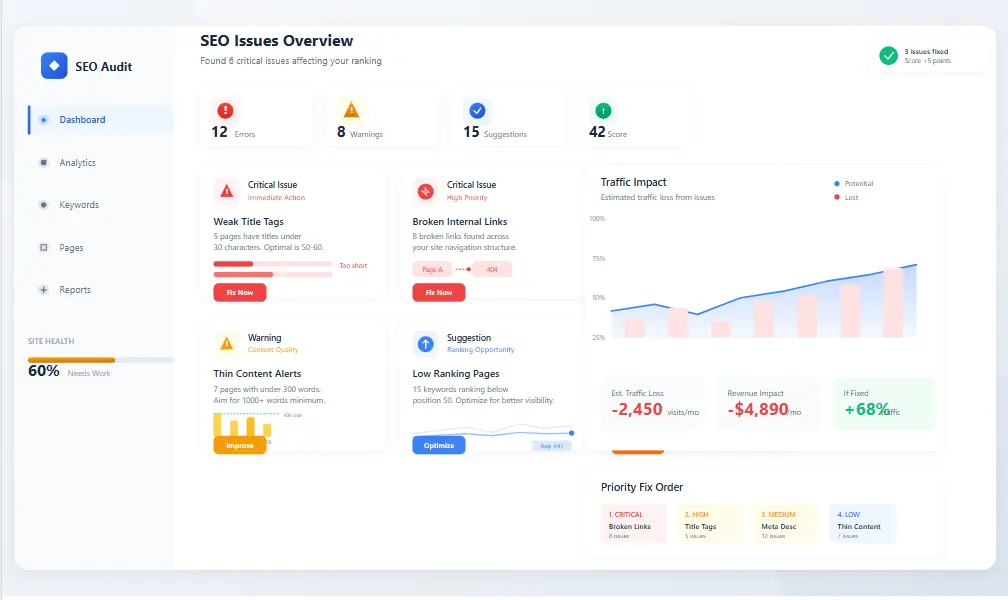
If your site is underperforming, there is a strong chance one or more beginner SEO mistakes is getting in the way. These are the ones worth fixing before you chase more advanced strategies.
No clear target keyword
One of the most common beginner SEO mistakes is publishing a page without deciding what the page should rank for. A page that tries to target everything usually ranks for nothing meaningful. Pick one main topic and build the page around that core idea.
Ignoring search intent
Many beginner SEO mistakes happen because the page type is wrong. If users want a tutorial, a thin sales page will not satisfy them. If they want comparisons, a generic overview will feel incomplete. Matching search intent is one of the most important basic SEO decisions.
Weak title tags
Titles influence both visibility and click-through rate. Vague, flat, or generic titles often fail to compete. A strong title should make the topic obvious, create interest, and still feel natural.
Poor meta descriptions
Meta descriptions do not directly solve every ranking problem, but they do influence clicks. A weak snippet can make a decent page look less useful in search results.
Weak heading structure
Beginner SEO mistakes often show up in headings. Some pages skip the H1. Some repeat the same heading idea too often. Others structure the page in a way that feels confusing. Clean headings improve readability and SEO at the same time.
Publishing thin content
Thin content is one of the most repeated beginner SEO mistakes because it feels efficient. But fast publishing with low depth rarely creates trust or strong rankings. If a topic needs detail, give it enough depth to be useful.
Forgetting internal links
If your pages do not connect to each other, important content stays isolated. Internal links help users navigate, help search engines discover pages, and strengthen the parts of your site that matter most.
Not optimizing images
Missing alt text, oversized files, and weak file names are common beginner SEO mistakes. Image optimization helps accessibility, context, and overall page quality.
Skipping technical basics
You do not need advanced developer knowledge, but you do need to care about crawlability, HTTPS, indexability, and sitemap health. Ignoring technical basics can block good content from performing.
Expecting results too fast
SEO usually rewards consistency. One of the most frustrating beginner SEO mistakes is expecting major results too quickly and then changing direction too often.
Using too many tools too early
Another common beginner SEO mistake is jumping between reports, dashboards, and tools without fixing the obvious page problems first. Tools support decisions. They do not replace clear structure and useful content.
No repeatable SEO process
Without a process, beginner SEO mistakes keep coming back. A stronger workflow usually looks like this: choose a topic, confirm intent, build structure, publish useful content, link it properly, then review performance later.
Why Beginner SEO Mistakes Keep Repeating
Most beginner SEO mistakes repeat because new site owners try to do too many things at once. They write content, design pages, test tools, and watch rankings without using a simple framework. That leads to inconsistent decisions. One page targets a broad topic, another has weak headings, another has no internal links, and another is published before it is truly ready.
Another reason beginner SEO mistakes keep happening is that beginners often copy isolated tips instead of following a process. They hear that titles matter, then only focus on titles. They hear that speed matters, then only focus on speed. They hear that content matters, then publish more content without improving page quality. SEO works better when the basics support each other.
Weak planning creates weak pages. Weak pages create weak results. Then site owners assume they need more tools, more tricks, or more content, when what they really need is a stronger foundation.
What Beginner SEO Mistakes Usually Lead To
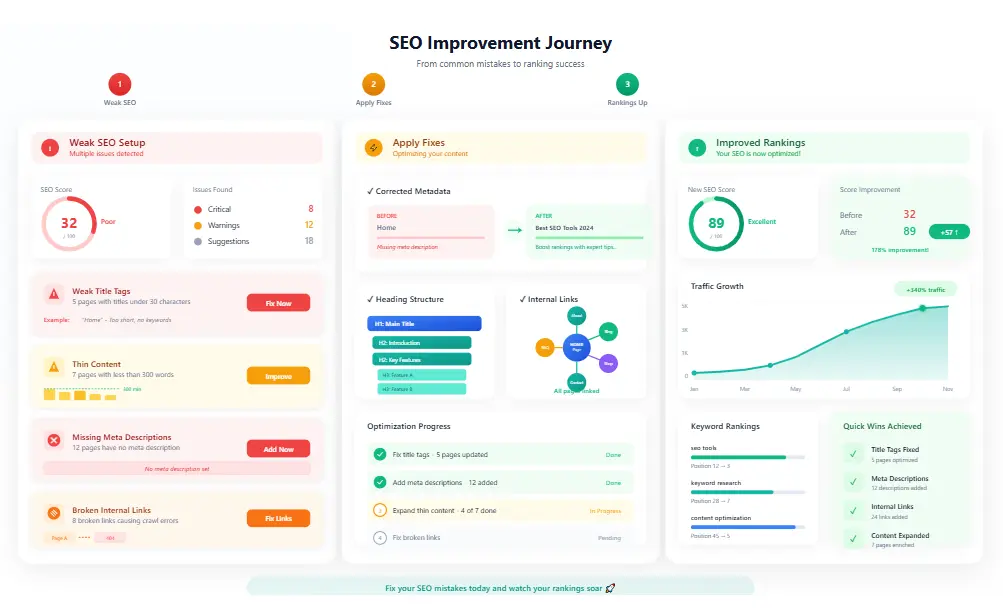
When beginner SEO mistakes stay unfixed, the results become predictable. Pages rank slowly. Click-through rates stay weak. Users do not engage well. Internal page value stays scattered. Important service pages and money pages remain buried because the site is not clearly signaling what matters most.
This is why fixing beginner SEO mistakes early gives you more leverage than publishing lots of random content. A better-structured site makes every future page stronger because the internal flow improves, the topic focus improves, and users can move through the site more naturally.
How to Fix Beginner SEO Mistakes Faster
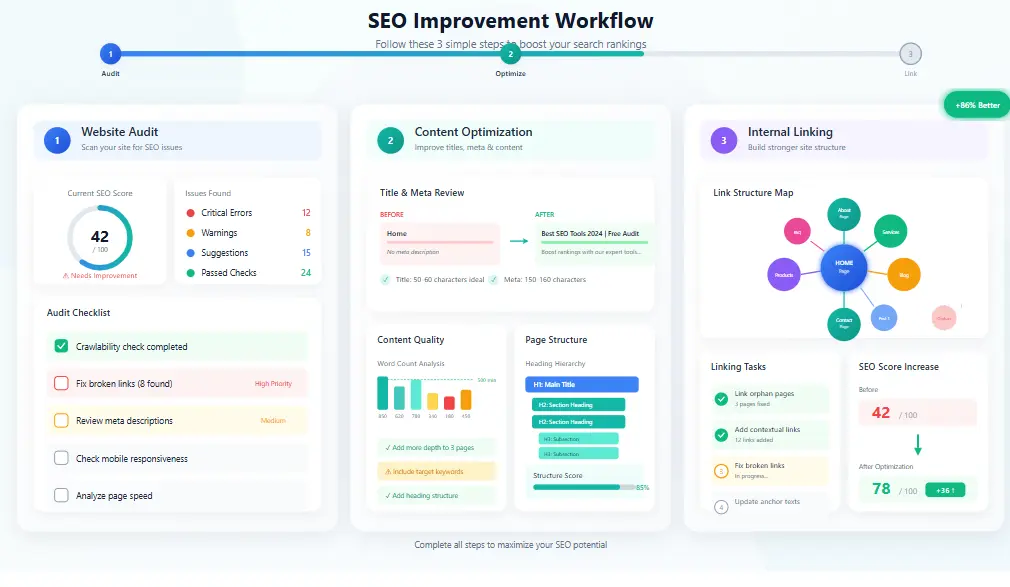
You do not need to fix everything at once. The fastest approach is to improve the parts of your site that have the most impact first.
Fix your homepage, service pages, and strongest guides first. These often influence traffic and leads more than the rest of the site.
Choose one keyword, one page goal, and one intent. That removes confusion and helps you fix beginner SEO mistakes more cleanly.
Connect your audit tool, beginner guide, checklist, and money pages so your site feels more useful and more organized.
Titles, meta descriptions, headings, image alt text, and content depth should be reviewed monthly on important pages.
A good first step is a quick audit. That helps you see which beginner SEO mistakes are hurting your pages right now instead of making random assumptions. After that, a checklist and a clearer page process usually make the biggest difference.
The Fastest Mindset Shift for Beginners
If you are serious about SEO, the best mindset shift is this: stop asking how to do more, and start asking how to do the basics better. Many beginner SEO mistakes come from trying to scale too early. Publishing more pages does not help if those pages are poorly targeted, weakly structured, or disconnected from your main site goals.
Think of SEO as a system. Every important page should have a clear keyword, a clear intent, a useful structure, internal links, and a reason to exist. When that becomes your default approach, beginner SEO mistakes naturally decrease.
Helpful External Resources to Avoid Beginner SEO Mistakes
You do not need to rely on random advice only. These trusted resources can help you validate the basics and reduce common beginner SEO mistakes.
For foundational advice, read the Google SEO Starter Guide.
To review performance and speed, use PageSpeed Insights.
To monitor indexing and visibility, set up Google Search Console.
They give you a more reliable foundation, which makes it easier to identify and correct beginner SEO mistakes without guesswork.
Frequently Asked Questions
What is the most common beginner SEO mistake?
The most common one is publishing content without a clear keyword and without matching the right search intent.
Can beginner SEO mistakes stop rankings completely?
Yes. Weak structure, poor content quality, and ignored technical basics can make it much harder for a page to rank.
Do I need expensive tools to fix beginner SEO mistakes?
No. Many beginner SEO mistakes can be fixed with a better checklist, a simple audit process, and clearer content decisions.
How long does it take to recover from beginner SEO mistakes?
That depends on the issue, but many sites improve once they strengthen page targeting, content quality, and internal links consistently.
Want to Find Your SEO Mistakes Faster?
Use the free audit tool to spot obvious problems, then move into a deeper guide or a full SEO audit if you want clearer priorities and stronger growth.