The Ultimate Content Marketing Checklist for 2026

Transform your content strategy with our comprehensive content marketing checklist. Follow 50+ proven steps to create, distribute, and measure content that drives results.

Get Your Free Checklist

Your Complete Content Marketing Checklist

In today’s digital landscape, a well-executed content marketing checklist is the foundation of any successful digital marketing strategy. With over 70% of companies actively investing in content marketing, having a comprehensive content marketing checklist is no longer optional—it’s essential for standing out in a crowded marketplace. Our extensive guide covers everything from initial planning and creation to distribution and measurement, ensuring you don’t miss any critical steps in your content journey. Whether you’re a beginner just starting with content marketing or an experienced marketer looking to refine your approach, this content marketing checklist will help you streamline your processes, maintain consistency, and achieve better results.

The importance of a structured content marketing checklist cannot be overstated. According to recent studies, businesses with documented content marketing strategies experience 513% more traffic and generate 7.8x more year-over-year growth in unique site traffic. This guide is designed to be your strategic roadmap, helping you navigate the complex world of content creation and distribution with confidence and purpose. By implementing each item on this content marketing checklist, you’ll build a robust framework that supports your business objectives, engages your target audience, and delivers measurable results.
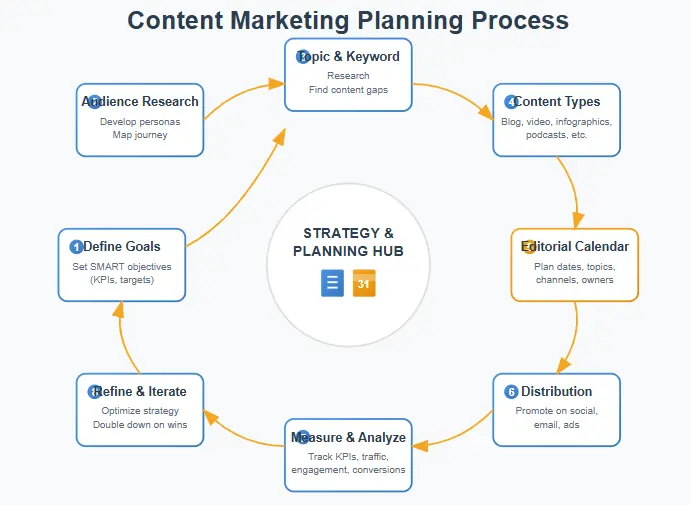
Content Marketing Checklist planning process with calendar and strategy documents

Success Story: How a Content Marketing Checklist Transformed a Business

A mid-sized B2B technology company was struggling with inconsistent content creation and poor engagement rates. After implementing our comprehensive content marketing checklist, they established a clear workflow, defined their target personas, and created a content calendar. Within six months, their organic traffic increased by 127%, lead generation improved by 89%, and their content engagement metrics tripled. This success demonstrates the power of a well-executed content marketing checklist.

3x Increase in Content Engagement

Strategy & Planning

  • Define your content marketing goals and KPIs
  • Identify your target audience and create personas
  • Conduct competitor analysis and content gap research
  • Establish your brand voice and tone guidelines
  • Create a content strategy template with publishing schedule
  • Set budget allocation for content creation and promotion
  • Define content themes and pillars
  • Establish team roles and responsibilities

Content Ideation

  • Research high search volume low competition keywords and search intent
  • Analyze top-performing content in your niche
  • Use tools like AnswerThePublic for topic ideas
  • Survey your audience for pain points and questions
  • Brainstorm content formats that resonate with your audience
  • Create a system for capturing and organizing ideas
  • Map content to different stages of the buyer’s journey
  • Prioritize ideas based on potential impact and effort

Content Creation

  • Write compelling headlines that grab attention
  • Structure content with clear headings and subheadings
  • Include relevant keywords naturally throughout the content
  • Add internal links to related content on your site
  • Include authoritative external links to support claims
  • Optimize images with descriptive alt text
  • Write a compelling meta description
  • Proofread for grammar, spelling, and style consistency

Content Distribution

  • Promote content on relevant social media platforms
  • Share with email newsletter subscribers
  • Reach out to industry influencers for amplification
  • Repurpose content into different formats (videos, infographics, etc.)
  • Submit to content curation platforms and communities
  • Use paid promotion for high-priority content
  • Engage with comments and build community
  • Update and republish evergreen content regularly

Analytics & Optimization

  • Set up Google Analytics and Search Console
  • Track key metrics (traffic, engagement, conversions)
  • Monitor keyword rankings and organic visibility
  • Analyze content performance by topic and format
  • Conduct A/B tests on headlines and CTAs
  • Identify and update underperforming content
  • Regularly review and adjust your content strategy
  • Create performance reports for stakeholders

Technical SEO

  • Ensure mobile-friendly responsive design
  • Optimize page loading speed
  • Implement structured data markup
  • Create and submit XML sitemap
  • Set up proper URL structure
  • Implement canonical tags to avoid duplicate content
  • Ensure secure HTTPS protocol
  • Conduct a comprehensive technical SEO audit to fix issues

Deep Dive: Why a Content Marketing Checklist is Essential for Success

A content marketing checklist serves as your strategic compass in the vast ocean of digital content. Without it, even the most talented content creators can find themselves adrift, producing content that fails to connect with audiences or achieve business objectives. The most successful content marketing teams treat their checklist as a living document—one that evolves with changing market conditions, audience preferences, and business goals.

Consider the content marketing landscape in 2026: with over 4 million blog posts published daily, standing out requires more than just good writing—it demands strategic precision. A comprehensive guide ensures that every piece of content serves a specific purpose, reaches the right audience, and contributes to your broader marketing objectives. It transforms content creation from a reactive process to a proactive strategy, enabling you to plan months in advance while maintaining the flexibility to capitalize on emerging trends and opportunities.

Content Marketing Leaders Are 13x More Likely to Have a Documented Strategy

The beauty of a well-structured content marketing checklist lies in its ability to balance creativity with consistency. While it provides the framework necessary for systematic content production, it doesn’t stifle innovation. Instead, it frees your creative team to focus on what they do best—crafting compelling narratives and valuable insights—while the guide handles the strategic and technical elements that often get overlooked in the creative process.

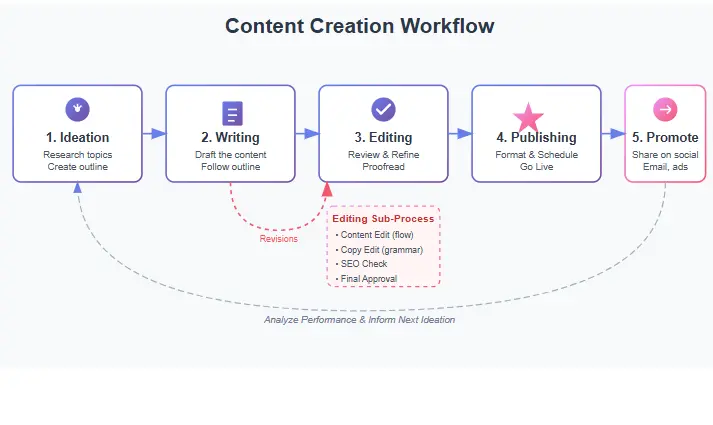
Content creation process showing writing, editing, and publishing workflow

Expert Tip

According to research by the Content Marketing Institute, businesses that document their content marketing strategy are 5x more likely to report success than those who don’t. Your checklist should be part of this documented strategy. The most effective guides include not just what to do, but why it matters and how success will be measured. This context transforms your content marketing checklist from a simple to-do list into a strategic framework that guides decision-making at every level of your organization.

The Evolution of Content Marketing: Why Your Checklist Must Adapt

Content marketing has undergone a dramatic transformation over the past decade. What began as primarily blog-based content has evolved into a sophisticated ecosystem encompassing video, podcasts, interactive tools, virtual events, and immersive experiences. Your guide must reflect this evolution, incorporating new formats and channels while maintaining the strategic foundation that makes content marketing effective.

In 2026, successful guides go beyond traditional text-based content to include considerations for voice search optimization, AI-assisted content creation, and multi-platform distribution strategies. They account for the fragmented attention spans of modern audiences and the increasing importance of creating content experiences rather than just content pieces. This evolution doesn’t make your guide more complicated—it makes it more comprehensive, ensuring you’re prepared for the current landscape while remaining agile enough to adapt to future changes.

The most forward-thinking guides also incorporate sustainability and ethical considerations. As consumers become more discerning about the content they consume and the brands they support, your checklist should include guidelines for creating authentic, transparent, and value-driven content that builds trust rather than just generating clicks.

This content marketing checklist is designed to be your go-to resource for all aspects of content marketing. By following this comprehensive guide, you’ll ensure that no critical steps are missed in your content strategy. Remember that a checklist is not just a one-time tool but an evolving document that should adapt to changing trends and your specific business needs. Make this guide part of your regular workflow to maintain consistency and achieve your content marketing goals.
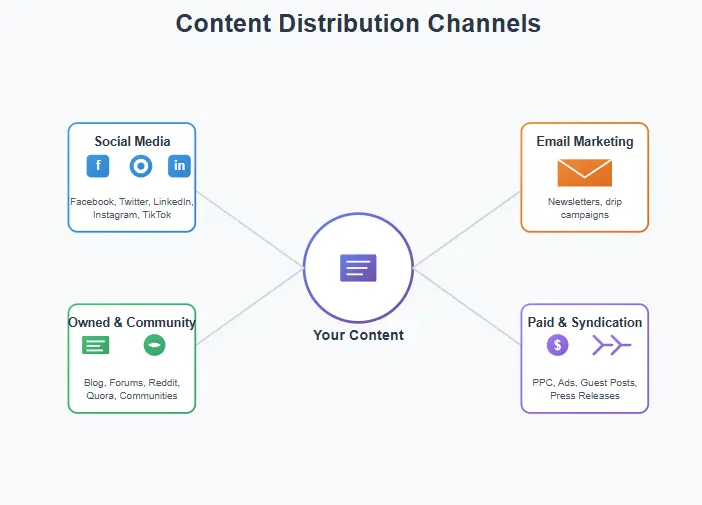
Content distribution channels showing social media, email, and other platforms

Implementing Your Content Marketing Checklist: A Step-by-Step Approach

Successfully implementing a content marketing checklist requires more than just checking boxes—it demands organizational alignment, resource allocation, and continuous improvement. The most effective approach is to phase your implementation, starting with the foundational elements of your guide before moving to more advanced strategies.

Begin with the Strategy & Planning section of your content marketing checklist. This foundation determines everything that follows, so invest the necessary time to thoroughly research your audience, analyze competitors, and establish clear objectives. Many organizations rush through this phase, eager to start creating content, but this approach often leads to unfocused efforts and disappointing results. A well-executed planning phase, guided by your checklist, sets the stage for sustainable success.

Once your strategy is established, move to the Content Ideation and Creation sections of your guide. This is where many teams struggle with consistency, so consider establishing a content creation workflow that builds the checklist items into your standard operating procedures. Some successful content marketing teams designate a “checklist champion” responsible for ensuring each piece of content meets all criteria before publication.

The Distribution and Analytics sections of your guide should be implemented concurrently with content creation. Too often, teams focus exclusively on creation and only consider distribution and measurement after content is published—a critical mistake that limits reach and prevents learning. Your checklist should remind you to plan distribution and measurement from the beginning of the content creation process.

Essential Content Marketing Tools

SEMrush

Comprehensive SEO and content marketing toolkit for keyword research, competitor analysis, and content optimization.

CoSchedule

All-in-one content calendar and marketing suite to plan, organize, and execute your content marketing strategy.

Google Analytics

Free web analytics service that tracks and reports website traffic and helps measure content performance.

Canva

Easy-to-use design tool for creating stunning visuals, infographics, and social media graphics for your content.

Buzzsprout

Podcast hosting platform that makes it easy to create, host, and promote your podcast content.

Mailchimp

Email marketing platform to distribute your content directly to subscribers and nurture leads.

Wistia

Video hosting platform with powerful marketing tools to promote and analyze your video content.

Trello

Visual collaboration tool to organize your content marketing projects and track progress.

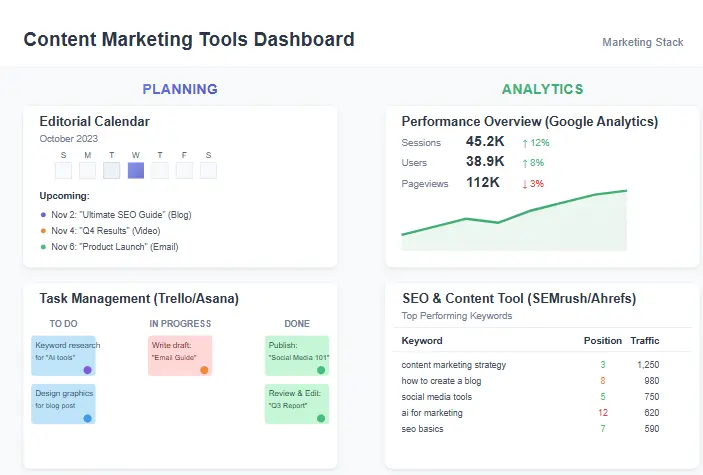
Content marketing tools dashboard showing analytics and planning software

Tool Recommendation

For comprehensive content marketing insights, Moz offers excellent tools for keyword research, link analysis, and SEO optimization that complement your content marketing checklist perfectly. Their Content Explorer tool is particularly valuable for identifying content gaps and opportunities in your niche.

Building Your Content Marketing Technology Stack

The right technology stack can amplify the effectiveness of your content marketing checklist, automating repetitive tasks and providing insights that would be impossible to gather manually. However, with hundreds of content marketing tools available, it’s essential to choose solutions that integrate well with each other and align with your specific guide requirements.

When building your technology stack, start with the fundamentals covered in your checklist: content planning, creation, distribution, and measurement. Many successful content marketing teams begin with a comprehensive tool like SEMrush or Ahrefs for research and planning, then add specialized tools for specific functions like design (Canva), email marketing (Mailchimp or ConvertKit), and analytics (Google Analytics plus a more advanced tool like Hotjar for user behavior insights).

Integration should be a key consideration when selecting tools to support your content marketing checklist. The most effective stacks create seamless workflows where data flows between systems, eliminating manual data entry and ensuring that insights from one tool inform actions in another. For example, your keyword research tool should integrate with your content calendar, which should connect to your analytics platform to track performance against the goals established in your guide.

Remember that technology should support, not replace, the strategic thinking outlined in your content marketing checklist. The most sophisticated tools won’t compensate for a weak strategy, but the right tools can dramatically enhance the execution of a strong content marketing plan.

Frequently Asked Questions

How often should I update my content marketing checklist?

Your content marketing checklist should be reviewed and updated at least quarterly, with more comprehensive reviews conducted semi-annually. The digital marketing landscape evolves rapidly, with new platforms, algorithm updates, and best practices emerging regularly. By revisiting your guide every few months, you can ensure it remains relevant and effective.

However, the frequency of updates should also depend on your industry’s pace of change and your content marketing maturity. Fast-moving industries like technology or fashion may require monthly updates to your checklist, while more stable industries might be fine with quarterly reviews. Additionally, consider updating your guide whenever you notice significant changes in your industry, when major platforms announce algorithm changes, or when you’re not achieving desired results with your current approach.

The most effective approach is to establish a regular review schedule for your content marketing checklist while maintaining flexibility for ad-hoc updates when necessary. During each review, evaluate whether each item in your guide is still relevant, identify any missing elements that should be added, and assess whether the priority order needs adjustment based on recent performance data and business objectives.

What’s the most important item on a content marketing checklist?

While every item on a content marketing checklist serves an important purpose, defining your target audience and creating detailed personas is arguably the most critical. Without a clear understanding of who you’re creating content for, your efforts are likely to miss the mark, regardless of how well you execute other elements of your guide.

Audience research and persona development should be the foundation upon which your entire checklist is built. Your audience insights should inform every aspect of your guide, from topic selection and tone of voice to distribution channels and promotion strategies. When you truly understand your audience’s pain points, questions, and preferences, you can create content that resonates deeply and drives meaningful engagement.

That said, the “most important” item can vary based on your current challenges and objectives. If you’re struggling with consistency, then your content calendar might be the most crucial item on your checklist. If distribution is your weak point, then promotion strategies might take priority. The key is to regularly assess which elements of your guide will have the greatest impact on your current goals and focus your attention there while still maintaining the other essential elements.

How can I measure the success of my content marketing checklist implementation?

Measuring the success of your content marketing checklist implementation requires tracking relevant KPIs aligned with your business goals. These might include website traffic, engagement metrics (time on page, bounce rate, comments, shares), lead generation, conversion rates, keyword rankings, and social shares. Create a dashboard to monitor these metrics regularly and compare them against your baseline before implementing the guide.

Beyond quantitative metrics, consider qualitative measures of success as well. Survey your audience about content relevance and value. Gather feedback from your sales team about content quality and its impact on the sales process. Review customer support inquiries to see if your content is addressing common questions and reducing support requests.

The most effective measurement approach connects content marketing checklist implementation directly to business outcomes. Track how content influenced deals in your CRM. Measure customer lifetime value for those who engage with your content versus those who don’t. Calculate the cost per lead generated through content marketing compared to other channels. These business-level metrics demonstrate the true value of your checklist and help justify continued investment in content marketing initiatives.

Should I create different content marketing checklists for different content types?

Yes, creating specialized content marketing checklists for different content types can significantly improve your efficiency and quality. While your master checklist covers the overall strategy, you might develop separate guides for blog posts, videos, podcasts, infographics, case studies, and other formats. Each content type has unique requirements for creation, optimization, and distribution.

For example, a video checklist might include scriptwriting, production quality, thumbnail optimization, and video SEO elements, while a blog post guide would focus more on keyword placement, internal linking, and readability. A podcast guide would emphasize audio quality, show notes, and distribution to podcast platforms, while an infographic guide would prioritize visual design, data accuracy, and shareability.

The key is to maintain consistency with your master content marketing checklist while customizing for the specific requirements of each format. The specialized guides should align with your overall strategy and brand guidelines while addressing the unique technical and creative elements of each content type. This approach ensures quality across all formats while allowing for the specialized expertise needed for different content types.

How can a small business with limited resources implement a comprehensive content marketing checklist?

Small businesses can successfully implement a content marketing checklist by prioritizing tasks based on impact and resource requirements. Start with the foundational elements of your guide, such as defining your audience and core topics. Focus on creating high-quality content for one or two key channels rather than trying to be everywhere at once.

Leverage free or low-cost tools mentioned in our content marketing checklist, and consider repurposing content across multiple formats to maximize your efforts. A single well-researched blog post can become a video script, podcast episode, social media series, and email newsletter, allowing you to maintain presence across channels without creating entirely new content for each.

As you see results, gradually expand your implementation of the guide. Many small businesses find success by focusing on owned channels first (blog, email newsletter) before expanding to social media and other platforms. Remember that consistency is more important than volume—regularly publishing high-quality content that aligns with your content marketing checklist will yield better results than sporadic efforts across multiple channels.

How do I balance SEO requirements with creating engaging content in my content marketing checklist?

Balancing SEO and engagement is a common challenge addressed in any comprehensive content marketing checklist. The key is to view SEO not as a constraint but as a framework for creating content that both search engines and humans will value. Your guide should include SEO elements like keyword research and on-page optimization, but these should support rather than drive your content strategy.

Start with audience needs and search intent—what questions are your target customers asking, and what problems are they trying to solve? Use keyword research to understand how they’re searching for these answers, then create content that genuinely addresses their needs. When you focus on providing value first, SEO optimization becomes about making that valuable content more discoverable rather than forcing keywords into uninspired content.

Your content marketing checklist should include elements for both search visibility and user experience. Technical SEO ensures your content can be found and properly indexed, while engagement elements like compelling headlines, scannable formatting, and multimedia ensure that once visitors arrive, they find value in your content. The most successful guides treat these as complementary rather than competing priorities.

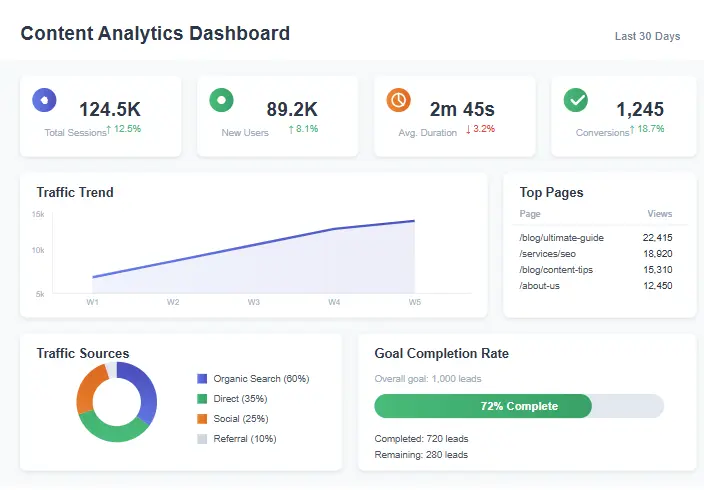
Content analytics dashboard showing performance metrics and KPIs

Industry Insight

According to Neil Patel, content marketing generates 3x more leads than outbound marketing and costs 62% less. This makes your content marketing checklist an invaluable tool for business growth. The key is consistency—publishing quality content regularly according to your guide builds momentum that compounds over time, creating a sustainable competitive advantage that’s difficult for competitors to replicate.