
7 Proven SaaS Lead Generation Strategies for Qualified Leads
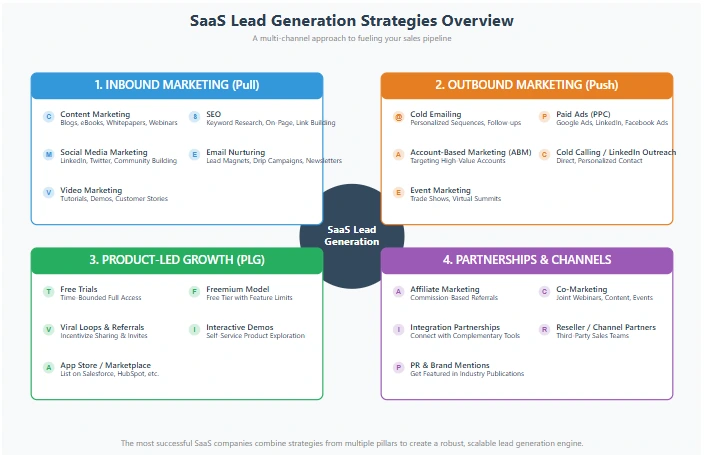
Table of Contents
In today’s competitive digital landscape, effective SaaS lead generation strategies are the lifeblood of any successful software-as-a-service business. With acquisition costs rising and customer expectations evolving, companies need sophisticated approaches to attract, engage, and convert qualified leads organically.
According to recent industry data, 61% of marketers cite generating traffic and leads as their top challenge, making it clear that even established companies struggle with this critical function. For SaaS businesses specifically, where customer lifetime value (CLV) is the key metric, sustainable SaaS lead generation strategies aren’t just about quantity—they’re about attracting the right prospects who will convert and stay long-term.
Statistic: Companies with strong organic SaaS lead generation processes achieve 3x higher ROI on their marketing efforts compared to those relying primarily on paid channels. Forbes reports that the global SaaS market is expected to reach $307.3 billion by 2026, making effective lead generation more crucial than ever.
This comprehensive guide will walk you through proven SaaS lead generation strategies that deliver measurable results without breaking the bank. We’ll explore how to build a sustainable organic pipeline that continuously feeds your sales team with qualified prospects, nurtures them through the buyer’s journey, and ultimately converts them into paying customers. These SaaS lead generation strategies are designed to work together to create a powerful system for consistent growth.
Download Your Free SaaS Lead Generation Checklist
Get our step-by-step checklist to implement these strategies in your business. Enter your details below to receive instant access.
Why Organic Lead Generation Matters for SaaS
Before diving into specific tactics, it’s essential to understand why organic SaaS lead generation deserves significant attention in your marketing strategy. While paid advertising delivers immediate results, organic approaches build a foundation for sustainable growth. Effective SaaS lead generation strategies focus on creating long-term assets that continue to deliver value over time.
Cost-effectiveness vs paid ads
Organic SaaS lead generation typically costs 62% less than paid acquisition channels. For startups and small businesses with limited budgets, this efficiency advantage can be the difference between thriving and merely surviving. The beauty of organic SaaS lead generation strategies is that they compound over time—content created today continues generating leads months or even years later without additional investment.
Example: A B2B SaaS company we worked with reduced their customer acquisition cost by 43% within six months by shifting 30% of their budget from paid ads to organic content marketing initiatives, proving the effectiveness of well-planned SaaS lead generation strategies.
Long-term sustainable growth
Unlike paid campaigns that stop delivering leads the moment you pause spending, organic SaaS lead generation creates assets that work for you indefinitely. A well-optimized blog post, a comprehensive resource guide, or a thoughtfully designed lead magnet continues attracting prospects long after creation, creating a flywheel effect that accelerates growth over time. These SaaS lead generation strategies build upon themselves, creating exponential results.
Building authority and trust with your audience
In the SaaS world, where buyers conduct extensive research before making purchasing decisions, establishing credibility is paramount. Organic SaaS lead generation strategies position your company as a knowledgeable authority in your niche, building trust before prospects even speak with your sales team. According to HubSpot’s research, 81% of consumers conduct online research before making large purchases, making your organic presence a critical component of the buyer’s journey.
Top SaaS Lead Generation Strategies
Effective organic SaaS lead generation requires a multi-faceted approach that meets prospects where they are in their journey. Below are the most impactful SaaS lead generation strategies that successful SaaS companies use to build sustainable pipelines.
Content Marketing for SaaS
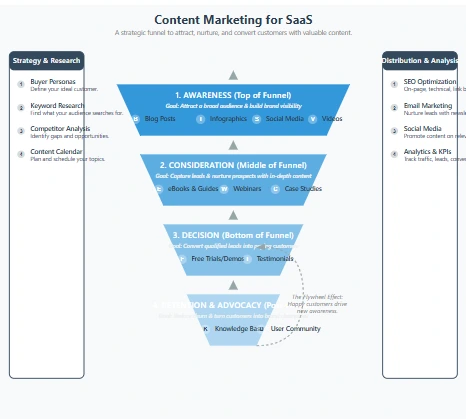
Content marketing remains the cornerstone of organic SaaS lead generation, with 70% of marketers actively investing in content marketing according to recent industry surveys. However, not all content is created equal. SaaS companies that succeed focus on creating content that addresses specific pain points at each stage of the buyer’s journey. These content-focused SaaS lead generation strategies build trust and demonstrate expertise.
Types of content that drive SaaS leads:
- Educational blog posts: How-to guides, tutorials, and best practices that solve specific problems
- Comparison guides: Detailed analyses of your solution versus alternatives
- Case studies: Real-world examples of how customers achieved success with your product. Check out our case studies for examples of successful implementations.
- Industry reports: Original research and insights that position you as a thought leader
- Interactive tools: Calculators, assessments, and quizzes that provide immediate value
Case Study: A project management SaaS company increased organic leads by 234% in 12 months by creating comprehensive guides addressing specific project management challenges, then optimizing those guides for high-intent keywords and building internal linking structures. This demonstrates how content-focused SaaS lead generation strategies can deliver exceptional results.
Best practices for SaaS content marketing:
- Focus on problems, not products—address pain points first, then introduce your solution
- Create content clusters around core topics to establish topical authority
- Develop a consistent publishing schedule to build audience expectations
- Repurpose successful content into multiple formats (blog to video, webinar to ebook, etc.)
- Include strategic CTAs that guide readers to the next logical step in their journey
SEO for SaaS
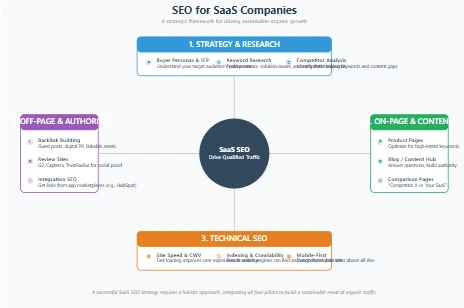
Search engine optimization is the engine that powers organic SaaS lead generation. With 53% of all website traffic coming from organic search according to BrightEdge research, neglecting SEO means missing out on more than half of your potential audience. SEO-focused SaaS lead generation strategies ensure your content gets found by the right audience.
On-page SEO essentials for SaaS:
- Keyword research: Focus on problem-aware and solution-aware keywords rather than just branded terms. Moz’s keyword research guide provides excellent frameworks for identifying high-intent keywords that drive qualified traffic.
- Page optimization: Strategic placement of keywords in titles, headers, and content
- Internal linking: Create logical pathways between related content to distribute authority
- Schema markup: Implement structured data to enhance search result appearance
- Page speed: Optimize loading times to improve user experience and rankings
Off-page SEO strategies for SaaS:
- Backlink acquisition: Earn high-quality links from authoritative industry sites. Our link building guide offers proven techniques for acquiring valuable backlinks that boost domain authority.
- Digital PR: Secure mentions and features in industry publications
- Guest posting: Contribute valuable content to relevant industry blogs
- Community engagement: Participate in forums and groups where your prospects gather
- Partnership content: Co-create content with complementary businesses
Technical SEO considerations:
- Site architecture: Ensure logical structure and easy navigation
- Mobile optimization: Provide seamless experience across all devices
- Site security: Implement HTTPS and security best practices
- XML sitemaps: Help search engines discover and index your content
- Core Web Vitals: Optimize for Google’s user experience metrics. Our Core Web Vitals guide provides specific guidance on optimizing loading performance, interactivity, and visual stability.
Email Marketing & Lead Nurturing
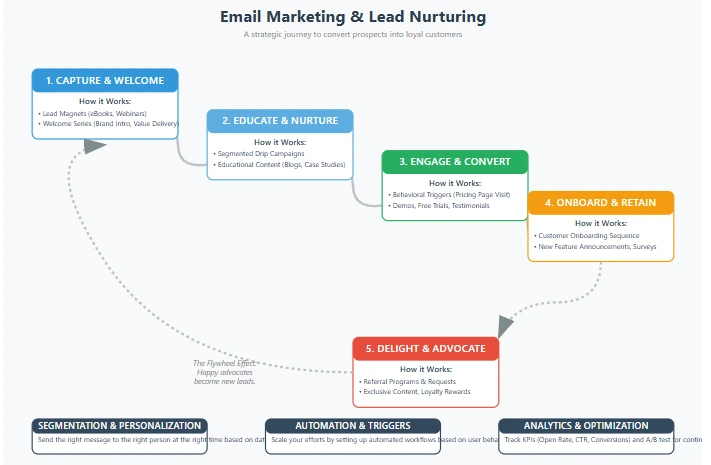
Despite the rise of new channels, email remains one of the most effective SaaS lead generation tools, with an average ROI of $42 for every $1 spent. The key is moving beyond generic newsletters to sophisticated nurturing sequences that guide prospects through their unique journey. Email-focused SaaS lead generation strategies keep your brand top-of-mind throughout the buyer’s journey.
Effective email nurturing strategies:
- Welcome series: Introduce new subscribers to your brand and value proposition
- Educational sequences: Deliver targeted content based on initial interests
- Behavior-triggered emails: Send relevant messages based on website actions
- Re-engagement campaigns: Win back inactive subscribers with special offers
- Product-focused sequences: Highlight specific features relevant to subscriber needs
Statistic: SaaS companies using segmented email campaigns report 760% increase in revenue according to Campaign Monitor research, demonstrating the power of targeted SaaS lead generation strategies.
Personalization tactics that drive conversions:
- Dynamic content blocks that change based on recipient attributes
- Behavioral triggers that reference specific website interactions
- Industry-specific case studies and testimonials
- Personalized recommendations based on previous content consumption
- Timing optimization based on recipient engagement patterns
Referral & Partnership Programs
Referral programs leverage your existing customer base to generate new leads, with 83% of satisfied customers willing to refer products and services they like. When properly structured, referral programs can become one of your most cost-effective SaaS lead generation strategies. These relationship-based SaaS lead generation strategies capitalize on social proof and trust.
Elements of successful referral programs:
- Clear incentives: Offer rewards that motivate both referrer and referee
- Simple process: Make referring as easy as possible with one-click sharing
- Tracking capabilities: Provide visibility into referral status and rewards
- Tiered rewards: Encourage ongoing referrals with escalating benefits
- Branded assets: Supply shareable content that reflects your brand quality
Strategic partnership opportunities:
- Integration partners: Collaborate with complementary software providers
- Agency partners: Build relationships with consultants who recommend tools
- Affiliate programs: Partner with content creators and industry influencers
- Co-marketing initiatives: Joint webinars, content, and events with non-competing brands
- Reseller relationships: Enable others to sell your product to their audiences
Social Media & Community Engagement
While often overlooked in B2B SaaS lead generation, social media and community engagement can be powerful channels for building relationships and attracting qualified leads. The key is focusing on platforms where your prospects actually spend their time, rather than trying to maintain a presence everywhere. Community-focused SaaS lead generation strategies create authentic connections with potential customers.
Platform-specific strategies:
- LinkedIn: Share industry insights, participate in relevant groups, and leverage employee advocacy
- Twitter: Engage in industry conversations, share quick tips, and connect with prospects
- Facebook Groups: Create or participate in communities around specific challenges your product solves
- Slack/Discord communities: Build or join specialized groups where your target audience gathers
- Reddit: Participate authentically in relevant subreddits without overt promotion
Example: A B2B analytics SaaS company generated 1,200 qualified leads in 6 months by creating a free Slack community for data professionals, sharing valuable insights, and occasionally introducing their tool when relevant to the conversation. This showcases how community-based SaaS lead generation strategies can yield impressive results.
Community building best practices:
- Focus on providing value before asking for anything in return
- Encourage user-generated content and peer-to-peer support
- Maintain consistent presence and response times
- Facilitate connections between community members
- Recognize and reward active contributors
Advanced Organic Tactics
Once you’ve implemented the foundational SaaS lead generation strategies, these advanced tactics can help accelerate your results and differentiate your approach from competitors. These sophisticated SaaS lead generation strategies can take your lead generation efforts to the next level.
Lead magnets: eBooks, templates, checklists
High-value lead magnets remain one of the most effective ways to convert website visitors into leads. The key is creating resources that address specific pain points with actionable solutions, making them worth exchanging contact information for. Lead magnets are essential components of successful SaaS lead generation strategies.
Types of high-converting lead magnets for SaaS:
- Comprehensive guides: In-depth resources that solve complex problems
- Templates and worksheets: Practical tools that streamline workflows
- Checklists: Step-by-step processes for achieving specific outcomes
- White papers: Research-backed insights on industry trends
- Free tools: Limited versions of your product or complementary utilities
Statistic: SaaS companies that implement targeted lead magnets see 55% increase in lead conversion rates according to HubSpot research, highlighting the importance of lead magnets in comprehensive SaaS lead generation strategies.
Webinars and online workshops
Webinars combine the educational value of content marketing with the personal connection of live interaction, making them particularly effective for complex SaaS products. With 73% of B2B marketers stating that webinars are the best way to generate high-quality leads, this tactic deserves serious consideration. Webinars are powerful additions to your arsenal of SaaS lead generation strategies.
Webinar formats that drive SaaS leads:
- Educational workshops: Teaching valuable skills related to your solution
- Product demonstrations: Showcasing how your tool solves specific problems
- Industry expert panels: Bringing together thought leaders to discuss trends
- Customer success stories: Featuring clients sharing their experiences
- Q&A sessions: Open forums addressing prospect questions
Free trials & gated content optimization
For SaaS companies, free trials are often the most effective lead generation tool, allowing prospects to experience value firsthand. However, simply offering a trial isn’t enough—optimization is crucial to maximize conversion rates. Trial optimization is a critical component of modern SaaS lead generation strategies.
Trial optimization strategies:
- Implement progressive profiling to collect information gradually
- Provide onboarding guidance to help users reach “aha moments” quickly
- Use time-limited offers to create urgency
- Implement usage-based triggers for timely outreach
- Offer different trial lengths based on product complexity
Case studies and SaaS demos
Social proof is particularly powerful in the SaaS space, where buyers seek reassurance that a product will deliver promised results. Well-crafted case studies and personalized demos can significantly accelerate the decision-making process. These proof-based SaaS lead generation strategies build credibility and trust.
Elements of effective SaaS case studies:
- Clear problem statement: Specific challenges the customer faced
- Detailed solution: How your product addressed those challenges
- Quantifiable results: Measurable outcomes and ROI
- Customer quotes: Direct testimonials in the customer’s voice
- Visual elements: Screenshots, graphs, and other supporting visuals
Example: A CRM SaaS company increased demo request conversions by 38% by replacing generic product demos with personalized “solutions discovery” sessions focused on addressing each prospect’s specific challenges. This demonstrates how personalized SaaS lead generation strategies can significantly improve conversion rates.
Tracking, Analytics & Conversion Optimization
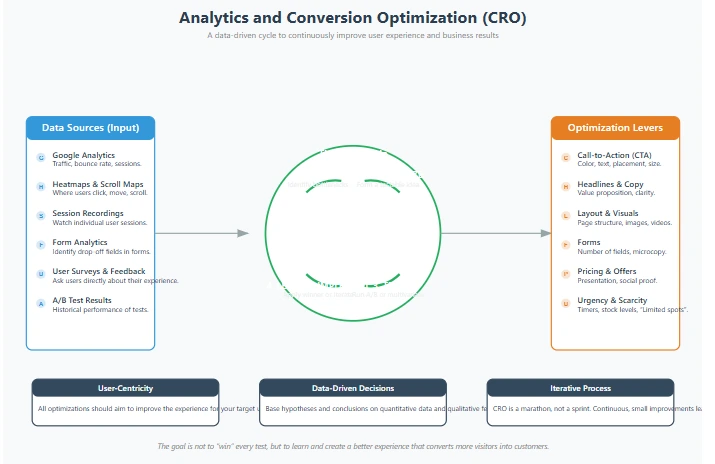
Effective SaaS lead generation isn’t just about implementing strategies—it’s about continuously measuring, analyzing, and optimizing performance. Without proper tracking, you’re essentially flying blind, unable to identify what’s working and what needs improvement. Data-driven SaaS lead generation strategies deliver the best results.
Key metrics to track
While every SaaS business is unique, certain metrics provide universal insight into lead generation performance:
Top-of-funnel metrics:
- Website traffic: Overall visitors and growth trends
- Traffic sources: Which channels drive the most qualified visitors
- Landing page views: Exposure to your lead capture pages
- Lead magnet downloads: Interest in your content offerings
- Time on page: Engagement with your content
Conversion metrics:
- Lead conversion rate: Percentage of visitors who become leads
- Cost per lead: Investment required to acquire each lead
- Lead quality score: Assessment of lead likelihood to convert
- MQL to SQL rate: Percentage of marketing-qualified leads that become sales-qualified
- Lead to customer rate: Percentage of leads that ultimately purchase
Google Analytics, dashboards, lead scoring
Setting up proper analytics infrastructure is essential for tracking these metrics effectively. While Google Analytics provides a solid foundation, SaaS companies often benefit from additional tools and customizations. Measurement-focused SaaS lead generation strategies ensure you’re investing in the right activities.
Analytics setup essentials:
- Conversion tracking: Properly configured goals and events
- Attribution modeling: Understanding which channels deserve credit
- Custom dashboards: Visualizations of key metrics
- UTI parameters: Tracking campaign performance accurately
- Cross-domain tracking: Following users across multiple properties
Lead scoring implementation:
- Define demographic criteria (company size, industry, role)
- Establish behavioral indicators (content consumed, pages visited)
- Assign point values to different actions and attributes
- Set thresholds for MQL and SQL classifications
- Implement automated routing based on scores
A/B testing landing pages & CTAs
Continuous optimization through A/B testing can significantly improve lead generation performance over time. Even small improvements in conversion rates can compound to substantial increases in lead volume. Testing-based SaaS lead generation strategies continuously improve your results.
Elements to test for optimization:
- Headlines and subheadings: Messaging clarity and value proposition
- Form length and fields: Balancing information needs with friction
- CTA button text and color: Actionability and visibility
- Page layout: Information hierarchy and visual flow
- Social proof elements: Testimonials, reviews, and trust indicators
Statistic: Companies that implement structured conversion rate optimization programs see 223% average ROI according to Invesp research, demonstrating the value of optimization-focused SaaS lead generation strategies.
Conversion rate optimization tips
Beyond A/B testing, these conversion rate optimization strategies can help maximize the value of your existing traffic:
- Implement exit-intent popups with compelling offers
- Add trust signals throughout your conversion process
- Reduce form fields to only essential information
- Use progressive disclosure to present information gradually
- Optimize page loading speed to reduce abandonment
- Create mobile-specific experiences for mobile visitors
- Implement live chat to address questions in real-time
Common Mistakes to Avoid
Even experienced marketers can fall into common traps when implementing SaaS lead generation strategies. Being aware of these pitfalls can help you avoid wasted effort and resources. Avoiding these mistakes is as important as implementing the right SaaS lead generation strategies.
Over-reliance on paid ads
While paid advertising has its place in a comprehensive marketing strategy, over-reliance creates several problems:
- Unsustainable customer acquisition costs as competition increases
- Lack of brand equity and authority in your space
- Vulnerability to algorithm changes and platform policy updates
- Difficulty scaling without proportional budget increases
- Higher churn rates from less-informed customers
Case Study: A project management SaaS company reduced their customer acquisition cost by 67% after shifting from 80% paid to 50% organic lead generation, while simultaneously increasing lead quality and reducing churn. This highlights the importance of balanced SaaS lead generation strategies.
Ignoring organic traffic
The opposite extreme—focusing solely on organic while neglecting paid entirely—can also be problematic:
- Slow initial growth, especially for new companies
- Difficulty testing new offers and value propositions
- Limited ability to retarget engaged prospects
- Challenges scaling quickly during growth phases
- Missing valuable data from paid campaigns
Poor content quality
In the rush to produce content for SEO purposes, many SaaS companies sacrifice quality, leading to:
- Low engagement metrics that signal poor quality to search engines
- Damage to brand perception and authority
- High bounce rates and low time on site
- Poor conversion rates from content-generated traffic
- Wasted resources on content that doesn’t drive results
Lack of follow-up & lead nurturing
Generating leads is only half the battle—without proper nurturing, even high-quality leads will go cold:
- Decreased conversion rates as leads lose interest
- Wasted marketing spend on unconverted leads
- Longer sales cycles as prospects restart their research
- Lower customer lifetime value from rushed conversions
- Competitor advantage as they nurture leads you’ve generated
Not aligning sales and marketing efforts
When sales and marketing operate in silos, SaaS lead generation strategies suffer:
- Mismatched expectations about lead quality and timing
- Poor handoff processes that allow leads to fall through cracks
- Inconsistent messaging that confuses prospects
- Lack of feedback loop to improve lead generation efforts
- Missed opportunities to optimize the entire customer journey
Conclusion & Next Steps
Effective SaaS lead generation requires a comprehensive, multi-channel approach that balances immediate results with long-term sustainable growth. By implementing the SaaS lead generation strategies outlined in this guide—from foundational content marketing and SEO to advanced tactics like webinars and referral programs—you can build a robust pipeline of qualified leads that consistently feeds your sales team.
Remember that successful SaaS lead generation strategies aren’t about finding a single magic bullet—they’re about creating a system of interconnected strategies that work together to attract, engage, and convert your ideal customers. The most successful companies continuously test, measure, and refine their approach based on data and results.
As you move forward, focus on implementing one or two SaaS lead generation strategies at a time rather than trying to do everything at once. Master each channel before expanding your efforts, and always maintain a clear view of your metrics to ensure your activities are delivering the desired results.
Ready to Transform Your SaaS Lead Generation?
Download our comprehensive SaaS Lead Generation Toolkit with templates, checklists, and guides to implement these SaaS lead generation strategies in your business.
Download Free ToolkitFrequently Asked Questions
While some tactics like email marketing can deliver immediate results, most organic SaaS lead generation strategies take 3-6 months to gain momentum. SEO and content marketing typically require 6-12 months to show significant impact, but these channels deliver the most sustainable long-term results.
The optimal balance varies by business stage and goals. Early-stage companies often benefit from a 70% paid/30% organic mix to generate initial traction, while established SaaS businesses typically aim for 40% paid/60% organic for sustainable growth and profitability.
Focus on high-impact organic SaaS lead generation strategies: create comprehensive content around long-tail keywords, develop valuable lead magnets, implement email nurture sequences, build referral programs, and engage in relevant online communities where your prospects gather.
The most effective lead magnets solve specific problems for your target audience. For SaaS, these often include comprehensive guides, templates, free tools, or limited-feature versions of your product. The key is providing immediate value while demonstrating your expertise.
Implement lead scoring based on demographic and behavioral factors, then track conversion rates by channel. Look beyond initial lead volume to metrics like MQL-to-SQL conversion rates, sales cycle length, and customer lifetime value by source channel.