
How to Manage Multiple Projects: The Ultimate Guide for 2026
Master the art of juggling multiple projects without dropping the ball

In today’s hyper-connected and fast-paced business environment, the ability to effectively manage multiple projects simultaneously is no longer a luxury—it’s a fundamental requirement for professional success. Whether you are a dedicated project manager, a team lead wearing many hats, or an entrepreneurial visionary, learning how to manage multiple projects efficiently can dramatically boost your productivity, reduce chronic stress, and significantly improve your overall performance and value to the organization. This guide is your definitive resource on how to manage multiple projects.
This comprehensive guide is meticulously designed to walk you through the proven strategies, indispensable tools, and transformative techniques on how to manage multiple projects without succumbing to feelings of being overwhelmed. By the time you reach the end of this article, you will possess a clear, actionable roadmap to streamline your workflow, prioritize with precision, and consistently deliver exceptional results across all your projects, solidifying your reputation as a master of execution. Your journey to learn how to manage multiple projects starts here.
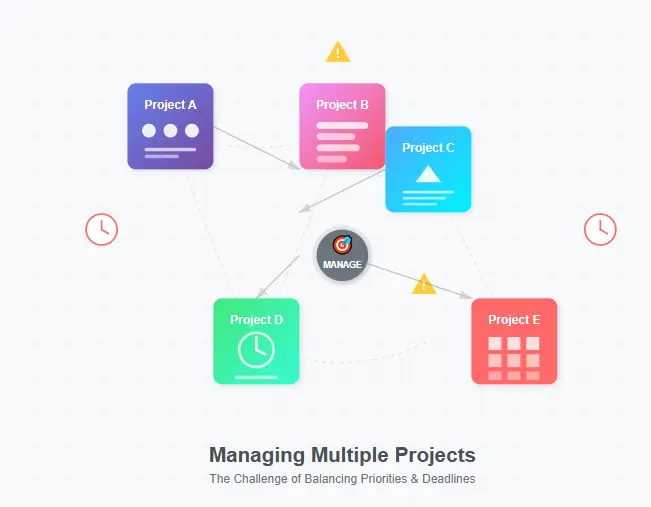
Why Mastering How to Manage Multiple Projects is Crucial in 2026
Before we dive into the practical strategies, it’s essential to fully grasp why mastering how to manage multiple projects is not just a “nice-to-have” skill but a critical competency in the modern workplace. The landscape of work has shifted from linear, single-project focus to a dynamic, multi-project reality. This shift is driven by several factors, including the need for greater agility, faster time-to-market, and more efficient resource utilization. Understanding how to manage multiple projects is now a key differentiator.
The statistics above starkly highlight the critical nature of effective multi-project management. When you deeply understand how to manage multiple projects, you gain a formidable competitive edge. You become the person who can deliver better results, navigate complexity with ease, and create immense value for your organization. This is a core skill consistently emphasized in leading reports from institutions like the Project Management Institute (PMI), which notes that the “project economy” is here to stay. Your ability to thrive in this economy is directly tied to your capacity to manage multiple projects successfully.
The Core Principles of How to Manage Multiple Projects
Successfully juggling multiple projects is not about chaotic multitasking; it’s about implementing a systematic and disciplined approach. Here are the fundamental principles that form the unshakable foundation of effective multi-project management. Mastering these principles is the first step in learning how to manage multiple projects with confidence and control.
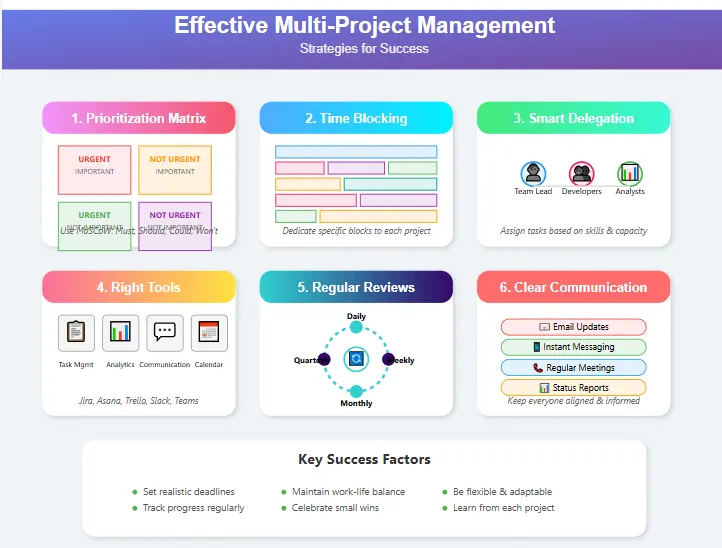
1. Clear and Ruthless Prioritization
The first and most critical step in learning how to manage multiple projects is establishing a crystal-clear hierarchy of priorities. Not all projects are created equal—some have a more significant business impact, tighter deadlines, or greater strategic importance. As the Harvard Business Review points out, effective prioritization is less about doing more work and more about doing the work that truly matters most. This means you must constantly evaluate and re-evaluate which projects deserve your immediate attention and resources when you manage multiple projects.
Pro Tip:
Use the Eisenhower Matrix to categorize tasks by urgency and importance. This simple yet powerful framework helps you focus on what truly matters when you manage multiple projects, ensuring you’re always working on the most impactful activities.
2. Centralized Organization and Information
When learning how to manage multiple projects, scattered information is your greatest enemy. A detail lost in an email, a deadline noted on a random sticky note, or a conversation forgotten can lead to disaster. Centralize all project details, deadlines, communications, files, and feedback in a single, accessible system. This creates a “single source of truth” for you and your entire team, eliminating confusion and preventing critical details from slipping through the cracks. This is a non-negotiable step for anyone who wants to manage multiple projects effectively.
3. Effective Time Blocking and Batching
Constantly switching between different projects and tasks is a massive drain on your mental energy and productivity. This phenomenon, known as “context switching,” can significantly reduce your efficiency. Time blocking is a powerful technique for anyone learning how to manage multiple projects. By dedicating specific, uninterrupted blocks of time to a single project or a specific type of task (e.g., answering all emails at once), you minimize context switching, enter a state of deep focus, and produce higher-quality work in less time. This technique is fundamental to how to manage multiple projects.
4. Regular and Systematic Review
Projects rarely go exactly as planned. Assumptions prove wrong, unexpected roadblocks appear, and priorities shift. A core principle of how to manage multiple projects is to build in a cadence of regular reviews. These reviews—whether daily, weekly, or monthly—allow you to assess progress against goals, identify potential issues before they become crises, and adjust your approach accordingly. This iterative process is central to the Agile methodology and is essential for maintaining control when you manage multiple projects.
5. Proactive Stakeholder Communication
Keeping stakeholders informed is not a reactive task; it’s a proactive strategy. When you manage multiple projects, you have multiple groups of stakeholders with different interests and information needs. A core principle is to establish clear communication protocols from the outset. This prevents misunderstandings, manages expectations, and builds trust, ensuring that everyone is aligned and supportive of your project portfolio. Effective communication is a pillar of how to manage multiple projects.
Essential Strategies for How to Manage Multiple Projects
Now that we’ve covered the core principles, let’s dive deeper into the specific, actionable strategies that will transform your ability to manage multiple projects from a source of stress into a showcase of your competence. These are the practical applications of the principles we’ve discussed.
1. Create a Master Project Dashboard
When learning how to manage multiple projects, visibility is your superpower. A master project dashboard provides a bird’s-eye view of all your projects, helping you track progress, identify bottlenecks, and make informed decisions quickly. This dashboard is your central command center and a critical tool for anyone who needs to manage multiple projects. It can be a sophisticated software view or a well-structured spreadsheet, but its function is the same: to give you an at-a-glance understanding of your entire project portfolio.
Your master dashboard should include:
- Project names and brief descriptions
- Current status (e.g., On Track, At Risk, Delayed, On Hold)
- Key milestones and upcoming deadlines
- Resource allocation and potential conflicts
- Priority level based on your framework
- Key performance indicators (KPIs) for each project
Ready to Master How to Manage Multiple Projects?
Wrike offers a comprehensive project management solution designed specifically for handling multiple projects with ease. With features like customizable dashboards, automated workflows, and real-time collaboration, it’s the perfect tool for anyone serious about learning how to manage multiple projects effectively. For a comprehensive look at its features, you can check out our detailed guide on Wrike as a project management software.
Try Wrike Free for 14 Days2. Implement a Standardized Project Management Methodology
Consistency is a powerful force multiplier when you manage multiple projects. Implement a standardized methodology—whether it’s Agile, Waterfall, Scrum, Kanban, or a hybrid approach—that can be flexibly applied across all your projects. This doesn’t mean every project is identical, but that the underlying processes for initiating, planning, executing, and closing projects are consistent. A standardized approach is key to how to manage multiple projects at scale.
Standardization helps by:
- Creating predictable and repeatable workflows
- Reducing the learning curve for new team members on new projects
- Facilitating easier resource allocation and swapping between projects
- Improving the consistency and quality of communication and reporting
3. Develop a Robust Prioritization Framework
Effective prioritization is the cornerstone of learning how to manage multiple projects. Gut feelings are not enough. You need a clear, transparent framework that you can use to evaluate and rank projects. This framework should consider a mix of quantitative and qualitative factors and is essential to how to manage multiple projects effectively.
Your framework should consider factors such as:
- Business Impact: What is the expected ROI or strategic value?
- Strategic Alignment: How well does this project align with company-wide goals?
- Resource Requirements: What is the budget, team, and technology needed?
- Stakeholder Influence: How important is this project to key stakeholders?
- Dependencies: Are other projects waiting for this one to be completed?
4. Master the Art of Delegation and Empowerment
You cannot do everything yourself when you manage multiple projects. Trying to be the hero who does it all is a recipe for burnout and project failure. Effective delegation is not just about offloading tasks—it’s about empowering your team members, leveraging their unique strengths, and providing them with opportunities for growth. This is a vital skill for anyone who wants to manage multiple projects successfully.
When learning how to manage multiple projects, remember these delegation principles:
- Delegate tasks, not just problems. Provide clear context and ownership.
- Match tasks to team members’ skills and their professional development goals.
- Provide clear instructions, define what “done” looks like, and set checkpoints for progress review.
- Trust your team to execute, but verify results with supportive check-ins.
- Provide consistent feedback and recognize their contributions publicly.
5. Implement Robust Risk Management Across Your Portfolio
When you manage multiple projects, risks are magnified. A risk in one project can have a cascading effect on others. You need to move beyond single-project risk management to portfolio-level risk awareness. This involves identifying potential risks that could impact multiple projects (e.g., a key team member leaving, a budget cut, a change in market conditions) and developing mitigation plans that address them holistically. Proactive risk management separates amateurs from professionals in how to manage multiple projects.
Learning how to manage multiple projects transformed my career. By implementing a clear prioritization framework and a robust risk management process, I increased my project delivery rate by 40% while reducing team overtime hours by 25%.
Essential Tools to Help You Manage Multiple Projects
While methodology and strategy are the brain and heart of multi-project management, having the right tools is the nervous system that connects everything. The right software can significantly enhance your ability to manage multiple projects by providing the structure, visibility, and automation you need to succeed. Your choice of tools will directly impact your success in how to manage multiple projects.
Wrike
Wrike is a comprehensive project management solution designed specifically for the complexities of handling multiple projects. With features like customizable dashboards for a portfolio view, automated workflows to reduce manual work, cross-tagging for tasks that span multiple projects, and real-time collaboration, it’s an ideal tool for anyone serious about learning how to manage multiple projects effectively. It’s a tool built from the ground up to help you manage multiple projects.
Start Your Free Trial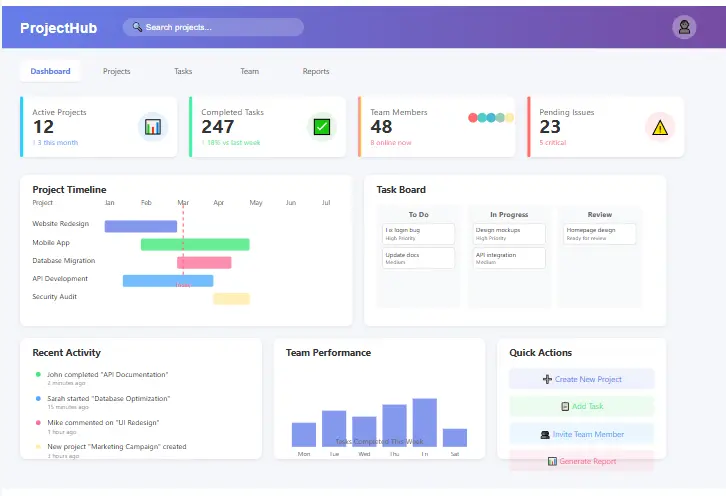
How to Choose the Right Tool
While Wrike is our top recommendation, you can also read our full Wrike review to see how it compares to others. When choosing a tool to help you manage multiple projects, consider these factors:
- Scalability: Can the tool grow with your team and project complexity?
- Integration: Does it connect with other tools you already use (e.g., Slack, Google Drive, Salesforce)?
- Reporting Capabilities: Can it generate the reports you need for stakeholders?
- Ease of Use: Is it intuitive for your team, or will it require extensive training?
- Collaboration Features: Does it support real-time communication and file sharing?
Other Notable Tools
- Asana: Excellent for task management and team collaboration with a user-friendly interface.
- Trello: A simple, visual, card-based system perfect for less complex projects or Kanban-style workflows.
- Monday.com: A highly customizable “Work OS” that can be tailored for complex project and resource management.
- Microsoft Project: A traditional, powerful tool with robust scheduling and Gantt chart capabilities, ideal for formal project management environments.
- Notion: An all-in-one workspace that combines documentation, note-taking, and lightweight project management, great for smaller teams.
Key Takeaway:
The best tool for you to manage multiple projects is one that your team will actually use. Prioritize integration capabilities and ease of use. The best tools work seamlessly together, reducing need for duplicate data entry and providing a unified view of all your projects.
Advanced Techniques for How to Manage Multiple Projects
Once you’ve mastered the fundamentals, you can explore these advanced techniques to further elevate your ability to manage multiple projects and deliver exceptional value. These methods are for those who are ready to take their skills to the next level.
1. Implement Agile Portfolio Management
Extend Agile principles beyond individual projects to the entire project portfolio. Agile Portfolio Management (APM) helps you align projects with strategic objectives, balance resource allocation across all initiatives, respond quickly to changing priorities, and maximize the overall value delivered by your project portfolio. It’s a dynamic approach to how to manage multiple projects, focusing on flow and value rather than rigid plans. This is the future of how to manage multiple projects.
2. Use Critical Chain Project Management (CCPM)
CCPM is a method of planning and managing projects that emphasizes the resources required to execute project tasks. It differs from more traditional methods that focus on managing task order and timelines. When you manage multiple projects, CCPP helps you identify and manage resource dependencies, reduce project durations through buffer management, increase overall project throughput, and minimize the inefficiencies of multitasking. It’s a powerful technique for how to manage multiple projects efficiently.
3. Develop and Leverage Project Templates
Don’t reinvent the wheel for every new project. Create standardized templates for common project types. When learning how to manage multiple projects, templates save immense amounts of time by providing a consistent structure, reducing setup time, ensuring critical elements aren’t overlooked, and facilitating easier reporting and comparison between similar projects. This is a huge time-saver when you manage multiple projects.
4. Master Financial and Budget Management
Managing multiple projects means managing multiple budgets. You need to have a firm grasp on budget allocation, tracking expenses against the budget for each project, forecasting future costs, and understanding the overall financial health of your project portfolio. This financial acumen is a critical skill for anyone who wants to manage multiple projects at a senior level. It’s a key part of the answer to how to manage multiple projects successfully.
Common Challenges and How to Overcome Them
Even with the best strategies and tools, you will inevitably encounter challenges when you manage multiple projects. The key is to anticipate them and have a plan to address them proactively. Here are some common hurdles in how to manage multiple projects.
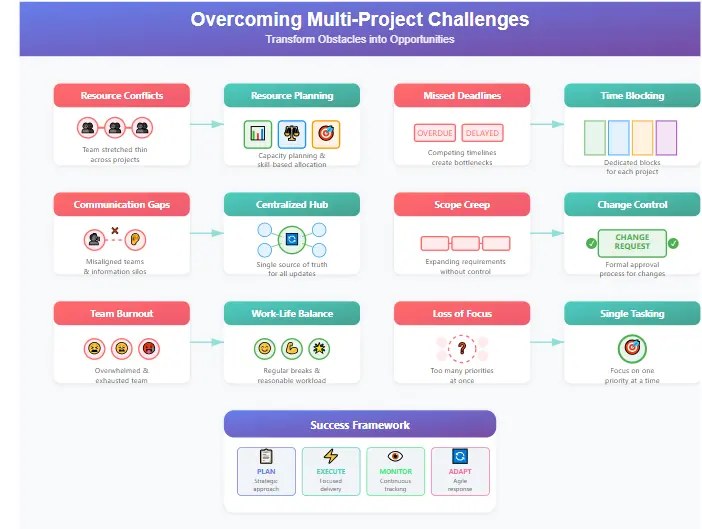
1. Resource Conflicts and Overallocation
Challenge: Your most valuable team members are scheduled to work 120% of their time across different projects. This is a classic problem when you manage multiple projects.
Solution: Implement resource management software that provides clear visibility into everyone’s availability and workload. Use resource leveling techniques to resolve conflicts. Consider cross-training team members to create flexibility and have backup personnel for critical roles. Better visibility is the solution to this challenge in how to manage multiple projects.
2. Competing Priorities from Stakeholders
Challenge: The head of Sales wants their project done now, but the head of Engineering insists their project is the priority. This is a common political challenge when you manage multiple projects.
Solution: This is where your prioritization framework becomes your shield. Establish the framework with key stakeholders upfront. When conflicts arise, you can refer to the objective criteria. Create a transparent, documented process for handling priority changes and escalations. This is a mature approach to how to manage multiple projects.
3. Loss of Focus and Context Switching
Challenge: You feel like you’re constantly being pulled in different directions, leading to shallow work and mistakes. This is a major productivity drain when you manage multiple projects.
Solution: Be ruthless with time blocking. Dedicate specific days or even entire weeks to a single major project. Batch similar tasks (like administrative work or reporting) together. Minimize distractions by turning off notifications and communicating your “focus time” to your team. This discipline is central to how to manage multiple projects effectively.
4. Team Burnout
Challenge: The sustained pressure of managing multiple projects leads to stress, disengagement, and burnout for you and your team. This is a serious risk when you manage multiple projects.
Solution: Champion a culture of sustainable work. Set clear boundaries for working hours. Encourage team members to take their vacation time. Delegate effectively and trust your team. Monitor workloads and be willing to push back deadlines or de-scope features to protect your team’s well-being. Remember, a burned-out team is an unproductive team. A key to how to manage multiple projects is managing your team’s energy.
Measuring Success: KPIs for How to Manage Multiple Projects
To know if you are truly learning how to manage multiple projects, you must measure your progress. To continuously improve your ability to manage multiple projects, you need to track the right Key Performance Indicators (KPIs). These metrics provide objective data on your performance and highlight areas for improvement in how to manage multiple projects.
- On-Time Delivery Rate: The percentage of projects completed by their original deadline.
- Resource Utilization Rate: Measures how effectively your team’s time is being used across projects.
- Portfolio Throughput: The number of projects successfully completed within a specific timeframe.
- Stakeholder Satisfaction Score: Feedback scores from project stakeholders gathered through surveys.
- Return on Investment (ROI):strong> The financial value delivered by the projects compared to their cost.
- Team Happiness/Burnout Index: Regularly measure team morale to prevent burnout.
Conclusion: Your Journey to Master How to Manage Multiple Projects
Learning how to manage multiple projects is a journey, not a final destination. It requires continuous learning, adaptation, and a commitment to refining your approach. By implementing the robust strategies, powerful tools, and transformative techniques outlined in this comprehensive guide, you will be exceptionally well-equipped to handle the beautiful complexity of multiple projects while maintaining your sanity and delivering exceptional results. Your journey to master how to manage multiple projects is ongoing.
Remember, the ultimate goal is not just to juggle more projects—it is to deliver greater value with less stress and more joy in your work. The essence of how to manage multiple projects is to achieve this balance. Start with small, incremental changes, build on your successes, and never be afraid to adjust your approach as you learn what works best for you and your unique team. The skill of how to manage multiple projects is one of the most valuable you can develop.
Ready to Transform How You Manage Multiple Projects?
Take the first step toward a better way to manage multiple projects with Wrike. Its intuitive interface, powerful features, and robust reporting capabilities make it the ideal tool for anyone looking to improve how they manage multiple projects. Start your free 14-day trial today and explore Wrike’s pricing plans to find the perfect fit for your team.
Start Your Free Wrike TrialRelated Articles


