
How to Write Content That Ranks on Google: The Ultimate 2026 Guide
Master the art of creating high-ranking content with our comprehensive guide on how to write content that ranks on Google. Learn proven strategies, techniques, and best practices to boost your search visibility and drive organic traffic.
Start Reading
Introduction: Understanding the Google Ranking Landscape
Learning how to write content that ranks on Google has become an essential skill for marketers, bloggers, and business owners in today’s digital landscape. With over 5.6 billion searches per day, Google remains the dominant force in driving organic traffic to websites. However, with constant algorithm updates and increasing competition—specifically the rise of AI-generated content—simply creating content is no longer enough to secure top positions in search results.
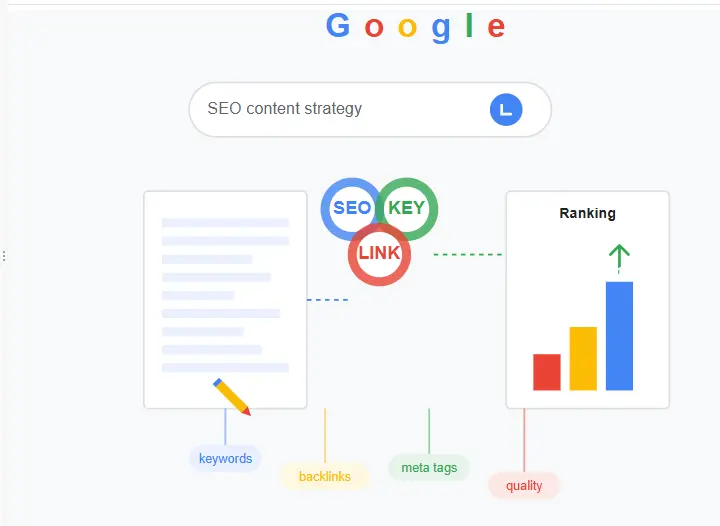
This comprehensive guide will walk you through the proven strategies and techniques on how to write content that ranks on Google in 2026 and beyond. We’ll cover everything from keyword research and content structure to on-page optimization and promotion tactics that will help your content climb the search engine results pages (SERPs).
Why Ranking on Google Matters
Studies show that the first page of Google captures 71% of search traffic clicks, with the top three results receiving over 50% of all clicks. This makes understanding how to write content that ranks on Google crucial for anyone looking to increase their online visibility, drive traffic, and achieve their business objectives. In 2026, with Search Generative Experience (SGE) summaries taking up more screen real estate, securing that top spot is more competitive—and more rewarding—than ever.
Before we dive into the specific strategies, it’s important to understand that Google’s primary goal is to provide users with the most relevant, helpful, and high-quality content for their queries. Therefore, the foundation of learning how to write content that ranks on Google begins with creating value for your audience.
Throughout this guide, we’ll emphasize the balance between writing for humans and optimizing for search engines—a delicate dance that, when mastered, can lead to sustainable ranking success. Let’s begin our journey into the world of creating content that not only appeals to your audience but also satisfies Google’s ranking criteria.
Mastering Keyword Research for Ranking Content
Effective keyword research forms the foundation of how to write content that ranks on Google. Without understanding what your target audience is searching for, you’re essentially creating content in the dark. In this chapter, we’ll explore the essential aspects of keyword research that will inform your content strategy and help you target the right terms.
Understanding User Intent
When learning how to write content that ranks on Google, it’s crucial to understand user intent—the “why” behind a search query. Google has become increasingly sophisticated at interpreting intent, and your content must align with what users are actually looking for. For a deeper dive into understanding user intent, it’s helpful to study the different classifications. There are generally four types of user intent:
- Informational Intent: Users seeking information or answers to questions (e.g., “how to write content that ranks on Google”)
- Navigational Intent: Users looking for a specific website or page (e.g., “Google Search Console”)
- Commercial Intent: Users researching products or services before making a purchase decision (e.g., “best SEO tools”)
- Transactional Intent: Users ready to make a purchase or complete a specific action (e.g., “buy SEO plugin”)
When creating content, identify the primary intent behind your target keywords and ensure your content satisfies that intent. For example, if you’re targeting “how to write content that ranks on Google,” your content should be educational and comprehensive, not a sales page for SEO services. Expert Insight: In 2026, Google also prioritizes “implied intent”—if a user searches for a tool, they often expect to see comparison tables or pricing, not just blog text.
Keyword Research Tools and Techniques
To effectively learn how to write content that ranks on Google, you need the right tools for keyword research. Here are some popular options:
- Google Keyword Planner: Free tool that provides keyword ideas and traffic estimates
- Ahrefs Keywords Explorer: Comprehensive keyword research tool with difficulty scores and traffic potential
- SEMrush Keyword Magic Tool: Offers extensive keyword databases and grouping capabilities
- Ubersuggest: User-friendly tool with keyword suggestions and content ideas
- AnswerThePublic: Visualizes search questions and phrases around your keywords
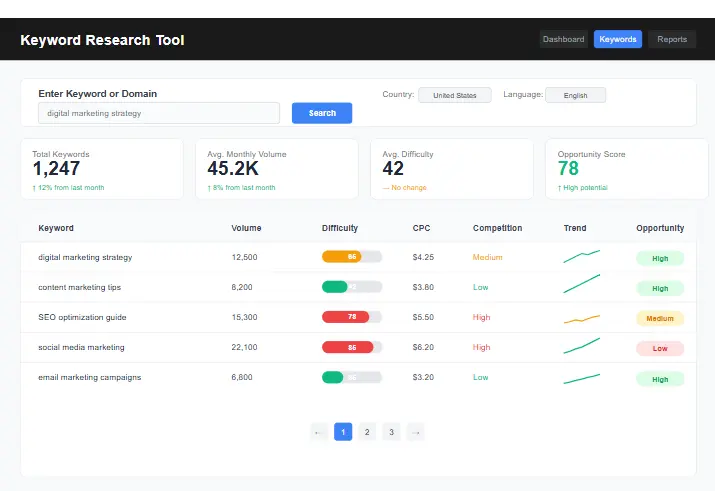
When conducting keyword research, look for terms with a balance of search volume, relevance to your business, and achievable difficulty. Long-tail keywords (phrases with three or more words) often have lower competition and higher conversion rates, making them valuable targets when learning how to write content that ranks on Google.
Mini Case Study: The Power of Long-Tail
A local bakery targeted “gluten-free wedding cakes” instead of just “cakes.” While “cakes” had 50k searches, the competition was impossible. The specific long-tail term had only 200 searches but converted at 15% because the intent was crystal clear. This illustrates why specificity beats volume in modern SEO.
Analyzing Competitor Keywords
Another essential aspect of how to write content that ranks on Google is analyzing what’s already working for your competitors. Tools like Ahrefs and SEMrush allow you to see which keywords your competitors are ranking for, providing valuable insights for your own content strategy.
When analyzing competitor content, look for:
- Keywords they’re ranking for that you’re not
- Gaps in their content that you can fill
- Content formats that are performing well in your niche
- Common questions or topics they haven’t addressed
Pro Tip
When learning how to write content that ranks on Google, don’t just copy your competitors’ keyword strategies. Instead, use their performance as a starting point to create something better—more comprehensive, more up-to-date, or offering a unique perspective that they’re missing. This “skyscraper” approach often yields the best link-building results.
Creating a Keyword Map
Once you’ve identified your target keywords, organize them into a keyword map that aligns with your site structure. This involves grouping related keywords and assigning them to specific pages on your website. This strategic approach to how to write content that ranks on Google ensures that each page targets a primary keyword while incorporating relevant secondary keywords.
Your keyword map should include:
- Primary keyword for each page
- Secondary keywords and variations
- Content format (blog post, guide, product page, etc.)
- User intent for each keyword
- Target word count based on competitor analysis
Real-World Example: If your main page is “Content Marketing,” your keyword map might assign “Content Strategy” to a sub-page and “Blog Writing Tips” to a blog post, all linking back to the main pillar page. This builds topical authority.
With a solid keyword research foundation, you’re ready to move on to the next phase of how to write content that ranks on Google: structuring your content for maximum SEO impact.
Structuring Your Content for Maximum SEO Impact
The structure of your content plays a crucial role in how to write content that ranks on Google. Well-structured content not only helps search engines understand your page better but also improves user experience, which is a significant ranking factor. In this chapter, we’ll explore the essential elements of content structure that contribute to higher rankings.
The Power of Proper Heading Hierarchy
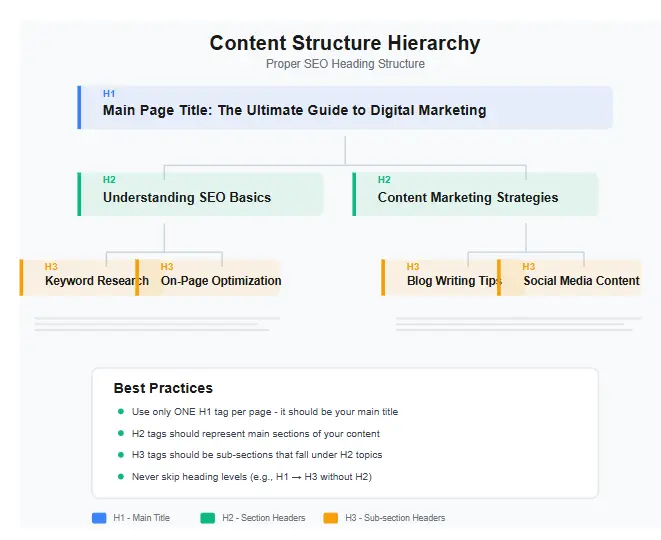
When learning how to write content that ranks on Google, mastering heading hierarchy is non-negotiable. Headings (H1, H2, H3, etc.) serve multiple purposes:
- They help search engines understand the main topics and subtopics of your content
- They improve readability by breaking up text into scannable sections
- They provide opportunities to include relevant keywords naturally
- They create a logical flow that guides readers through your content
Follow these heading best practices:
- Use only one H1 tag per page, typically for your main title
- Use H2 tags for main sections of your content
- Use H3 tags for subsections within H2 sections
- Continue with H4, H5, and H6 as needed, but avoid going too deep
- Include your primary keyword in at least one subheading
- Keep headings concise yet descriptive
Crafting Compelling Introductions
Your introduction is critical when learning how to write content that ranks on Google. It needs to hook readers, establish your topic’s relevance, and encourage them to continue reading. A strong introduction should:
- Include your primary keyword within the first 100 words
- Clearly state what the content will cover
- Establish why the topic is important to the reader
- Create curiosity or highlight a pain point you’ll solve
- Be concise—aim for 150-200 words maximum
Common Mistake to Avoid
Many writers make the mistake of keyword stuffing in their introduction when learning how to write content that ranks on Google. Instead, focus on creating a natural, engaging opening that incorporates your keyword without sounding forced. For example, instead of “Best SEO tips 2026 SEO guide,” try “Mastering the best SEO tips for 2026 requires a shift in strategy.”
The Art of Content Outlining
Before you start writing, create a detailed outline that structures your content logically. This is a crucial step in how to write content that ranks on Google because it ensures comprehensive coverage of your topic while maintaining readability. Your outline should include:
- Main sections (H2 headings)
- Subsections (H3 headings)
- Key points to cover in each section
- Data, examples, or case studies to include
- Places to incorporate visual elements
A well-planned outline not only makes the writing process more efficient but also helps ensure you cover all aspects of your topic comprehensively—a factor Google rewards when determining how to rank content.
Creating Scannable Content
Most online readers don’t consume content word-for-word; they scan. Understanding this behavior is essential to how to write content that ranks on Google. Make your content scannable by:
- Using short paragraphs (2-3 sentences maximum)
- Incorporating bullet points and numbered lists
- Bolding important phrases or concepts
- Using blockquotes for key takeaways
- Including relevant images, charts, or infographics
- Adding white space to break up text
These formatting techniques improve user experience, which can indirectly boost your rankings by increasing time on page and reducing bounce rates.
Optimizing Content Length
When learning how to write content that ranks on Google, you’ll quickly discover that content length matters. Studies consistently show that longer content tends to rank higher, but quality should never be sacrificed for quantity. The ideal length depends on your topic and competition, but here are some general guidelines:
- Blog posts: 1,500-2,500 words
- Comprehensive guides: 3,000-5,000 words
- Pillar pages: 5,000+ words
- Product descriptions: 300-500 words
Before deciding on length, analyze the top-ranking pages for your target keyword. If they’re all 3,000-word guides, your 800-word blog post will likely struggle to compete. However, if you can provide more value in fewer words, don’t add fluff just to increase word count.
Strategic Internal Linking
Internal linking is an often-overlooked aspect of how to write content that ranks on Google. Strategic internal links help search engines discover new content, understand the relationship between pages, and distribute link equity throughout your site. When adding internal links:
- Link to relevant, related content on your site (e.g., link to your pillar page)
- Use descriptive anchor text that includes relevant keywords
- Link to both newer and older content to keep it fresh
- Ensure every important page is linked to from somewhere else on your site
- Don’t overdo it—2-5 internal links per 1,000 words is a good guideline
By implementing these structural elements, you’re creating content that’s both user-friendly and optimized for search engines—a winning combination when learning how to write content that ranks on Google.
On-Page SEO Essentials for Ranking Content
On-page SEO is a critical component of how to write content that ranks on Google. These are the optimizations you make directly on your webpage to improve its visibility in search results. In this chapter, we’ll cover the essential on-page SEO elements that can significantly impact your rankings.
Crafting SEO-Friendly Titles
Your title tag is one of the most important on-page SEO factors when learning how to write content that ranks on Google. It appears in search results, browser tabs, and social media shares. An effective title tag should:
- Include your primary keyword, preferably near the beginning
- Be between 50-60 characters to avoid truncation in search results
- Accurately describe the content of the page
- Be compelling enough to encourage clicks
- Incorporate your brand name if space allows
Consider this formula when creating title tags: Primary Keyword + Secondary Keyword + Benefit | Brand Name. For example: “How to Write Content That Ranks on Google: Complete Guide | RankWise”
Optimizing Meta Descriptions
While meta descriptions aren’t a direct ranking factor, they significantly impact click-through rates, which can indirectly influence rankings. When learning how to write content that ranks on Google, craft compelling meta descriptions that:
- Are between 150-160 characters
- Include your primary keyword naturally
- Summarize the content accurately
- Create curiosity or highlight a benefit
- Include a call-to-action when appropriate
Think of your meta description as ad copy for your page in search results. Make it compelling enough to stand out among the competition.
URL Structure Best Practices
Clean, descriptive URLs are an important aspect of how to write content that ranks on Google. They help both users and search engines understand what a page is about before even clicking. Follow these URL best practices:
- Keep URLs short and descriptive
- Include your primary keyword
- Use hyphens to separate words
- Avoid unnecessary words or parameters
- Use lowercase letters consistently
- Create a logical hierarchy that reflects your site structure
For example, a good URL might be: example.com/how-to-write-content-that-ranks-on-google
Image Optimization
Images enhance user experience and can contribute to how to write content that ranks on Google when optimized correctly. Follow these image optimization best practices:
- Use descriptive file names that include keywords (e.g., “how-to-write-content-that-ranks-on-google.jpg”)
- Compress images to improve page load speed
- Include descriptive alt text that describes the image and incorporates keywords when relevant
- Use appropriate image dimensions to prevent layout shifts
- Implement lazy loading for below-the-fold images
- Consider using next-gen formats like WebP for better compression
Technical Note
Page speed is a confirmed ranking factor, and unoptimized images are one of the most common causes of slow-loading pages. When learning how to write content that ranks on Google, don’t overlook image optimization as part of your technical SEO efforts. A delay of even one second can reduce conversions by 7%.
Schema Markup Implementation
Schema markup is structured data that helps search engines understand your content better and can result in rich snippets in search results. When learning how to write content that ranks on Google, implementing relevant schema can give you a competitive edge. Rich snippets can significantly improve your visibility in search results. Common schema types include:
- Article schema for blog posts and news
- FAQ schema for frequently asked questions (essential for 2026)
- HowTo schema for step-by-step guides
- Review schema for product reviews
- Recipe schema for cooking content
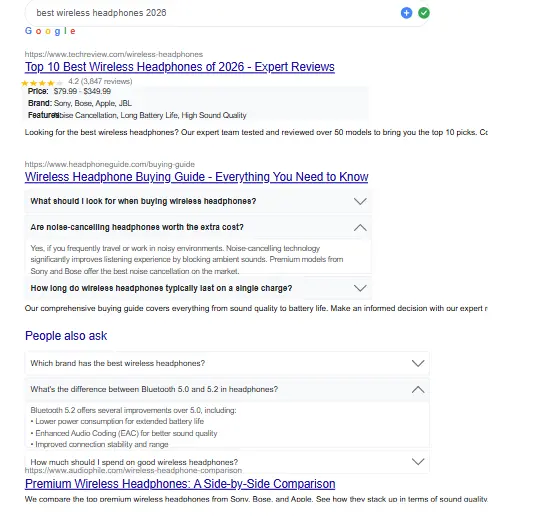
Implementing schema markup might seem technical, but tools like Google’s Structured Data Markup Helper can simplify the process. The result is often enhanced visibility in search results, which can significantly improve click-through rates. Pro Tip for 2026: With the rise of AI overviews, FAQ schema is one of the few ways to force direct visibility in Google’s generative responses.
Mobile Optimization
With Google’s mobile-first indexing, ensuring your content is optimized for mobile devices is non-negotiable when learning how to write content that ranks on Google. Mobile optimization includes:
- Responsive design that adapts to different screen sizes
- Readable font sizes (16px minimum)
- Adequate spacing between clickable elements
- Fast loading times on mobile connections
- Horizontal scrolling avoidance
- Accessible navigation menus
Use Google’s Mobile-Friendly Test tool to check how well your pages perform on mobile devices and identify areas for improvement.
Core Web Vitals Optimization
Core Web Vitals are a set of specific factors that Google considers important in a webpage’s overall user experience. They’re now part of Google’s ranking algorithm, making them essential to how to write content that ranks on Google. The three Core Web Vitals are:
- Largest Contentful Paint (LCP): Measures loading performance (should be under 2.5 seconds)
- First Input Delay (FID): Measures interactivity (should be under 100 milliseconds)
- Cumulative Layout Shift (CLS): Measures visual stability (should be under 0.1)
Optimizing these metrics involves technical improvements like optimizing server response time, minimizing render-blocking resources, and specifying dimensions for images and videos. While these aspects go beyond content creation, they’re crucial for the overall performance of how to write content that ranks on Google. For detailed guidance on how to fix Core Web Vitals issues, check out our comprehensive guide.
By implementing these on-page SEO essentials, you’re creating a strong foundation for your content to rank well in search results. However, remember that on-page optimization is just one piece of the puzzle—content quality remains paramount.
Creating High-Quality Content That Satisfies Users and Google
While technical optimization is important, the quality of your content remains the most critical factor in how to write content that ranks on Google. In this chapter, we’ll explore what constitutes high-quality content from both user and search engine perspectives, and how to create content that satisfies both.
Understanding Google’s E-E-A-T Guidelines
Google’s E-E-A-T (Experience, Expertise, Authoritativeness, and Trustworthiness) guidelines are fundamental to understanding how to write content that ranks on Google. These principles help Google assess content quality, especially for topics that could impact a person’s health, financial stability, or safety. Let’s break down each component:
- Experience: Content created by someone with firsthand experience on the topic
- Expertise: Content created by someone with specialized knowledge or skills
- Authoritativeness: Content from recognized experts or authoritative sources
- Trustworthiness: Content that is accurate, honest, and reliable
To demonstrate E-E-A-T in your content:
- Include author bios with relevant credentials
- Cite reputable sources and link to them
- Provide evidence, data, or case studies to support claims
- Be transparent about affiliations or potential conflicts of interest
- Keep content updated and accurate
- Enable user reviews or testimonials when appropriate
Expert Insight: Demonstrating “Experience”
In 2026, “Experience” is the new differentiator. Don’t just explain how a tool works; include a sentence like, “After testing Tool A for three months on a site with 50k monthly visitors, we noticed a 12% dip in load times compared to Tool B.” This proof of usage signals trust that AI-generated content cannot easily replicate.
The Importance of Originality and Depth
When learning how to write content that ranks on Google, originality and depth are non-negotiable. Google’s algorithms are sophisticated enough to identify duplicate, thin, or low-value content. To create content that stands out:
- Conduct original research or surveys
- Share unique insights or perspectives
- Create comprehensive resources that cover topics exhaustively
- Include personal experiences or case studies
- Combine information from multiple sources to create something new
- Go beyond surface-level information to provide real value
Before creating content, analyze what’s already ranking for your target keyword. Then, ask yourself: “How can I create something 10x better?” This approach to how to write content that ranks on Google ensures you’re not just replicating what’s already available but providing superior value.
Writing for Readability and Engagement
High-quality content isn’t just about information—it’s about presentation. Even the most valuable content will struggle to rank if it’s difficult to read or engage with. When learning how to write content that ranks on Google, focus on readability by:
- Using simple language and avoiding jargon when possible
- Varying sentence length and structure
- Using active voice rather than passive voice
- Writing in a conversational tone when appropriate
- Breaking up complex concepts into digestible sections
- Using analogies and metaphors to explain difficult ideas
Tools like Hemingway Editor or Grammarly can help assess and improve the readability of your content.
Engagement Signals Matter
Google considers user engagement signals like time on page, bounce rate, and scroll depth when determining rankings. Creating engaging, readable content is essential to how to write content that ranks on Google because it encourages users to stay longer and interact more with your page. Expert Tip: Add a “Table of Contents” sticky widget (like the one on this page) to improve navigation and scroll depth.
Incorporating Visual and Interactive Elements
Text-only content rarely ranks well in competitive niches. Incorporating visual and interactive elements is a key strategy in how to write content that ranks on Google. Consider adding:
- Relevant images and infographics
- Videos or embedded media
- Interactive charts or graphs
- Calculators or tools
- Quizzes or assessments
- Downloadable resources or checklists
These elements not only enhance user experience but also increase the perceived value of your content, making it more likely to earn backlinks and social shares—both important ranking factors.
Addressing User Pain Points and Questions
The most effective content solves problems or answers questions. When learning how to write content that ranks on Google, focus on addressing your audience’s pain points directly. To identify these:
- Review customer support inquiries
- Analyze comments on social media or forums
- Conduct surveys or interviews with your target audience
- Use tools like AnswerThePublic to find common questions
- Review “People Also Ask” results in Google
Structure your content to directly address these pain points, using clear headings and actionable advice. This approach to how to write content that ranks on Google ensures your content is genuinely helpful to your audience.
Keeping Content Fresh and Updated
Content freshness is a known ranking factor, especially for topics that change frequently. When learning how to write content that ranks on Google, establish a process for regularly updating your most important content. This includes:
- Reviewing and updating statistics and data
- Adding new information or insights
- Removing outdated information
- Improving formatting and readability
- Adding new examples or case studies
- Refreshing images and media
Consider adding a “last updated” date to your content to signal freshness to both users and search engines.
Creating Content Series and Pillar Pages
For comprehensive topics, consider creating content series or pillar pages as part of your strategy for how to write content that ranks on Google. This approach involves:
- Creating a comprehensive “pillar” page that broadly covers a topic
- Developing multiple “cluster” pages that address specific subtopics in detail
- Linking between the pillar and cluster pages to establish topical authority
- Updating and expanding the content over time
This content hub strategy demonstrates expertise and comprehensiveness, both of which are valued by Google’s algorithms. For small businesses looking to implement this approach, check out our content calendar ideas for SMBs to help plan and execute your content strategy effectively.
By focusing on creating high-quality, comprehensive, and engaging content, you’re building a strong foundation for SEO success. Remember that while technical optimization is important, content quality remains the ultimate determinant of how to write content that ranks on Google.
Content Promotion and Link Building Strategies
Creating great content is only half the battle when learning how to write content that ranks on Google. The other half is promotion and link building. In this chapter, we’ll explore effective strategies to get your content in front of the right audience and earn the backlinks necessary to rank well.
Understanding the Role of Backlinks in Rankings
Backlinks remain one of the most important ranking factors in Google’s algorithm. They serve as “votes of confidence” from other websites, indicating that your content is valuable and authoritative. When learning how to write content that ranks on Google, it’s essential to understand that:
- Quality of backlinks matters more than quantity
- Relevant links from authoritative sites in your niche are most valuable
- Natural anchor text distribution is important
- Link velocity (how quickly you acquire links) should appear natural
- Both internal and external links contribute to page authority
While you should never buy links or engage in manipulative link-building schemes, proactive promotion and relationship-building can help you earn the backlinks needed to rank. For a deeper dive into these techniques, resources like Moz’s Beginner’s Guide to Link Building are invaluable.
Creating Link-Worthy Content
The foundation of effective link building is creating content that people naturally want to link to. When learning how to write content that ranks on Google, focus on creating link-worthy assets such as:
- Original research studies with unique data
- Comprehensive guides that become go-to resources
- Free tools or calculators
- Infographics with compelling data visualizations
- Expert roundups with insights from industry leaders
- In-depth case studies with real results
These types of content provide unique value that others will want to reference and share, making link building more natural and sustainable.
Real-World Example: The Skyscraper Technique
We published a guide on “Email Marketing Statistics.” We found the top-ranking competitor had 50 stats. We created a page with 200 verified stats, categorized by industry, and added a downloadable PDF. We then emailed 50 marketers who had linked to the old post. Result: 15 high-authority backlinks within 30 days.
Outreach Strategies for Link Building
Once you’ve created link-worthy content, you need to promote it to earn backlinks. Effective outreach strategies for how to write content that ranks on Google include:
- Email Outreach: Personalized emails to relevant websites and bloggers in your niche
- Broken Link Building: Finding broken links on relevant sites and suggesting your content as a replacement
- Resource Page Link Building: Getting your content included on curated resource pages
- Guest Posting: Writing for other blogs in exchange for a byline with a link back to your site
- Digital PR: Pitching your content to journalists and publications
When conducting outreach, personalize your messages, focus on building relationships rather than just asking for links, and always explain the value your content provides to their audience.
Outreach Best Practices
When learning how to write content that ranks on Google through outreach, avoid mass, generic emails. Instead, research each prospect, reference their specific work, and explain why your content would be valuable to their audience. Quality over quantity is the key to successful outreach. A personalized email to 10 people beats a template sent to 1,000.
Leveraging Social Media for Content Promotion
While social media shares don’t directly impact rankings, they increase visibility, which can lead to more backlinks. When learning how to write content that ranks on Google, incorporate these social media promotion strategies:
- Share your content across all relevant social platforms
- Create platform-specific adaptations of your content
- Use relevant hashtags to increase discoverability
- Tag relevant influencers or brands in your posts
- Engage with comments and shares to increase visibility
- Consider paid promotion to reach a wider audience
Focus on platforms where your target audience is most active, and tailor your approach to each platform’s unique features and audience expectations.
Building Relationships with Industry Influencers
Relationship building is a long-term strategy that can significantly amplify your content promotion efforts. When learning how to write content that ranks on Google, focus on:
- Identifying key influencers in your niche
- Engaging with their content before asking for anything
- Providing value to them before requesting promotion
- Featuring them in your content (with their permission)
- Offering exclusive content or early access
- Collaborating on content projects
These relationships can lead to natural mentions, shares, and backlinks that boost your content’s visibility and authority.
Repurposing Content for Maximum Reach
One piece of content can be repurposed into multiple formats, extending its reach and link-building potential. When learning how to write content that ranks on Google, consider repurposing your content into:
- Slide decks for platforms like SlideShare
- Video scripts for YouTube or social media
- Podcast episodes
- Infographics
- Social media carousels or threads
- Webinars or presentations
Each format provides new opportunities for promotion and backlink acquisition, maximizing the return on your content investment.
Internal Linking for Content Promotion
Don’t overlook the power of internal linking when promoting new content. When learning how to write content that ranks on Google, strategically link to your new content from:
- Relevant older blog posts
- Your homepage or resource pages
- Your website’s navigation
- Newsletters or email campaigns
- Author bios
Internal links help distribute authority throughout your site and ensure both users and search engines can discover your new content.
Measuring Content Promotion Success
To refine your content promotion strategy, track key metrics such as:
- Backlinks acquired (quantity and quality)
- Referral traffic from promotion channels
- Social shares and engagement
- Keyword ranking improvements
- Conversion rates from promoted content
Use tools like Google Analytics, Ahrefs, or SEMrush to monitor these metrics and identify which promotion strategies are most effective for your content.
By implementing these content promotion and link-building strategies, you’re ensuring that your high-quality content gets the visibility it needs to rank well on Google. Remember that promotion is an ongoing process—the most successful content marketers continue to promote their best pieces long after publication.
Measuring Success and Refining Your Strategy
Learning how to write content that ranks on Google is an iterative process that requires continuous measurement and refinement. In this final chapter, we’ll explore the key metrics to track and how to use this data to improve your content strategy over time.
Essential SEO Metrics to Track
When evaluating the success of your content strategy, focus on these key metrics:
- Keyword Rankings: Track where your content ranks for target keywords
- Organic Traffic: Measure visitors coming from search engines
- Click-Through Rate (CTR): Monitor how often searchers click on your listing
- Time on Page: Assess how long visitors stay on your content
- Bounce Rate: Track the percentage of visitors who leave after viewing one page
- Pages per Session: Measure how many pages visitors view during a session
- Conversion Rate: Monitor how many visitors take desired actions
- Backlinks Acquired: Track new links pointing to your content
Tools like Google Analytics, Google Search Console, and specialized SEO platforms can help you monitor these metrics effectively.
Setting Up Google Search Console
Google Search Console is a free tool that provides invaluable insights into how your content performs in Google search. When learning how to write content that ranks on Google, set up Search Console to:
- Monitor your keyword rankings and click-through rates
- Identify technical issues that might impact rankings
- Submit sitemaps and individual pages for indexing
- View which pages drive the most organic traffic
- Analyze mobile usability and Core Web Vitals
- Discover internal and external linking opportunities
Regularly reviewing your Search Console data will help you understand which content strategies are working and where there’s room for improvement.
Conducting Regular Content Audits
Periodic content audits are essential to maintaining and improving your rankings. When learning how to write content that ranks on Google, schedule quarterly or biannual audits to:
- Identify underperforming content that needs updating
- Find content gaps that present new opportunities
- Discover pages with high potential for optimization
- Remove or consolidate outdated or redundant content
- Identify your most successful content to replicate
Use a spreadsheet to track key metrics for each piece of content, including current rankings, traffic, backlinks, and conversion rates. This will help you prioritize your optimization efforts.
A/B Testing for Continuous Improvement
A/B testing allows you to experiment with different elements of your content to see what performs best. When learning how to write content that ranks on Google, consider testing:
- Different title tags and meta descriptions
- Various content formats and structures
- Different calls-to-action
- Various image placements and types
- Different internal linking strategies
Tools like Google Optimize can help you set up and run these tests, providing data-driven insights to improve your content performance.
Testing Patience
When learning how to write content that ranks on Google, remember that SEO results take time. Allow at least 2-3 weeks between making changes and evaluating results to account for the time it takes Google to crawl and reindex your content. Content “decay” is normal; refreshes are often needed every 6-12 months.
Adapting to Algorithm Updates
Google frequently updates its algorithm, with several major updates each year. When learning how to write content that ranks on Google, stay informed about these updates and be prepared to adapt your strategy. Follow resources like Search Engine Land’s Google Algorithm Update History to stay informed. To stay ahead:
- Follow reputable SEO news sources
- Monitor your rankings and traffic for unusual fluctuations
- Focus on creating high-quality, user-centric content that aligns with Google’s guidelines
- Avoid manipulative tactics that could be penalized in future updates
- Diversify your traffic sources to reduce dependence on any single channel
Remember that while algorithm updates can cause short-term volatility, content that genuinely serves user needs tends to perform well over the long term.
Creating a Content Optimization Workflow
Establish a systematic workflow for optimizing your content based on performance data. When learning how to write content that ranks on Google, consider this process:
- Identify underperforming content with high potential
- Analyze why it’s underperforming (technical issues, content gaps, competition)
- Prioritize optimization opportunities based on potential impact
- Implement changes (refresh content, improve technical SEO, build links)
- Monitor results for 4-6 weeks
- Document what worked and apply insights to future content
This systematic approach ensures you’re continuously improving your content strategy based on real performance data.
Scaling Your Content Success
Once you’ve identified what works for your audience and search engines, scale your success by:
- Creating templates for successful content formats
- Developing style guides that incorporate your learnings
- Building processes for keyword research and content planning
- Training team members on your proven strategies
- Investing in tools that streamline your workflow
By systematizing your approach to how to write content that ranks on Google, you can produce high-quality, ranking content more efficiently at scale.
Remember that SEO is a long-term strategy. Consistent effort, continuous learning, and adaptation based on performance data are the keys to sustained success in creating content that ranks on Google.
Frequently Asked Questions About How to Write Content That Ranks on Google
The time it takes for content to rank on Google varies significantly based on factors like domain authority, competition, content quality, and backlink profile. Generally, new content may take anywhere from a few weeks to several months to rank for competitive keywords. For less competitive long-tail keywords, you might see rankings within a few weeks. The key is to focus on creating high-quality content consistently and promoting it effectively to accelerate the ranking process.
There’s no universal ideal word count for ranking content, as it depends on your topic, competition, and user intent. However, studies consistently show that longer, more comprehensive content tends to rank higher. For blog posts, aim for 1,500-2,500 words, while comprehensive guides and pillar pages might be 3,000-5,000 words or more. The key is to cover your topic thoroughly rather than focusing on hitting a specific word count. Analyze what’s currently ranking for your target keywords and aim to create something more comprehensive.
The frequency of content updates depends on your topic and industry. For rapidly changing topics like technology or digital marketing, review and update your content every 6-12 months. For more evergreen topics, an annual review might suffice. Signs that content needs updating include declining rankings, outdated statistics or information, and new developments in your industry. Regularly refreshing your most important content signals to Google that your site is current and authoritative, which can help maintain or improve rankings.
Both creating new content and optimizing existing content are important components of a successful SEO strategy. A good approach is to follow the 70/30 rule: spend 70% of your efforts creating new content to target new keywords and expand your reach, and 30% optimizing existing content that’s already showing promise. Pages ranking on page 2 for valuable keywords often have the most potential for improvement with relatively small optimizations. Analyze your performance data to identify which approach will deliver the best results for your specific situation.
Backlinks remain one of the most important ranking factors in 2026, serving as strong signals of authority and trustworthiness to Google. However, the focus has shifted from quantity to quality. A few high-quality, relevant backlinks from authoritative sites in your niche are more valuable than numerous low-quality links. While creating exceptional content is the foundation of earning natural backlinks, proactive promotion and relationship-building are still necessary to acquire the links needed to rank for competitive keywords. Remember that relevance and authority matter more than ever in Google’s link evaluation.
Yes, AI-generated content can rank, provided it meets Google’s quality guidelines. Google’s systems reward helpful, original content regardless of how it is produced. However, generic, unedited AI content often fails to demonstrate E-E-A-T (Experience, Expertise, Authoritativeness, Trustworthiness). To rank AI-assisted content, you must add human insights, verify facts, and inject personal experience.
SGE provides AI-generated summaries at the top of search results. To rank well in an SGE world, your content must be highly citable. This means using clear structure, definitive statistics, and authoritative sources that Google’s AI can reference. Optimizing for “People Also Ask” and FAQ schema is crucial to getting your brand mentioned in these generative snapshots.
Absolutely. Keyword stuffing is an outdated tactic that can lead to penalties. Google’s algorithms are now smart enough to understand semantic context and synonyms. Instead of repeating a keyword unnaturally, focus on using variations, related entities, and writing naturally for the user. Write for the topic, not just the keyword.
It is possible for low-competition, long-tail keywords, but extremely difficult for high-volume terms. Backlinks remain a primary signal of authority. Even “perfect” content needs validation from other websites to prove its trustworthiness to Google, especially in competitive niches.
Conclusion: Your Path to Ranking Success
Learning how to write content that ranks on Google is a journey that combines creativity, technical knowledge, and strategic thinking. Throughout this guide, we’ve explored the essential elements of creating high-ranking content, from keyword research and content structure to on-page optimization and promotion strategies.
As we’ve seen, the key to success lies in balancing the needs of users with the requirements of search engines. Google’s ultimate goal is to provide the most relevant, helpful, and high-quality content for each search query. By focusing on creating exceptional content that serves your audience’s needs while implementing technical best practices, you’ll be well-positioned to achieve and maintain high rankings.
Remember that SEO is not a one-time effort but an ongoing process of creation, measurement, and refinement. The digital landscape and search algorithms will continue to evolve, but the fundamental principles of providing value to users will remain constant.
As you implement these strategies on how to write content that ranks on Google, be patient with yourself and the process. SEO success rarely happens overnight, but with consistent effort and a commitment to quality, you’ll see your content climb the rankings and drive meaningful results for your business.
We hope this comprehensive guide has provided you with the knowledge and confidence to create content that not only ranks well on Google but also genuinely serves and delights your audience. Here’s to your content success!
Ready to Create Content That Ranks?
Implement these strategies and start creating content that climbs the Google rankings. Subscribe to our newsletter for more SEO tips and content marketing insights delivered to your inbox.
Subscribe Now