
Wrike Review 2026: The Ultimate Deep Dive (Is It Worth It?)
Are you drowning in a sea of tasks, missed deadlines, and disjointed team communication? In today’s fast-paced business world, finding the right project management tool isn’t just a luxury—it’s a necessity for survival and growth. You’ve likely heard of many contenders, but this comprehensive Wrike review will delve deep into one of the most powerful and flexible platforms on the market.
Wrike isn’t just another to-do list app; it’s a robust work management platform designed to bring order to chaos. But is it the right fit for your team? Is its power worth the potential learning curve and cost? This is the most detailed Wrike review you’ll find online, designed to answer those exact questions. We’ll explore every nook and cranny, from its granular task management to its advanced automation, giving you the honest insights you need to make an informed decision.
Quick Verdict: Wrike is a top-tier project management solution for medium to large teams that need deep customization, powerful automation, and robust reporting. It can be overkill for simple projects but is an invaluable asset for complex workflows.
Ready to see if it lives up to the hype? You can start a free trial right now and follow along with this Wrike review.
Start Your Wrike Free Trial NowWhat is Wrike? A Core Overview
At its heart, Wrike is a cloud-based project management and collaboration software. Its primary goal is to help teams organize, track, and manage their work from a single, centralized hub. Unlike simpler tools, Wrike is built for complexity. It allows users to customize nearly every aspect of their workflow, from task statuses and request forms to dashboards and reports.
This Wrike review found that its strength lies in its flexibility. Whether you’re in marketing, IT, professional services, or product development, Wrike can be molded to fit your specific processes. It supports traditional project management methodologies like Waterfall with its Gantt charts, but it’s also agile-friendly with features like Kanban boards and sprint management tools. This adaptability is a recurring theme in any positive Wrike review.
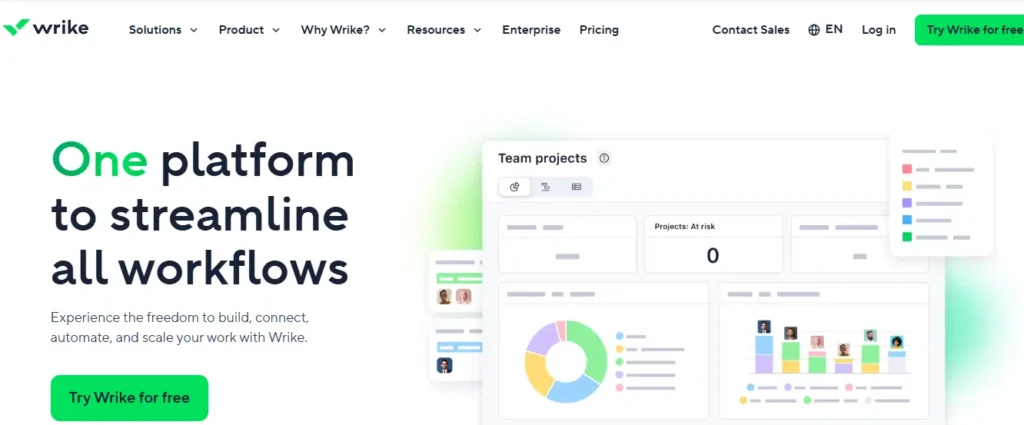
Ultimately, Wrike aims to provide full visibility into work progress, facilitate seamless collaboration, and automate repetitive tasks, freeing up your team to focus on what they do best. This Wrike review will explore exactly how it achieves this.
Deep Dive: Wrike’s Core Features
No Wrike review would be complete without a thorough examination of its feature set. This is where Wrike truly shines and justifies its position as a market leader. Let’s break down the key functionalities.
1. Task Management & Subtasks
At the most basic level, Wrike excels at task management. Each task can be detailed with descriptions, assignees, due dates, priorities, and custom statuses. But the real power lies in its hierarchy. You can create tasks within folders (projects), and then break those tasks down into subtasks, and even sub-subtasks. This multi-level structure is perfect for complex projects and is a key point in this Wrike review.
You can also attach files, leave comments, and tag colleagues using @mentions directly within tasks, ensuring all communication and context are kept in one place. Our Wrike review process found this keeps related conversations from getting lost in email inboxes.
2. Gantt Charts & Timelines
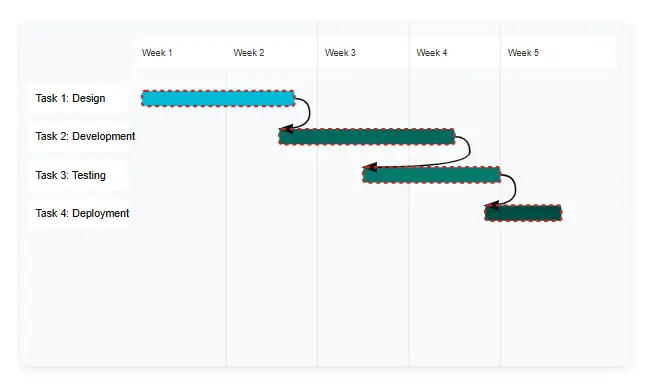
For project managers who love to visualize timelines, Wrike’s Gantt charts are a dream. They are not just static images; they are fully interactive. You can drag and drop to change dates, create dependencies between tasks (e.g., Task B can’t start until Task A is finished), and see the entire project timeline laid out. This dynamic view is a critical feature highlighted in many a Wrike review.
The critical path is automatically highlighted, so you can instantly see which tasks will impact your final deadline. This feature alone makes Wrike a strong contender for teams managing complex, interdependent projects. Any thorough Wrike review must mention the power of these visual timelines.
3. Wrike Automate (Automation Engine)
This is where Wrike moves from a simple project tracker to a true work management powerhouse. Wrike Automate is a rules-based engine that lets you automate repetitive actions without any coding. For example, you can create a rule like: “When a task’s status changes to ‘Ready for Review’, automatically assign it to the QA team and set the due date for three days from now.”
This feature saves an incredible amount of time and reduces human error. The possibilities are vast, and this Wrike review believes it’s one of the platform’s most valuable assets for scaling teams. It’s a cornerstone of the positive feedback you’ll read in any Wrike review.
4. Custom Workflows, Dashboards, and Request Forms
This is the core of Wrike’s customization. You’re not stuck with a generic “To-Do, In Progress, Done” workflow. You can create custom statuses for any type of work (e.g., “Idea,” “Briefing,” “In Design,” “Legal Review,” “Published”).
Dashboards are also fully customizable. You can create widgets to display tasks, track progress on key projects, see workload charts for your team, and more. This Wrike review found that creating personalized dashboards for different roles (e.g., a high-level view for an executive, a task-focused view for a designer) is incredibly effective.
Request forms streamline intake. You can build custom forms that, when submitted, automatically create tasks in the right folder with all the necessary information pre-filled. This is a game-changer for marketing or creative teams. This Wrike review was particularly impressed by this feature’s ability to standardize work requests.
5. Real-Time Collaboration
Wrike is built for teams. The @mention system ensures notifications go to the right people. You can have threaded conversations within tasks. Document proofing and approval is a standout feature, allowing users to annotate directly on files (PDFs, images, videos) without leaving the platform. This eliminates messy email chains with conflicting feedback. It’s a collaborative tool that this Wrike review found to be exceptionally well-integrated.
6. Reporting and Analytics
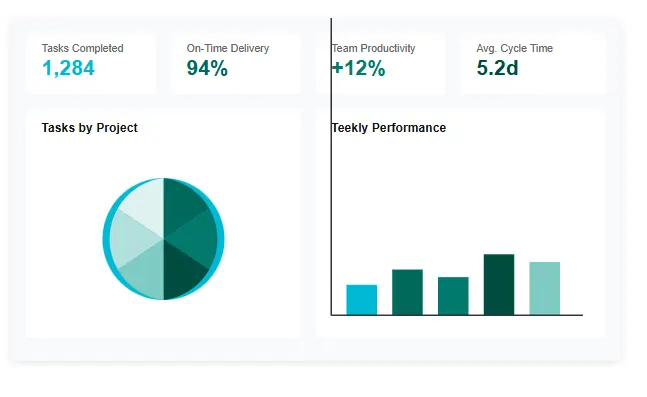
Wrike offers robust reporting capabilities to help you track performance and identify bottlenecks. You can create custom reports on task completion rates, time tracking, workload allocation, and more. These reports can be shared with stakeholders to keep everyone informed. While the built-in reports are powerful, higher-tier plans offer even more advanced analytics. This Wrike review confirms that data-driven teams will find these features invaluable.
Wrike Pricing Breakdown: Which Plan is Right for You?
A crucial part of any Wrike review is the cost. Wrike’s pricing is tiered, based on the number of users and the features included. It’s generally considered a mid-to-high-range solution, but the value scales with the features.
| Plan | Best For | Key Features | Pricing (per user/month) |
|---|---|---|---|
| Free | Small teams trying out Wrike | Task & subtask management, basic dashboards, 2GB storage. | $0 (for up to 5 users) |
| Team | Growing teams needing collaboration | Everything in Free, plus Gantt charts, shareable dashboards, integrations, 5GB storage. | $9.80 |
| Business | Teams needing advanced features & security | Everything in Team, plus Wrike Automate, custom fields/calendars, advanced reports, 50GB storage. | $24.80 |
| Enterprise | Large organizations with complex needs | Everything in Business, plus advanced security, SSO, 2FA, dedicated account manager. | Custom (Contact Sales) |
| Pinnacle | Enterprise with highest-level needs | Everything in Enterprise, plus advanced analytics, Wrike Integrate (for API/EDI), premium support. | Custom (Contact Sales) |
*Note: Prices are based on annual billing and are subject to change. Always check the official Wrike site for the most current information.*
For most businesses, the Business plan is the sweet spot, as it unlocks the powerful automation and customization features that make Wrike, Wrike. This Wrike review strongly recommends starting with a free trial to see which features you truly need before committing.
Explore Plans & Start Your Free TrialThe Pros and Cons: An Honest Wrike Review
No tool is perfect. A balanced Wrike review must look at both the good and the bad. Here’s our honest assessment.
Pros
- Extremely Customizable: Workflows, dashboards, and fields can be tailored to any process.
- Powerful Automation: Wrike Automate is a game-changer for efficiency.
- Excellent for Complex Projects: Gantt charts and dependencies are top-notch.
- Robust Feature Set: From task management to proofing, it’s an all-in-one platform.
- Great Integrations: Connects seamlessly with tools like Slack, Microsoft Teams, and Adobe Creative Cloud.
- Strong Reporting: Provides valuable insights into team performance and project health.
Cons
- Steep Learning Curve: The sheer number of features can be overwhelming for new users.
- Can Get Expensive: The most valuable features are locked behind higher-priced plans.
- Interface Can Feel Cluttered: With so much information, the UI can sometimes feel busy.
- Overkill for Simple Needs: If you just need a basic to-do list, Wrike is too much tool.
- Mobile App is Good, But Not Perfect: While functional, the full power is best experienced on the desktop.
This Wrike review finds that the pros significantly outweigh the cons for the right target audience. The key is to ensure your team’s complexity matches Wrike’s.
Who Should Use Wrike? Ideal Use Cases
Based on this Wrike review, the platform is not a one-size-fits-all solution. It excels in specific environments:
Marketing & Creative Teams
Wrike is a haven for marketing teams. The custom request forms for creative briefs, the built-in proofing and approval tools for marketing collateral, and the campaign management features are perfectly suited for their workflows. Any Wrike review from a marketing professional is likely to be glowing.
Professional Services & Consulting
For teams that manage multiple client projects simultaneously, Wrike’s structure is ideal. You can create separate, secure spaces for each client, track billable hours with time-tracking, and generate reports to show clients exactly what they’re paying for. This Wrike review sees it as a strong fit for agencies.
Software Development & IT Teams
While not a dedicated dev-ops tool, Wrike’s agile features like Kanban boards, backlog management, and sprint planning make it a viable option for software teams. Its strength lies in its ability to connect development work with other business departments, like marketing and product, providing a single source of truth. This Wrike review notes its versatility across tech departments.
Wrike vs. The Competition
To give you the fullest possible Wrike review, let’s see how it stacks up against its biggest rivals.
Wrike vs. Asana
Asana is often praised for its cleaner, more user-friendly interface and is generally easier for beginners to pick up. It’s a fantastic tool for managing tasks and simple projects. However, Wrike offers a much deeper level of customization, more powerful automation (on comparable plans), and superior Gantt charts and dependency tracking. In short: Asana is for simplicity and elegance; Wrike is for power and complexity. This Wrike review positions Wrike as the choice for teams that have outgrown Asana.
Wrike vs. Monday.com
Monday.com is Wrike’s closest competitor in terms of flexibility and visual appeal. It uses a colorful, spreadsheet-like interface that many users love. Both platforms are highly customizable and offer strong automation. The choice often comes down to personal preference in UI and specific feature nuances. Wrike’s proofing tool and more mature Gantt chart functionality might give it an edge for certain creative and project management-heavy teams. This Wrike review suggests trying both to see which interface your team prefers.
Wrike vs. Trello
This is an apples-to-oranges comparison. Trello is a simple, Kanban-based tool. It’s incredibly intuitive and great for visualizing simple workflows. However, it lacks the depth of Wrike: no built-in Gantt charts, limited reporting, and basic automation. Trello is a great starting point, but teams looking to scale will inevitably need to migrate to a more powerful tool like Wrike. This Wrike review sees Trello as a “starter” and Wrike as a “pro-level” tool.
Final Verdict: Is Wrike Worth Your Money in 2026?
After this extensive Wrike review, the conclusion is clear: yes, Wrike is absolutely worth the investment for the right team.
If you’re a small team with simple projects, you might be better served by a more lightweight (and cheaper) tool like Trello or Asana’s free plan. But if your team is growing, your projects are becoming more complex, and you’re struggling with a lack of visibility and inefficient processes, Wrike is the solution you’ve been searching for.
Its power lies in its ability to adapt to you, not the other way around. The time saved through automation, the clarity gained from custom dashboards, and the efficiency of its collaboration tools provide a significant return on investment. The initial learning curve is a small price to pay for a system that can scale with your business for years to come.
This Wrike review concludes that it is one of the most powerful, flexible, and comprehensive project management platforms available today.
Don’t just take our word for it. The best way to understand its potential is to experience it yourself.
Get Started with Wrike for Free Today!Frequently Asked Questions (FAQ)
Is Wrike good for small businesses?
Yes, it can be. The free and Team plans are great for small businesses. However, small businesses with very simple needs might find it too complex. It’s ideal for small businesses that anticipate growth and have complex workflows.
Does Wrike have a mobile app?
Yes, Wrike has fully-featured mobile apps for both iOS and Android. You can manage tasks, collaborate, and update statuses on the go.
Can I integrate Wrike with other tools?
Absolutely. Wrike has a vast library of native integrations with over 400 popular apps, including Slack, Microsoft Teams, Google Drive, Salesforce, and Adobe Creative Cloud.
Is Wrike secure?
Yes. Wrike takes security very seriously, offering features like two-factor authentication (2FA), single sign-on (SSO), and role-based access controls. They are also compliant with various security standards like GDPR and CCPA.
What kind of support does Wrike offer?
Support levels depend on your plan. All users have access to a comprehensive knowledge base and community forums. Paid plans get access to email and chat support, while Enterprise and Pinnacle plans get a dedicated account manager and premium support.