
Moz Review (2026): Honest Moz Pro Breakdown — Features, Pricing ROI & Who It’s Best For
If your rankings dropped, SEO feels confusing, or you’re tired of paying for features you don’t use—this Moz Review is for you. I’ll show what Moz Pro actually does well (and where it doesn’t), how the data helps you make faster decisions, and how to judge ROI before you spend money.
Moz Pro is not the “flashiest” SEO suite—but it’s one of the most trusted. The difference is clarity: Moz tries to turn messy SEO into actionable steps so you stop guessing and start executing.
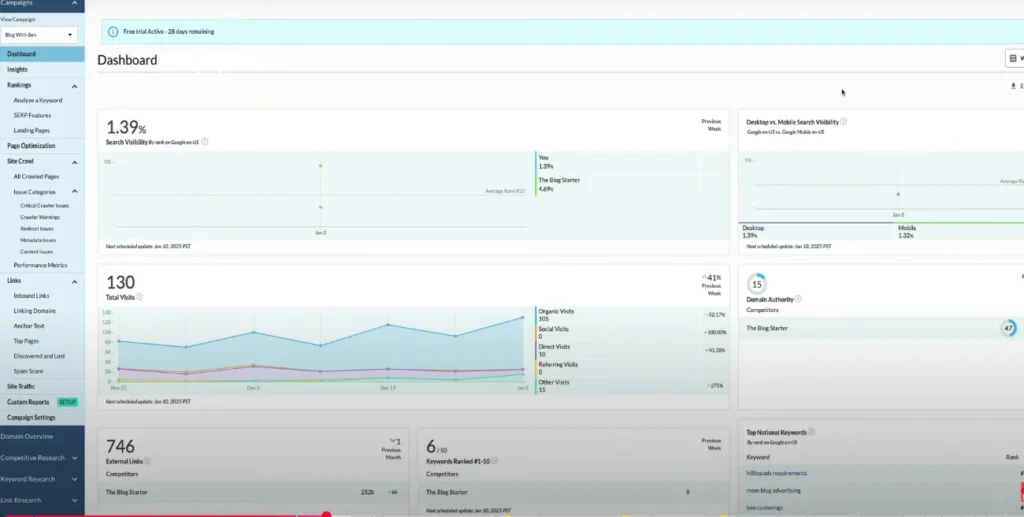
Quick Verdict (Moz Review)
Overall Rating: 8.4/10
Best balance of simplicity + trustworthy metrics for steady SEO growth.
Best for: bloggers, small teams, consultants, local SEO, SEO beginners, agencies that want clean reporting.
Not ideal for: very heavy backlink pros who live inside huge link indexes all day.
ROI summary:
If Moz helps you rank just one page that earns $300/month (ads, leads, affiliate), it can pay for itself quickly. The real value is reducing wasted time and wrong moves.
Micro-CTA: If you’re unsure, don’t buy yet—run a trial and prove it with one keyword list + one crawl + one competitor comparison. Start here →
What Is Moz? (Moz SEO Tool Review)
Moz is a long-standing SEO company best known for making SEO data easier to understand and act on. Moz Pro is its paid suite that combines keyword research, rank tracking, site audits, backlink analysis, and on-page recommendations in one place.
In this Moz Pro review, the focus is simple: does Moz help you rank more pages with less confusion—without forcing you to become a technical expert?
Trust matters in SEO. When tools are unclear, you overthink, delay publishing, or chase random “tips.” Moz tends to win when you want a guided path: what to fix first, what keywords have realistic chances, and what links are actually helping.
If you also want a broader comparison across platforms, you can check your hub page later and link it here: Best SEO Tools.
Moz Pro Features Deep Dive (Problem → Solution → Benefit)
This section is the heart of the Moz Review. For each feature, I’ll show: the real SEO pain, the hidden cost of ignoring it, and how Moz turns it into a decision you can take today.
1) Keyword Explorer (Moz Keyword Research Tool)
Problem: You publish content, but it doesn’t rank—because the keyword was too competitive or the intent was wrong.
Cost of ignoring: 2–6 hours wasted per article (writing + formatting + publishing), plus weeks of waiting, only to realize the topic never had a realistic path to page one.
Moz solution: Keyword Explorer helps you estimate difficulty, prioritize opportunities, and expand into related terms so you can build topical authority—especially helpful if you’re targeting affiliate keywords.
- Better keyword selection: focus on terms where your site can actually compete.
- Smarter clusters: build a content plan instead of random posts.
- Cleaner intent mapping: avoid writing “informational” content for a buying keyword (and vice versa).
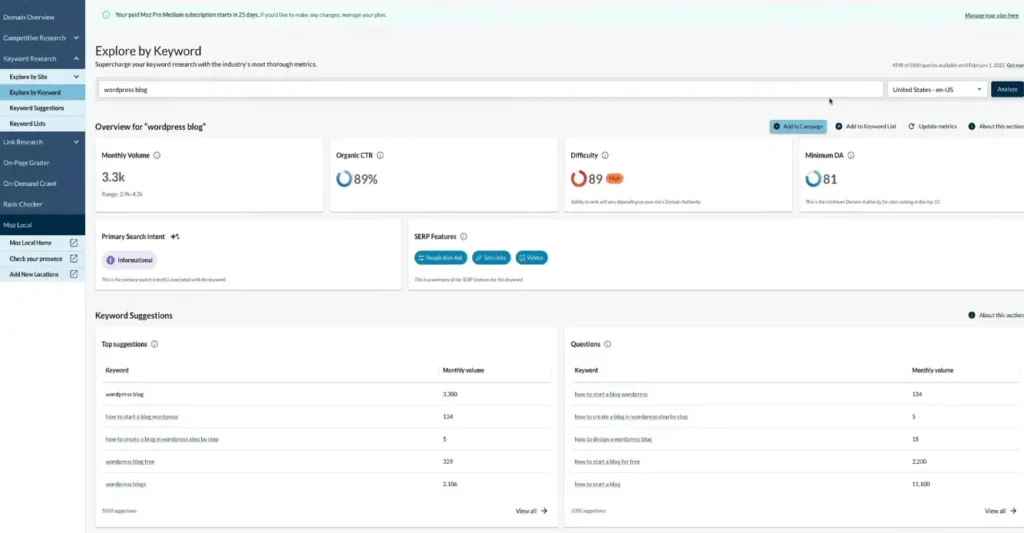
ROI move: Pick 1 “money” keyword + 4 supporting keywords. Publish 1 pillar + 4 sub-posts. This is how a Moz keyword research tool turns into steady clicks (not one-time spikes).
2) Rank Tracking (Stop Guessing What Google Did)
Problem: Rankings move and you don’t know why. One day clicks are up, next day down—and you panic.
Cost of ignoring: You change titles, internal links, or content too quickly and break what was working. That hurts CTR and stability.
Moz solution: Campaign tracking makes ranking changes visible so you can act with evidence—not emotion. This is huge for affiliate pages because tiny changes can change conversions.
- Trend clarity: identify if a drop is one keyword or the whole category.
- Opportunity spotting: find keywords stuck at positions 8–15 and push them with internal links.
- Client-friendly reporting: agencies can show progress clearly.
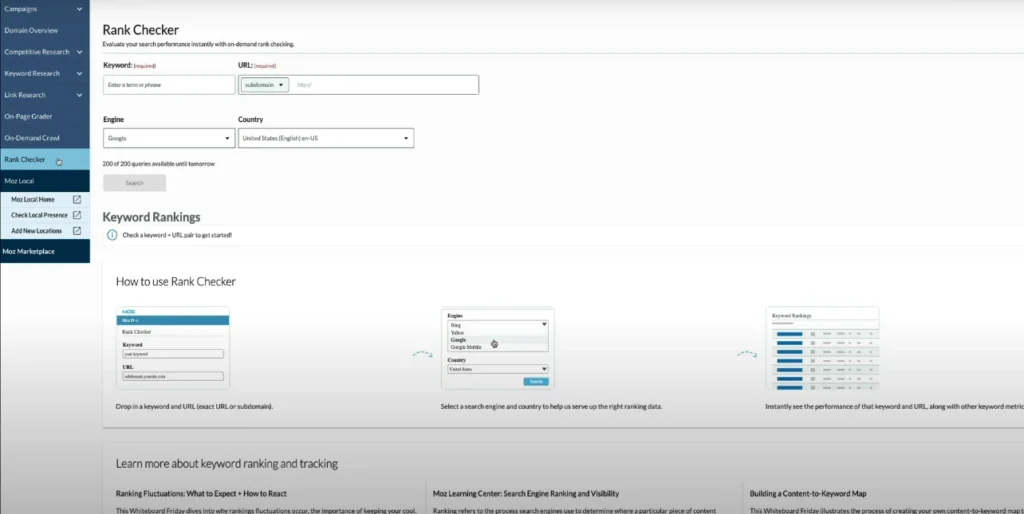
Micro-CTA: Track your top 25 affiliate keywords for 14 days. If Moz helps you find 3 “almost page one” keywords and you push them to top 5, you’ll feel the ROI fast. Try Moz Pro →
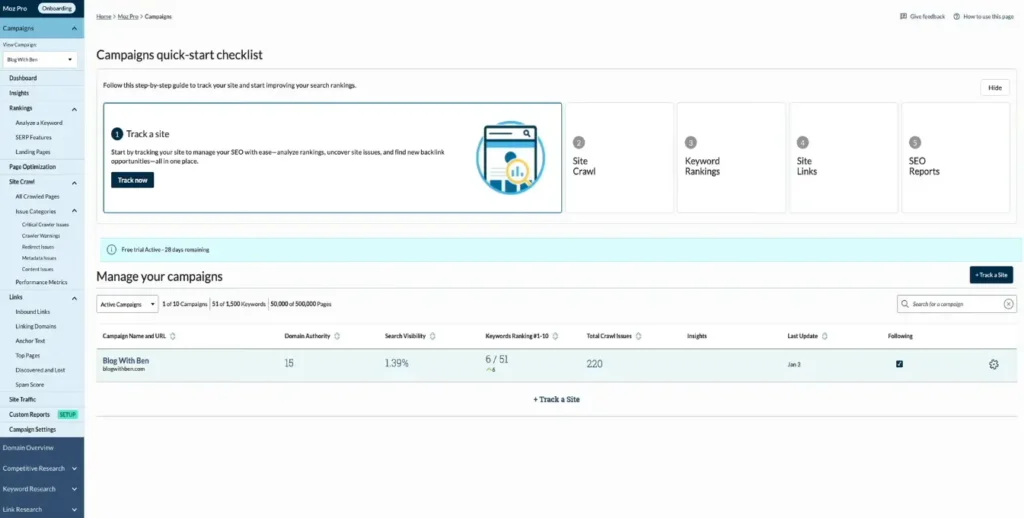
3) Site Crawl (Technical SEO Without Headache)
Problem: your site has broken links, missing meta titles, slow pages, or crawl issues—and you don’t notice until traffic drops.
Cost of ignoring: Google crawls less efficiently, indexation gets messy, and important pages lose visibility. It’s like building a house on weak foundation.
Moz solution: Moz Site Crawl highlights priority fixes so you don’t waste time fixing low-impact issues first. That matters when you’re managing many pages.
- Fix-first list: you get a clear action queue.
- Cleaner internal structure: improves crawlability and topical signals.
- Protects affiliate pages: prevents silent technical damage.
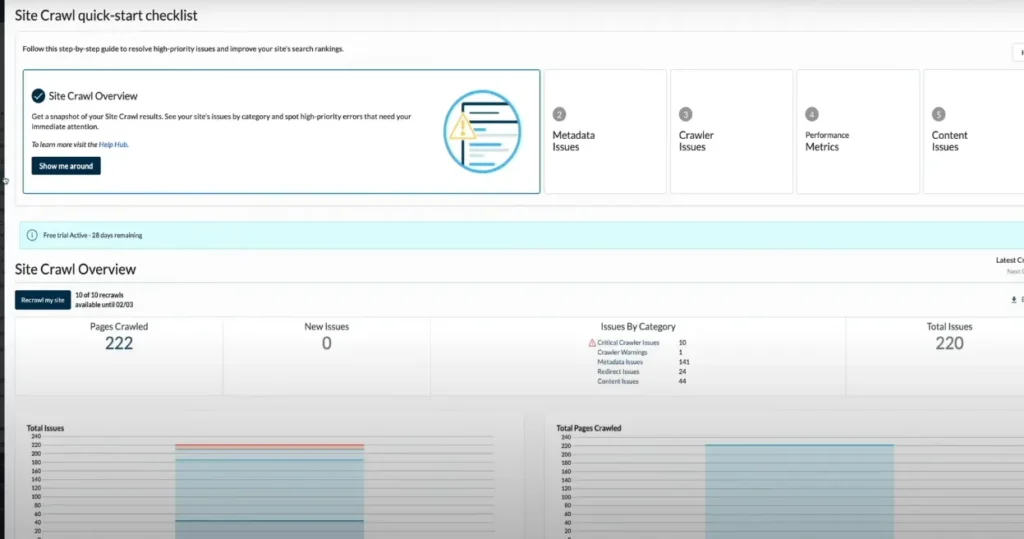
If you’re already writing tool reviews on Seoraf, crawl audits help protect pages like SEMrush review and other money pages from technical mistakes that quietly reduce rankings.
4) Link Explorer (Backlinks That Actually Matter)
Problem: You build links but don’t know if they’re helping—or if toxic links are pulling you down.
Cost of ignoring: wasted outreach, wasted money, and sometimes risky link profiles. Many sites don’t fail from “no links”—they fail from bad link choices and no link strategy.
Moz solution: Link Explorer helps you evaluate linking domains, anchor patterns, and link growth—so you can focus on quality and relevance.
- Link gap ideas: see where competitors are earning links.
- Risk awareness: spot suspicious patterns early.
- Authority planning: build links to your pillar pages first.
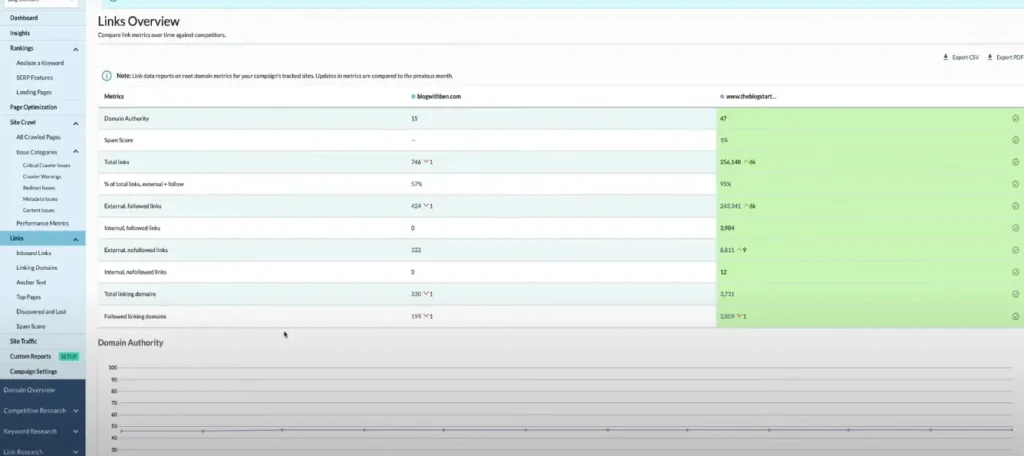
5) On-Page Grader (Simple On-Page Wins)
Problem: You wrote a good article, but it’s not ranking because the page isn’t aligned—title, headings, internal links, and intent are slightly off.
Cost of ignoring: your content sits at position 11–20. That’s the “invisible zone”—you did the work but don’t get the clicks.
Moz solution: On-Page Grader is like a checklist that helps you polish pages faster. This is especially useful when you’re scaling affiliate content and need consistency.
- Better structure: headings and topic coverage become clearer.
- Internal linking cues: improves topical authority flow.
- Faster updates: refresh old pages without rewriting everything.
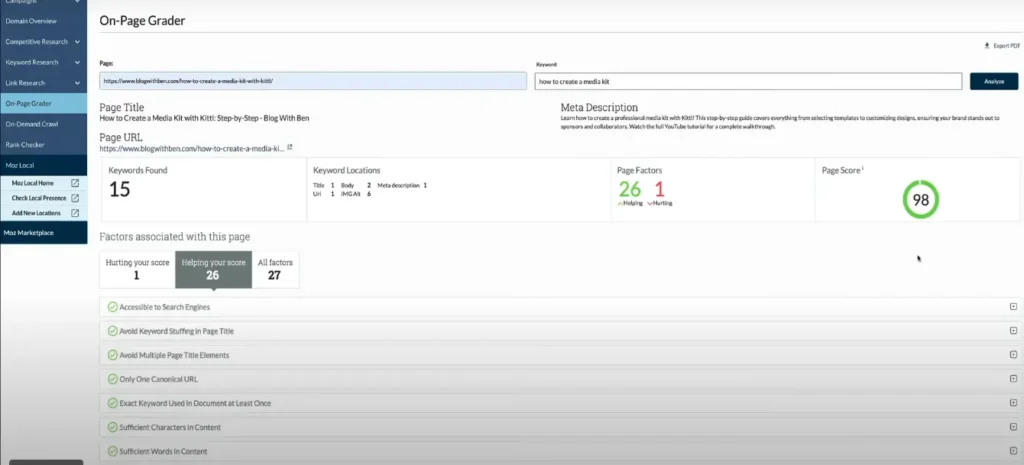
If you’re refreshing older reviews (like pricing pages or tool comparisons), this feature helps you keep pages clean and focused. For example, you can pair Moz checks with your own internal guide pages like SEMrush pricing plans when you build pricing comparison clusters.
Quick Action Plan (15 minutes)
- Run 1 Moz Site Crawl → fix top 5 issues.
- Pick 1 affiliate keyword cluster → map 1 pillar + 4 support posts.
- Track 10 keywords → watch movement for 14 days.
Moz Pricing (ROI Angle)
Moz pricing changes over time, and sometimes trials vary by region or promotion. The smartest way to approach pricing is not “cheap vs expensive,” but ROI vs guesswork.
How to Judge Moz Pro ROI (Simple Calculation)
Imagine Moz helps one article reach top 5 and that page earns:
- $10/day from affiliate clicks = ~$300/month
- OR 3 leads/month × $150 each = $450/month
- OR even a small boost across 10 pages that adds 20 clicks/day = long-term compounding
If you can create even one reliable “winner” page, Moz can pay for itself. The real win is that it helps you choose better keywords and fix technical issues before you waste months.
For the most current Moz pricing, always verify on Moz directly: Moz pricing page.
Moz Pricing ROI: When Moz Pays for Itself
Moz pricing only feels “expensive” when you don’t tie it to outcomes. A practical Moz Review should show ROI clearly. Here’s a simple way to think about it:
- 1 affiliate page ranks and earns $5/day = $150/month.
- 2 pages rank and earn $5/day each = $300/month.
- If Moz helps you find the right keyword + fix technical blocks + improve links, it can cover the subscription with just a few wins.
ROI mindset: You don’t buy Moz to “have an SEO tool.” You buy Moz to stop guessing—so your content targets keywords that are actually rankable, and your site stays technically clean.
If you’re a blogger, Moz keyword research tool features help you build a content plan that grows month after month. If you’re an agency, the reporting + audit workflow helps you deliver faster—meaning more clients, less time.
Want to test everything before paying? That’s why most Moz Pro review readers start with the trial.
Start Moz Pro Trial →Moz Pros & Cons (Honest Moz Review)
Pros
- Beginner-friendly: clear UI and guided workflows.
- Strong core SEO toolkit: keywords, crawl, links, ranks—no clutter.
- Great for content planning: helps build clusters (not random posts).
- Reporting: agency-ready dashboards and client updates.
- Authority metrics: widely recognized industry signals.
Cons
- Can feel pricey if you only need one feature.
- Not the deepest link index for hardcore backlink-only workflows.
- Power users may want extra competitor/PPC layers from other suites.
Moz vs SEMrush vs Ahrefs (Comparison Table)
In every Moz Review, people ask: “Moz vs SEMrush or Moz vs Ahrefs—what should I pick?” Here’s a practical comparison based on real usage style.
| Tool | Best For | Strength | Weakness | Pricing Type | Action |
|---|---|---|---|---|---|
| Moz | Beginners, bloggers, agencies needing clean reporting | Clear workflows + trusted metrics | Not the most “all-in” marketing suite | Subscription | Try Moz Pro → |
| SEMrush | All-around marketing + competitor research | Huge toolkit, competitive insights | Can feel complex/overloaded | Subscription | Read SEMrush Review |
| Ahrefs | Backlink-heavy teams, competitive link research | Link analysis depth | Less guided for beginners | Subscription | See full tools list |
Simple choice: If you want a guided SEO suite that doesn’t overwhelm you, Moz is often the smarter start. If you want a huge marketing toolbox, SEMrush might fit. If you live in link research all day, Ahrefs can be powerful.
Advanced Moz Playbook (Fast Results Without Overthinking)
This Moz Review isn’t complete without a simple action plan. If you want faster rankings in 2025, you need a workflow you can repeat weekly—without drowning in reports.
- Keyword Explorer: pick 1 main keyword + 6–10 supporting keywords with the same intent.
- SERP Reality Check: open the top 5 results. If they’re all huge brands, go longer-tail.
- Site Crawl: fix technical blockers (broken links, redirect chains, duplicate titles, thin pages).
- On-Page Grader: improve headings, internal links, semantic terms, and readability.
- Link Explorer: watch authority trends + identify safe outreach targets via competitor links.
- Rank Tracking: track 20–50 keywords weekly and update pages that drop.
Future pacing: Imagine publishing 2 optimized pages per week with this workflow. In 8–12 weeks, you’ll usually see more keywords enter the top 20—then traffic and affiliate clicks start compounding.
Is Moz Worth It? (Beginner + Agency Perspective)
Moz for Beginners
If you’re learning SEO, your biggest enemy is not “lack of tools”—it’s confusion. Moz helps you make clean decisions: which keyword to target, what’s stopping your pages technically, and how to track progress without panic.
Future pacing: imagine publishing consistently, seeing rankings climb month by month, and knowing exactly which pages to update next. That calm, repeatable system is where Moz often shines.
Moz vs SEMrush vs Ahrefs (Real-World Decision Scenarios)
Most people read a Moz Review and still feel stuck because they’re comparing tools like a checklist. The smarter way is to compare by workflow. In 2025, your SEO results depend on how fast you can move from “data” to “action” without confusion.
Scenario 1: You want clean SEO decisions (not noise)
If you get overwhelmed by 50 reports and 200 charts, Moz is often the better fit. A practical Moz Review conclusion: Moz wins when you want guided keyword + link + audit insights that feel simple and actionable.
Scenario 2: You run an agency workflow
SEMrush is strong for “marketing everything”—SEO + PPC + social + competitive dashboards. But agencies that only want dependable SEO execution can still prefer Moz Pro. This Moz Pro review point matters: fewer distractions = faster client deliverables.
Scenario 3: You are link-building heavy
Ahrefs is usually the “backlink depth” king. But Moz Link Explorer + Spam Score can still be enough for many bloggers and small businesses. If your main goal is content ranking + safe links, Moz is often “good enough” while staying easier to use.
Quick shortcut: If you want a tool that helps you publish and rank faster, Moz Review readers usually choose Moz Pro first, then upgrade later if they need PPC or deeper competitor intelligence.
Try Moz Pro Today →Moz for Agencies
Agencies need two things: reliable data and reporting clients can understand. Moz is strong when you manage multiple campaigns and want clear explanations for “what we did and why.”
- Cleaner reporting = easier renewals
- Audit + keyword planning = faster client onboarding
- Rank tracking = proof over opinions
If you’re building SEO service pages too, connect Moz Review to your services hub: SEO Services.
Strategic Persuasion (10%): The Hidden Cost of Waiting
The longer you rely on guesswork, the more you pay—just not on your credit card. You pay with time, missed rankings, and content that never reaches its potential.
Micro-CTA: If you already have reviews like Surfer SEO review or SEO PowerSuite review, use Moz to build a “best tools” cluster and interlink them strategically. Then track ranking movement weekly.
E-E-A-T Notes (For Trust + SEO)
For long-term rankings, your Moz Review should show you follow best practices from reliable sources, not just opinions. Here are two authority references you can cite in your own content strategy:
FAQ (Moz Review)
Is Moz good for beginners?
Yes. Moz is one of the most beginner-friendly SEO platforms because it reduces overwhelm. You get clear keyword planning, simple reporting, and a site crawl that prioritizes fixes—so you can act fast without technical confusion.
Is Moz worth it in 2026?
Moz is worth it if you want a reliable, guided SEO suite and you’ll actually use keyword research, rank tracking, audits, and link analysis together. If you only need one feature once a month, you may prefer smaller tools instead.
Is Moz worth it for affiliate marketing?
Yes—if you focus on rankable keywords and consistent publishing. This Moz Review takeaway is simple: Moz helps you find low-competition topics, keep your site healthy, and track progress. For affiliates, even one page ranking can pay back Moz pricing quickly.
Moz vs SEMrush: which is better for beginners?
Moz is usually easier for beginners because the interface is less crowded and the workflows feel guided. SEMrush is powerful but can be overwhelming. If you want SEO fundamentals done right, Moz Pro is often the smoother start.
Does Moz keyword research tool data stay accurate in 2025?
No SEO tool is “perfect,” but Moz is trusted for consistent keyword difficulty, priority scoring, and link metrics like Domain Authority. For best accuracy, compare a few SERPs manually and use Moz trends for decision-making.
Moz vs SEMrush: which is better?
Moz is often better for clarity and guided SEO workflows. SEMrush is stronger as a broad marketing suite with many extra layers. If you prefer simplicity and clean execution, Moz can be the better daily driver.
Moz vs Ahrefs: which is better?
Ahrefs is famous for deep backlink workflows. Moz is great when you want balanced SEO features with a friendlier experience. If link research is your whole job, Ahrefs may win; for balanced SEO growth, Moz is strong.
Does Moz help with keyword research?
Yes. The Moz keyword research tool (Keyword Explorer) helps you choose realistic targets, find related terms, and build content clusters. For affiliate sites, that’s crucial because you need keywords that can rank and convert.
Is there a Moz Pro free trial?
Many reports show Moz Pro has a trial (often mentioned as 7 days) and may require payment details; promotions can change. The safest approach is to check the trial offer directly before you sign up.
Can agencies use Moz Pro effectively?
Yes. Moz for agencies works best when you need clear reporting, campaign tracking, and audit-based roadmaps. It’s a strong tool for communicating progress, which improves client trust and retention.
What should I do first after buying Moz?
Start with a site crawl (fix top 5 issues), then build one keyword cluster (1 pillar + 4 supports), and track 10–25 keywords. That workflow gives the fastest proof of value and protects your money pages.
Final Verdict (Moz Review): Should You Buy Moz Pro?
Moz is not trying to impress you with complexity. It’s trying to help you win with consistency. If your main problems are ranking drops, confusing data, and wasting money on tools you don’t fully use—Moz Pro is a smart, practical option.
The longer you rely on guesswork, the more you lose in silent ways: missed rankings, slower growth, and content that never reaches page one. If you want a clean SEO system you can follow week after week, Moz is worth testing.
Ready to test Moz Pro?
Don’t “hope” it works—prove it with one crawl + one keyword cluster + two weeks of rank tracking.
Try Moz Pro Today →