
Best SEO Tools in 2026: The High-ROI Toolkit to Rank Faster, Convert More, and Scale Profitably
If you’re serious about rankings, you can’t rely on guesswork. The Best SEO Tools turn scattered data into clear decisions—what to optimize, what to write next, and where your competitors are vulnerable. With the right Best SEO Tools, you’ll stop wasting hours on manual checks and start building momentum that compounds: higher rankings, more clicks, stronger authority, and better conversions.
This pillar guide is built for real-world outcomes: beginners who need a reliable starting point, freelancers who want faster delivery, and agencies that need scalable workflows. You’ll get a practical SEO tools comparison, deep reviews, real use cases, and decision frameworks—so you can pick the best-fit stack today and upgrade later without pain.
Why the Best SEO Tools Are Non-Negotiable in 2026
SEO isn’t just “publish and pray” anymore. Modern SERPs reward websites that prove authority, satisfy intent, and keep users engaged. That’s why the Best SEO Tools matter: they help you validate demand, map intent, optimize content with precision, and track performance without blind spots.
Think of the Best SEO Tools as your advantage multiplier. They compress research time, expose competitor gaps, and help you prioritize tasks that actually move rankings and revenue. Even better—good tools improve decision quality. When you can see what’s working (and what isn’t) in your niche, you spend less and win faster.
What “high-ROI SEO” looks like
- Find keywords with buying intent, not vanity traffic.
- Build topic clusters that strengthen EEAT signals.
- Improve CTR with better titles, snippets, and internal linking.
- Optimize pages based on evidence, not opinions.
What the Best SEO Tools help you avoid
- Writing content nobody searches for.
- Chasing “one-off hacks” instead of scalable workflows.
- Missing indexing or technical issues for months.
- Overspending on tools you don’t fully use.
If you want a full blueprint for implementation, explore our internal guides: SEO Guides, SEO Tools Hub, and EEAT Checklist.
We’ll break down six popular choices across budgets and skill levels, then give you a practical Best SEO Tools comparison and a decision framework. If you’re looking for affordable SEO tools, you’ll see where the value is. If you’re running client projects, you’ll see which Best SEO Tools for agencies scale cleanly without complexity overload.
Ready to stop guessing and start ranking?
Pick one of the Best SEO Tools below and run a simple 7-day sprint: keyword shortlist → content plan → on-page optimization → rank tracking. You’ll feel the difference immediately.
SE Ranking Review: A Balanced All-in-One Pick for Beginners and Growing Agencies
If you want one platform that covers core SEO workflows without a steep learning curve, SE Ranking is a strong contender. Many marketers choose it as one of the Best SEO Tools because it blends rank tracking, keyword research, competitor insights, and reporting in a way that feels clean and actionable. In short: it’s built for getting work done, not just showing data.
SE Ranking (All-Rounder Stack)
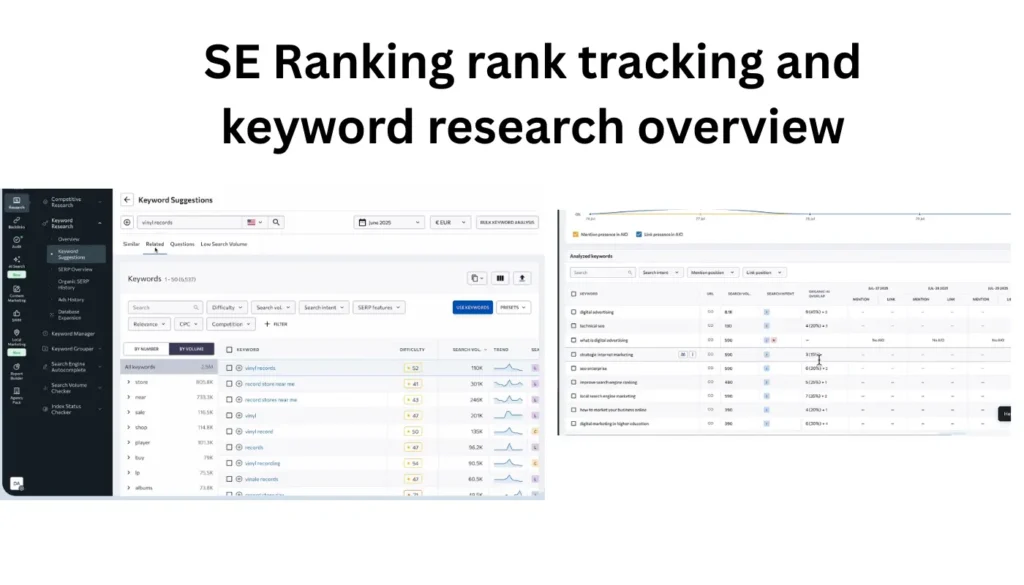
Overview: SE Ranking is designed to help you move from “what should I do?” to “here’s my next action.” It’s especially useful if you want a practical tool that supports consistent workflows: build keyword lists, audit pages, track movement, and send updates to stakeholders or clients.
Rank Tracking That Drives Decisions
Monitor priority keywords, track competitors, and spot volatility early so you can respond quickly.
Keyword Research + SERP Insight
Find opportunities and evaluate difficulty so you don’t waste content on impossible targets.
Reporting for Clients or Teams
Turn SEO progress into simple reports—great for agencies and stakeholder communication.
Key Features
- Rank tracking for keywords across locations and devices.
- Keyword research to discover new opportunities and content angles.
- Competitor analysis for faster gap discovery and prioritization.
- Site auditing to identify technical and on-page issues.
- Reporting that helps you show progress clearly (especially useful for agencies).
Pricing
SE Ranking is often positioned as one of the more affordable SEO tools in the “all-in-one” category. Pricing typically scales by keyword volume, projects, and reporting needs. The best approach: choose a plan that matches your current workflow, then upgrade once you’ve proven ROI.
Pros
- Strong “all-in-one” coverage without complexity overload.
- Great value for freelancers and growing teams.
- Reporting helps agencies look professional.
- Clear UI that supports consistent execution.
Cons
- Power users may want deeper data in some niche areas.
- Enterprise-level teams may outgrow it later.
- Like all platforms, plan limits matter—choose carefully.
Best For
- Beginners who want the Best SEO Tools without a steep learning curve.
- Freelancers who need research + tracking in one place.
- Agencies that want scalable reporting and multiple projects.
Real-World Use Case (Fast ROI Workflow)
Here’s a simple way to use SE Ranking for measurable outcomes: pick 20–40 keywords with intent, create a topical map, publish 2–4 pages per month, and track movement weekly. When rankings move, you optimize titles, internal links, and content sections to capture more clicks. This “track → improve → expand” loop is why many consider it among the Best SEO Tools for consistent growth.
How It Compares
In a broad SEO tools comparison, SE Ranking often wins on ease-of-use and value. If you want an all-in-one platform but you’re not ready to pay premium enterprise pricing, it can be a smart starting point—especially if your main goals are ranking improvements and predictable reporting.
Action: If you want one of the Best SEO Tools to run your weekly workflow—research, tracking, audits, and reporting—start here and measure your results in the first 30 days.
Try This Best SEO ToolAffiliate note: If you use our link, we may earn a commission at no extra cost to you.
Quick win: boost CTR before you write more content
Update your top 5 pages: improve title hooks, tighten meta descriptions, add internal links, and refresh headings. The Best SEO Tools help you track the lift and prioritize what’s worth optimizing next.
SEMrush Review: Powerhouse Data for Competitive SEO and Agency-Level Strategy
SEMrush is widely recognized in Best SEO Tools conversations because it’s built for competitive intelligence. If your SEO strategy depends on understanding what competitors rank for, where they’re acquiring backlinks, and which pages drive their growth, SEMrush gives you a wide map of the battlefield. It’s a favorite in many Best SEO Tools for agencies stacks for one reason: it helps you make confident decisions fast.
SEMrush (Competitive Intelligence Engine)
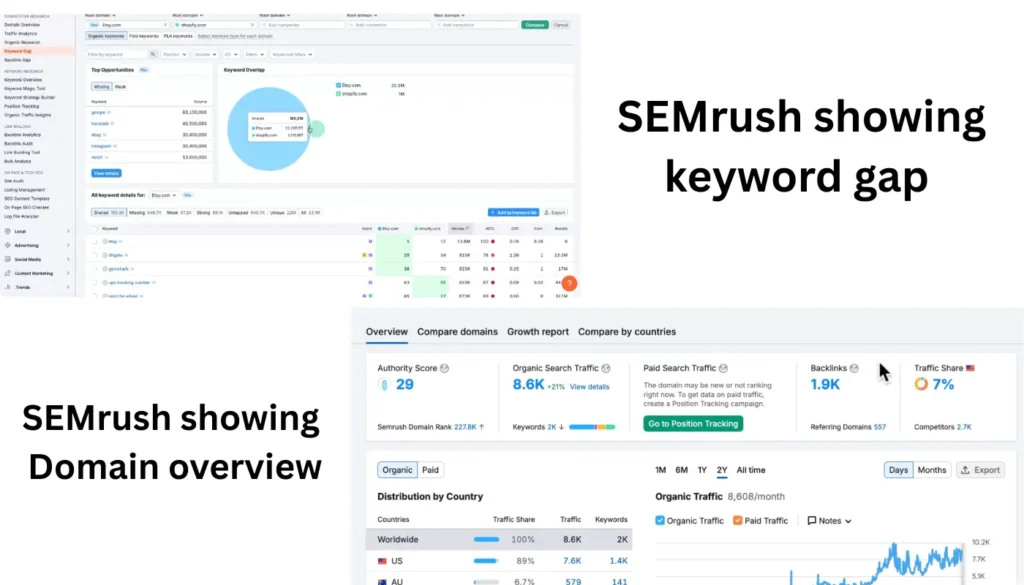
Overview: SEMrush shines when you need breadth: keyword discovery, competitor research, content ideation, audits, and brand-level reporting. It’s not the cheapest option, but it can deliver strong ROI when you actually use the data to drive strategy instead of just collecting dashboards.
Key Features
- Competitive research (domain analysis, gap analysis, and content opportunities).
- Keyword research to build clusters and identify intent-driven topics.
- Site audits to catch technical issues and prioritize fixes.
- Content planning to accelerate editorial calendars.
- Reporting for clients, teams, and executives.
Pricing
SEMrush is usually positioned as a premium suite. If you’re searching for affordable SEO tools, it may feel expensive at first. But for agencies managing multiple clients—or brands battling strong competitors—the ROI can justify the cost. The key is adoption: if you only use 10% of the platform, you’re paying for potential, not outcomes.
Pros
- Deep competitive insight for strategy and pitching.
- Strong keyword discovery for content clusters.
- Useful for agencies managing many sites.
- Supports scalable reporting and auditing.
Cons
- Learning curve can be steep for beginners.
- Premium pricing compared to simpler stacks.
- So many features that focus can drift without a system.
Best For
- Agencies needing one of the Best SEO Tools for research + reporting at scale.
- Competitive niches where opponent analysis wins faster than guessing.
- Growth teams building content clusters and tracking performance.
Real-World Use Case (Agency Pitch + Delivery)
For agencies, SEMrush can improve close rates and retention. Use it to run a fast competitor snapshot: top pages, top keywords, and obvious gaps. Then convert that insight into a 90-day plan: technical fixes, content cluster roadmap, and link-worthy assets. When you show a client a clear pathway to growth, SEMrush becomes more than a tool—it becomes a revenue engine. That’s why it’s often grouped among the Best SEO Tools for agencies.
How It Compares
In a Best SEO Tools comparison, SEMrush wins on competitive intelligence and breadth. If you want something easier or more budget-friendly, you might start with simpler platforms and upgrade later. But if you need a “big picture + tactical execution” suite now, SEMrush can be the center of your stack.
Action: If competition is strong in your niche, pick a tool from the Best SEO Tools list that helps you analyze opponents and build a smarter plan—then execute weekly.
Try This Best SEO ToolTip: Combine competitive research with clear content briefs and internal linking for faster results.
SEO Surfer Review: Content Optimization That Turns Drafts Into Ranking Assets
If your main bottleneck is content quality and on-page optimization, SEO Surfer (often referenced as Surfer SEO) is a popular choice. It’s frequently mentioned among the Best SEO Tools for content teams because it helps writers and SEOs align pages with search intent and SERP patterns—without relying purely on intuition.
SEO Surfer (On-Page Content Accelerator)
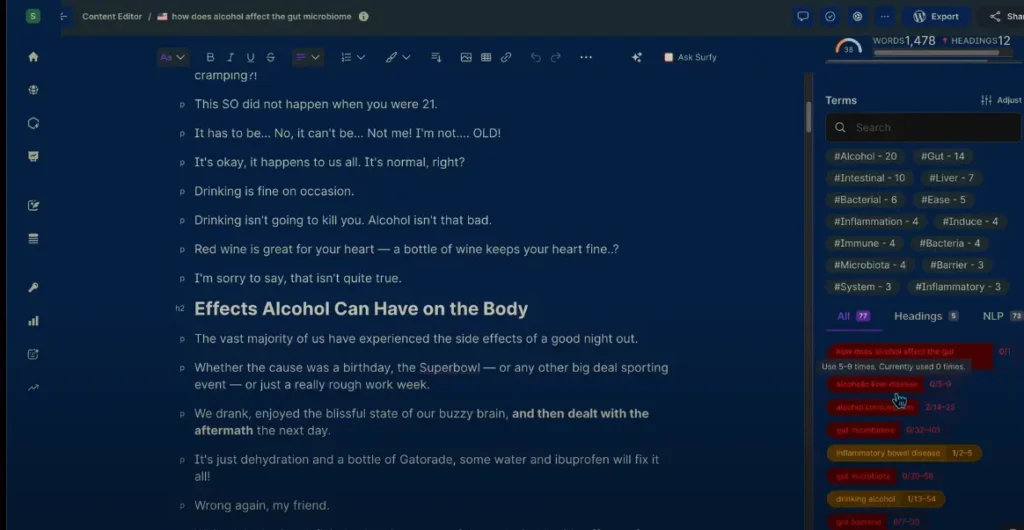
Overview: SEO Surfer is built for action: it helps you structure content, cover key subtopics, and improve on-page signals. The real value is speed—teams can create more consistent content quality across many writers. If you’re trying to build topical authority, it’s one of the Best SEO Tools to standardize output.
Key Features
- Content editor that highlights structure, coverage, and optimization opportunities.
- SERP analysis to understand what winning pages have in common.
- Content briefs that reduce writer confusion and revision cycles.
- Optimization checklists that make on-page updates faster.
Pricing
SEO Surfer is typically priced as a specialized content optimization tool. If you’re looking strictly for affordable SEO tools, you’ll want to compare how many content pieces you optimize each month. It often pays for itself when you publish consistently and treat optimization as a repeatable process.
Pros
- Improves content consistency across writers.
- Speeds up briefs and reduces revision cycles.
- Helpful for building topic clusters and authority.
- Great companion tool in a multi-tool stack.
Cons
- Most valuable when you publish regularly.
- Can be misused if teams “optimize for the tool” instead of intent.
- Not a full all-in-one suite by itself.
Best For
- Content teams who need a repeatable quality standard.
- Agencies producing content for multiple clients.
- Beginners who want guidance without advanced technical knowledge.
Real-World Use Case (Optimization Sprint)
Run a weekly “optimization sprint” on your existing pages: pick one page with impressions but low CTR, refine the title and intro, add missing subtopics, and improve internal links to relevant hub pages like SEO Tools or SEO Guides. Tools like SEO Surfer help you keep this process consistent, which is exactly why it’s included in many Best SEO Tools stacks.
How It Compares
In an SEO tools comparison, SEO Surfer isn’t “the only tool you need”—it’s the tool that upgrades your content output. Combine it with rank tracking and keyword research for a balanced stack. If your content is already strong, its incremental value may be smaller; if content quality is your bottleneck, the lift can be huge.
Action: Want more rankings from the content you already have? Add one of the Best SEO Tools for on-page optimization and run a 4-week improvement plan.
Try This Best SEO ToolContent tip: Always prioritize search intent and clarity over “checking boxes.”
Micro-CTA: build a simple SEO stack today
The fastest path is usually: one of the Best SEO Tools for tracking + research, plus one tool for content optimization. Keep it simple, execute weekly, and scale after results.
Moz Pro Review: Trusted SEO Suite for Sustainable, Long-Term Optimization
Moz has been a well-known name in SEO for years, and Moz Pro remains a solid choice for marketers who value a steady, fundamentals-first workflow. It’s often considered among the Best SEO Tools for teams who want a reliable suite for research, audits, and optimization guidance—without feeling overwhelmed.
Moz Pro (Sustainable SEO Workflow)
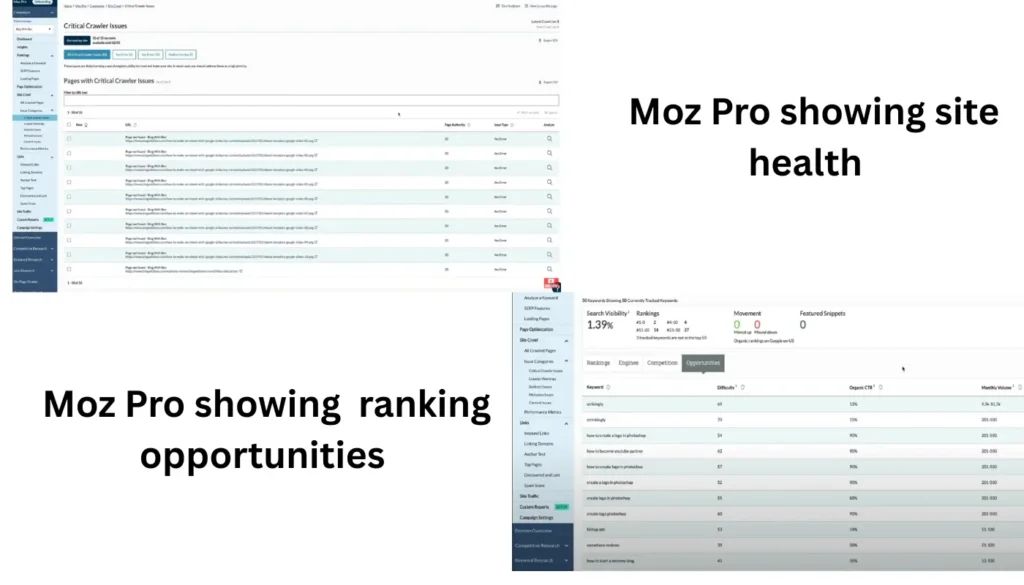
Overview: Moz Pro provides a balanced set of features that support long-term SEO growth—keyword research, tracking, audits, and link insights. For many users, the benefit is clarity: the tool focuses on helping you understand and improve fundamentals that consistently matter.
Key Features
- Keyword research for opportunity discovery and content planning.
- Site audits to identify technical and on-page issues.
- Rank tracking to monitor progress over time.
- Link insights to understand authority and growth opportunities.
Pricing
Moz Pro pricing typically sits in the mid-to-premium range, depending on limits and add-ons. If your priority is finding affordable SEO tools, compare value against your workflow: how many sites, how many keywords, and how often you report. Moz Pro can be a strong investment if you want stable features and a clear learning path.
Pros
- Clear guidance for improving SEO fundamentals.
- Good for consistent, sustainable optimization.
- Beginner-friendly experience compared to some suites.
- Trusted brand and educational ecosystem.
Cons
- May feel less “competitive-intel heavy” than some alternatives.
- Power users may prefer deeper data in certain areas.
- Limits matter—choose a plan aligned with your scale.
Best For
- Small teams and site owners who want the Best SEO Tools for fundamentals.
- Beginners learning structured SEO workflows.
- Brands focused on sustainable authority-building.
Real-World Use Case (Authority & Trust Growth)
If you’re building long-term authority (especially for informational sites), Moz Pro can support a structured plan: audit your site monthly, prioritize page-level improvements, and build a topic cluster strategy that strengthens relevance. Pair this with an EEAT approach—author pages, references, and clear editorial standards. If you want more EEAT support, review our EEAT checklist. This kind of consistent execution is why Moz Pro stays in many Best SEO Tools lists.
How It Compares
In a Best SEO Tools comparison, Moz Pro is a “steady performer.” It may not be the flashiest, but it’s strong for teams who want reliable SEO workflows. If you’re an agency fighting aggressive competition, you might pair it with competitor-heavy tools. If you’re a beginner, Moz Pro can feel like a friendly, structured teacher.
Action: If you want one of the Best SEO Tools to strengthen fundamentals and build authority over time, Moz Pro can be a dependable choice.
Try This Best SEO ToolAuthority tip: Follow official guidance and best practices. Start here: Google Search Central documentation.
Ubersuggest Review: Simple, Budget-Friendly SEO for Beginners Who Want Momentum
Ubersuggest is often recommended as an entry point for people who want SEO tools for beginners and don’t want to spend premium prices. It’s commonly included in Best SEO Tools discussions because it makes keyword ideas and basic SEO insights easy to access. The best way to use it is to stay focused: pick a few high-intent keywords, publish helpful content, and track progress consistently.
Ubersuggest (Budget-Friendly Starter)
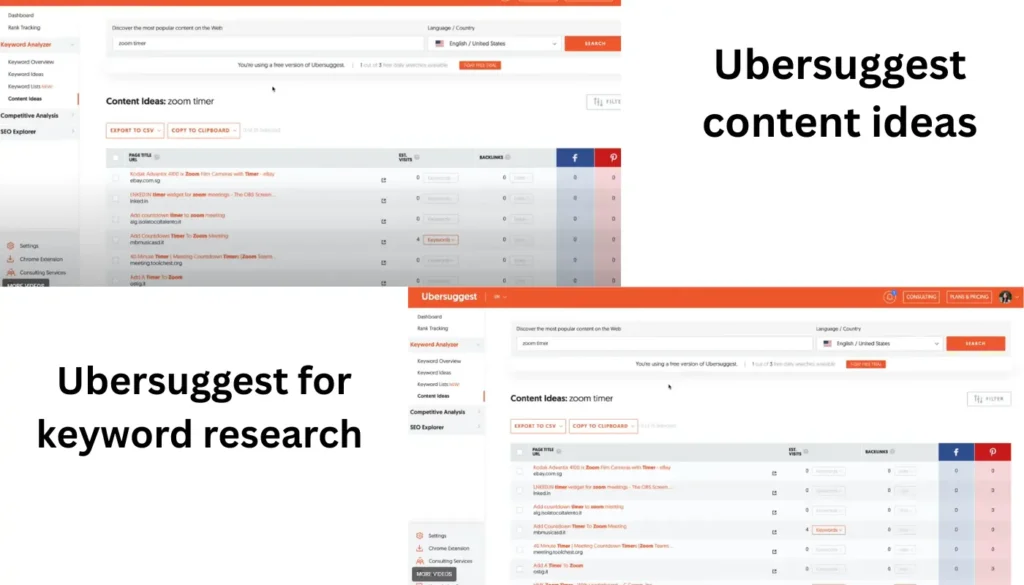
Overview: Ubersuggest prioritizes accessibility. It’s designed so new users can quickly find keyword ideas, get basic competition insight, and build a starting roadmap. While it may not have the deepest data compared to premium suites, it can be enough to start making progress—especially for small sites.
Key Features
- Keyword research for topic discovery and content planning.
- Content ideas to support your editorial calendar.
- Basic audits to highlight simple issues you can fix.
- Tracking to monitor keyword movement and improvements.
Pricing
Ubersuggest is often discussed as one of the more affordable SEO tools. For beginners or small publishers, that affordability can remove a major barrier: you can invest in execution (content and updates) instead of paying for a tool you won’t use.
Pros
- Easy for beginners to get started quickly.
- Lower cost compared to many suites.
- Good for basic keyword and content ideation.
- Helps maintain momentum for small sites.
Cons
- May feel limited for advanced SEO or large-scale agencies.
- Data depth can be lighter than premium platforms.
- Best results require disciplined execution (weekly habits).
Best For
- Beginners who want the Best SEO Tools experience without complexity.
- Small site owners focused on consistent publishing.
- Budget-conscious teams seeking affordable learning and growth.
Real-World Use Case (Beginner Momentum Plan)
Use Ubersuggest to build a simple weekly rhythm: choose one target keyword, draft content that answers intent, publish, and then update internal links to related pages (like your tools hub or guides). In 30–60 days, you’ll have enough data to double down on winners. This is how many beginners use the Best SEO Tools approach: less complexity, more output.
How It Compares
In a broad SEO tools comparison, Ubersuggest often wins on price and accessibility. It may not replace enterprise suites, but it can be a smart “starter tool” if you’re learning or building a new site. If you outgrow it, upgrade to a more robust platform later.
Action: If you need affordable SEO tools to start publishing and learning, this can be a practical entry point—then graduate to a deeper suite as you scale.
Try This Best SEO ToolBeginner tip: Keep your workflow simple. Consistency beats complexity.
Micro-CTA: Want faster affiliate ROI?
Don’t just add links—build trust. Compare tools honestly, show real use cases, and recommend the Best SEO Tools by category. That’s how readers click with confidence.
Mangools Review: Clean, Focused SEO Toolkit for Everyday Keyword Research
Mangools is known for a friendly UI and a focused toolkit that’s easy to use daily. It’s often recommended in Best SEO Tools roundups for people who want practical keyword research and SERP evaluation without enterprise complexity. If you value speed, clarity, and a pleasant workflow, Mangools can be a strong fit—especially for content-focused sites.
Mangools (Simple, Daily SEO Toolkit)
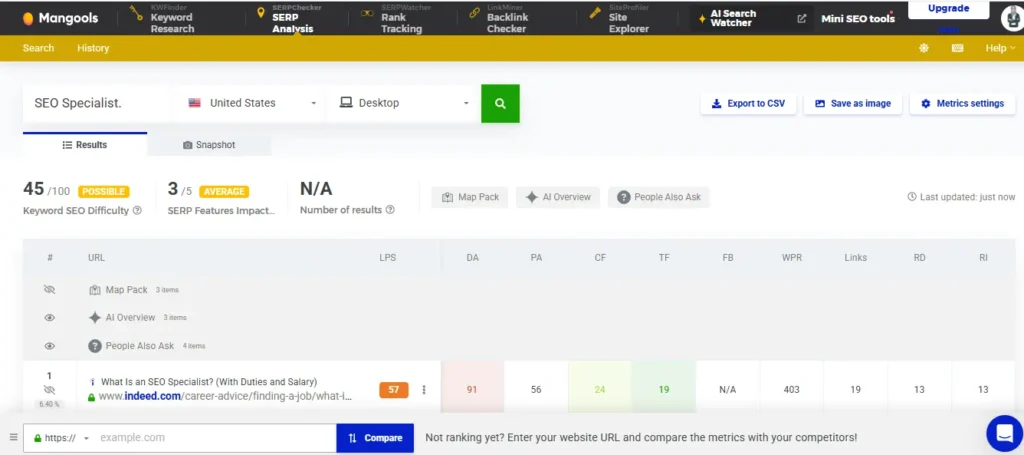
Overview: Mangools focuses on the essentials: finding keywords, evaluating competition, and staying consistent. For many users, the biggest advantage is usability. When a tool is easy to open and use every day, it’s more likely to be used—and that alone can drive better results.
Key Features
- Keyword research designed for quick discovery and filtering.
- SERP analysis to evaluate what it takes to rank.
- Rank tracking for monitoring progress with simplicity.
- Basic backlink insights to support authority planning.
Pricing
Mangools is frequently seen as one of the more affordable SEO tools relative to premium suites. If you want a focused tool you’ll actually use daily—without paying for advanced features you don’t need—it can be a smart choice.
Pros
- Excellent UI and beginner-friendly experience.
- Fast keyword discovery and SERP evaluation.
- Great for content-first SEO strategies.
- Affordable relative to large suites.
Cons
- May feel limited for large agencies or enterprise workflows.
- Not as broad as all-in-one competitive suites.
- Best paired with strong content and consistent publishing.
Best For
- Bloggers and content creators building topical authority.
- Beginners who want the Best SEO Tools experience without overwhelm.
- Small teams focusing on consistent keyword-based publishing.
Real-World Use Case (Content Cluster Builder)
Use Mangools to create a “pillar + cluster” plan: pick a main pillar page (like “Best SEO Tools in 2026”), then create supporting posts for each subtopic (tool reviews, comparisons, beginner guides). Link them together with a clean internal linking structure. This strategy strengthens relevance and helps pages rank as a group—one reason Mangools remains in many Best SEO Tools stacks for content-first sites.
How It Compares
In an SEO tools comparison, Mangools is best viewed as a streamlined daily toolkit. If you need heavyweight competitor data and advanced reporting, you may prefer an all-in-one suite. If you need a clean system for content planning and execution, Mangools can be a great fit.
Action: If you want the Best SEO Tools experience with simple daily usage, choose a tool you’ll open every day—and build consistency.
Try This Best SEO ToolConsistency tip: Publish on a schedule and update older winners monthly.
Best SEO Tools Comparison: Features, Pricing, Pros/Cons, and Quick Actions
A strong Best SEO Tools comparison should help you decide quickly. Instead of “which is best overall,” ask: which tool matches your workflow today? Below is a practical SEO tools comparison table designed for readability, speed, and ROI—so you can take action immediately.
Want to validate your strategy with authority sources? Review official guidance at Google Search Central, learn growth frameworks at HubSpot Blog, and deepen SEO fundamentals at Moz Blog.
| Tool | Core Features | Best For | Pricing | Pros | Cons | Action |
|---|---|---|---|---|---|---|
| SE Ranking | Rank tracking, keyword research, audits, competitor insights, reporting | Beginners, freelancers, growing agencies | Often budget-friendly vs premium suites | All-in-one value, clean UI, strong reporting | May be lighter for extreme enterprise needs | Try This Best SEO Tool |
| SEMrush | Competitive research, keyword discovery, audits, planning, reporting | Agencies, competitive niches, growth teams | Premium suite pricing | Deep competitor intel, broad toolkit | Learning curve, can feel expensive if underused | Try This Best SEO Tool |
| SEO Surfer | On-page optimization, content briefs, SERP-driven guidance | Content teams, agencies publishing at scale | Specialized tool pricing | Consistent content quality, faster briefs | Not a complete suite alone | Try This Best SEO Tool |
| Moz Pro | Keyword research, audits, tracking, link insights | Fundamentals-focused teams, long-term SEO | Mid-to-premium | Stable workflows, clear guidance | May be less aggressive for competitor intel | Try This Best SEO Tool |
| Ubersuggest | Keyword ideas, content suggestions, basic audits, tracking | Beginners, small sites, budget-focused creators | Often positioned as affordable | Easy to start, good for momentum | Less depth for enterprise-level strategy | Try This Best SEO Tool |
| Mangools | Keyword research, SERP analysis, rank tracking, basic link data | Content-first SEO, bloggers, small teams | Often affordable vs premium suites | Great UI, fast daily workflows | Not as broad as large suites | Try This Best SEO Tool |
If you’re choosing today, a smart default is: start with an all-in-one platform (like SE Ranking or SEMrush), then add a content optimizer (like SEO Surfer) once you publish consistently. That simple stack is often enough to outperform complicated setups—and it’s why many people prefer a tight, focused set of Best SEO Tools.
Micro-CTA: Turn the comparison into action
Choose one tool today, run it for 14 days, and track improvements. The Best SEO Tools don’t create results—your weekly execution does. Start now while motivation is high.
How to Choose the Best SEO Tools for Your Budget, Skill Level, and Business Type
Picking the Best SEO Tools is less about “the most popular” and more about fit. The right tool is the one you’ll use consistently, the one that matches your workflow, and the one that helps you make measurable decisions. Use this framework to avoid expensive mistakes and build a stack that grows with you.
1) Budget: start with the highest-leverage tool
If budget is tight, prioritize a platform that covers the biggest needs: keyword research and rank tracking. That’s the foundation of most SEO success. Many creators start with affordable SEO tools to learn and build consistency. Once you see results, you reinvest into deeper analytics or content optimization.
Rule of thumb: If you publish less than 4 pieces per month, focus on tracking + research first. If you publish 8+ pieces per month, add content optimization to improve consistency and reduce revision cycles.
2) Skill level: pick tools that guide you, not overwhelm you
The Best SEO Tools for beginners usually have clear interfaces, actionable suggestions, and minimal “analysis paralysis.” If you’re new, avoid buying the most complex suite and then using only one feature. Instead, use a simple tool daily and master it. Your skill growth will make upgrades worth it later.
3) Business type: match the tool to your workflows
For beginners & solo creators
- Focus: keywords, content schedule, internal links, CTR improvements.
- Best fit: beginner-friendly and affordable platforms.
- Goal: consistent publishing + weekly optimization.
For agencies & service teams
- Focus: multi-project management, reporting, competitor analysis, scalability.
- Best fit: Best SEO Tools for agencies with client reporting.
- Goal: predictable results + retention through clarity.
4) ROI: measure outcomes, not features
The biggest trap is buying a tool because it has “everything.” Instead, define the outcomes you want. Do you need better CTR? Faster content creation? Stronger reporting for clients? More predictable rankings? The Best SEO Tools for you are the ones that shorten the path to those outcomes.
- CTR improvement: track pages with impressions, test title hooks, improve internal linking.
- Content performance: build clusters, optimize on-page structure, update older posts.
- Agency retention: send clear monthly reporting with visible progress.
- Scale: create templates and SOPs for research, briefs, and optimization.
5) Scalability: avoid tool-switching chaos
Scalability is why tool selection matters early. If you plan to grow into an agency workflow, choose tools that support multi-site projects and reporting. If you’re building a content site, choose tools that make daily research and optimization easy. Many people succeed with a small stack of Best SEO Tools rather than a huge pile of subscriptions.
Want a clear implementation plan? Use internal resources to build your workflow: SEO Templates, SEO Guides, SEO Services.
Micro-CTA: Choose your stack in 60 seconds
If you want an easy start, pick one of the Best SEO Tools that covers research + tracking. If you publish frequently, add a content optimizer next. Keep it simple and execute weekly.
FAQ: Best SEO Tools (Quick Answers for Featured Snippets)
What are the Best SEO Tools for beginners in 2026?
The Best SEO Tools for beginners are easy to use, provide clear guidance, and cover core needs like keyword research and rank tracking. Start with one tool you can use weekly without overwhelm, then add content optimization once you publish consistently. Beginner-friendly stacks usually prioritize clarity and repeatable workflows.
Which Best SEO Tools are best for agencies managing multiple clients?
The Best SEO Tools for agencies typically include multi-project management, client reporting, and strong competitor research. Agencies benefit most from tools that make progress visible, reduce manual reporting time, and support scalable SOPs across clients. Choose based on reporting quality and workflow speed, not just feature lists.
Are affordable SEO tools good enough to rank on Google?
Yes—many affordable SEO tools are good enough to rank if you execute well. Tools don’t replace strategy; they accelerate it. If you can research intent-driven keywords, publish helpful content, and optimize consistently, you can compete. Upgrade later when your site or client load grows and you need deeper data.
How should I run an SEO tools comparison before buying?
A smart SEO tools comparison starts with your workflow: research, content planning, optimization, tracking, and reporting. List what you must do weekly, then evaluate which platform makes those steps faster and clearer. The Best SEO Tools comparison is the one that leads to action, not endless deliberation.
Do I need an all-in-one platform or multiple tools?
Many people start with an all-in-one from the Best SEO Tools list because it reduces complexity. A common upgrade path is adding a content optimizer once publishing scales. Multiple tools can be powerful, but only if you have a consistent system. If you’re unsure, start simple and expand after results.
What’s the fastest way to get ROI from the Best SEO Tools?
The fastest ROI comes from optimizing what already has momentum: pages with impressions, rankings on page 2, or posts that almost match intent. Use the Best SEO Tools to identify those pages, improve titles and intros for CTR, add internal links, and update content sections. Small improvements on near-winners can produce quick gains.
How often should I check rankings and SEO data?
For most sites, weekly check-ins are enough. Use your Best SEO Tools to track key keywords, monitor changes, and prioritize actions. Daily checking often creates anxiety and distractions. Instead, set a weekly routine: review rankings, review pages with impressions, optimize, and publish consistently.
Where can I learn best practices to use SEO tools correctly?
Follow official and authoritative resources. Start with Google Search Central for foundational guidelines, then explore education from HubSpot and Moz. Combine that learning with a consistent workflow using the Best SEO Tools you choose.
Conclusion: The Best SEO Tools to Buy First (By Goal and Budget)
The Best SEO Tools aren’t magical. They’re leverage. They make your strategy clearer, your execution faster, and your results easier to measure. If you’ve been stuck in “research mode,” this is your sign to pick a tool, commit to weekly action, and build momentum that compounds.
Here’s a practical way to decide without overthinking. If you want one balanced platform to run your workflow—research, tracking, audits, and reporting—SE Ranking is a strong starting point. If you’re in a competitive niche or managing multiple client accounts, SEMrush can be worth the investment for deeper competitive intelligence. And if your main growth lever is publishing content, SEO Surfer can help you standardize quality and optimize pages more consistently.
Top picks by category
- Best SEO tools for beginners: start with a simple all-in-one, then add optimization later.
- Best SEO tools for agencies: choose a suite with reporting + competitor research.
- Affordable SEO tools: pick what you’ll use weekly—consistency wins.
Next steps (simple 14-day plan)
- Day 1–2: pick your tool and set up tracking.
- Day 3–7: build a keyword shortlist + content plan.
- Day 8–14: publish 1–2 pages, optimize 1 old page, and add internal links.
If you want the fastest affiliate ROI, don’t just list tools—recommend the Best SEO Tools by real scenarios. Show who each tool is for, what problem it solves, and what result it helps them get. That’s how you earn clicks with trust, not pressure.
Final Action: Choose one of the Best SEO Tools and start today
Your next ranking jump won’t come from reading more guides—it’ll come from executing a weekly system. Start with a tool you’ll actually use, track progress, and improve what already has potential. If you want a balanced all-in-one pick, begin here.
Disclosure: Some links may be affiliate links. We only recommend tools that fit real workflows and measurable outcomes.
Continue learning and scaling with internal resources: SEO Tools Hub • SEO Guides • SEO Templates • SEO Services • SEO Case Study • EEAT Checklist